
China's US$2.2 tril urban renewal plan to boost construction, property sectors
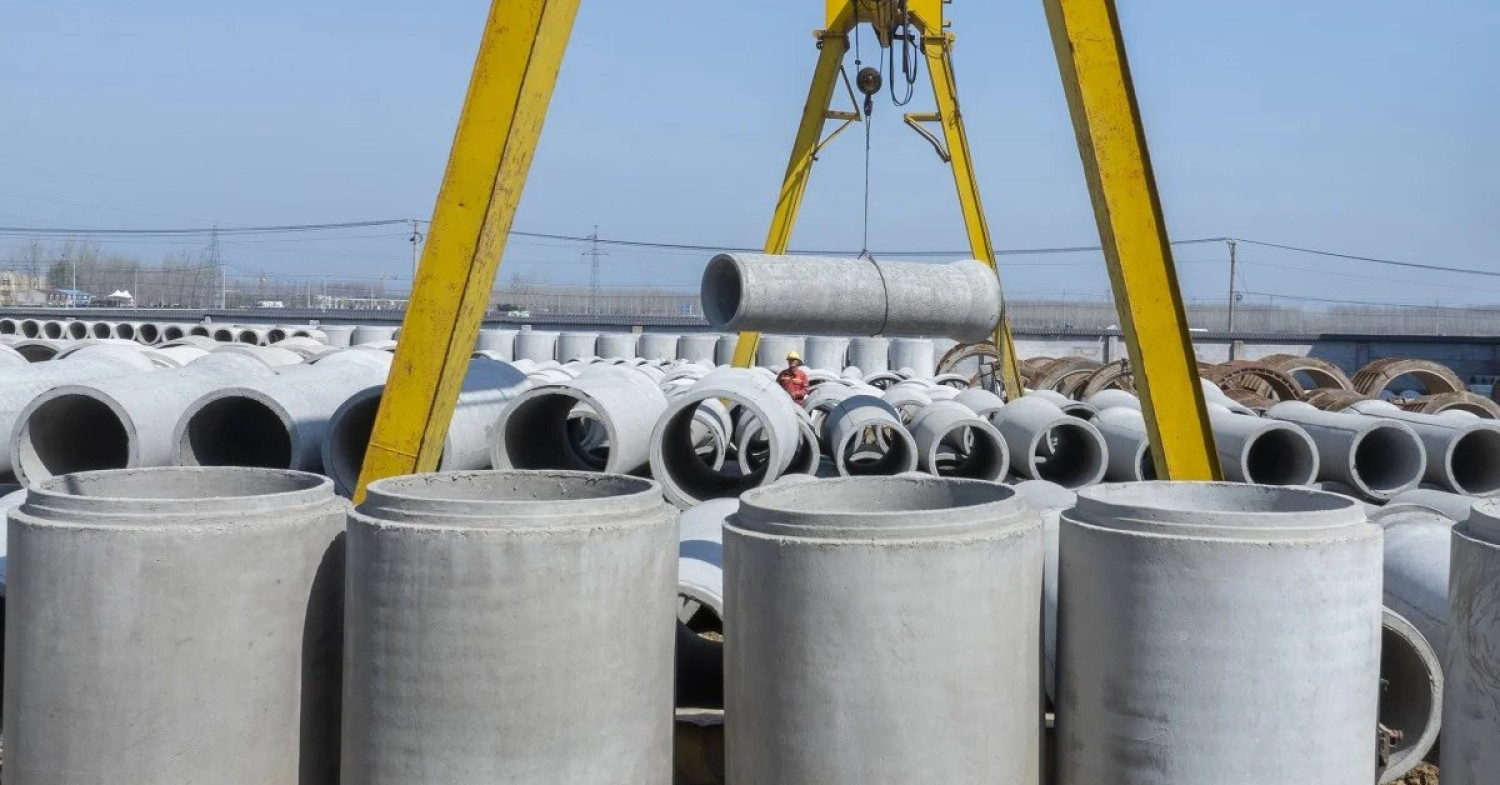
Reinforced concrete drainage pipes are parked at a building materials company in Suqian, in eastern China’s Jiangsu province, on April 1, 2025 (Photo: NurPhoto via Getty Images)
China’s ambitious urban renewal projects, from upgrading dilapidated homes to rebuilding gas pipelines, are expected to require investment of at least US$2.2 trillion ($2.84 trillion) in the five years from 2026, offering fresh growth opportunities for construction firms.
Property developers also received a shot in the arm on May 29, after the State Council, China’s cabinet, released a guideline on the urban renewal campaign, part of Beijing’s 15th five-year plan for 2026 to 2030.
The overall investment could top RMB20 trillion ($3.78 trillion) during the period, based on details of the rebuilding and renovation plans, according to the Economic Information Daily, a newspaper run by state news agency Xinhua.
Read also: Langham to open third hotel in Ningbo, China
“Mega reconstruction projects can improve people’s welfare and be an important driver for the national economy,” said Wang Feng, chairman of Shanghai-based financial services group Ye Lang Capital. “Indeed, the central and regional governments will keep up repair and renovation work even after 2030, to ensure safety and efficiency of the infrastructure.”
The five-year plan defines mainland China’s economic and social priorities, and both Chinese and international companies delve into various government documents related to the plan to sniff out opportunities.
A total of 200,000km of gas pipelines, 175,000km of drainage pipes and 175,000km of water-supply pipes across the mainland’s urban areas would be rebuilt by 2030, according to the State Council’s guideline.
A total of 500,000 dilapidated housing units would also be renovated, it added, with public facilities to support education, medical care and elderly care upgraded.
Urban networks of pipes for sewage, electrical cables, gas and wiring for telecoms and broadcasting play a vital role in China’s urbanisation drive, as does proper drainage of rainwater to reduce rainy-season flooding.
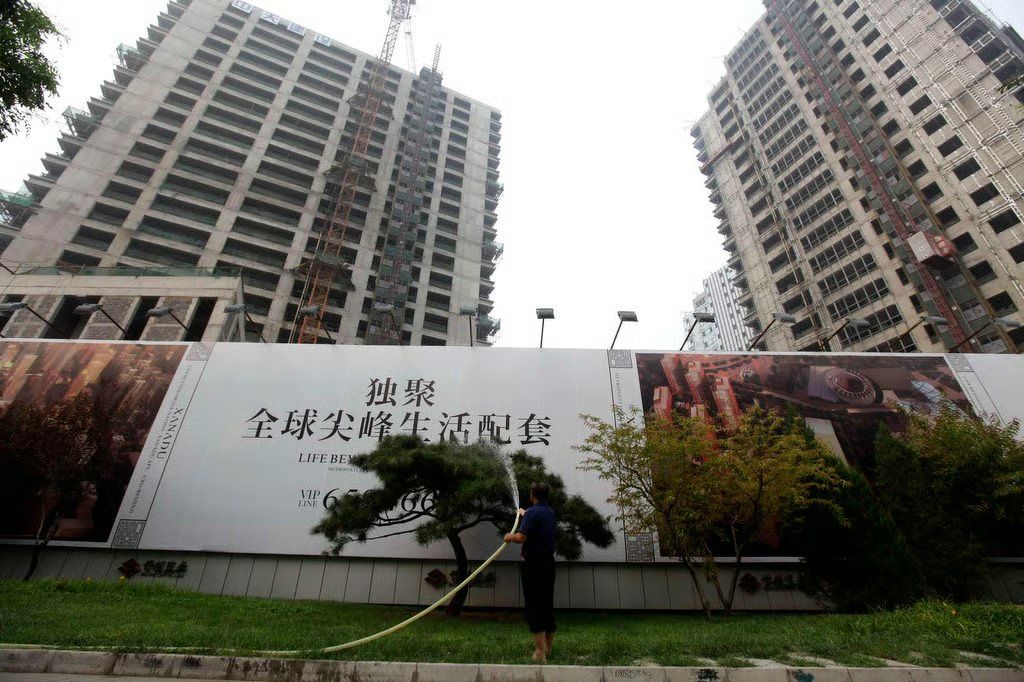
A worker waters a tree outside a construction site in Beijing (Photo: Reuters)
Technological innovation hinges on such networks, which are viewed as the foundation for a sound business environment.
Analysts said Beijing’s ambitions could benefit property developers, which have suffered a five-year slump.
“With an influx of capital due to reconstruction and renovation of public works, property companies may see a ray of hope amid the governments’ determination to upgrade old residential properties,” said Yin Ran, a Shanghai-based angel and property investor. “But not all the developers will benefit. Only those with sufficient experience in redevelopment of large projects will be picked to support the multi-trillion yuan renewal campaign.”
Country Garden Holdings saw its Hong Kong-listed shares bounce up 16.3% to HK$0.24 ($0.039) on news of the announcement. Shares of China Vanke gained 6.7% to HK$2.71, Sunac China rose 6.8% to HK$0.95 and Cifi Holdings advanced 5.2% to HK$0.06.
The property sector and related industries — from construction to home appliances — account for roughly a quarter of China’s economic output, meaning even a modest recovery could have wider implications for growth.
Sales of pre-owned homes in major Chinese cities surged in March and April, led by Shanghai, fuelling expectations that the embattled property sector might be stabilising.
Analysts and brokers said a more active resale market pointed to a gradual return of confidence among homebuyers after the downturn. — South China Morning Post
Follow Us
Property updates, 24/7.


Subscribe to Newsletter
Market insights, delivered weekly.

Top Articles
Search