
How cross-border real estate financing is evolving between Hong Kong and Singapore
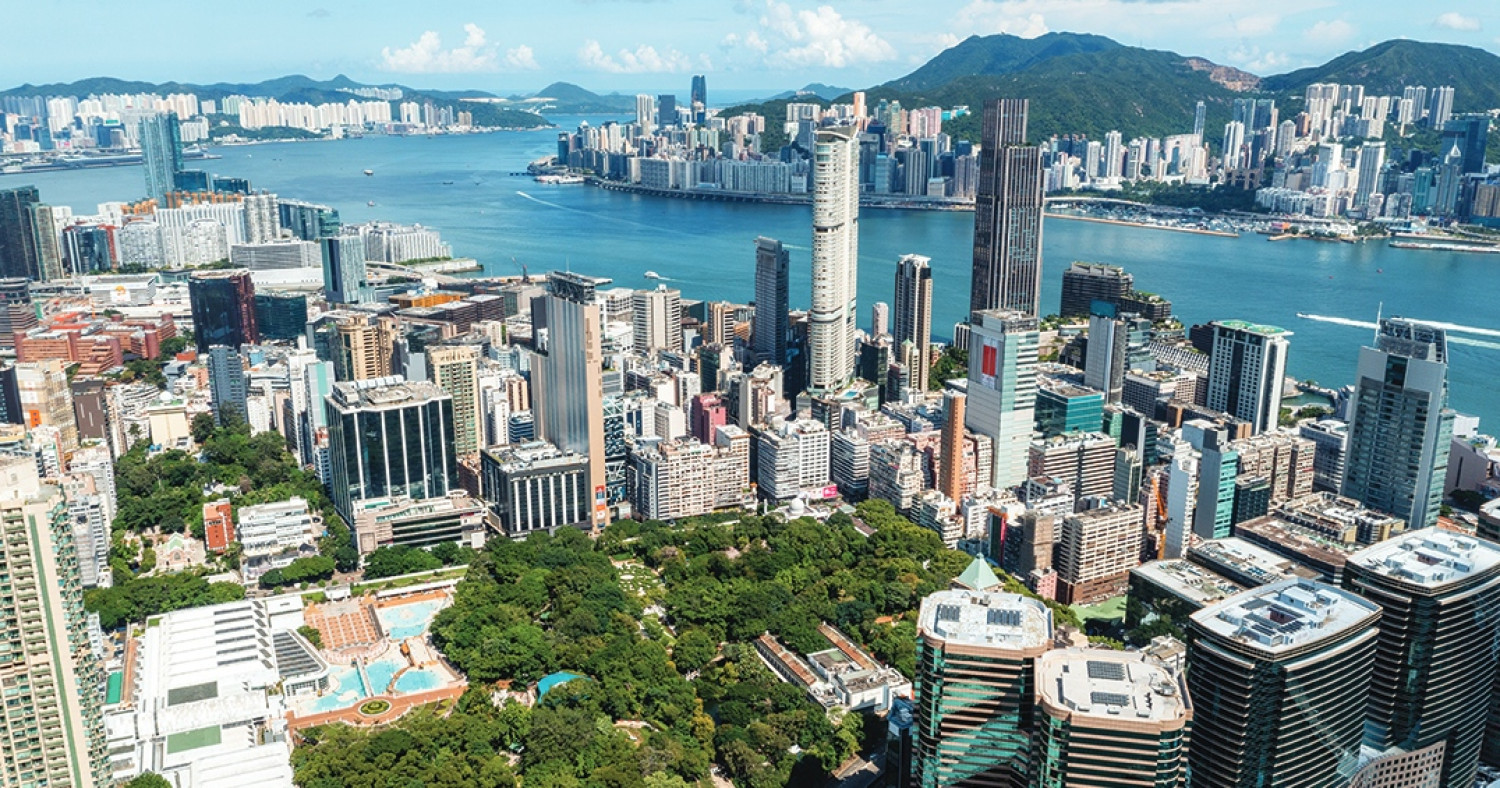
More buyers and investors from Hong Kong (pictured), including family offices and SMEs, are looking to leverage Singapore's resilient property market to access liquidity. (Photo: Shutterstock)

Ask Buddy
The landscape of cross-border real estate financing between Hong Kong and Singapore is rapidly evolving.
As global investors recalibrate their portfolios amid shifting interest rates and market corrections, we are witnessing a distinct change in how high-net-worth individuals (HNWIs) and corporate entities leverage assets across these two premier Asian financial hubs.
While investment flows between the two markets have long attracted attention, financing strategies are becoming just as important.
Investors are increasingly using existing assets to unlock liquidity, diversify their portfolios and pursue new opportunities across jurisdictions.
At the same time, evolving market conditions and regulatory requirements are reshaping how cross-border transactions are structured and financed.
Singapore assets as a source of liquidity
We have recently observed that more Hong Kong buyers are borrowing against assets in Singapore.
This comes as Hong Kong investors wish to leverage Singapore's resilient property market to access liquidity without liquidating core assets.
We primarily see high-net-worth individuals and family offices using bridging loans to bypass traditional banking constraints, which often require local income proof.
SMEs also use this strategy to fund business expansion or seize time-sensitive investment opportunities.
Typical loan quantums range from $5 million to over $20 million — reflecting the premium nature of the underlying real estate collateral.
Historically, for these borrowers in Hong Kong, their focus on Singapore assets has centred on prime residential condominiums located in areas such as Districts 9, 10 and 11.
That said, we are also observing a strategic pivot towards commercial assets, particularly conservation shophouses and boutique hospitality properties.
This shift is driven by the desire for higher yields and to avoid incurring the additional buyer's stamp duty (ABSD) levied on residential purchases in Singapore.
Commercial assets offer robust capital appreciation and are increasingly viewed as stable wealth preservation vehicles amid broader economic volatility.
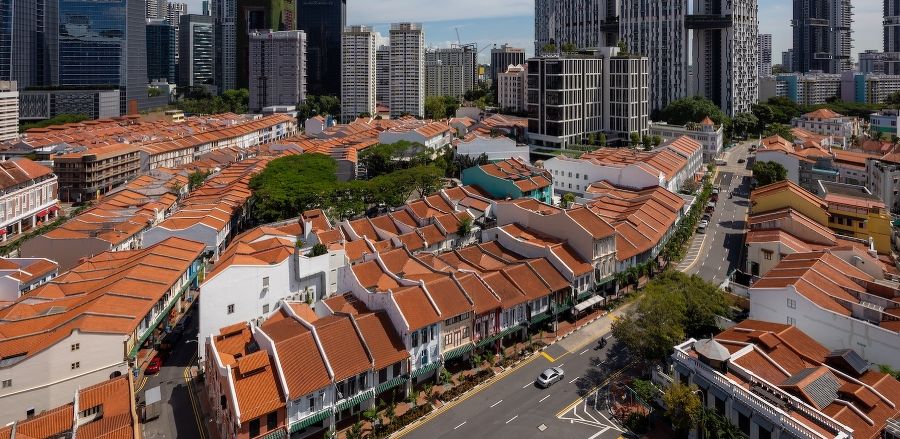
Shophouses in Singapore. Law firm Hugill & Ip is seeing Hong Kong buyers showing growing interest in such commercial assets. (Photo: Samuel Isaac Chua/EdgeProp Singapore)
Unlocking value from Singapore assets
When an individual or business in Hong Kong takes out a loan secured against a Singapore property, such financing arrangements typically involve cross-border bridging loans or asset-backed facilities, governed by Singapore law for the security over the property and often Hong Kong law for corporate guarantees.
Borrowers must navigate strict compliance with Singapore's total debt servicing ratio if using traditional banks, though private credit may offer more flexibility.
Crucially, investors must understand the enforcement mechanisms across both jurisdictions and the tax implications of repatriating funds, ensuring their exit strategy is legally sound.
The rising appetite for financing secured against Singapore property points to the deep reliance on real estate as a primary collateral base within the region.
Despite market fluctuations, property remains the preferred asset class for securing substantial credit.
For transactions in Singapore, these funds are frequently channelled into acquiring high-value commercial real estate, funding redevelopment projects, or providing equity release for family offices looking to diversify their portfolios across the Asia Pacific region as they seek stability outside the immediate Hong Kong market.
Singapore's status as a wealth hub can also work in favour of Hong Kong investors who already own assets in the city-state.
For instance, equity release and asset-backed bridging loans allow investors to unlock trapped capital without selling. We are advising an increasing number of clients on these structures to fund further acquisitions in both markets.
This dynamic fosters a virtuous cycle for Hong Kong-Singapore cross-border investment activity, deepening the financial integration between the two hubs.
Private credit funds and agile, cross-border legal advisers are best positioned to benefit if they can navigate the regulatory nuances and execute these complex, multi-jurisdictional transactions swiftly.
Singapore-Hong Kong financing: Stable yet constrained
The picture is somewhat different for Singapore investors who are looking to finance Hong Kong property.
Many traditional lenders are exercising heightened caution regarding new loans secured by Hong Kong real estate. This strategic retreat is primarily a risk mitigation response to the prolonged correction in Hong Kong's commercial property sector and the broader economic uncertainties impacting asset valuations.
Banks are prioritising stringent loan-to-value ratios and robust cash flow profiles, effectively scaling back exposure to avoid potential non-performing loans in a market that is still navigating its recovery phase.
Practically, this means Singapore investors face higher borrowing costs and stricter underwriting criteria from traditional lenders.
To bridge this gap, many are turning to private credit funds and licensed money lenders in Hong Kong.
The primary trade-off is the cost of capital; alternative financing typically carries higher interest rates and shorter tenures.
However, the distinct advantage is usually speed and flexibility — allowing investors to capitalise on distressed asset opportunities that traditional banks might decline to finance.
Despite tighter lending conditions, there are still financing structures that may possibly improve borrowing terms for those in Singapore who are keen on Hong Kong real estate.
Structuring an acquisition through a Hong Kong-incorporated special purpose vehicle (SPV) can streamline the financing process and potentially secure better terms. This localises the borrowing entity, making it more palatable for Hong Kong-based lenders.
Furthermore, providing cross-collateralisation with stable Singapore assets or securing strong corporate guarantees from well-capitalised parent companies can significantly enhance the credit profile, leading to more favourable loan-to-value ratios and competitive interest rates in a tight lending environment.
Opportunities for buyers following price correction
The recent correction in Hong Kong’s property market — coupled with the abolition of demand-side management measures for residential properties such as the buyer's stamp duty — has undoubtedly created attractive entry points.
From a legal standpoint, the removal of these taxes significantly lowers the acquisition cost for Singapore buyers.
Financially, while traditional lending is tight, the adjusted valuations mean that cash-rich investors or those tapping agile private credit can acquire premium assets at highly competitive prices, positioning themselves for long-term capital appreciation.
Legal considerations in cross-border deals
A frequent pitfall is the misalignment of legal expectations between jurisdictions, particularly concerning guarantor arrangements. Borrowers often assume a guarantee executed in Singapore is seamlessly enforceable in Hong Kong without proper legal formalisation.
Another issue is poorly structured SPVs that fail to account for tax inefficiencies upon exit or repatriation of funds.
Overlooking the nuances of stamp duty regulations in both markets can also lead to unexpected liabilities that significantly erode the anticipated return on investment.
Moreover, investors often underestimate the rigorous due diligence required regarding corporate structures and beneficial ownership under Hong Kong's anti-money laundering regulations.
Delays frequently occur during the verification of overseas corporate entities that are providing guarantees.
Additionally, navigating the specific requirements of the Hong Kong Companies Registry for registering charges can be complex.
Ensuring that all cross-border legal opinions are aligned and that the security documents are properly executed under Hong Kong law is where meticulous legal counsel is vital.
Regulatory developments can potentially add another layer of complexity. Enhanced regulations under Hong Kong's Money Lenders Ordinance, with the first phase taking effect in August 2026, introduce stricter debt servicing ratio caps and prohibit the use of loan referees.
For Singapore investors who wish to use alternative financing, this means lenders will conduct more rigorous affordability assessments, potentially extending approval timelines.
Investors must ensure their financial documentation is impeccably prepared and understand that these measures, while designed to protect consumers, will inevitably tighten the compliance requirements and operational frameworks of private credit facilities in Hong Kong.
Cross-border real estate financing between Hong Kong and Singapore continues to present attractive opportunities for investors.
As financing structures become increasingly sophisticated and regulatory frameworks evolve, success depends not only on identifying attractive assets but also on understanding the legal and financing considerations on both sides of the transaction.
Careful planning, sound legal structuring and a clear appreciation of the regulatory requirements in each jurisdiction will be essential to unlocking opportunities while managing cross-border risk.

Polly Chu is head of real estate and partner at Hugill & Ip, an independent law firm based in Hong Kong.
Ask Buddy
Follow Us
Property updates, 24/7.


Subscribe to Newsletter
Market insights, delivered weekly.


Top Articles
Search