
How young Singaporeans are rethinking homeownership
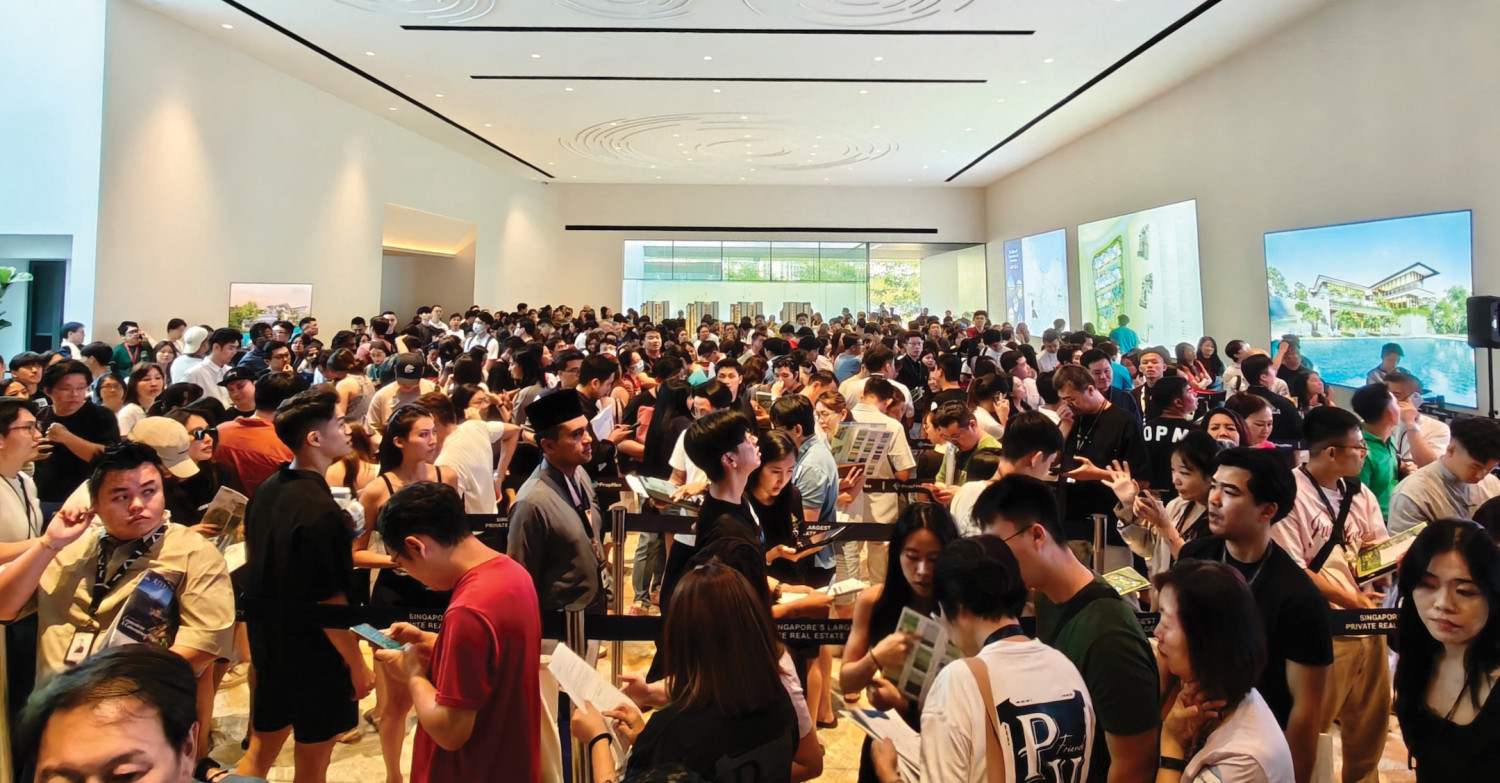
The crowd at Rivelle executive condo on launch day, where 92.5% of the 572 units were snapped up at an average price of $1,893 psf, excluding the 3% premium for those who opted for the deferred payment scheme (Photo: Sim Lian Group)
Singaporeans have achieved significant success in their property market within a relatively short yet impactful history. Many from the baby boomer, generation X, and older millennial groups entered the market when housing was more affordable, and competition among buyers and sellers was lower.
Younger Singaporeans, however, are approaching homeownership under very different conditions. Years of successive cooling measures and rising land costs have pushed prices higher, raising the bar to entry. At the same time, they are entering the market with priorities and aspirations that do not necessarily mirror those of earlier generations.
The more important question, then, is no longer whether young Singaporeans want to own a home — but what homeownership now represents to a generation entering the market on very different terms.
Same ambition, different starting points
ERA’s “My Dream Home” survey suggests that the key difference between generation Z (gen Z) and young millennials is not desire, but how achievable the goal feels at present.
Young millennials are entering the market with greater urgency. Nearly half (49%) intend to buy a home soon, indicating that homeownership is shifting from a distant goal to a near-term financial priority.
Gen Z, by contrast, is looking at the market earlier. Most (73%) say their plans are long-term, with only 27% expecting to purchase in the near future. This shows that the generation remains prepared to enter the market, with decisions shaped by age, income and life stage.
That context matters. More than half of gen Z respondents are still studying. Consequently, 34% say they cannot afford a home at the moment, while another 28% are not actively planning to buy one. Instead of showing a lack of interest, gen Z’s ambition persists, but it remains a long-term goal for many.
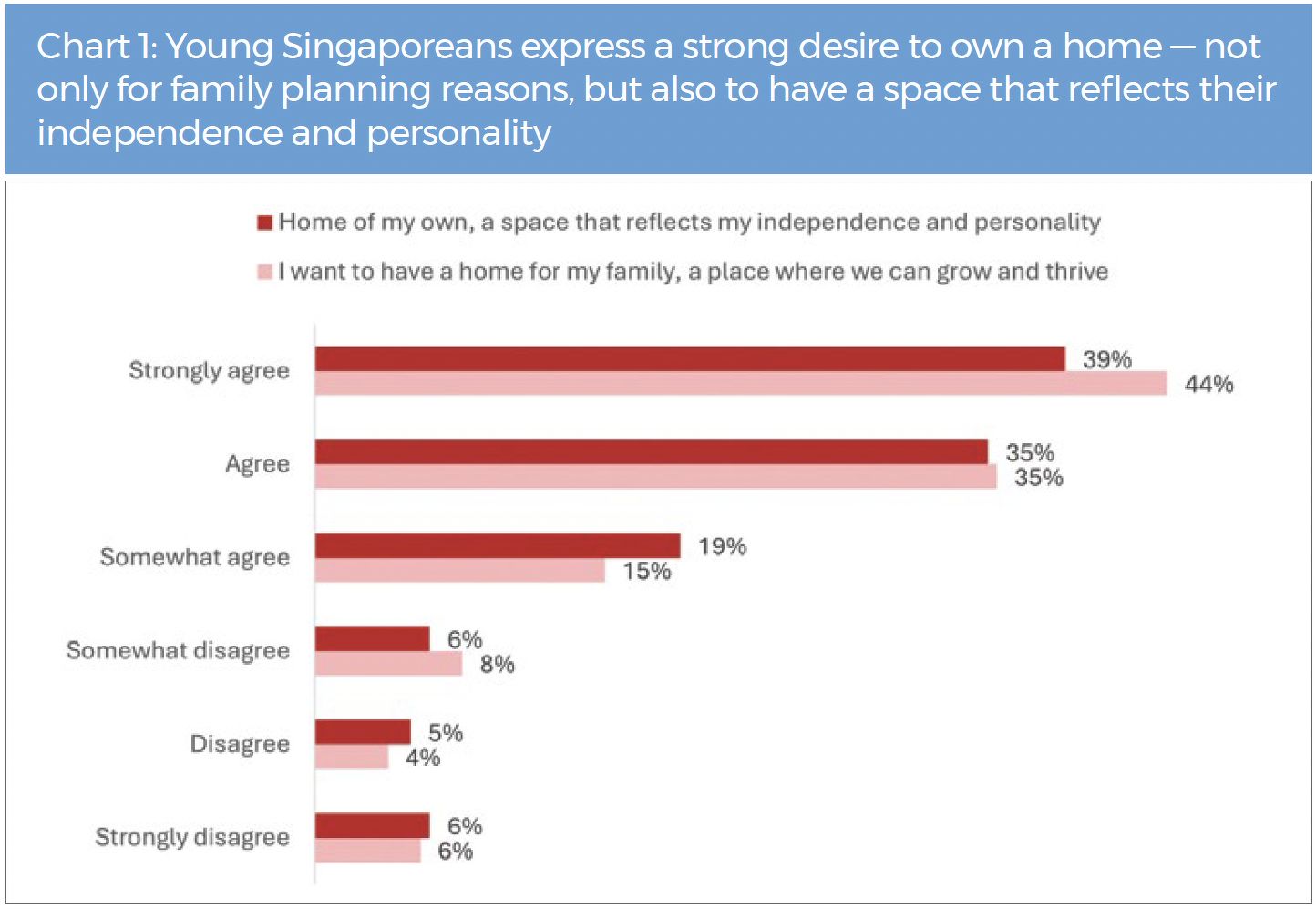
Chart: ERA Research and Market Intelligence
Delayed affordability rather than dampened demand
Young Singaporeans have not lost interest in homeownership. For many, the concern is more about how realistic it appears at this point in life. Affordability has emerged as the clearest pressure point. Today, 37% of younger Singaporeans consider affordability the primary obstacle to buying property.
This indicates a new generation entering the market with ambition but less financial flexibility compared to older buyers. Over half of respondents, 56%, have a monthly income of less than $10,000, and 31% report household incomes below $6,000.
It is understandable that homeownership among this group stays much lower at 26%, compared to 64% for older generations. The difference shows that younger buyers are often driven more by timing, income increases and what they can afford, rather than just their intentions.
This is reflected in broader income patterns among younger workers in Singapore. Median monthly income gradually rises with age, from $3,269 for those aged 20–24, to $4,680 for ages 25–29, and reaching $5,870 for ages 30–34.
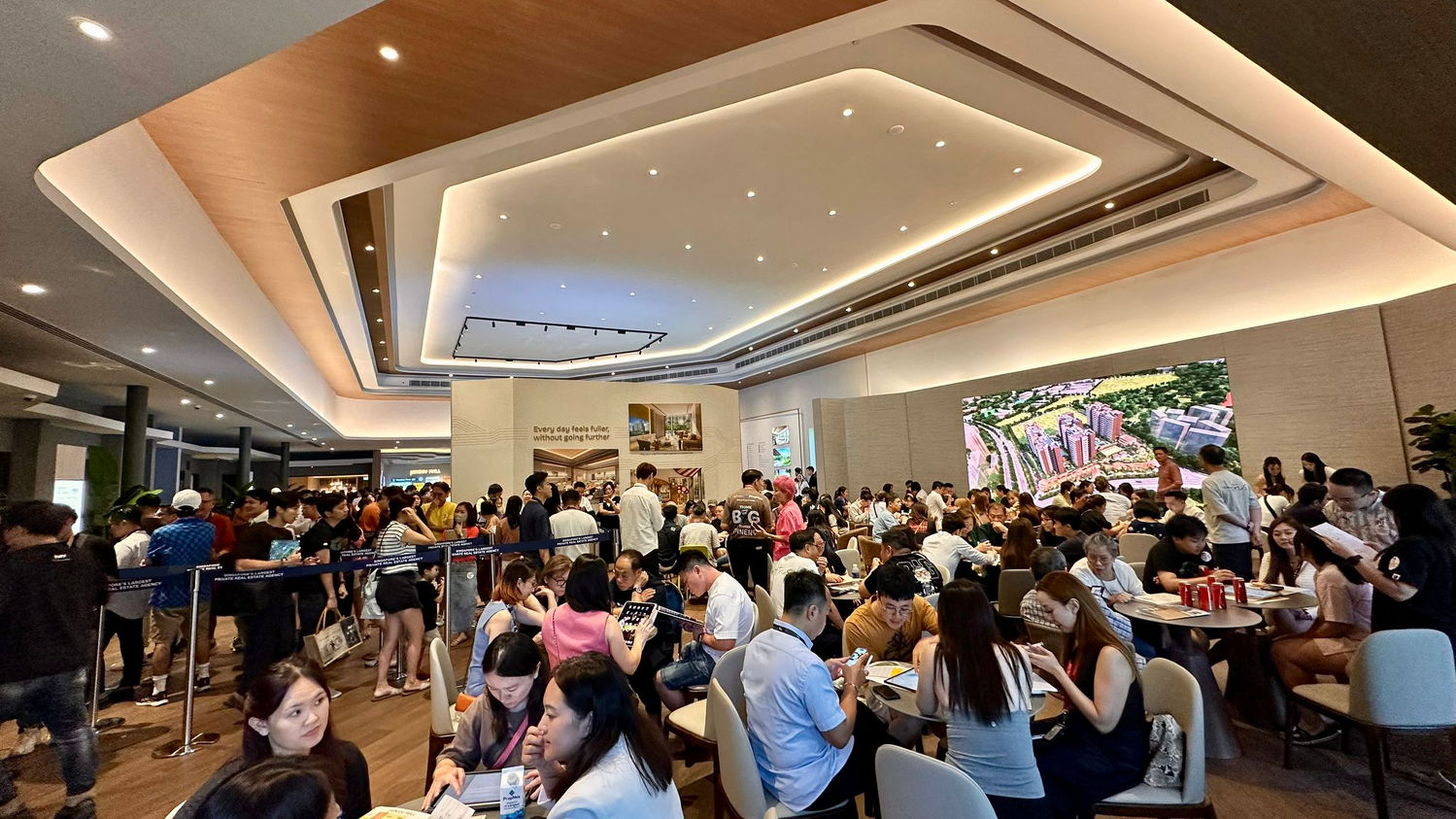
The crowd at Pinery Residences, where 92.5% of units were taken up at an average of $2,546 psf (Photo: Hoi Hup Realty and Sunway MCL)
In practical terms, many younger buyers are entering the market while still working on their financial stability. Therefore, affordability affects not only what they can buy but also the timing of their market entry.
Homeownership as identity, not just investment
For younger buyers, homeownership no longer hinges only on asset value or traditional milestones. Instead, it is a more personal choice, influenced equally by identity, independence and daily lifestyle, as by financial goals or family plans.
In this way, a home is not just a long-term asset but also a reflection of one’s preferred way of living.
This reflects a subtle but significant shift in housing priorities. Previous generations often emphasised size, status or long-term capital growth. In contrast, younger buyers, though pragmatic, place a greater emphasis on liveability and personal fit.
They are not ignoring the financial benefits of property ownership but are considering other factors — preferring homes that seamlessly integrate into their daily routines.
Therefore, flexible layouts, efficient space utilisation, and closeness to daily amenities are becoming more critical.
Young Singaporeans mainly prioritise larger floor plans or unit sizes (68%) when buying a home. Meanwhile, their top locational preference is proximity to amenities, which 65% of them consider most important.
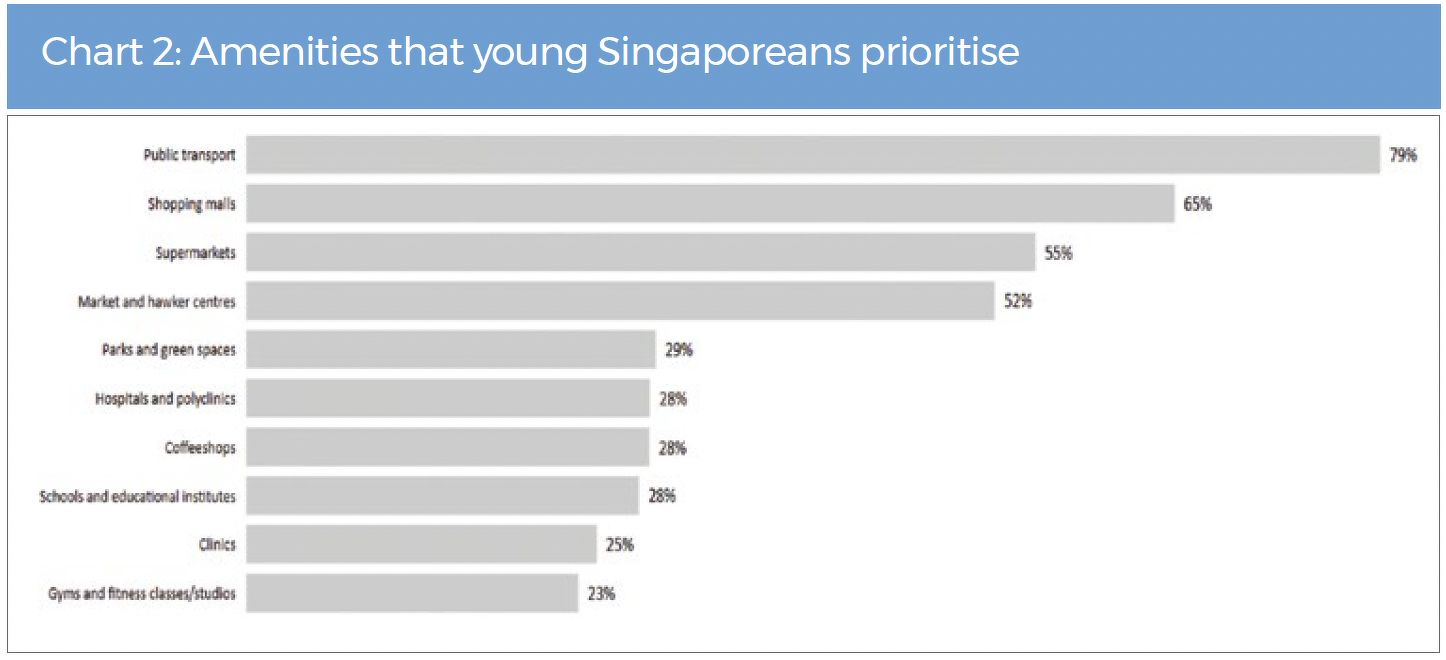
Chart: ERA Research and Market Intelligence
Smaller households changing what space means
A major shift in today’s housing market is the changing value placed on space.
As household sizes shrink and life paths diversify, younger Singaporeans are less concerned with sheer size and more focused on whether a home suits their lifestyle.
Instead of prioritising extra space for future family growth, younger buyers are increasingly allocating their budgets to locational benefits such as accessibility, convenience, and proximity to key amenities.
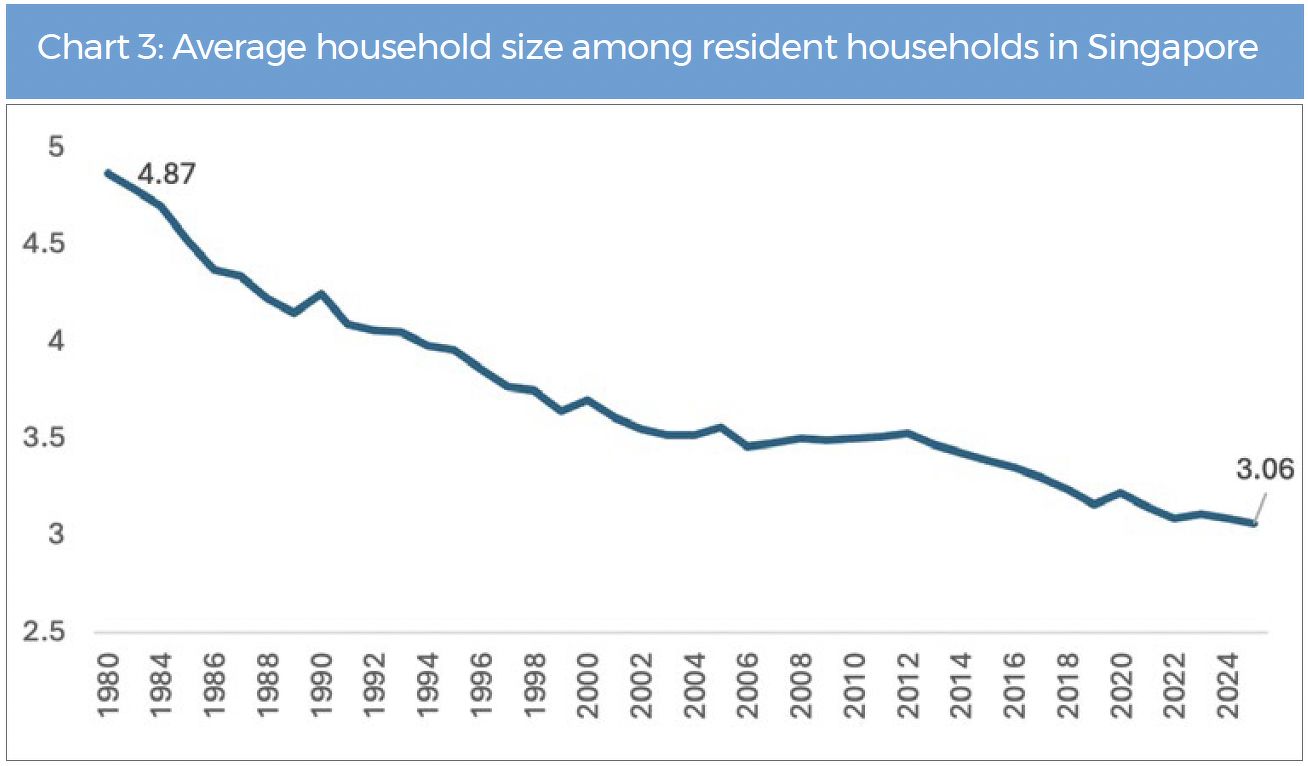
Chart: Singstat and ERA Research and Market Intelligence as at March 11
This change is partly influenced by evolving life trajectories. Younger generations invest more time in education and join the workforce later, prolonging the phase dedicated to career growth and personal pursuits before starting a family.
Consequently, starting a family in one’s 20s or early 30s is no longer typical, affecting both the timing of home purchases and the types of housing buyers prioritise.
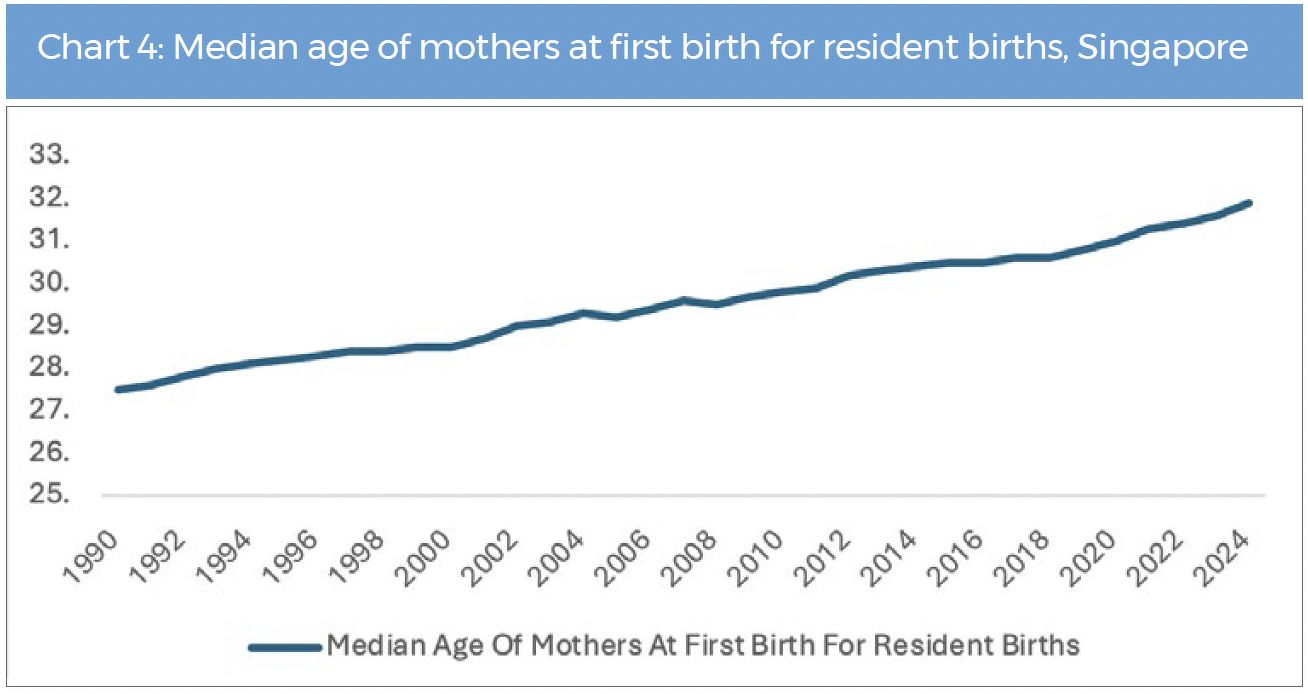
Chart: Singstat and ERA Research and Market Intelligence as at March 11
Homebuying decisions shaped by lifestyle choices
Younger respondents view homes less as permanent assets and more as spaces that support daily life.
Accessibility and connectivity are more than just practical considerations; they shape how smoothly a home fits into everyday life. 27% of younger respondents prioritise proximity to work, compared to 22% of older groups. The most important factor for 79% of respondents is access to public transport, with nearby malls, supermarkets, and hawker centres also highly valued.
These preferences highlight a shift towards a lifestyle-focused, car-light approach, where convenience and time-saving are top priorities. More young buyers are opting for homes that offer flexibility, ease and comfort, prioritising spaciousness and functional spaces over just increasing the number of bedrooms.
Property is no longer the only measure of security
Younger Singaporeans are also taking a broader view of financial security.
Although owning a home is still valued, it is seen more as one component of a larger strategy instead of the only crucial element of financial stability.
Just 3.9% of younger respondents see property mainly as a retirement tool, whereas nearly 14% of older respondents do.
This practical outlook also explains why homes in the Rest of Central Region are attractive, as they provide a good mix of affordability, connectivity, and long-term value that match younger buyers’ priorities.
What this means for future housing demand
What we are seeing is not a decline in aspiration, but a shift in timing and priorities. Younger Singaporeans still want to own homes, but they are entering the market more deliberately, guided by affordability, lifestyle needs and long-term flexibility.
As incomes grow and life stages evolve, this group will gradually translate into real housing demand. The implication for the market is clear — future demand will increasingly favour homes that are efficient, well-connected, and aligned with everyday living.
In a more uncertain global environment, real assets like property continue to provide stability. Understanding how the next generation thinks about homeownership will be key for developers, policymakers and advisers to stay relevant in the years ahead.

Marcus Chu is CEO of ERA Singapore
Follow Us
Property updates, 24/7.


Subscribe to Newsletter
Market insights, delivered weekly.

Top Articles
Search