
Singapore tops Asia Pacific for office fit-out costs amid rising workplace investment


An example of a high/premium fit-out, which focuses on aesthetics, branding and employee experience. In Singapore, fit-out costs averaged US$2,029 per sq m ($2,610 per sq m). (Photo: Knight Frank)
Singapore has emerged as the most expensive market in Asia Pacific for office fit-outs, according to research by Knight Frank. In the firm’s latest Asia Pacific Fit-Out Cost Guide 2026, published in March, Singapore registered average fit-out costs of US$2,029 per sq m ($2,610 per sq m).
Ranking just below Singapore are Tokyo and Taipei, recording average fit-out costs of US$1,994 per sq m and US$1,593 per sq m respectively.
The guide, based on market data collected in 4Q2025, tracks workplace spending in 23 countries across Australasia, East Asia, Southeast Asia and India. It benchmarks fit-out costs across three specification tiers: basic, which focuses on functional office setups; mid/standard, which includes moderate use of enclosed areas and average-quality materials and finishes; and high/premium, which emphasises aesthetics, branding and employee experience.
The guide was produced in partnership with specialist cost consultants, including Platform Consulting Group, Currie Brown and Cova.
Wide cost gap across Asia Pacific markets
The ranking reflected in Knight Frank’s report highlights a wide dispersion of average fit-out costs between established gateway cities and emerging office markets within the region.
This trend is particularly evident in Southeast Asia, which “remains one of the most diverse fit-out landscapes in Asia Pacific, with costs shaped by uneven market maturity and regulatory frameworks”. While Singapore stands out as “a clear outlier”, commanding premium pricing across all specification levels due to labour constraints and stringent sustainability requirements, other Southeast Asian cities continue to offer cost-efficient fit-out solutions.
Compared with Singapore’s mid/standard fit-out cost of US$2,029 per sq m, fit-out costs for the same tier in other Southeast Asian cities are significantly lower. Phnom Penh records US$375 per sq m, Ho Chi Minh City US$500 per sq m and Bangkok US$797 per sq m at the lower end of the spectrum, followed by Manila (US$849 per sq m), Kuala Lumpur (US$849 per sq m) and Jakarta (US$899 per sq m).
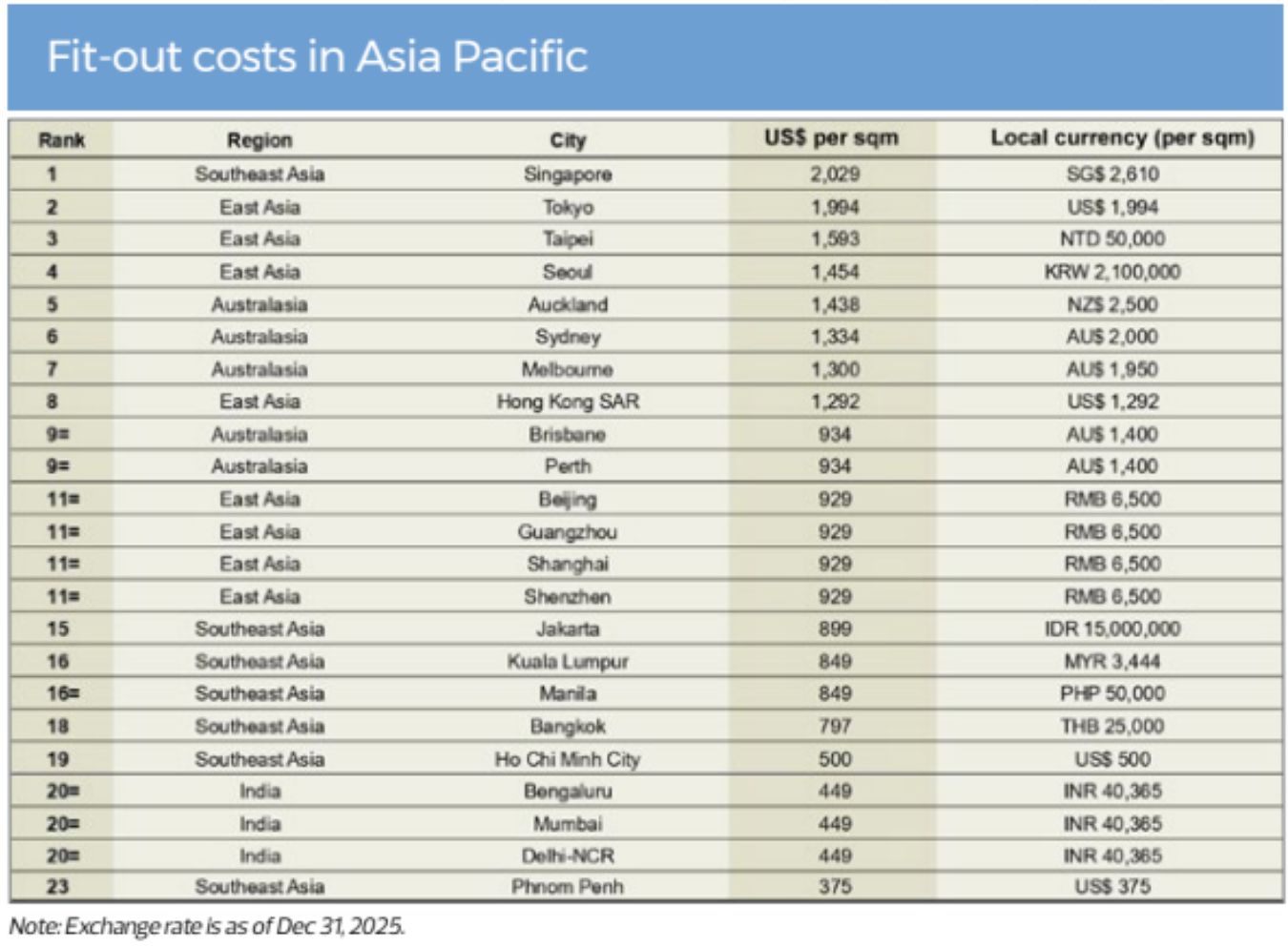
Table: Knight Frank Research, Platform Consulting Group (Auckland), Currie Brown (Taipei), Cova (Phnom Penh)
Meanwhile, India’s office market was identified as the most competitive for fit-out costs in the wider Asia Pacific region. Business hubs such as Bengaluru, Mumbai and Delhi recorded broadly consistent pricing across all specification levels, reflecting a high degree of standardisation in office fit-out delivery. Across these three cities, average mid-range fit-out costs were about US$449 per sq m.
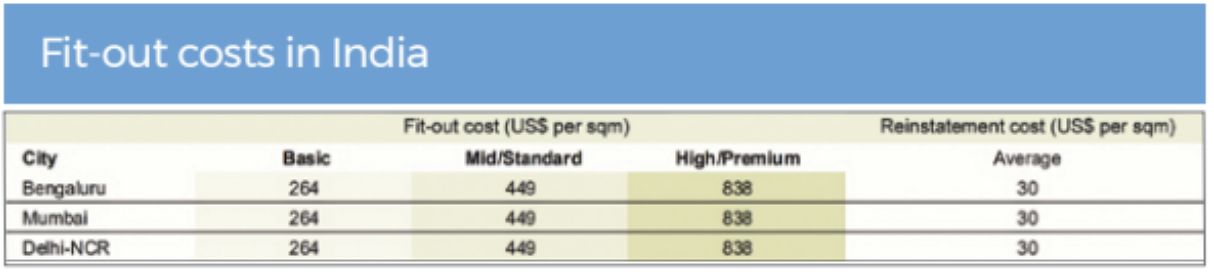
Table: Knight Frank Research
The report adds that costs remain relatively contained even at the high/premium tier, which averages US$838 per sq m, underscoring India’s ability to deliver higher-quality workplaces with comparatively modest capital investment. Overall, India continues to offer some of the lowest fit-out costs in the region, backed by the country’s large construction labour pool and strong domestic supply chains, as well as lower compliance-related costs.
Flight-to-quality reshaping the workplace
Across the Asia Pacific region, office fit-out costs are expected to rise by around 2% to 5% over the next 12 months, Knight Frank’s report states. While broader inflationary pressures have eased, the report notes that tight construction labour markets, along with a continued flight to quality among occupiers, are likely to sustain upward pressure on fit-out pricing.
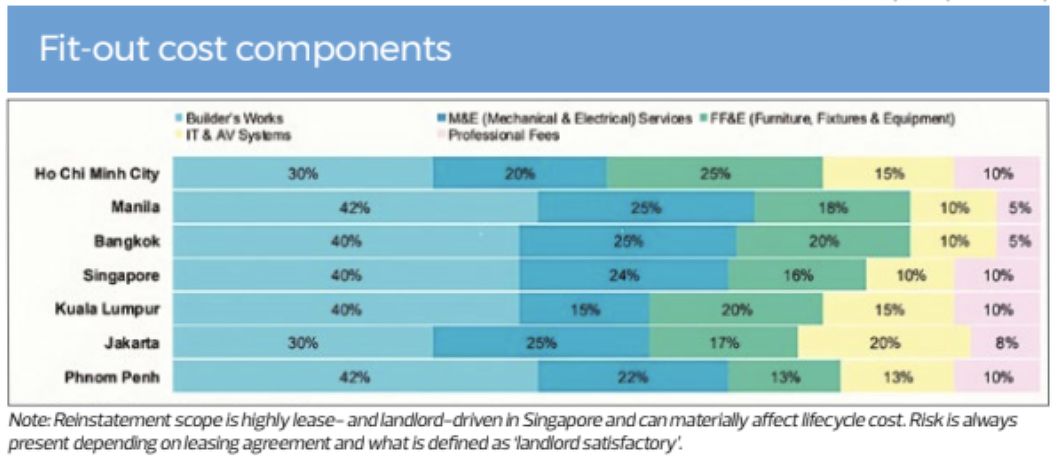
Chart: Knight Frank Research, Cova (Phnom Penh)
Amid the flight-to-quality trend, occupiers are increasingly prioritising sustainability in the workplace. “Sustainability requirements are no longer a nice-to-have; they are now an expectation,” says Knight Frank. Those expectations are shaping occupier fit-out decisions across the region, influencing design standards, materials and building systems.
Additionally, tighter environmental regulations, green building certifications and expanded environmental, social and governance (ESG) reporting are contributing to rising upfront costs for fit-outs. This is particularly prevalent in markets such as Singapore and Sydney, where an ESG-aligned fit-out is “increasingly the starting point, not the upgrade”, adds the report.
The rise in sustainability requirements comes alongside the increasing integration of smart workplace technologies. AI-enabled automation, cloud-based workplace platforms and Internet of Things infrastructure are being used to optimise space utilisation and operational efficiency, creating more responsive hybrid working environments.
Shifting towards the design-and-build model
“For occupiers managing portfolios across multiple Asia Pacific markets, the challenge is no longer simply controlling fit-out costs; it is understanding why those costs are moving and what that means for long-term portfolio strategy,” says Francesco Demarco, head of global portfolio solutions in Asia Pacific at Knight Frank.
To manage costs and reduce project timelines, many occupiers across Asia Pacific are turning to design-and-build (D&B) models for office fit-outs. This shift is especially prevalent in small to mid-sized offices, says Knight Frank.
Under this approach, design and construction are consolidated under a single contract. This contrasts with the traditional fit-out model, where occupiers typically work with a designer first before bringing in a separate contractor for the actual fit-out works.
Knight Frank notes that the D&B model offers greater pricing certainty while shifting the risk of cost overruns to the contractor. In addition, it estimates that the approach can shorten project timelines by 20% to 30% compared with the traditional model. This benefits occupiers — particularly fast-moving sectors such as technology — by enabling them to secure and operationalise spaces more efficiently.
For projects with some degree of standardisation, the benefits of faster delivery, cost certainty and single-point accountability often outweigh the flexibility of fully bespoke, client-managed procurement models for many occupiers, notes the report.
Knight Frank highlights a case study in Singapore involving a Grade A office fit-out in the CBD for a banking client. The 1,951 sq m (21,000 sq ft) workspace was designed to strengthen the organisation’s business profile by creating a client-facing workplace centred on premium meeting rooms and collaboration areas. Delivered through a D&B procurement model, the project was completed in three months at a total fit-out cost of $2.7 million, illustrating how a streamlined delivery approach can support both brand positioning and operational needs.
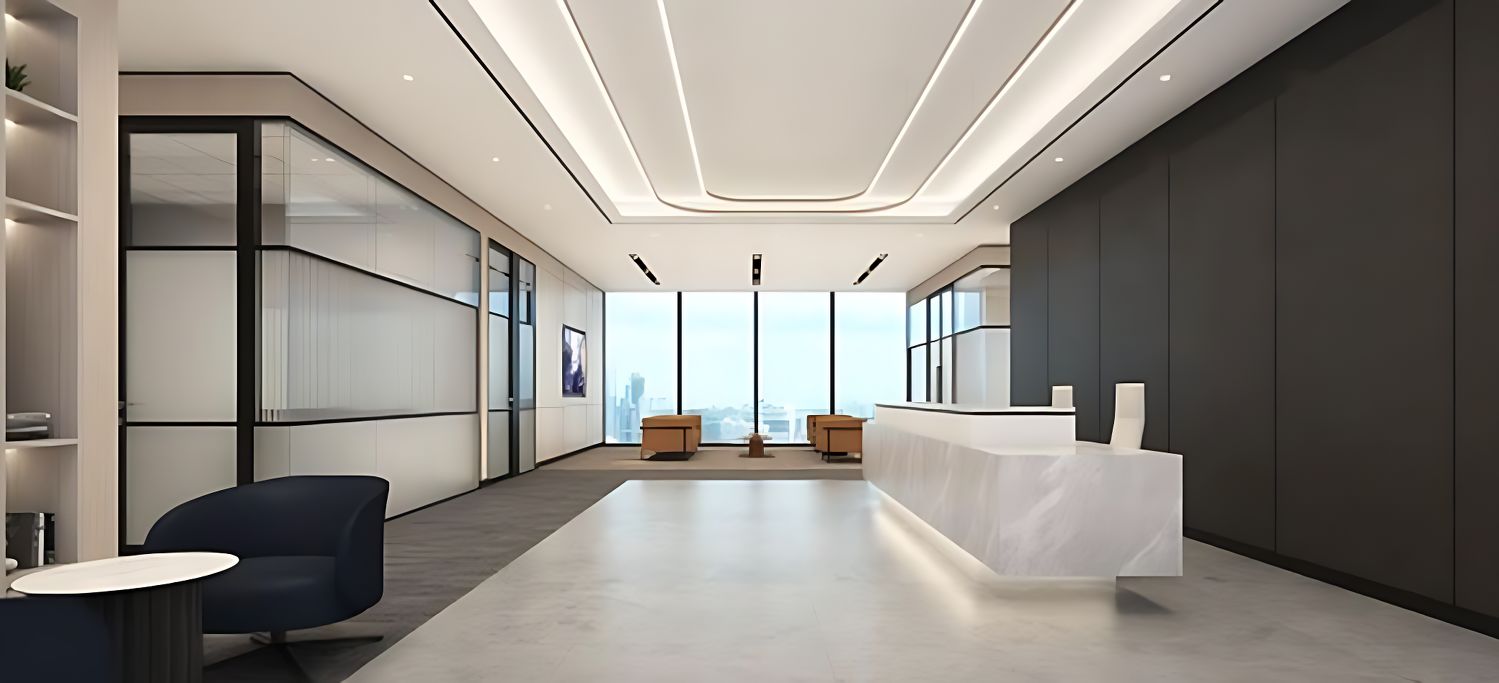
The fit-out for a Grade A office in Singapore was completed in three months through a design-and-build model at a total cost of $2.7 million (Photo: Knight Frank)
Occupier-led design and space optimisation
Knight Frank’s report also highlights that more occupiers are focusing on space optimisation and capital efficiency. To that end, many organisations are choosing to enhance existing workplaces through adaptive reuse and targeted refurbishments rather than opting for full relocations. As companies refine hybrid work strategies and seek more flexible workplace environments, this approach allows occupiers to fine-tune layouts and utilisation strategies, enabling long-term adaptability.
Flexible layouts, activity-based work settings and collaboration zones are increasingly being prioritised to support multiple work modes and evolving workforce needs. At the same time, wellness-focused upgrades and improved environmental quality are becoming baseline requirements rather than discretionary enhancements.
These considerations underscore the importance of aligning fit-out scope and specifications with realistic usage patterns, employee expectations and lease strategies before committing capital.
Mitigating risk amid uncertainty
Looking ahead, Knight Frank anticipates currency volatility and import duties, which vary from zero to above 30% across the region, to remain a critical risk for fit-out budgets reliant on imported components.
Amid these uncertainties, occupiers have started shifting towards proactive supply-chain planning. This includes qualifying local and regional suppliers for key materials and furniture, fixtures and equipment during the design phase. Doing so can help save costs, reduce lead times, minimise carbon footprint and reduce exposure to currency fluctuations.
Knight Frank cites a case study in Bangkok, Thailand, where a 4,000 sq m (43,055 sq ft) Grade A office space in the CBD was fitted out for a client in the trading sector. The project focused on achieving operational functionality within strict budget parameters and included meeting rooms, collaboration areas, as well as training and town hall spaces.
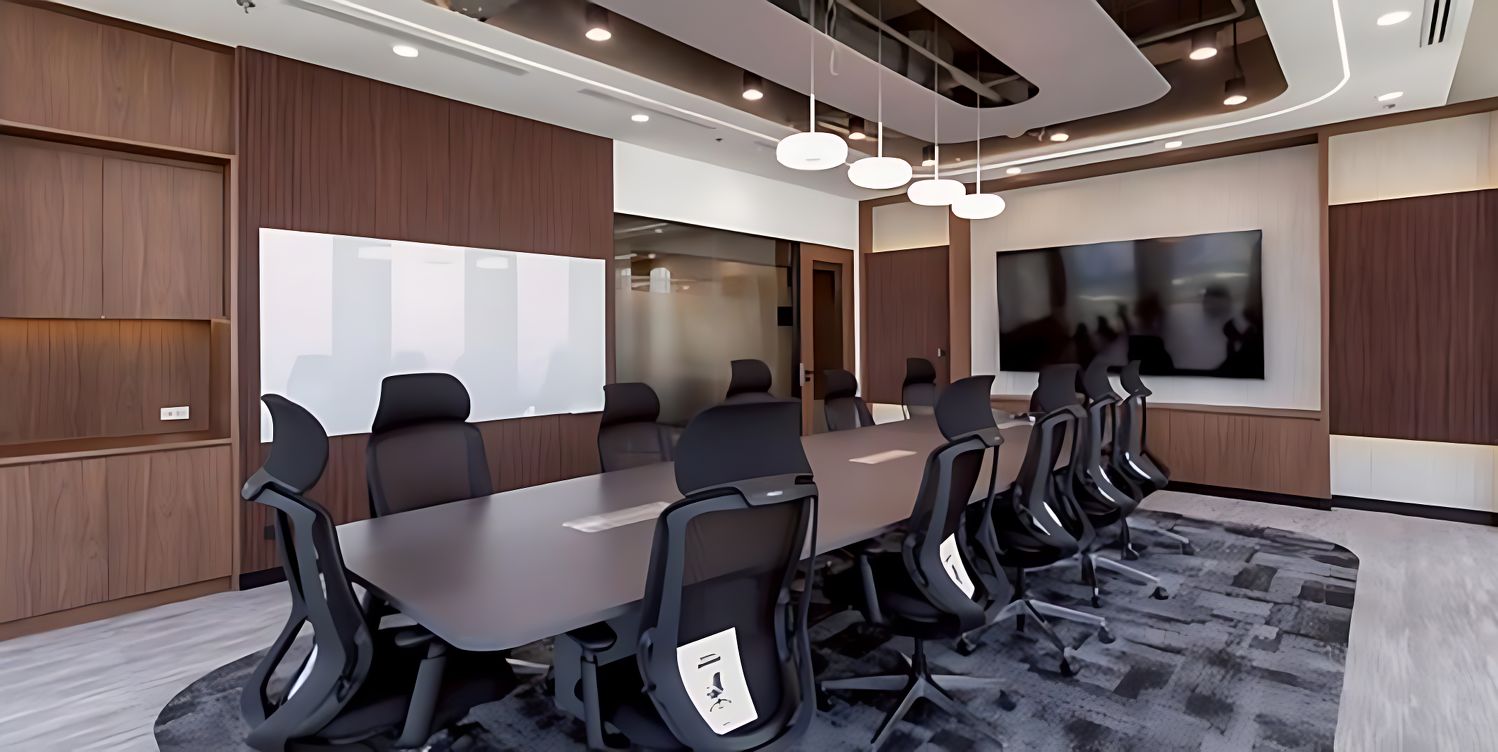
Knight Frank cites a case study in Bangkok, Thailand, where a 4,000 sq m (43,055 sq ft) Grade A office space in the CBD was fitted out within five months (Photo: Knight Frank)
To stay within budget, the client opted for a consultant-led approach, with extensive planning and project management. A headcount-based workplace planning strategy helped optimise space allocation, while stringent coordination with international furniture suppliers allowed the fit-out to meet the client’s requirements while maintaining cost discipline and delivery timelines. The project was completed in five months at THB24,000 per sq m ($966 per sq m).
“Our advice to occupiers is to engage early, clearly lock in scope, and build flexibility into procurement strategies,” says Tim Armstrong, global head of occupier strategy and solutions at Knight Frank. “Those who do so will be better placed to manage both cost and delivery risks.”
For more news and analysis, read our weekly e-paper. Prefer a print copy? Get it delivered to your home every Monday.
Follow Us
Property updates, 24/7.


Subscribe to Newsletter
Market insights, delivered weekly.

Top Articles
Search