
Wee Hur’s 10,500-bed Pioneer Lodge debuts as workers’ dorms enter a boom year
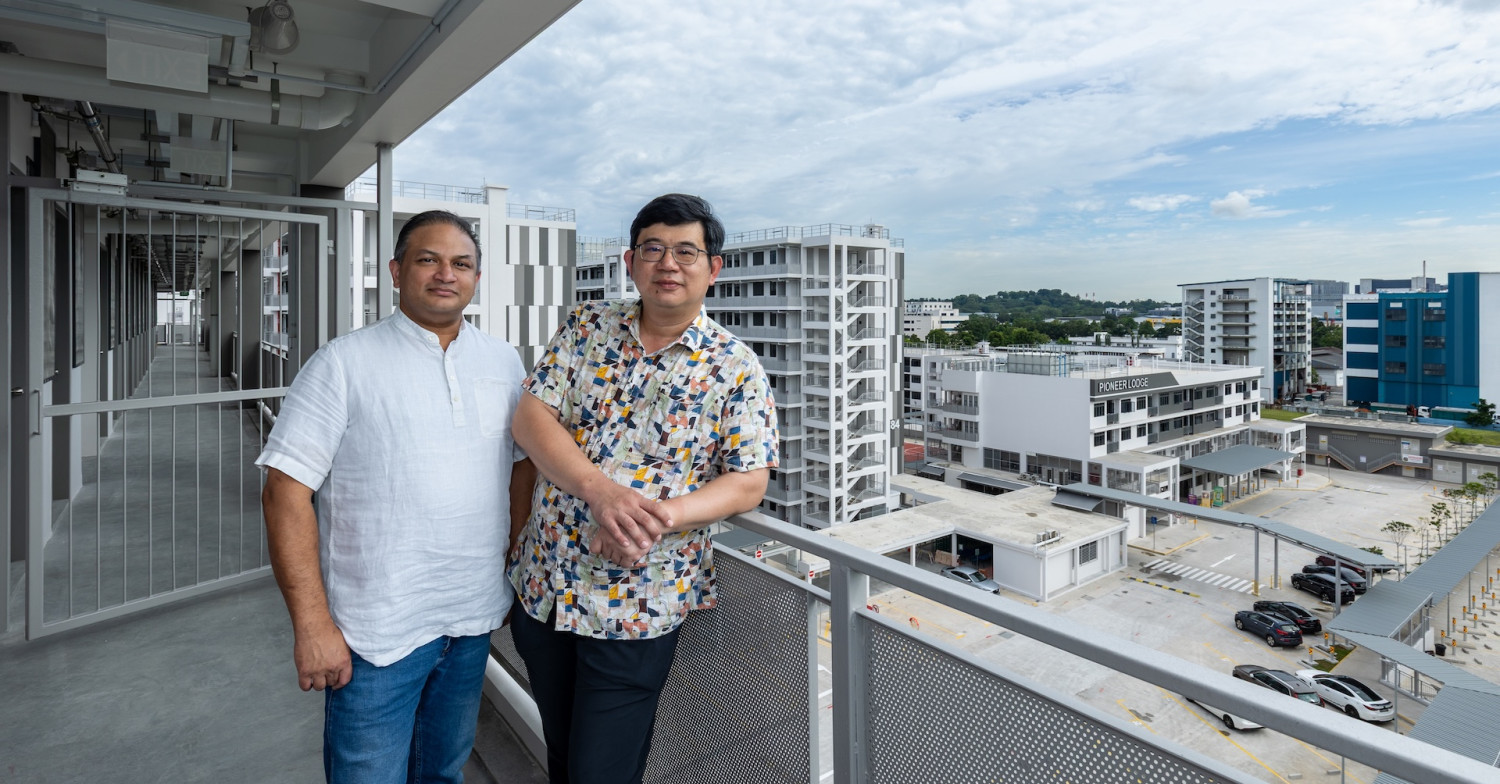
Joint venture partners of Pioneer Lodge workers’ dormitory, (from left) Shamkumar Subramani, CEO and co-founder of TS Group and Goh Cheng Yu, CEO of Wee Hur Property (Photo: Samuel Isaac Chua/EdgeProp Singapore)
Goh Chengyu, CEO of Wee Hur Property, the property development arm of the Singapore-listed construction, development, and investment firm Wee Hur Holdings, recalls an unusual stop during his wedding photoshoot eight years ago. It was the Tuas View Dormitory. “The sea view from Tuas is very nice,” he recounts.
Tuas View, which opened in 2014, was the largest migrant workers’ dormitory in Singapore with 15,744 beds. It is jointly owned by Wee Hur, Lucrum Capital and TS Group, which also serves as the operator.
This year, the largest purpose-built workers’ dormitory to come onstream is the 10,500-bed Pioneer Lodge, developed by Wee Hur and its joint-venture partner and operator, TS Group. Phase One, comprising 3,088 beds, began operations in April and is already fully leased.
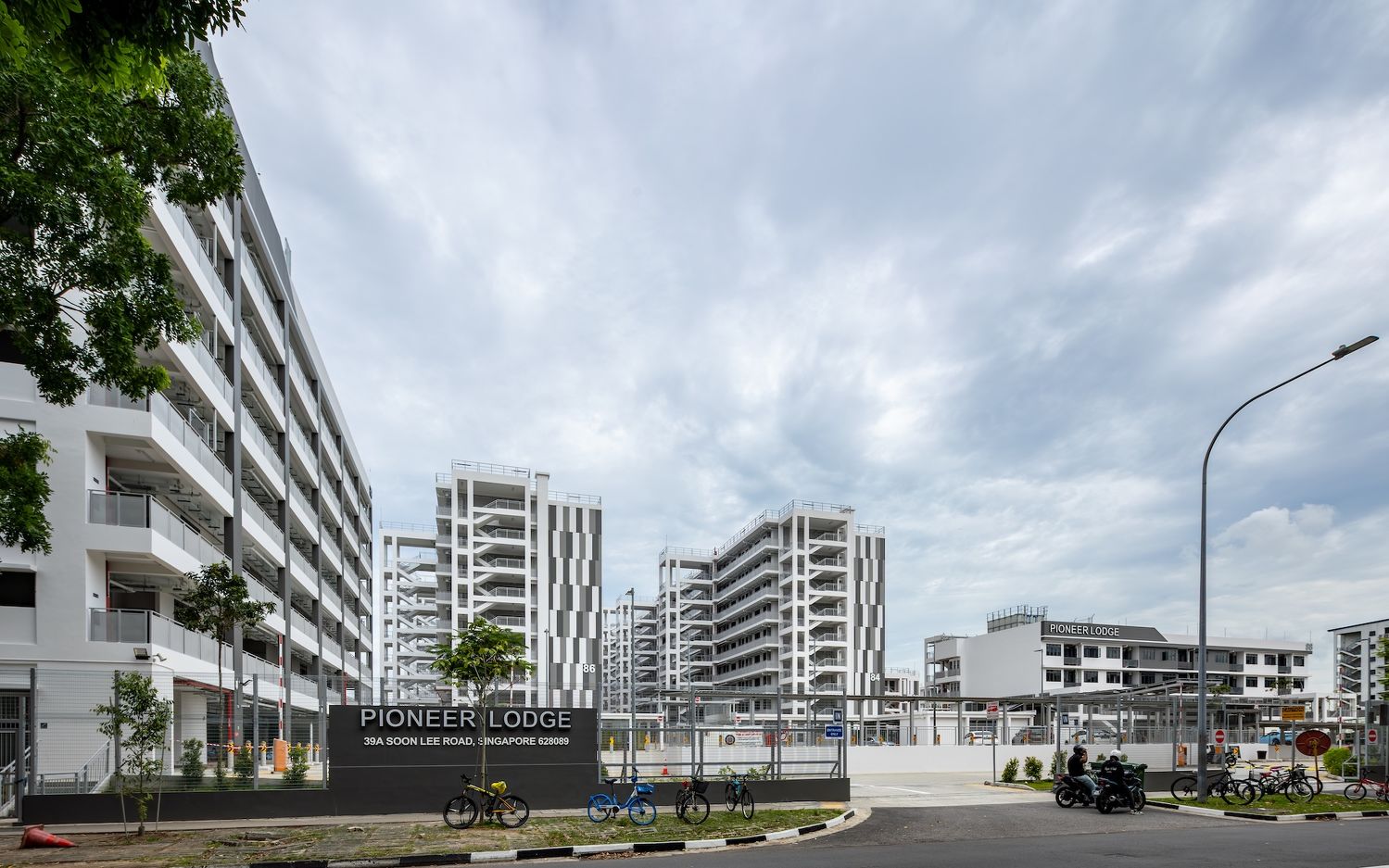
The second phase of the 10,500-bed Pioneer Lodge workers’ dormitory was recently completed, with the first phase, which opened in April, fully taken up (All photos by Samuel Isaac Chua/EdgeProp Singapore)
Phase Two of Pioneer Lodge, with 7,412 beds, was recently completed. Given its location on Soon Lee Road in Jurong West, the dormitory’s location is “very strategic”, says Shamkumar Subramani, CEO and co-founder of TS Group. It is near Jurong Island, the Tuas Mega Port, and the surrounding industrial and logistics clusters. It is also accessible via the Ayer Rajah Expressway. “The convenient location will provide employers with cost savings in terms of time and transport,” he says.
Monthly bed rates at Pioneer Lodge average around $500, in line with market levels. The project primarily serves construction workers, who account for about 80% of residents in Phase One.
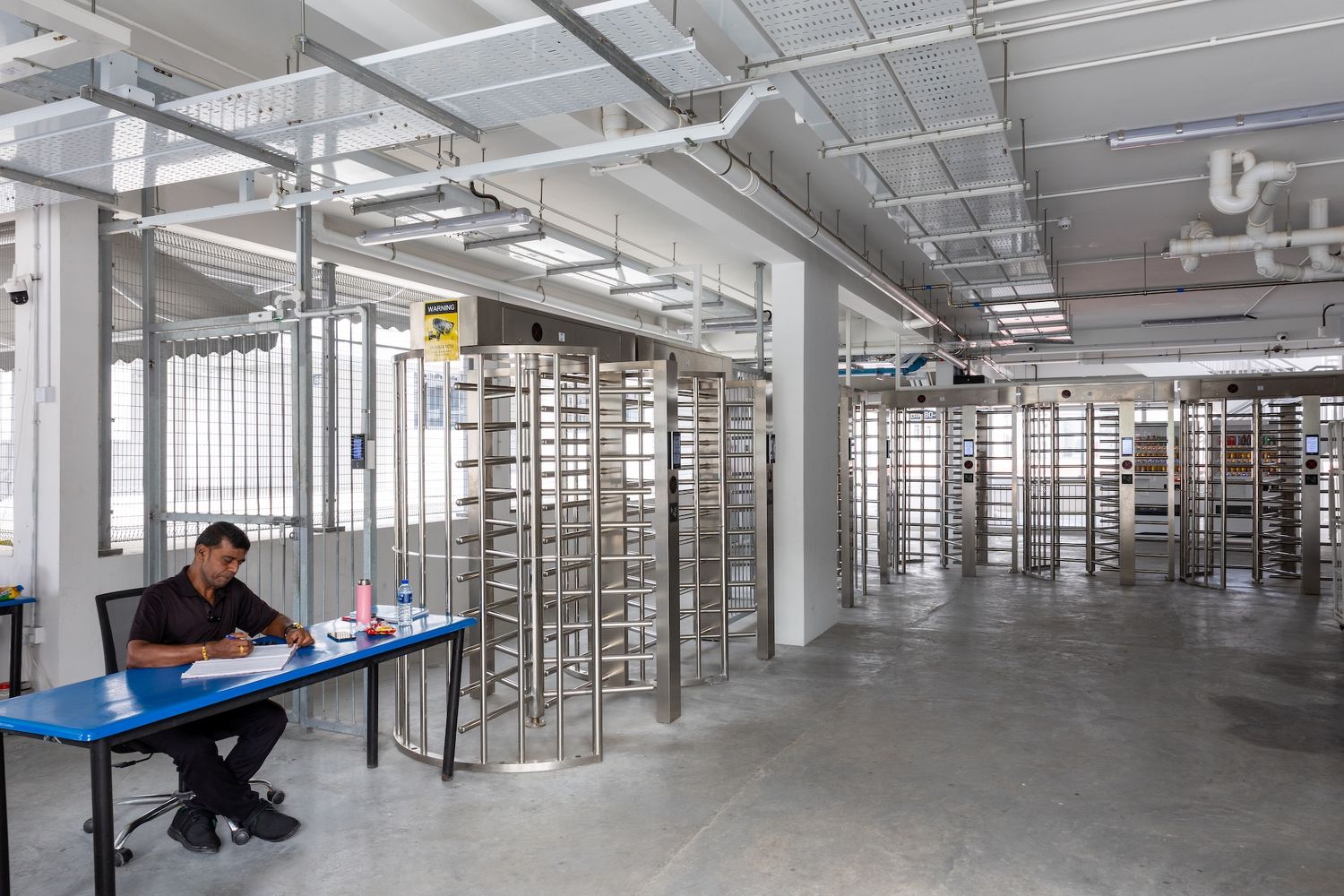
The security at the gantries where access is via face recognition
New post-Covid standards elevate living conditions
As a new facility built to post-Covid government standards, Pioneer Lodge is able to command premium rents. There are three room types — six-, 10- and 12-bed configurations, the latter being the maximum allowed. The dormitory meets the enhanced minimum living space of 4.2 sqm per resident, up from the previous 3.5 sqm rule, and provides at least 1m spacing between beds.
Each room has ensuite bathrooms — showers, toilets and sinks — provided at a ratio of one set per six residents. Rooms also come with enclosed kitchens, pantries and washing machines. Ventilation is enhanced through large window openings and high-speed fans. There is space for hanging laundry, as well as air-conditioning ledges for installing condenser units if required. “These will be add-on services if employers opt for them,” says Shamkumar.
Amenities are extensive: basketball courts, relaxation pavilion, indoor air-conditioned gym, reading and TV rooms, a minimart and an upcoming food court. Free WiFi is provided throughout. Since the pandemic, security access is now via facial recognition.
“As Pioneer Lodge is new, the residents’ experience will also be better,” says Goh of Wee Hur.
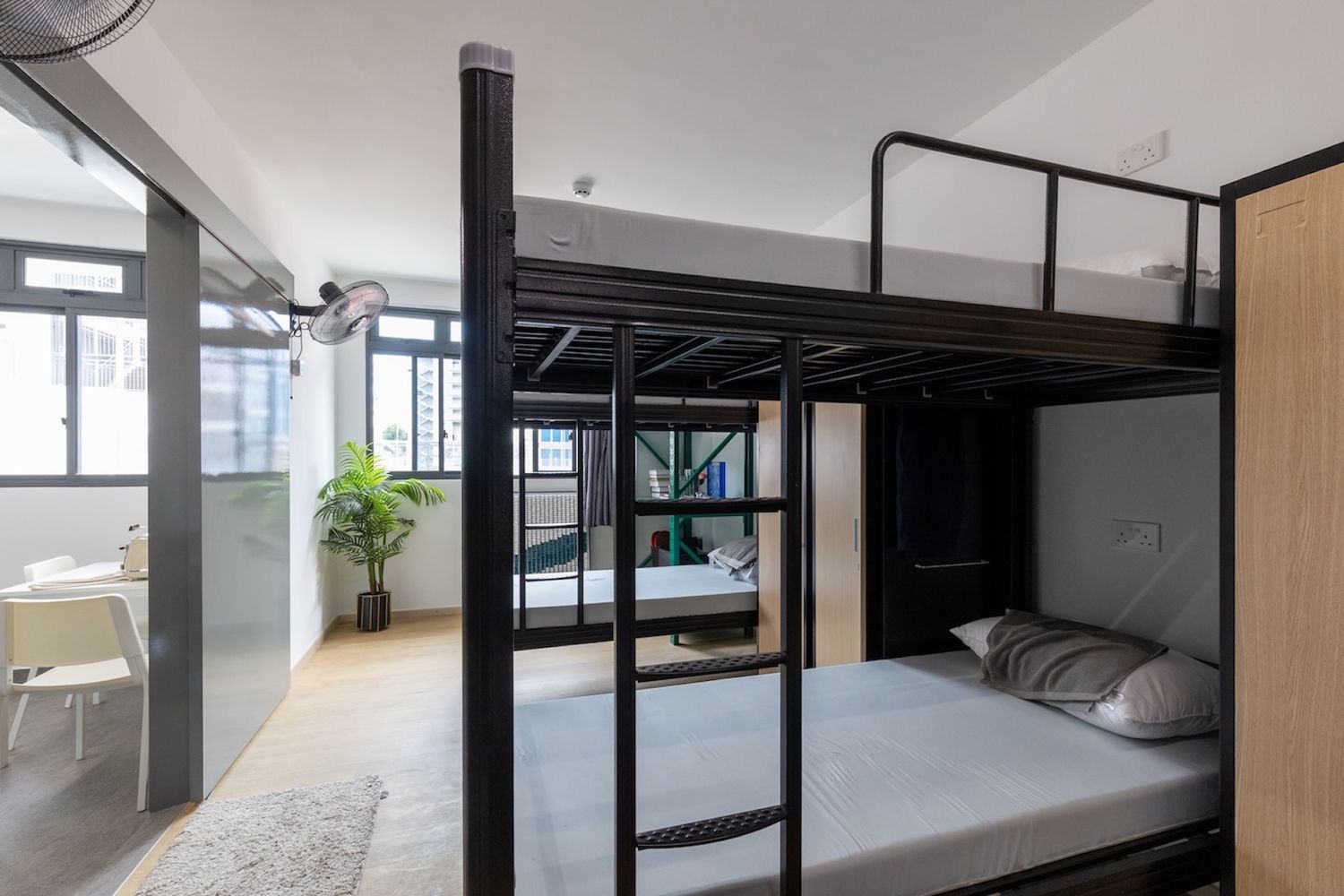
Pioneer Lodge comes with three room configurations - six-bed (pictured), 10-room and 12-room
Regulatory transition ahead
Goh estimates that post-Covid standards and space requirements have increased overall costs by about 30%. One key requirement is that each workers’ dormitory provide an isolation block with rooms set aside for residents in the event of an outbreak.
At Pioneer Lodge, Phase One includes a block of 28 isolation rooms, while Phase Two adds another 56 rooms. Each of these rooms accommodates one or two beds. The minimum number of isolation beds required is 1% of a dormitory’s total capacity — equivalent to 105 beds for Pioneer Lodge.
In the event of a public health outbreak, capacity can be expanded to 2.5%. These isolation beds are in addition to the dormitory’s 10,500 regular beds and cannot be used under normal circumstances.
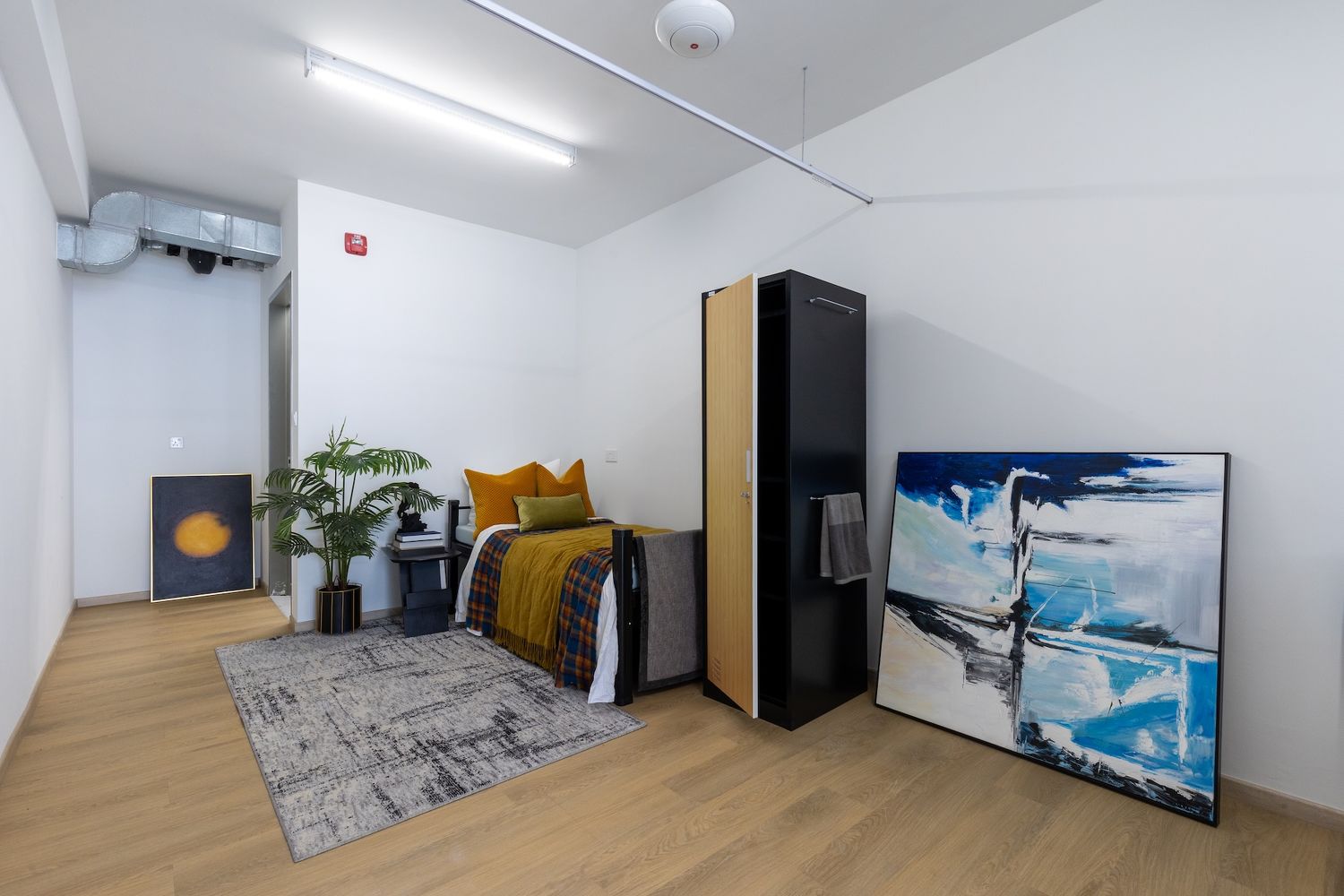
The isolation block in the dormitory has a mix of rooms with single and two beds, with a normal capacity of 1% of the total beds in the dormitory. In the event of an outbreak, the capacity can be increased to 2.5%
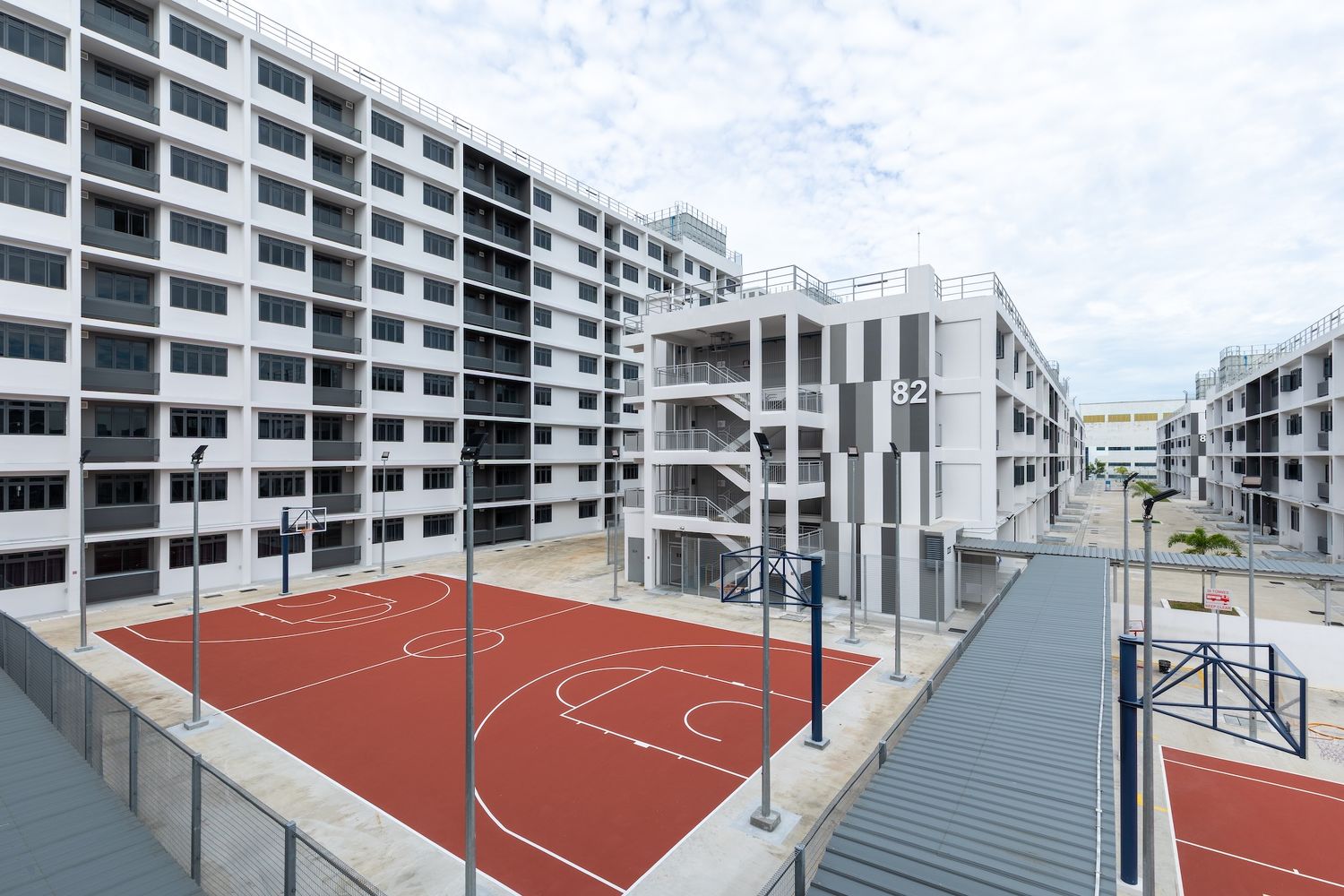
Outdoor amenities include basketball courts and pavilions for relaxation
From next year, nearly 900 existing dormitories will undergo upgrades under the Dormitory Transition Scheme (DTS), which aims to improve public health resilience and living conditions.
By 2030, all dormitories must comply with interim standards, including a maximum of 12 workers per room, one ensuite toilet per six residents, and a minimum of 3.6 sqm of living space per person.
By 2040, the minimum living space requirement will rise to 4.2 sqm. New purpose-built dormitories (PBDs) such as Pioneer Lodge already meet these standards.
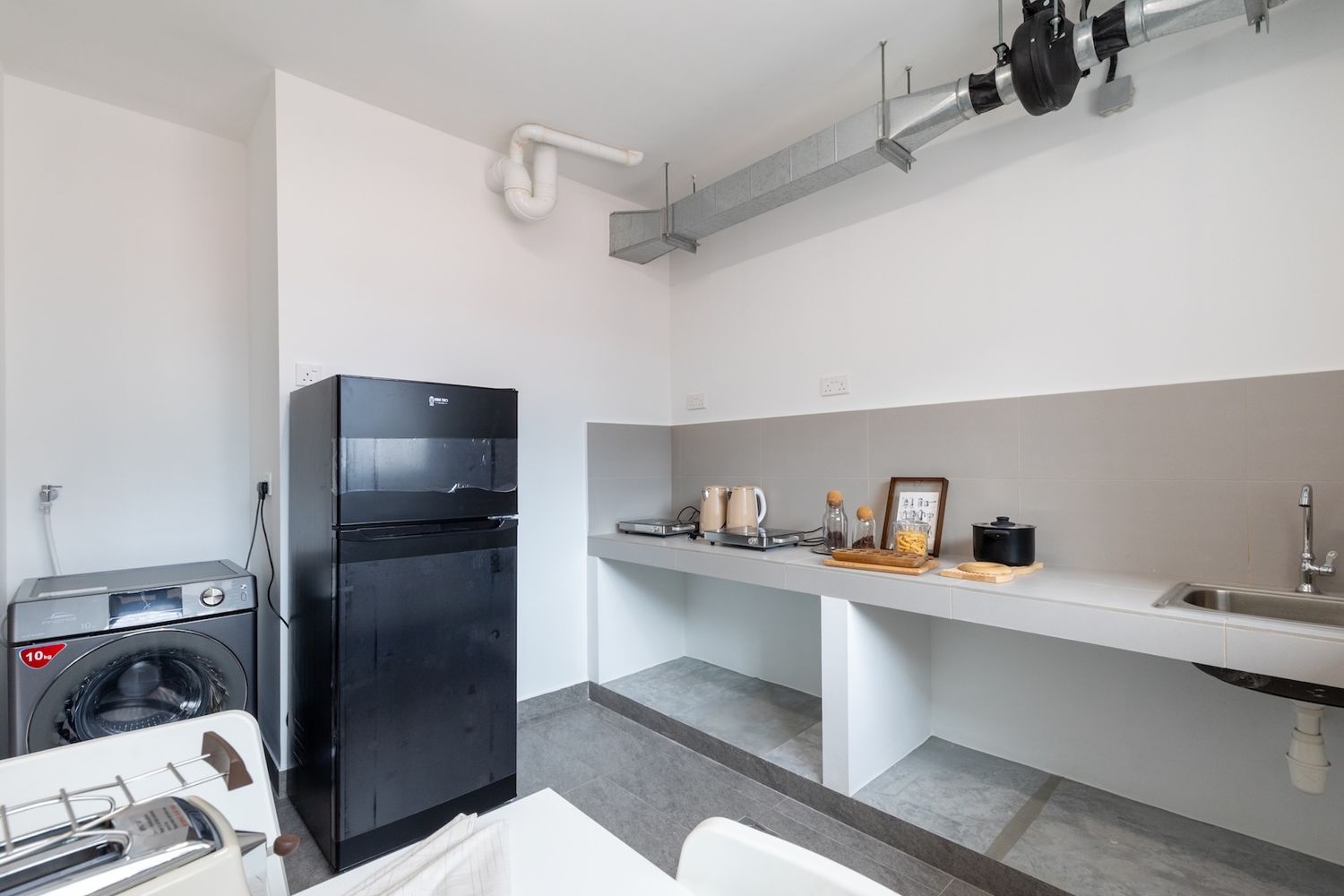
All the rooms come with an enclosed kitchen, equipped with a refrigerator, stove tops, hot water boilers and a washing machine
Operational and social challenges
Operationally, one of the biggest challenges is managing the mix of nationalities living together under one roof. “We have people from China, Malaysia, Thailand, the Philippines, Myanmar, Bangladesh and India,” says Shamkumar. “There are a lot of cultural issues to handle, and we constantly educate residents to be considerate.”
Shamkumar has also observed more cases of mental health stress, often related to work pressures, homesickness and social isolation. Many workers are in Singapore without close family or friends. To support them, the operator has set up a helpline and, where necessary, refers workers to national hotlines.
The Migrant Workers’ Centre (MWC) is located next to Pioneer Lodge, with a side gate that leads directly to it. Established in 2009, MWC was formed by the National Trades Union Congress (NTUC) and the Singapore National Employers Federation (SNEF) to promote fair employment practices and worker well-being.
The residents at Pioneer Lodge can also use the amenities at MWC, including banking and remittance services, dining and retail options, and educational programmes. Workers can also access specialised services such as legal assistance, insurance plans and community support.
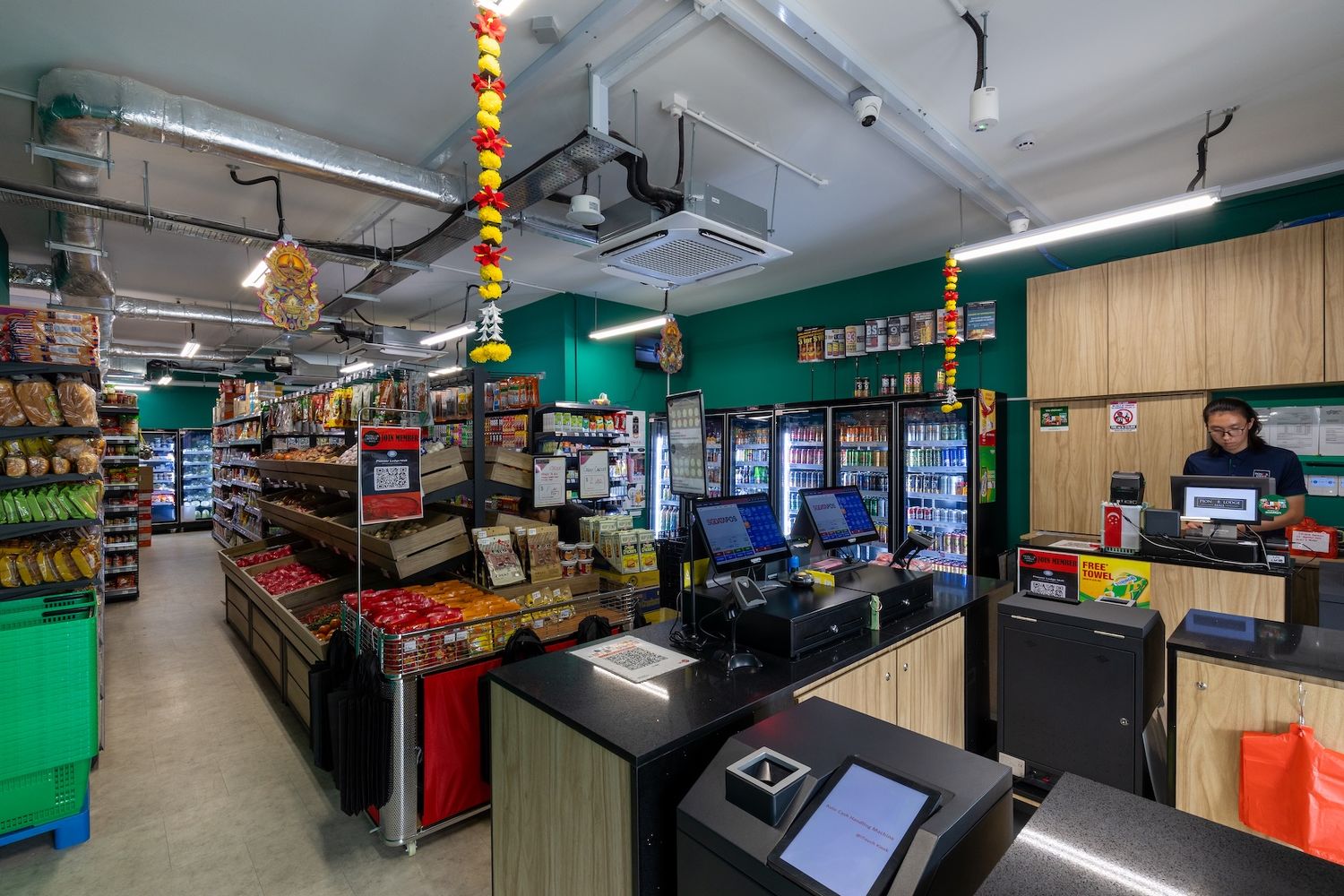
The minimart at Pioneer Lodge
Tuas View: A mature asset
For Wee Hur, Pioneer Lodge is its second PBD after Tuas View, bringing its portfolio to 26,244 beds.
While Pioneer Lodge has a nine-year lease (three years with two renewals), Tuas View initially received a six-year lease and later received a three-year extension. It is now in its 10th year of operation. “However, after next year, it’s a question mark,” says Shamkumar. Since lease renewals are subject to JTC’s review, the JV partners “will evaluate our options when the time comes”, he adds.
During the pandemic, Tuas View’s capacity was reduced by 25% to 11,808 beds. With restrictions lifted, capacity has rebounded to more than 15,500 residents, with occupancy at 99%.
Goh notes that PBDs typically have long payback periods. In 1HFY2025 ended June 30, Wee Hur’s dormitory segment generated $41.98 million in revenue — 26.9% of the group’s total $155.97 million.
On the earnings front, the dormitory segment accounted for $22.18 million or about 43% of the group’s $51.95 million profit before interest and tax in 1H2025.
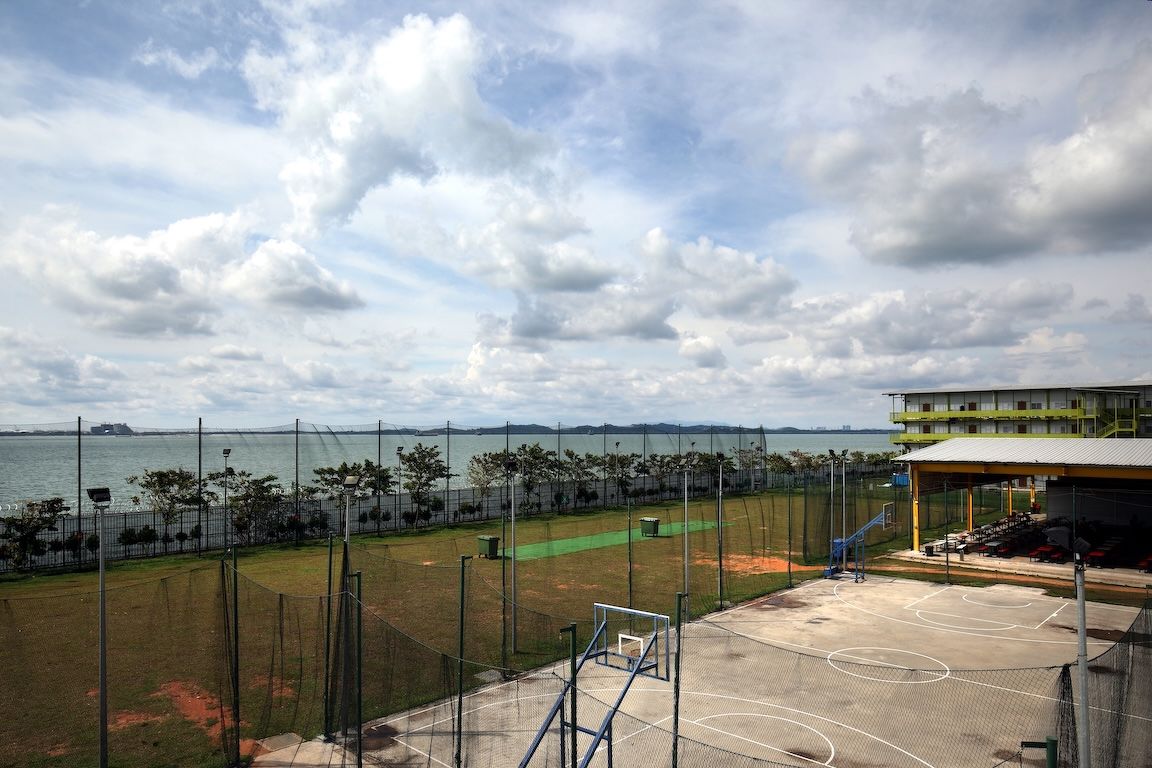
For Wee Hur, Pioneer Lodge is its second PBD after Tuas View, bringing its portfolio to 26,244 beds
A growing institutional asset class
Institutional interest in purpose-built accommodation is rising. In September, Centurion Accommodation REIT launched its IPO, becoming the first pure-play REIT focused on student and worker housing. The portfolio includes five workers’ dormitories worth $1.34 billion.
In 1Q2025, Bain Capital acquired Avery Lodge, a portfolio of four workers’ dormitories with 17,009 beds. The purchase price of $750 million is almost double the $380 million Morgan Stanley paid for the portfolio in 2010.
Workers’ dormitories were among the key niche asset classes driving investment volumes in 2025, according to Cushman & Wakefield in its market outlook report earlier in December.
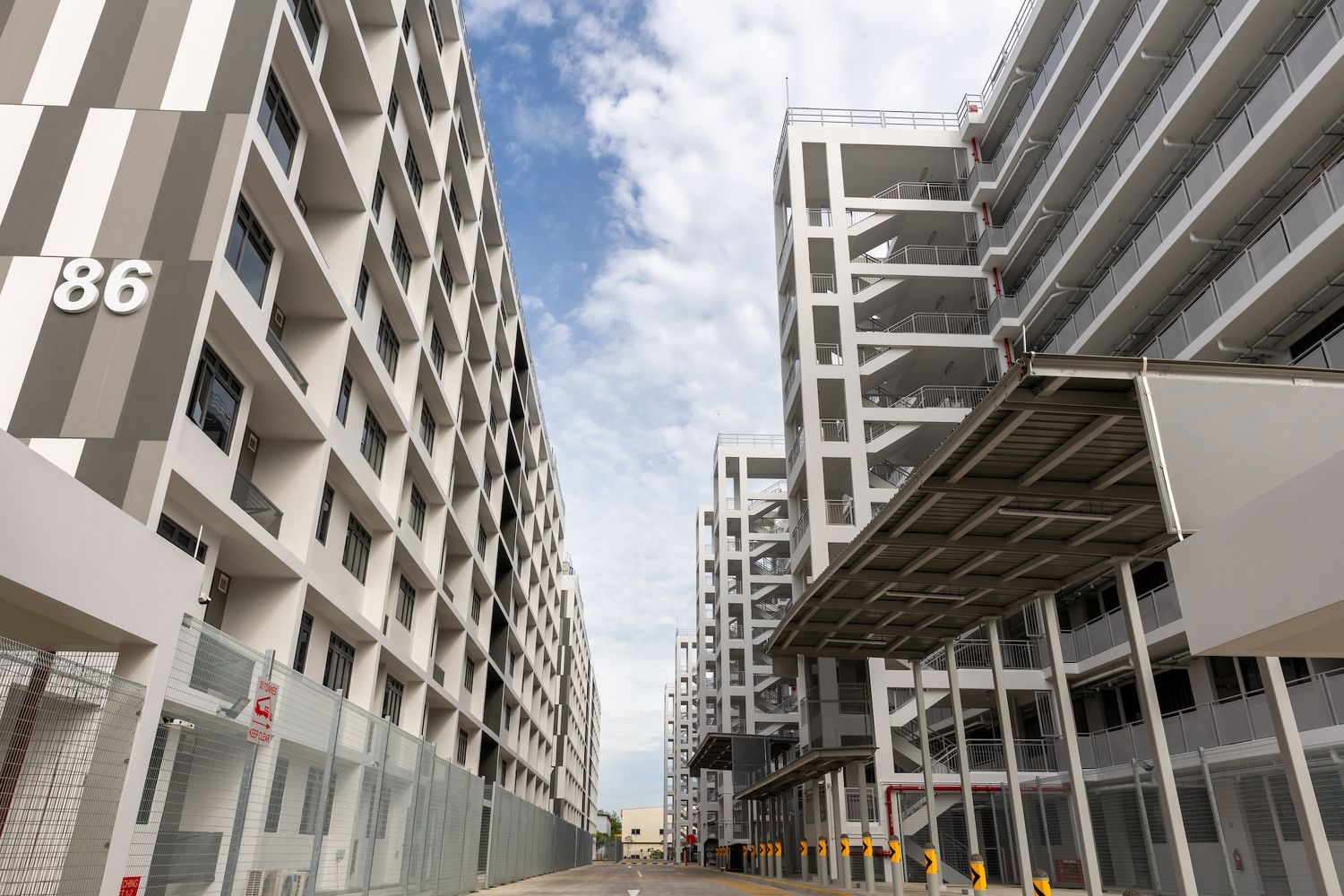
The blocks in the second phase of Pioneer Lodge
Demand drivers: Population growth and infrastructure push
Singapore’s total population reached 6.11 million as at June 2025, up 1.2% from a year earlier. The increase was driven mainly by growth in the non-resident population, particularly work-permit holders supporting major infrastructure projects such as Changi Terminal 5, and by the ramp-up in housing supply.
MOM figures show 460,300 work-permit holders in construction, marine, shipyard and process sectors as at June, up 0.8% from 456,800 in December 2024. However, it was nearly 11% higher than in December 2022 (415,000) and 48% higher than in December 2020 (311,100).
In 1H2025, monthly bed rents for commercial dormitories averaged $490 per bed, with a range of $445 to $530. This reflects a 6.5% increase in six months and 8.9% y-o-y, according to a Knight Frank–Dormitory Association of Singapore report issued on Sept 8.
Since the trough of $270 in 1H2019, monthly rents have surged 81.5%. Besides strong demand, rising operating and maintenance costs due to inflation have also pushed rents higher.
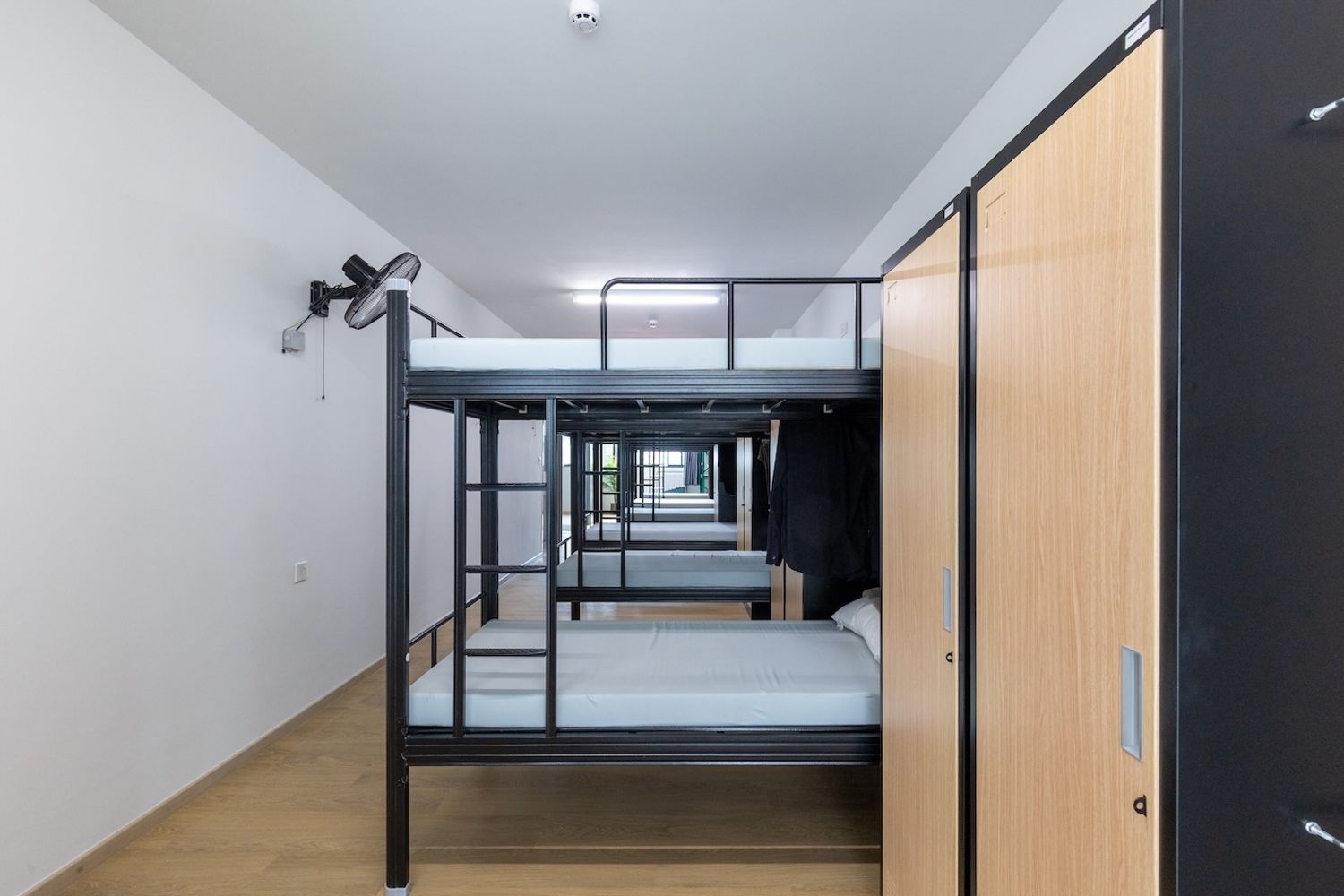
A 12-bed room configuration at Pioneer Lodge
More new supply
New supply in the pipeline includes Westlite Toh Guan, a 1,764-bed facility by Centurion Accommodation REIT that is due for completion in 4Q2025. Westlite Mandai, which will offer 3,696 beds, is scheduled for completion in 1Q2026.
MOM is also developing two PBDs under a new corporate entity, NEST Singapore, with 2,400 beds in Tukang, Jurong, to be operational in 2026; and 7,200 beds in Sengkang to be ready by 2028.
In total, five new PBDs adding 35,000 beds are expected over the next few years.
However, supply remains tight in the near term. “With all the new construction projects coming online, and new phases at Marina Bay Sands and Resorts World Sentosa, we don’t expect demand for workers and workers’ housing to taper off in the next few years,” says Shamkumar. “Things should be status quo for the next few years.”
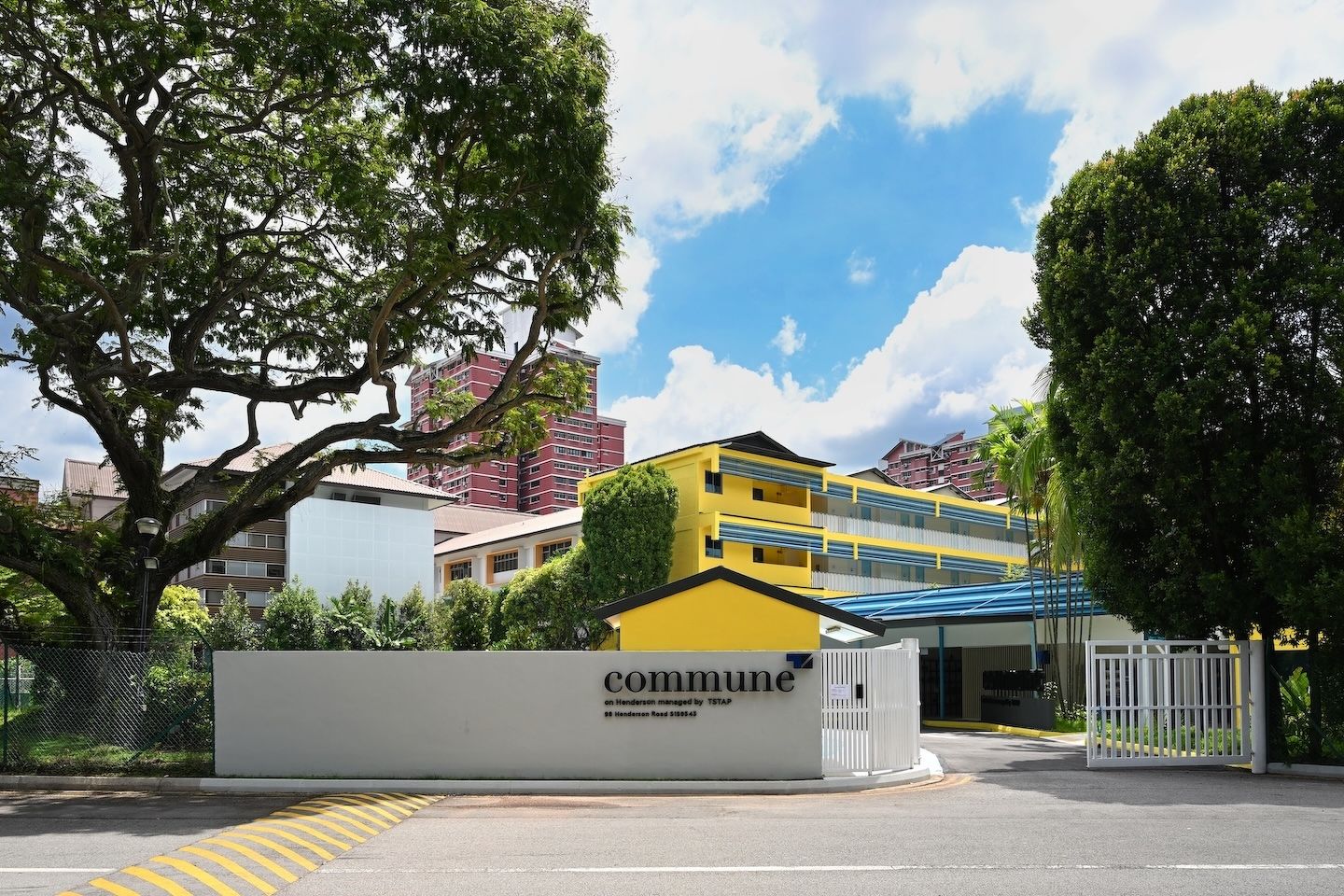
TS Group has grown into one of the region’s largest purpose-built accommodation operators, managing 70,000 beds across Singapore and Malaysia, including migrant-worker dormitories, senior-living facilities, and co-living accommodations for healthcare workers. In June, it opened Singapore’s first intergenerational co-living space, Commune @ Henderson, in partnership with The Assembly Place
The stable demand outlook may also underpin the reported $500 million sale of a stake in TS Group by Shamkumar, fellow co-founder Tome Oh and investor Dymon Asia Private Equity, which took a stake in the company in 2023. For now, TS Group has made no official announcement about any potential sale, and Shamkumar declined to comment.
Founded in 2009, TS Group has grown into one of the region’s largest purpose-built accommodation operators, managing 70,000 beds across Singapore and Malaysia, including migrant-worker dormitories, senior-living facilities, and co-living accommodations for healthcare workers. In June, it opened Singapore’s first intergenerational co-living space, Commune @ Henderson, in partnership with The Assembly Place.
According to Wee Hur’s Goh, the performance of the workers’ dormitory sector is closely tied to the economy and government manpower policies. “If they decide to bring in more foreign workers, of course, it would be better for us,” he says.
For now, with demand outpacing supply and new projects ramping up, operators like Wee Hur and TS Group appear well-positioned in a still-expanding market.
Follow Us
Property updates, 24/7.


Subscribe to Newsletter
Market insights, delivered weekly.
Top Articles
Search