
Swim, sauna, unwind: Wellness features redefining homes in Singapore

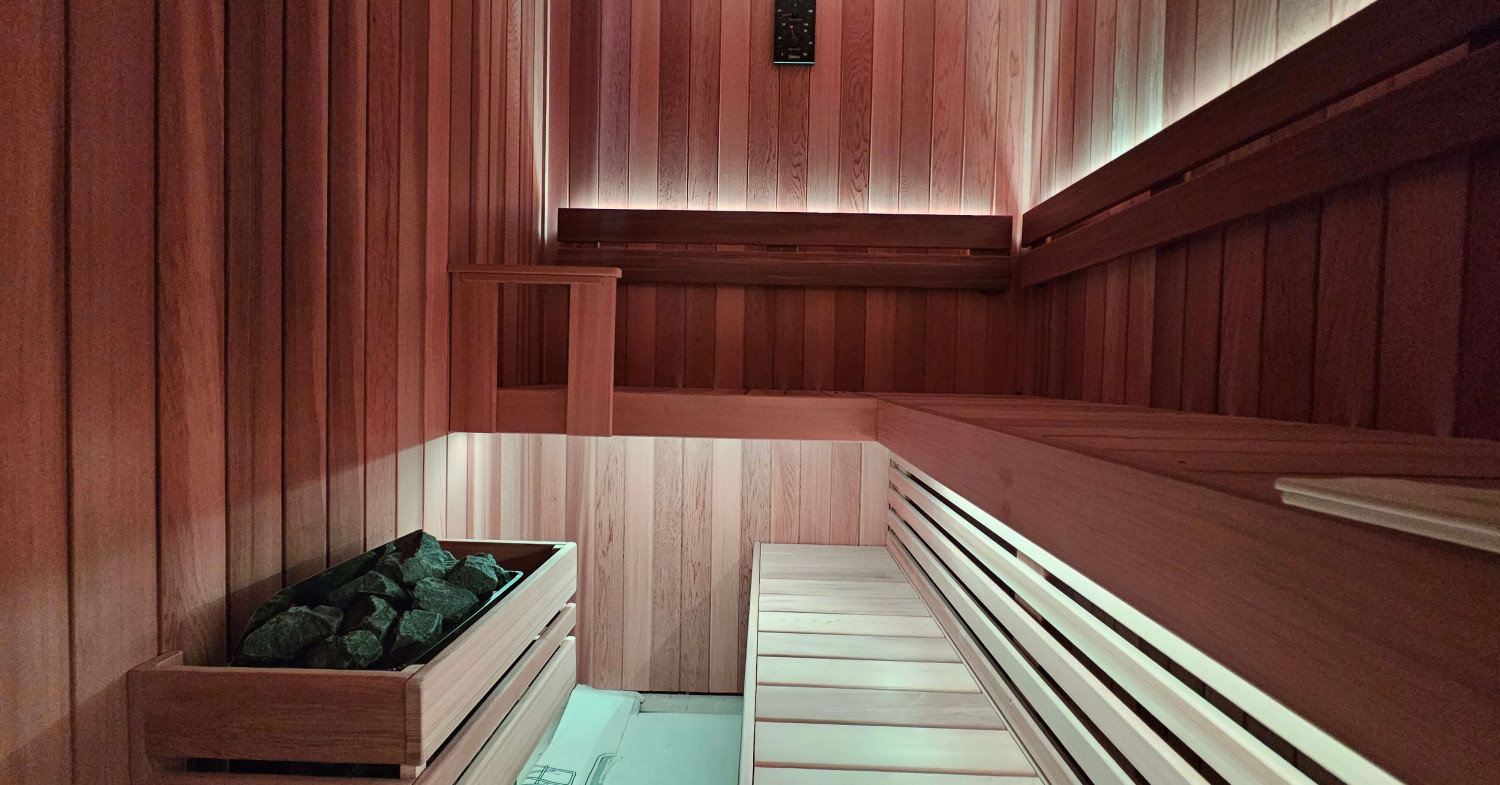
A home sauna, installed by SteamSauna Singapore, in a condo unit. More wellness-focused homeowners in Singapore are incorporating such spaces and high-tech amenities. (Photo: SteamSauna Singapore)
Note: This article was updated on May 25 for clarity and to reflect the latest product prices.
Before the city wakes, a man slips into a heated saltwater pool that measures just 5m long. He taps an app on his phone and a device begins generating powerful currents. Taking a deep breath, he starts swimming against the waves.
In just a few minutes, he is breaking a sweat and his heart rate is up. He completes his workout in half an hour, and feels as if he has just swum dozens of laps in an Olympic-sized pool. Exiting the pool, he dries himself and walks into a sauna booth a few steps away, for a rejuvenating heat therapy session before a hectic day ahead at work.
A daily routine like this, within the comfort of home, is becoming increasingly common in Singapore as a new generation of owners integrate such features into their homes.
No longer an afterthought, wellness spaces are being planned and designed into residences from day one — with the likes of high-tech pools, saunas, steam rooms, infrared cabins, ice baths, hyperbaric oxygen chambers and well-equipped gyms treated as part of the core brief rather than a finishing touch.
Diong Fuhan, principal architect of Quod Architects, has noticed this trend. “We have seen a rise in these wellness-focused spaces among younger and well-heeled homeowners in their 30s and 40s,” she says.
At Quod Architects, the typical clientele who wish to install these features are young professionals and entrepreneurs in high-stress industries such as medicine or finance. They are designing recovery and relaxation into their busy daily lives, Diong notes.

Diong Fuhan, Quod Architects: We have seen a rise in these wellness-focused spaces among younger and well-heeled homeowners in their 30s and 40s.
Smart pools for smaller spaces
Aside from lifestyle needs, space constraints are also driving homeowners’ growing preference for intelligent wellness features, according to pool specialist Aquatic’s head of marketing and strategic growth, Carlos Choon.
In landed properties, new-build pools are trending smaller, prompting more owners to seek smart solutions that maximise limited space while catering to a wider range of uses.
For many, the pool has evolved beyond a space for swimming alone, doubling as a health and wellness amenity. Homeowners are also increasingly turning to automation to simplify maintenance while lowering costs and improving convenience, Choon notes.

Carlos Choon, Aquatic: Many homeowners see the swimming pool as doubling as a space for health and wellness.
Aquatic is the regional distributor for iGarden, a China-headquartered outdoor living brand whose product range includes robotic pool cleaners, heated and AI-controlled water pumps, and the Swim Jet.
The last is an app-controlled, counter-current swimming system that generates wide-shaped currents at adjustable speeds, allowing users to swim continuously in place. It runs on inverter-driven, ultra-low voltage technology.
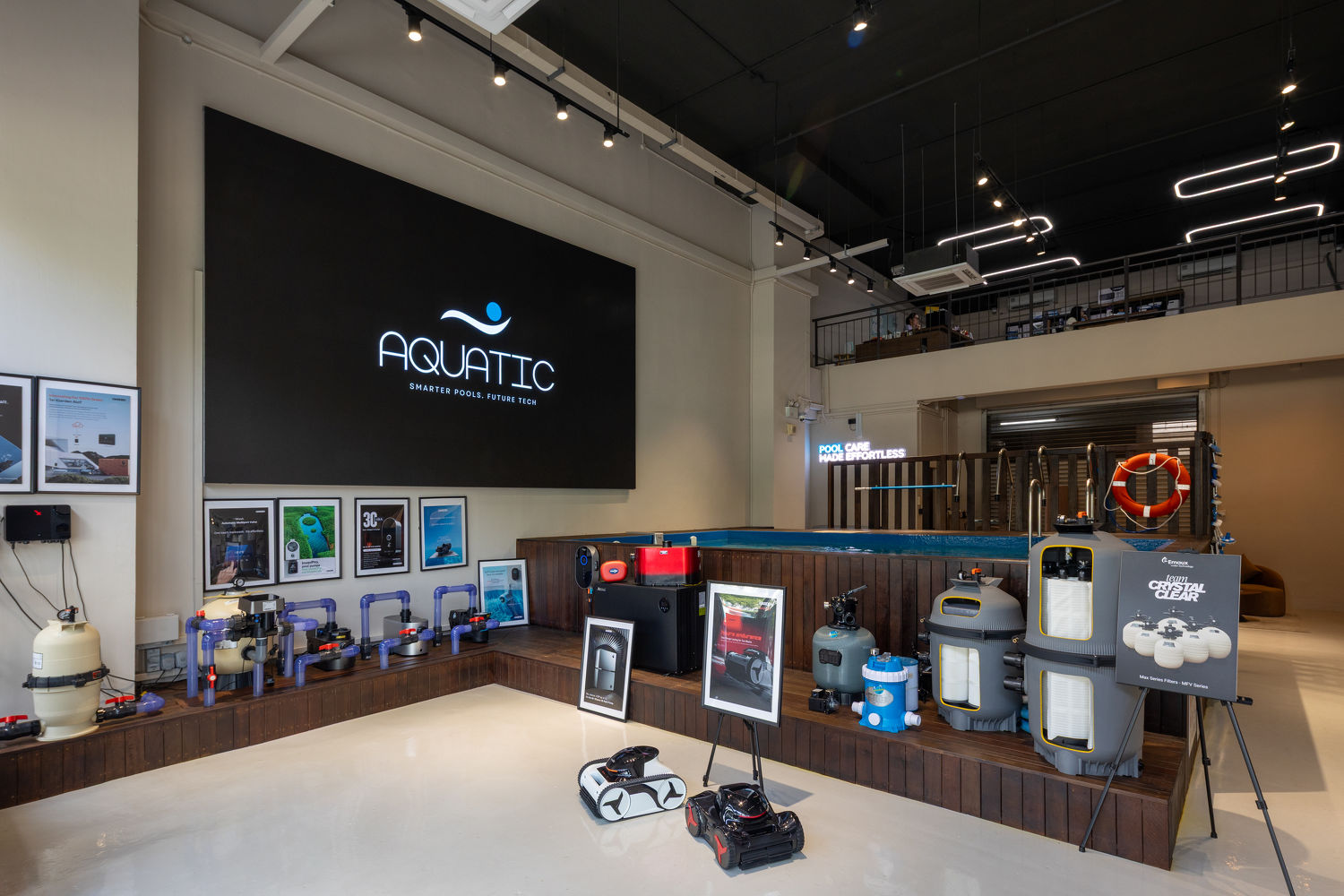
Aquatic’s smart pool experience centre in Admiralty. The pool specialist is the regional distributor for iGarden, which provides intelligent pool-cleaning robots and smart pool water pumps. (Photo: Samuel Isaac Chua/EdgeProp Singapore)
“The Swim Jet helps to create that endless swimming experience,” says Choon. For homeowners constrained by space, a smaller pool can quickly become impractical, as swimmers may manage only one or two strokes before reaching the wall, which limits the pool’s utility. A counter-current system addresses this directly.
Starting from $4,200 for the lower-tier models, the Swim Jet is priced well below older counter-current systems, which tend to cost upwards of $20,000, bringing the technology within reach of more homeowners.
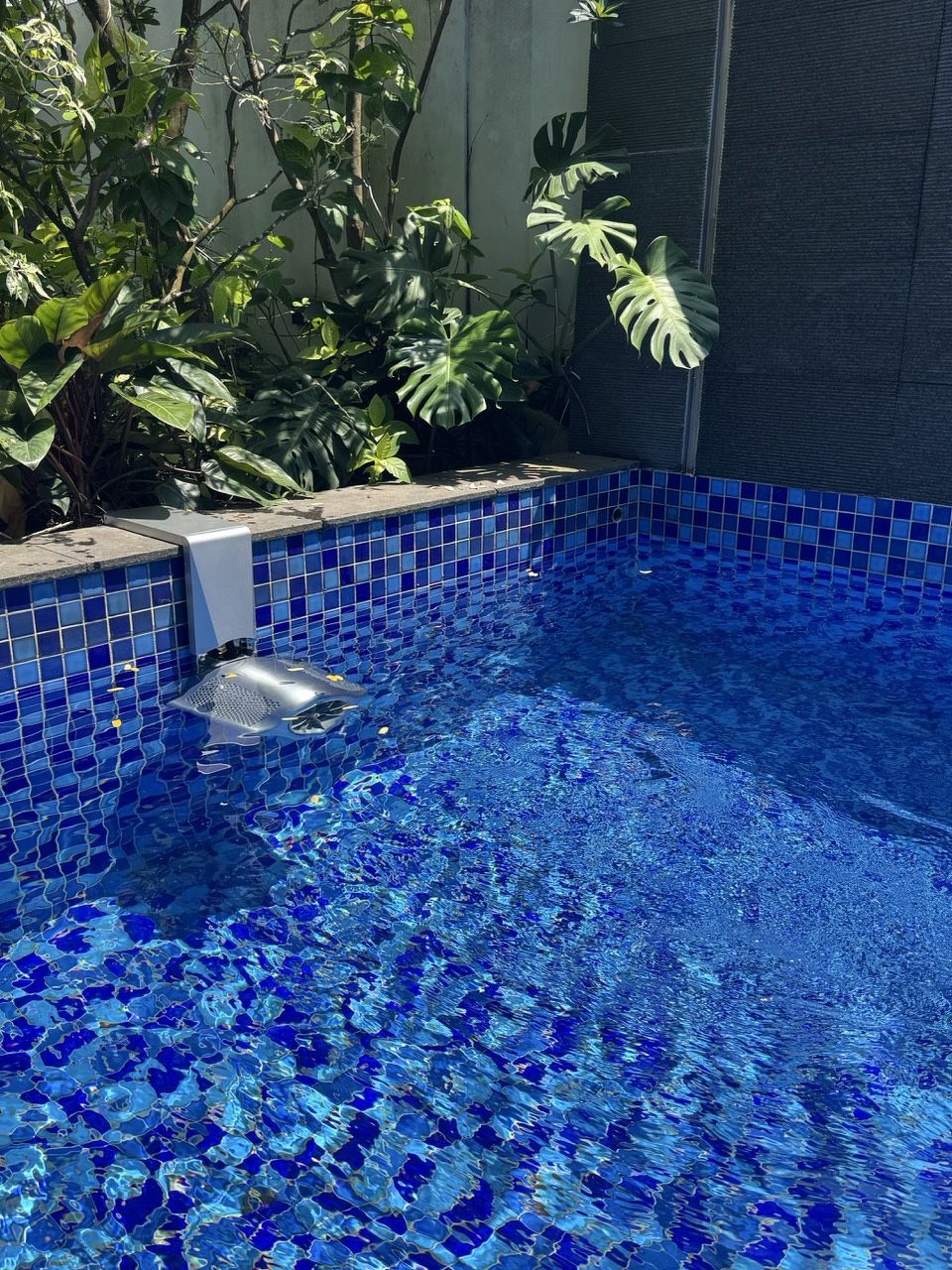
At a semi-detached house in District 19, the Swim Jet P series sits in an 8m by 2m pool, where the current it generates extends the functional use of the narrow space (Photo: Aquatic)
Saltwater therapy and hassle-free, cost-efficient upkeep
Saltwater pools are another popular option. Once considered a premium feature of high-end landed homes, they are gaining wider traction — with boutique luxury condo developers and owners also approaching Aquatic to retrofit existing pools.
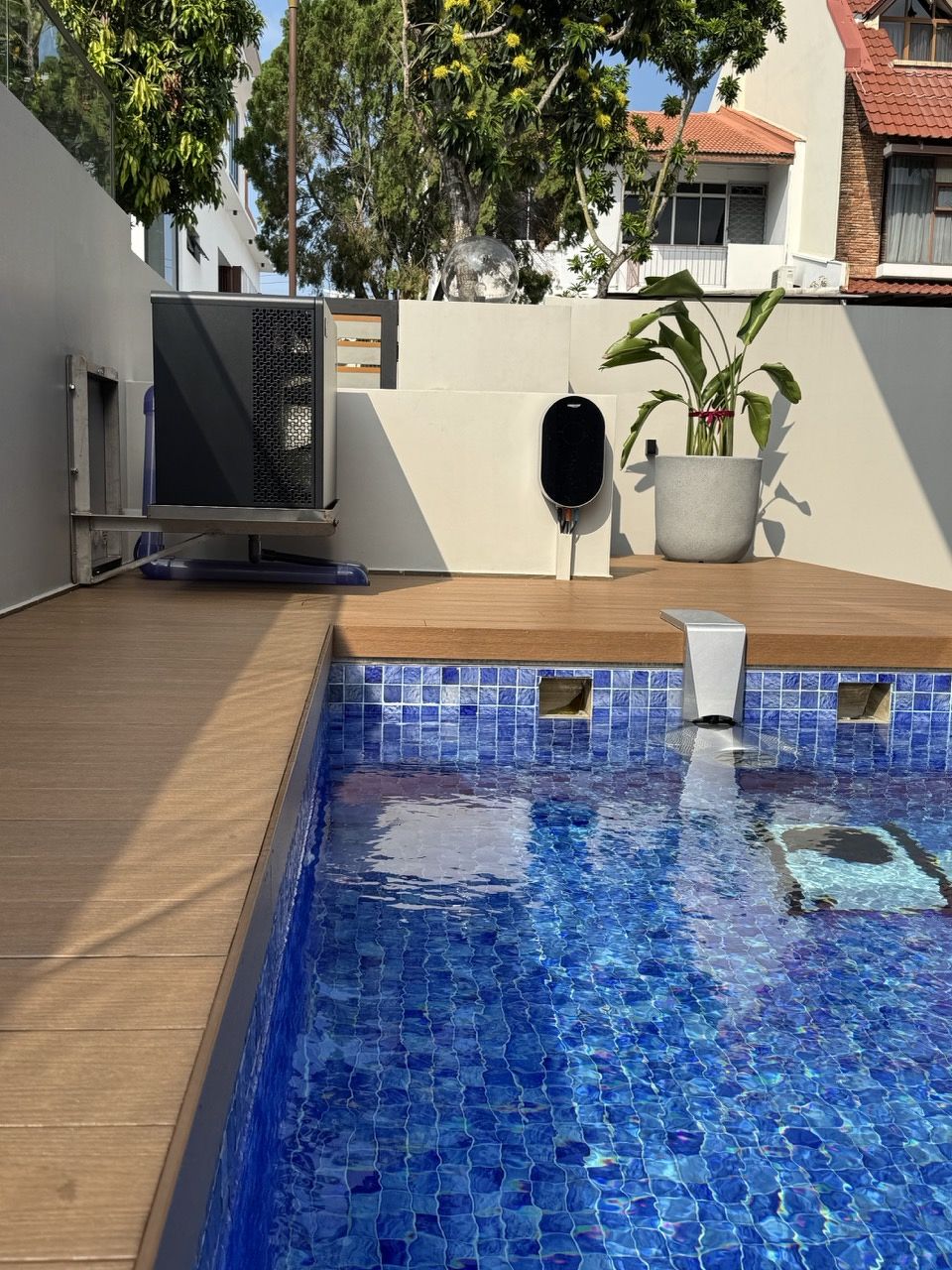
A District 15 semi-detached house features a full iGarden smart pool system, including a heat pump, saltwater chlorinator, variable speed pump, robotic cleaner and the Swim Jet counter-current system (Photo: Aquatic)
A salt chlorinator generates chlorine through electrolysis from salt, removing the need for chemical chlorine. The water is gentler on swimmers, and the closed-loop system reduces chemical waste and plastic packaging.
Smart pool technology has also addressed the cost and upkeep concerns that homeowners commonly raise.
Inverter-driven variable speed pumps can cut energy consumption by up to 60% compared to conventional pumps, while automated multiport valves monitor pressure and trigger backwashing only when necessary, reducing water wastage. Robotic pool cleaners automate debris removal, cutting down on manual vacuuming.
The cumulative effect is a pool that largely manages itself. Choon recalls an instance when the saltwater pool at Aquatic’s showroom had turned murky. “Because it’s a smart pool, I was able to determine the issue from home and rectify it with the press of a button,” he says.
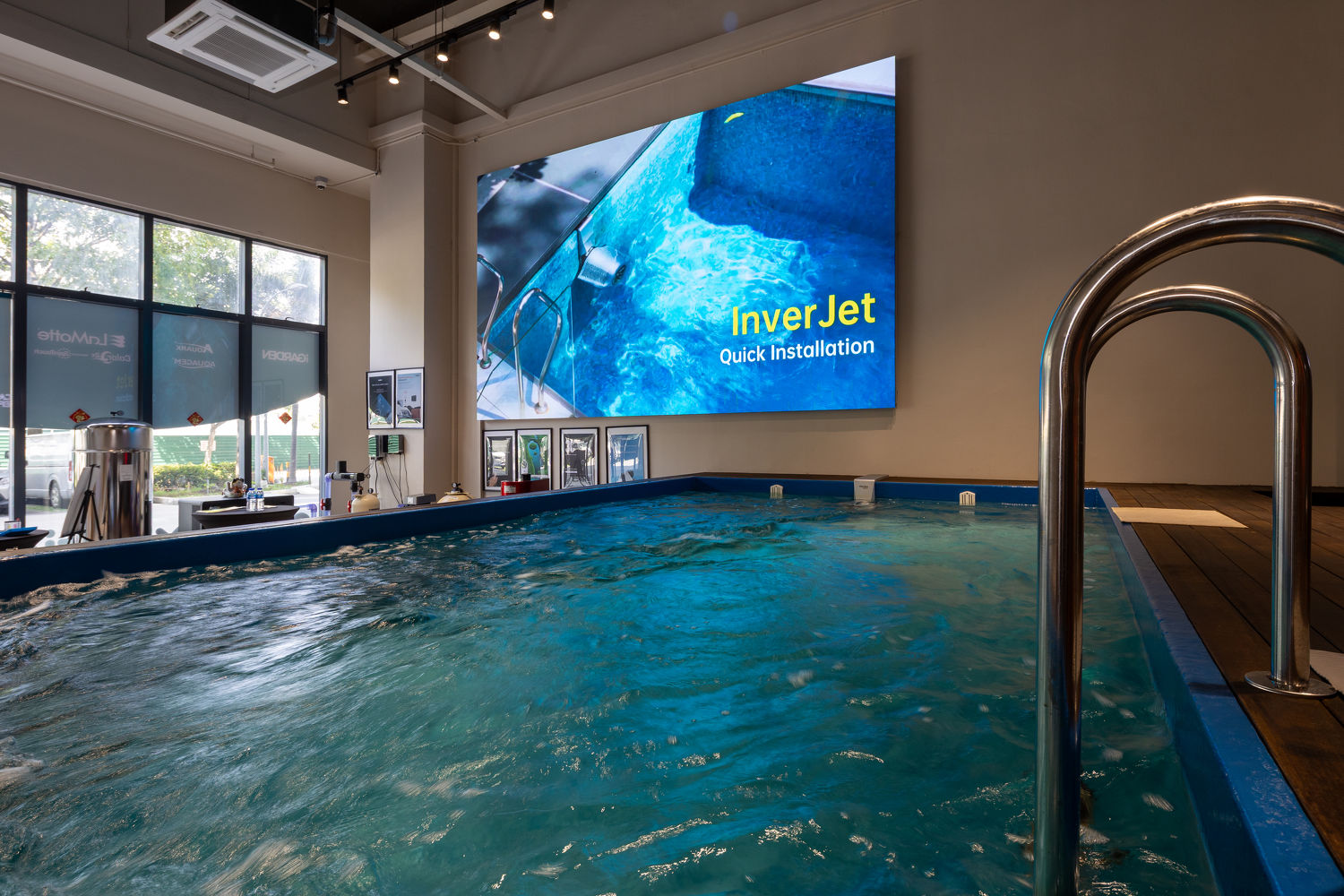
The 5m by 3m saltwater pool at Aquatic’s pool experience centre, where homeowners and developers can see its products and tools in action (Photo: Samuel Isaac Chua/EdgeProp Singapore)
This level of convenience and ease of remote management is part of the appeal for today’s homeowners, especially for the time-pressed working professionals that Diong from Quod Architects describes.
Turning up the heat
Personal saunas are finding their way into an increasing number of Singapore homes — not just landed properties, but also condos and HDB flats.
SteamSauna Singapore, one of the few specialist companies in the city-state focusing on authentic Finnish sauna design and installation, has seen rising demand.
The company is Singapore’s only member of Sauna from Finland, an organisation that sets rigorous standards for how a traditional Finnish sauna should be designed and experienced, ranging from ventilation and heat circulation to material choices and the overall ritual of use.
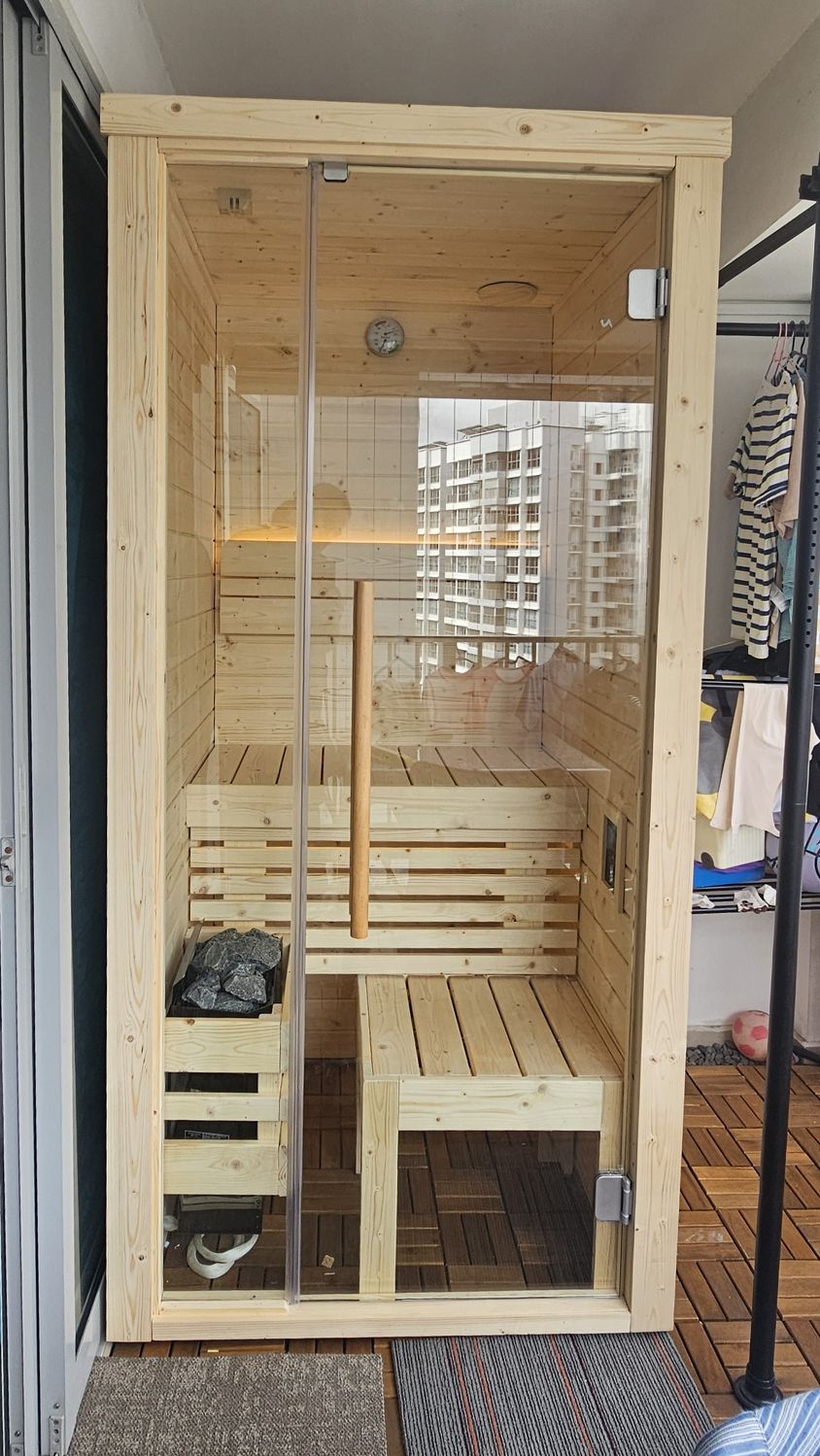
A single-person sauna booth installed in an HDB flat. Buyers often see the Finnish sauna ritual as something that can help support resilience, recovery and a more grounded rhythm of living, instead of a purely indulgent feature, according to SteamSauna’s Lee. (Photo: SteamSauna Singapore)
Sauna culture in Finland was formally inscribed on Unesco’s Representative List of Intangible Cultural Heritage in 2020 — a recognition that SteamSauna believes has helped recast the sauna from a niche luxury amenity to a mainstream lifestyle practice.
SteamSauna’s buyers are generally in their 30s to 50s, with an even split between men and women, says Joey Lee, the firm’s executive director. They tend to be wellness-conscious, physically active or “simply seeking a more restorative home environment”, he says.
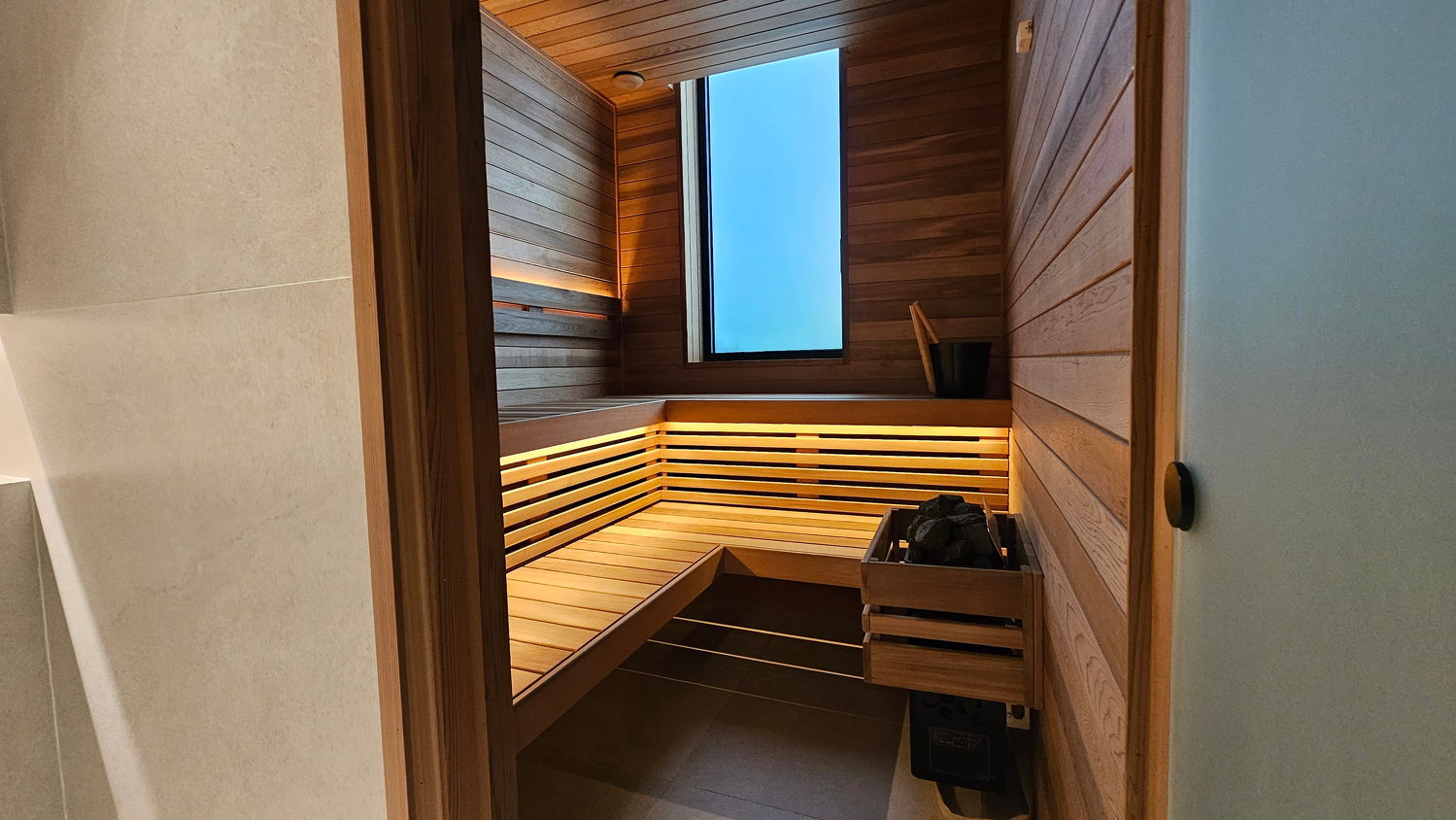
A sauna in a landed property. SteamSauna is seeing growing interest from buyers who are looking for ways to feel calmer, recover better, sleep more deeply and age actively, says its executive director Joey Lee. (Photo: SteamSauna Singapore)
“Many of our clients tend to see this less as a short-term expense and more as an investment in their future self and long-term wellbeing,” Lee adds.
The company offers three main product categories: traditional Finnish sauna cabins built around dry heat, steam rooms for wet-heat therapy, and infrared cabins, which operate at lower temperatures and may appeal to homeowners seeking convenience and ease of use. Within each category, buyers can customise wood types, heater specifications, layout and finish to suit their space and aesthetic preferences.
Pricing varies by size and configuration. Compact setups suitable for smaller homes start from below $10,000. Larger, bespoke saunas designed for four or more persons, with premium finishes and custom layouts, can exceed $30,000, Lee notes.
As sauna and ice bath sessions become fixtures at gyms, spas and recovery centres, the appetite for these experiences at home is growing too. “Saunas will increasingly be integrated into home designs,” Diong says, pointing to their compact, modular nature as a key advantage.
Saunas are one of numerous modular wellness installations that can be fitted into existing properties without major structural work, which makes them accessible to homeowners across a range of property types and sizes.
Other modular amenities gaining traction include red-light therapy pods, cryotherapy chambers and hyperbaric oxygen chambers. O2genes, a Singapore-based company specialising in hyperbaric oxygen therapy equipment and training, prices its hard-shell chambers at $150,000 and the inflatable soft-shell alternatives at $40,000.
The range of options available today, from a small sauna cabin at under $10,000 to a custom-built pool system well into six figures, reflects both the market’s growth and the widening entry points into restorative living.
From luxury to baseline
Homeowners in Singapore are increasingly willing to spend on such features, in Diong’s view.
For those already committing millions to rebuilding their landed properties, the cost of these installations typically amounts to “a relatively small fraction” of the total construction costs, she points out. They are also being written into standard project briefs from the outset.
Full landed-home rebuilds tend to run between $2 million and $5 million, says Diong. Against that backdrop, even a sunken pool that is deeper than 1.2m — which requires excavation works and regulatory permits, costing upwards of $150,000 — is a comparatively modest line item. In one of Quod Architects’ ongoing projects, the owner has also dedicated a room to a home gym, fitted with reformer pilates machines, a treadmill and a dumbbell rack.
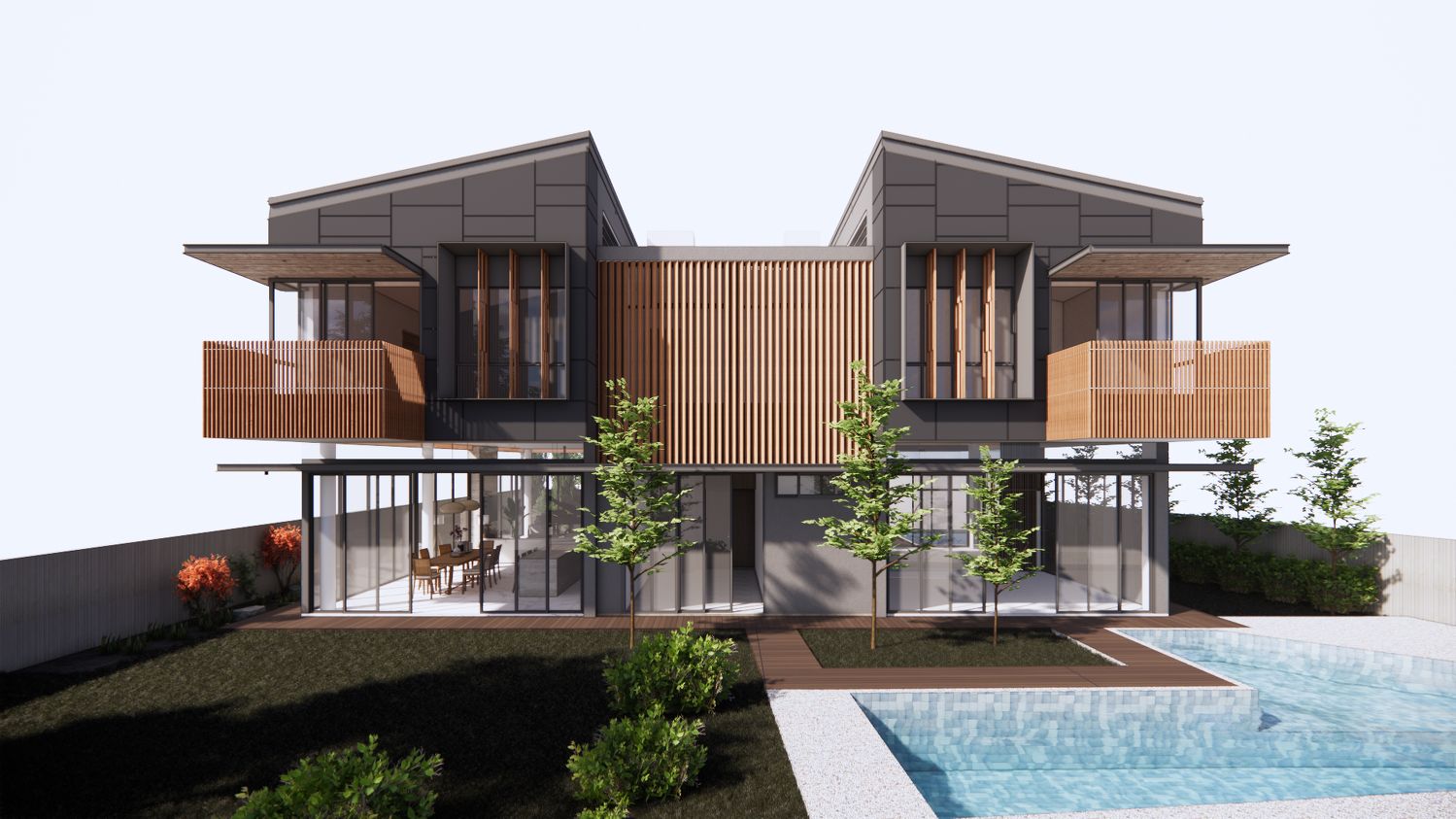
A rendering of the exterior of an ongoing build by Quod Architects, with a 12m by 5m swimming pool (Photo: Quod Architects)
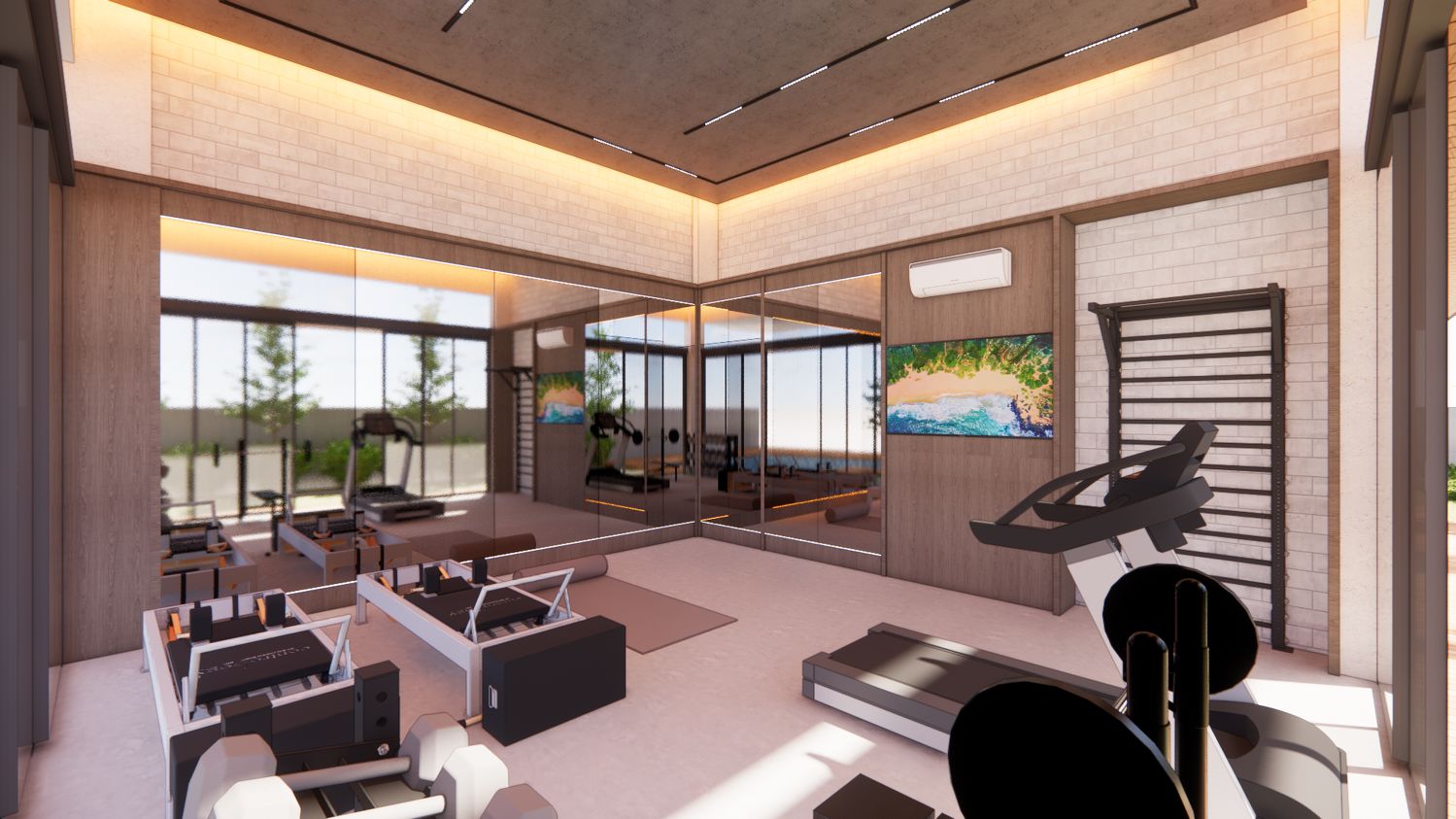
A rendering of a 6m by 6m home gym, featuring equipment such as reformer pilates machines and a treadmill, in a landed residential project by Quod Architects (Photo: Quod Architects)
For a growing segment of homeowners, these features are coming to be seen less as optional add-ons and more as an expected part of a well-designed home — as essential as any other room in the house.
The daily routine that once required a commute to the gym or wellness centre is now unfolding at home: in a heated saltwater pool or a cosy infrared sauna cabin a few steps away.
For more news and analysis, read our weekly e-paper. Prefer a print copy? Get it delivered to your home every Monday.
Follow Us
Property updates, 24/7.


Subscribe to Newsletter
Market insights, delivered weekly.

Top Articles
Search