Chee Hong Tat: Singapore’s built environment sector poised for growth on up to $53 bil construction pipeline

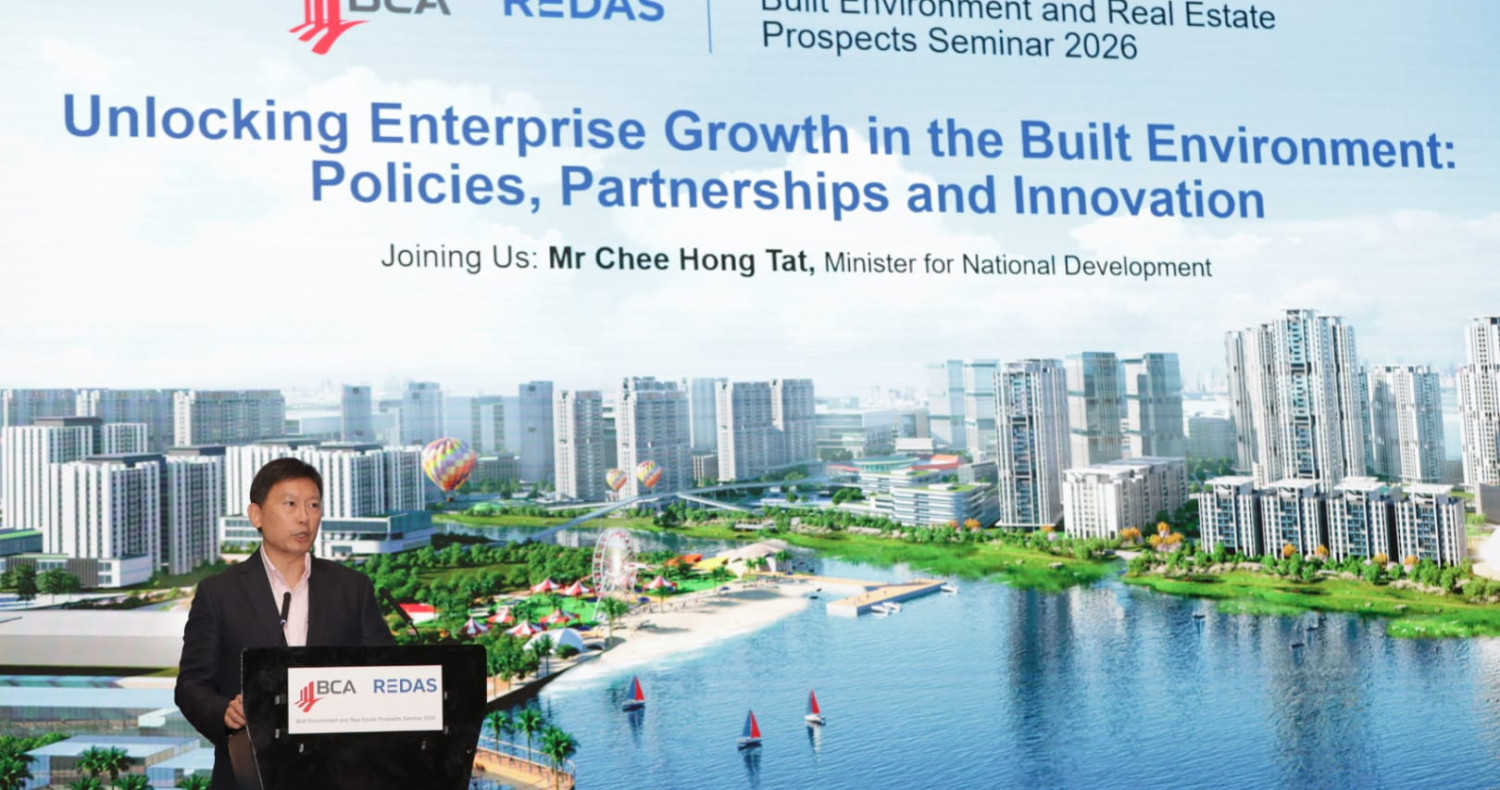
Construction demand in 2026 is expected to range between $47 billion and $53 billion in nominal terms, underpinned by major infrastructure projects (Photo: Samuel Isaac Chua/EdgeProp Singapore)
Singapore’s built environment (BE) sector is poised for sustained growth on the back of new government initiatives and a strong construction pipeline, said Minister for National Development Chee Hong Tat, as he unveiled a suite of initiatives at the BCA-REDAS Built Environment and Real Estate Prospects Seminar on Jan 22.
Construction demand in 2026 is expected to range between $47 billion and $53 billion in nominal terms, underpinned by major infrastructure projects such as Changi Airport Terminal 5, the Marina Bay Sands expansion, Tengah General and Community Hospital, and the Downtown Line 2 extension.
Over the medium term from 2027 to 2030, annual construction demand is projected to remain firm at between $39 billion and $46 billion. “This presents opportunities for our BE firms, given the strong growth trajectory of our construction sector,” Chee said.
Advertisement
Advertisement

Housing supply to remain strong

Turning to the housing market, Chee reaffirmed the government’s commitment to maintaining a robust supply pipeline to keep homes affordable and accessible.
About 19,600 BTO flats are slated for launch this year, including around 4,000 units with waiting times of under three years. Between 2025 and 2027, some 55,000 BTO flats will be launched—about 10% more than the earlier commitment of 50,000 units.
Chee noted that the sustained ramp-up in BTO supply has helped stabilise the resale market, with HDB resale prices flat quarter-on-quarter in 4Q2025 for the first time since 1Q2020. Further moderation is expected as more flats reach their minimum occupation period (MOP), with 13,500 units doing so this year, rising to about 19,500 units by 2028.
In the private residential segment, around 12,000 units are expected to be launched for sale in 2026, including projects from en-bloc redevelopment sites and executive condominiums (ECs).
For 1H2026, the Government Land Sales (GLS) programme will release close to 4,600 units on the Confirmed List, with a similar number available on the Reserve List. In total, the private housing pipeline is projected to exceed 57,000 units—helping to moderate price growth, which slowed to its lowest pace since 2020 last year.

Productivity and technology push

Against this backdrop of sustained demand and incoming supply, Chee stressed the need to accelerate transformation efforts to deliver Singapore’s “ambitious building plans” more efficiently.
Advertisement
Advertisement
“The future of our built environment sector lies not in individual excellence, but in our collective ability to innovate, collaborate, and push for a more productive sector,” he said.
One key initiative is a new tranche of the Productivity Solutions Grant (PSG) to help small and medium-sized BE firms adopt proven technologies to boost productivity. Previous tranches have supported more than 1,100 firms, with companies such as Novaars International achieving manpower and time savings of up to 30% through AI-powered façade inspection systems.
The new tranche, slated to take effect from Apr 1, will expand the range of pre-approved advanced equipment and digital solutions, including construction robots and tools to streamline processes such as contract management. Firms that have already benefited from earlier PSG tranches will also be able to apply again to unlock productivity gains in new areas.
Chee also announced that from Jun 1, the listing validity for the Public Sector Panels of Consultants (PSPC) will be extended from one year to three years. The move is intended to reduce administrative burdens, provide greater business certainty, and allow firms to redirect resources towards service quality and staff retention.

Building project management capability

On the manpower front, the Building and Construction Authority and the Project Management Institute will roll out an enhanced project manager competency framework in the second half of 2026.
The updated framework aims to strengthen accreditation in areas such as stakeholder and supply-chain management, while offering credentials recognised both locally and internationally.
Advertisement
Advertisement
“Through this, we will develop a pool of reliable project managers who can confidently help our BE firms deliver projects on schedule, within budget and resources, and aligned with quality and safety requirements,” Chee said.
Follow Us
Property updates, 24/7.
Subscribe to Newsletter
Market insights, delivered weekly.