
Designing for three generations: Quod Architects reimagines landed living with The Twin House
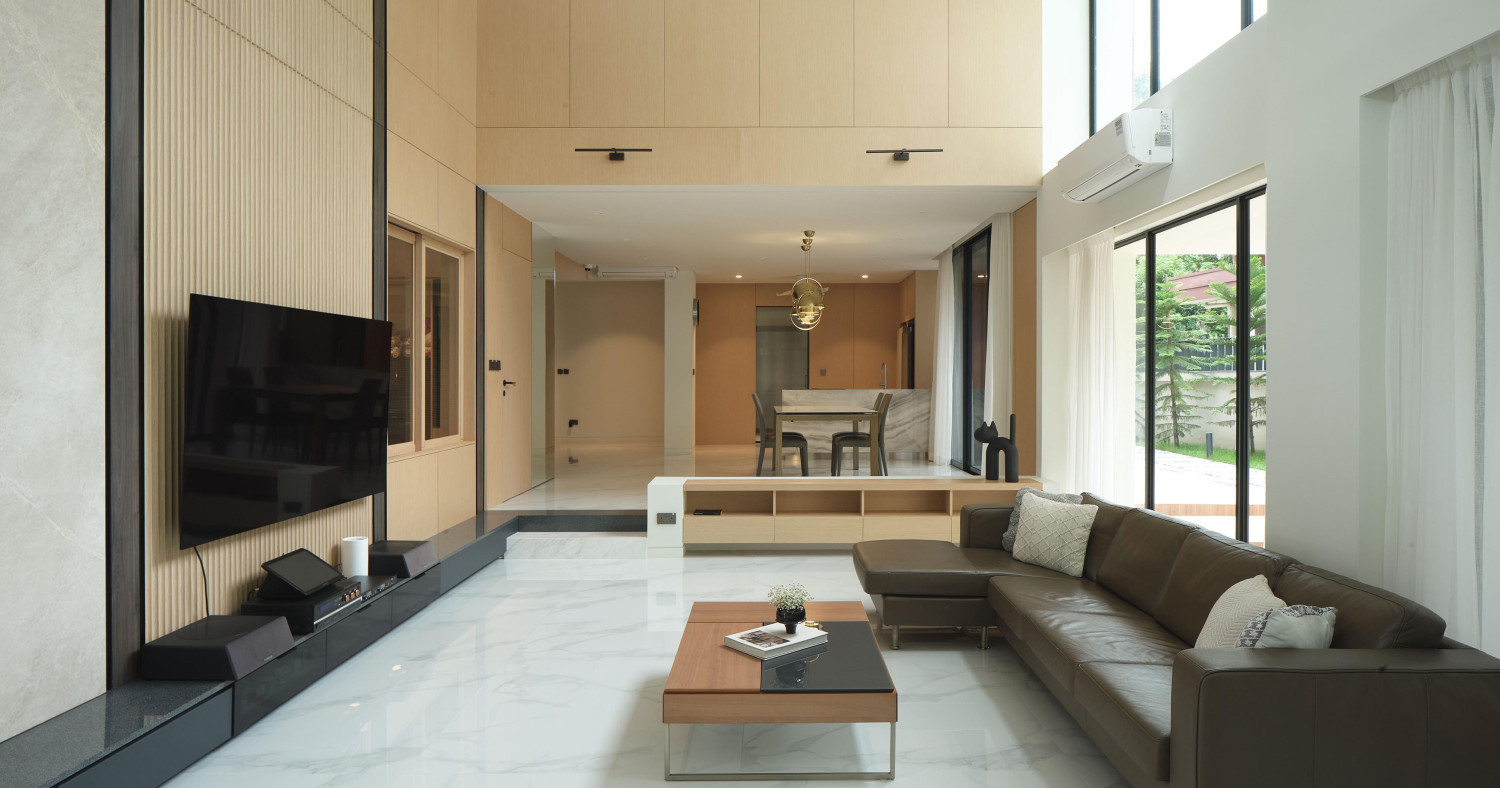
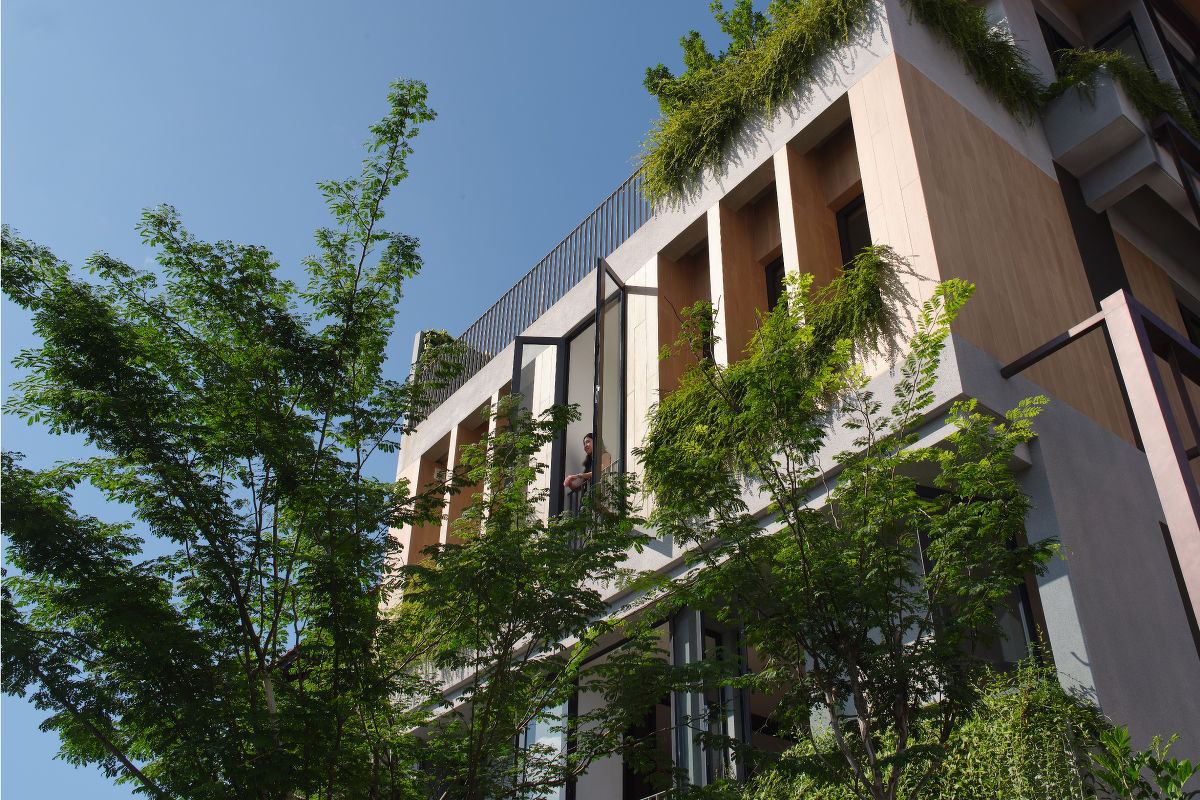
The Twin House, designed by Quod Architects, comprises a pair of neighbouring semi-detached houses in the Bukit Timah residential enclave (Photo: Quod Architects)


Ask Buddy
As land prices continue to climb, multigenerational homes are gaining renewed traction in Singapore’s landed housing market. “This shift has been more prominent in the last three or four years,” observes Diong Fuhan, principal architect at Quod Architects.
She adds that homeowners are gravitating towards “intensifying” and reconfiguring their existing spaces to accommodate ageing parents and growing families, instead of purchasing smaller, separate residences.
Quod Architects was behind the design of The Twin House — a pair of neighbouring semi-detached houses in the Bukit Timah residential enclave that were recently renovated to accommodate three generations across two interconnected yet independent residences. The firm’s clients had purchased one of the semi-detached houses to live alongside their parents, who have long occupied the adjacent home.
Combination of architecture and interior design
Diong founded Quod Architects in 2018 with the aim of combining her interests in both architecture and interior design to deliver a more holistic approach to design. “Designing both the architecture and interiors of projects allows for a more coherent and holistic outcome, rather than separating the two,” she observes.
Quod Architects undertakes a range of projects that span residential and commercial properties. Offering both architecture and interior design services, the firm focuses on intelligent design, craftsmanship and attention to detail that enhances spaces for users while also improving the long-term value of properties.

Diong Fuhan, principal architect and founder of Quod Architects (Photo: Quod Architects)
Over the years, landed homes have emerged as a key segment for the firm, says Diong. “Our core expertise currently lies in landed homes,” she notes, adding that the firm has seen growing interest in its services from families looking to build or renovate landed properties to accommodate multigenerational living.
Before founding Quod Architects, Diong had spent eight years at DP Architects, which she joined in 2010 after completing her Master of Architecture at the National University of Singapore. At DP Architects, she worked on various large-scale residential, commercial and hospitality projects, such as the 386-key Carlton City Hotel and the 940-key Carlton Hotel in Singapore.
Two homes, three generations
Built in 1988, the adjacent units that make up The Twin House sit along a busy road, which informed its original spatial configuration. Diong says that the utilitarian zones of the house, such as the kitchen, yard and helpers’ areas, are positioned at the front, closer to the road, to mitigate traffic noise for the living areas and bedrooms.
The renovation largely retained the layout but introduced refinements to enhance functionality and views, she adds. These included resizing the existing wet kitchen to add a dry show kitchen facing the dining area. Also, views of the rear garden from the living space were improved with more cohesive, lusher landscaping across the adjoining properties.
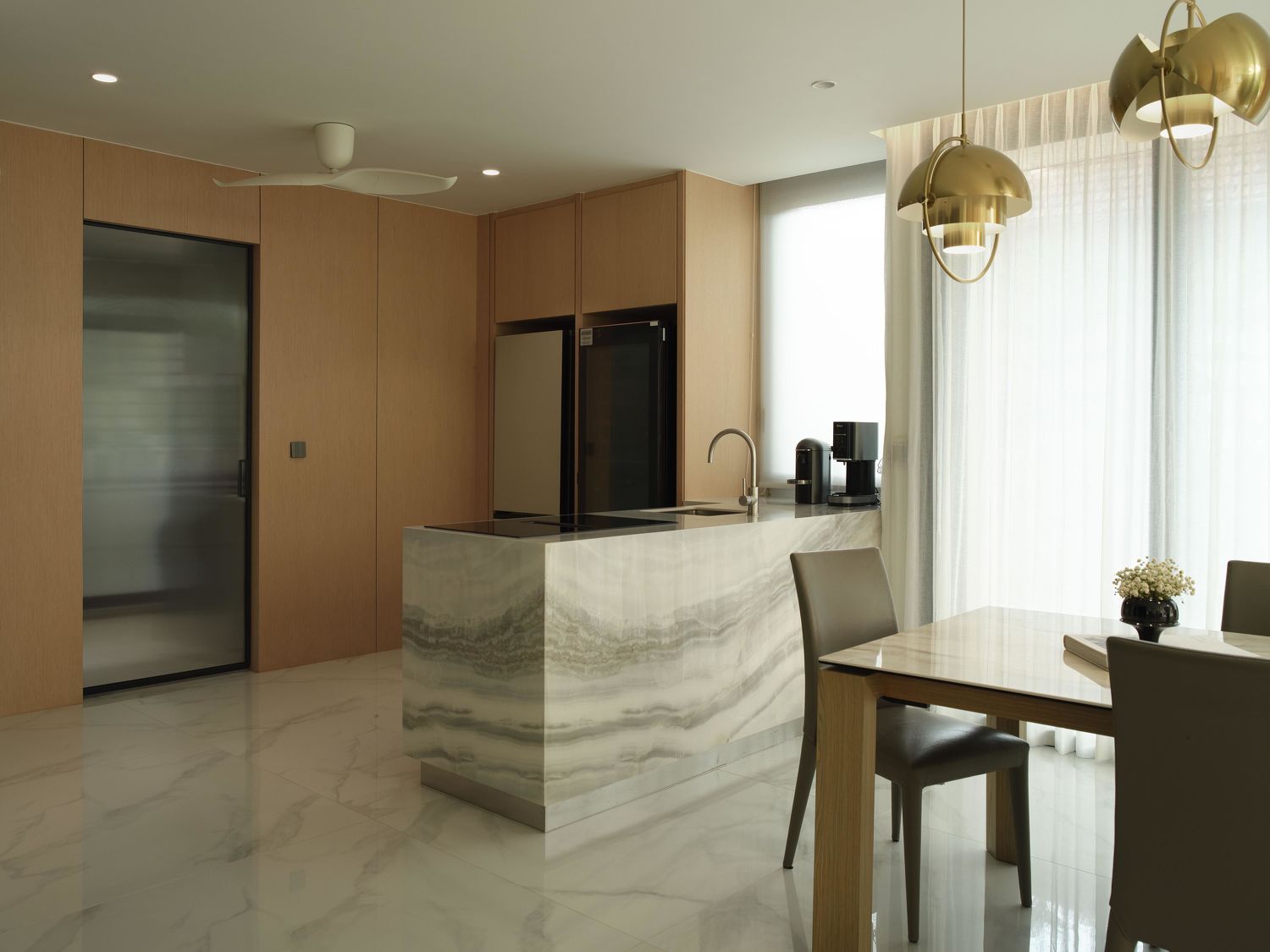
Refinements to the layout included resizing the existing wet kitchen to create both a wet kitchen and a dry show kitchen (Photo: Quod Architects)
A key consideration for The Twin House abode was ensuring the families’ proximity without sacrificing privacy, adds Diong. To that end, the design focused on optimising the existing spaces to cater to two distinct households: ageing parents in one unit and their adult child’s nuclear family in the other.
Both units, each with a floor area of approximately 3,000 sq ft, retain separate entrances, kitchens and bedrooms. However, other areas — such as the living and family areas — form part of several interconnected spaces on the ground floor. By partially knocking down the shared wall between the two houses, Quod Architects was able to create living spaces that comfortably accommodate the entire family.
“We had to think about designing spaces to encourage interaction between the entire extended family, while allowing each nuclear family to retain some autonomy over their own personal spaces,” says Diong.
Working with light and volume
The renovation project also retained and enhanced key architectural features of the original houses, including a double-volume living space and skylights. Sliding screens were introduced in the living area, allowing the families to selectively enclose the space, which also addressed the challenge of air-conditioning loss to adjacent areas — an issue often faced in landed homes. “The sliding screens help to balance spatial openness with environmental performance,” adds Diong.
Additionally, the double-volume living space was enhanced by cladding the feature wall with marble and timber tiles. “This created a more homely yet contemporary feel for the home,” Diong explains.
Upstairs, the master bedroom was transformed by raising the existing ceiling, making it feel more open and inviting. Meanwhile, a spiral staircase anchors the ground floor’s interiors. Previously a concrete structure, whose steps had uneven heights, it was updated with metal railings and timber treads for a more contemporary look.
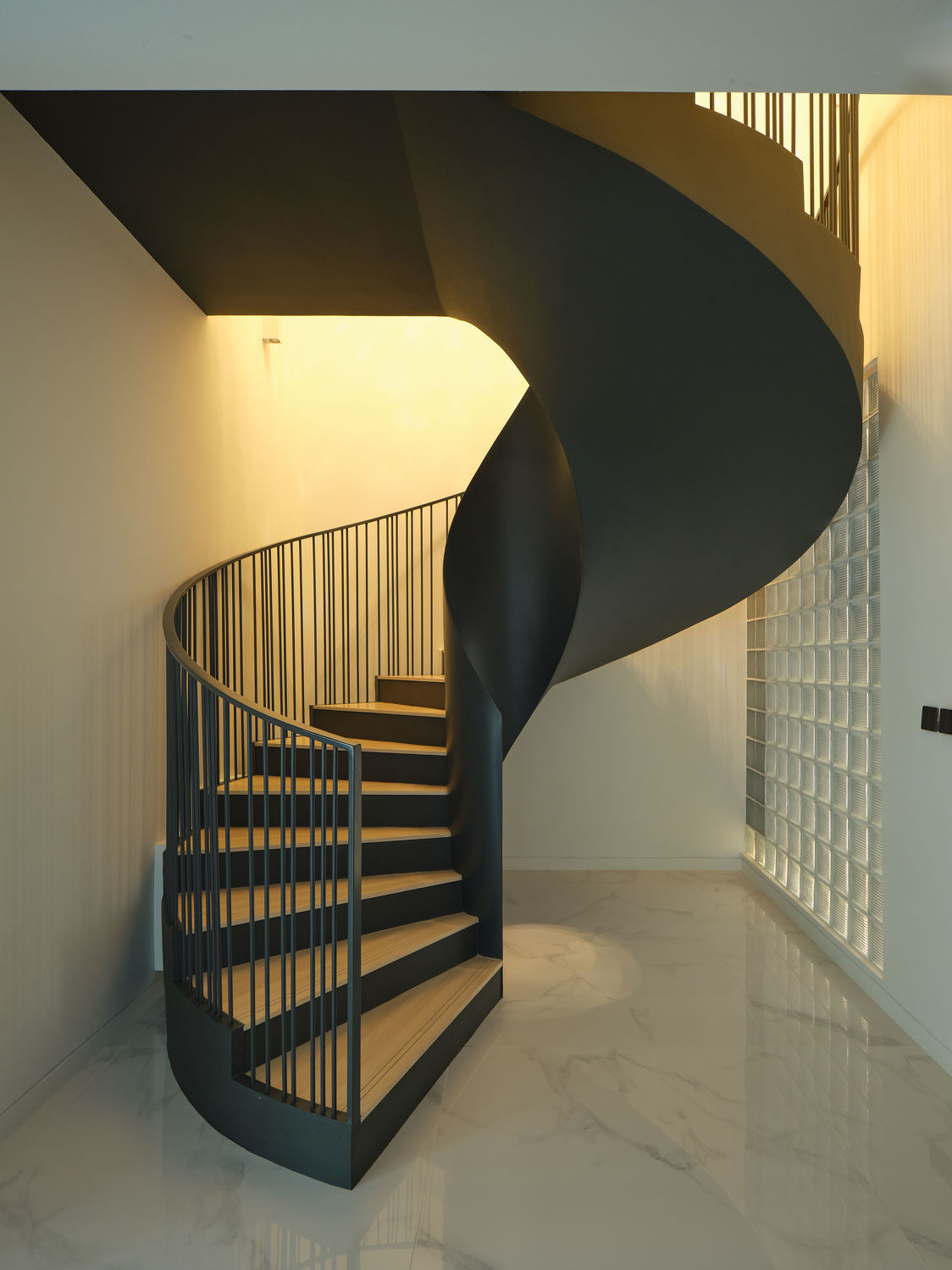
The spiral staircase anchors the ground floor of The Twin House (Photo: Quod Architects)
Balancing differing needs
The project took approximately two years from conceptualisation to completion. Throughout the process, balancing the needs of both households was a key challenge, shares Diong.
“With multigenerational families, there tends to be differing opinions when it comes to different design considerations,” she says. To streamline the decision-making process, the firm liaised with just one appointed family representative, which helped to consolidate design considerations before implementation.
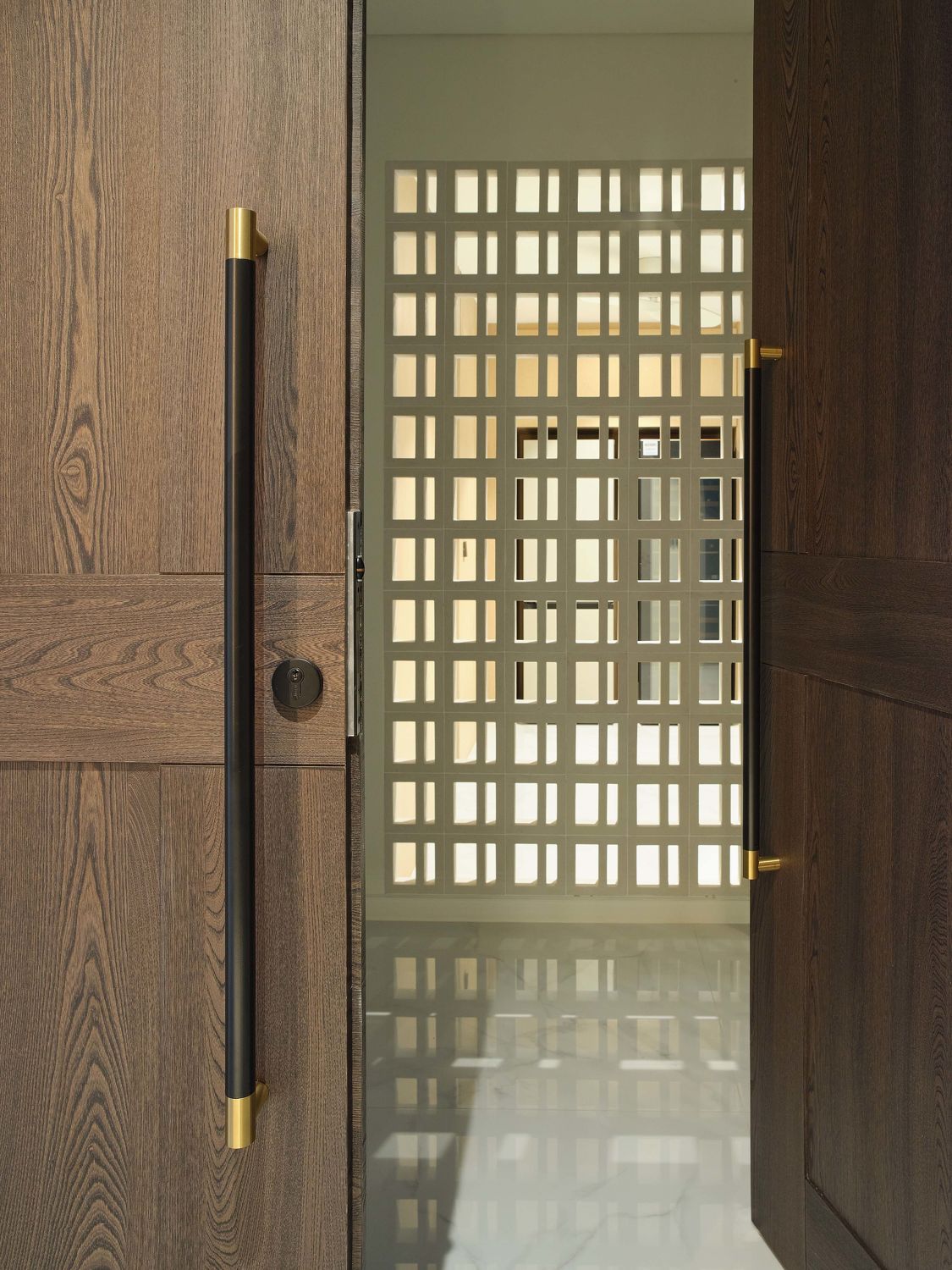
The project took approximately two years from conceptualisation to completion (Photo: Quod Architects)
Certainly, streamlining decisions came in useful in scoping out the needs of the abode’s expansive car porch, which is combined and shared between the two houses. While a single, larger car porch would offer greater convenience for vehicle access, it also raised safety concerns, particularly with young children moving between the two households.
Quod Architect’s solution was to introduce screens between the two units, ensuring some segregation while retaining visibility on both sides.
The Outdoor House
Prior to The Twin House, another notable project by Quod Architects was The Outdoor House, a renovated version of a semi-detached house along Coronation Road.
The project’s design centred around the clients and their adult children, creating opportunities for interaction while maintaining privacy, says Diong. A key feature was the introduction of an external spiral staircase that connects the driveway directly to the second-floor bedrooms, creating a separate entrance to the house.
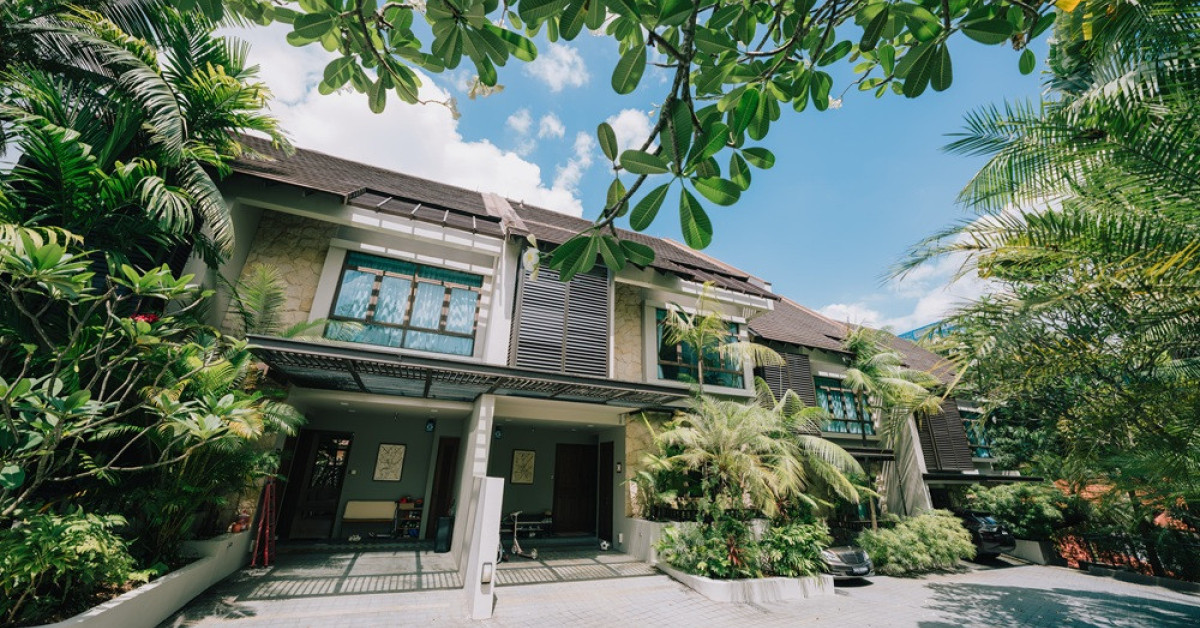
The Outdoor House, a semi-detached house along Coronation Road, was renovated by Quod Architects (Photo: Quod Architects)
Sustainability and ageing in place
Beyond multigenerational living, Diong observes a growing emphasis on sustainability and long-term liveability among landed homeowners.
“With Singapore’s ageing population, landed homes need to be upgraded,” she notes. “A lot of recent projects are driven by the need to age in place alongside multigenerational living.” Diong says that features such as lifts, wider corridors to provide space for wheelchairs, and bigger bathrooms are increasingly incorporated as design features.
On the sustainability front, she observes that more clients are requesting solar panels and isolators for electric vehicle charges. As utility costs increase, homeowners have become increasingly receptive to installing solar panels to save costs in the long run.
Other sustainability features include tapping into natural ventilation, maximising daylight without excessive heat gain and integrating more greenery within the living space.
“Sustainability also shapes the way spaces are being planned, especially in response to the tropical climate experienced in Singapore,” says Diong.
For more news and analysis, read our weekly e-paper. Prefer a print copy? Get it delivered to your home every Monday.
Ask Buddy
Follow Us
Property updates, 24/7.


Subscribe to Newsletter
Market insights, delivered weekly.
Top Articles
Search