
Greater Southern Waterfront tops homebuyer awareness; MRT access and freehold key priorities: survey
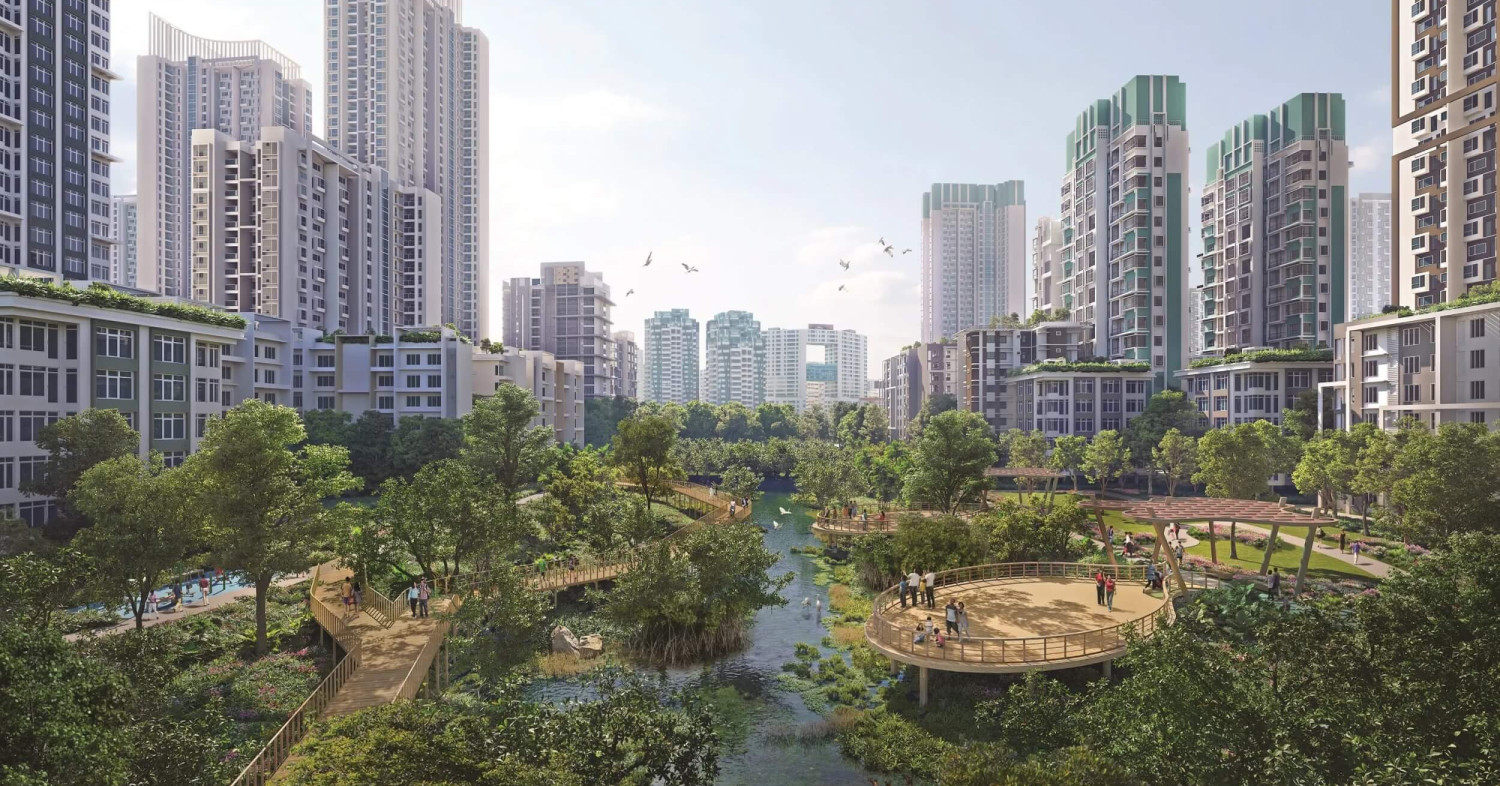
For illustrative purposes only: Artist’s impression of future housing and recreational spaces at the former Keppel Club site, within the Greater Southern Waterfront (Photo: HDB)
Singapore’s next phase of urban growth is already taking shape. Punggol Digital District in the northeast is now largely operational, Jurong Lake District in the west is being progressively developed as a major commercial and mixed-use node, and the Paya Lebar Air Base site in the east will be freed up from the 2030s onwards.
These developments sit on different timelines, but they raise the same consideration for buyers, who are weighing where future employment nodes, transport links and lifestyle amenities may emerge, often well before an area matures.
Among the most closely watched of these long-term transformations is the Greater Southern Waterfront.
Spanning a 30km stretch of Singapore’s southern coast, from Pasir Panjang to Marina East, it will be progressively developed over the coming decades into a major gateway for urban living as port activities are consolidated in Tuas.
Plans include the 10,000-home Berlayar waterfront estate on the former Keppel Club site, alongside the adaptive reuse and rejuvenation of areas such as the Pasir Panjang Power District.
Awareness of the Greater Southern Waterfront is already broad-based. In an online survey of homeowners conducted by FRX Capital and EdgeProp Singapore between April and June 2026, 73% of respondents said they were aware of the transformation plan.
Meanwhile, six in 10 respondents expect areas near the Greater Southern Waterfront to outperform the wider property market over the long term.
Understanding how buyers intend to navigate these long-term transformations requires a closer look at their current ownership profiles and buying budgets.
The survey data maps out the different consumer segments in this changing landscape.
Demographics of respondents
The online survey attracted a total of 1,933 respondents.
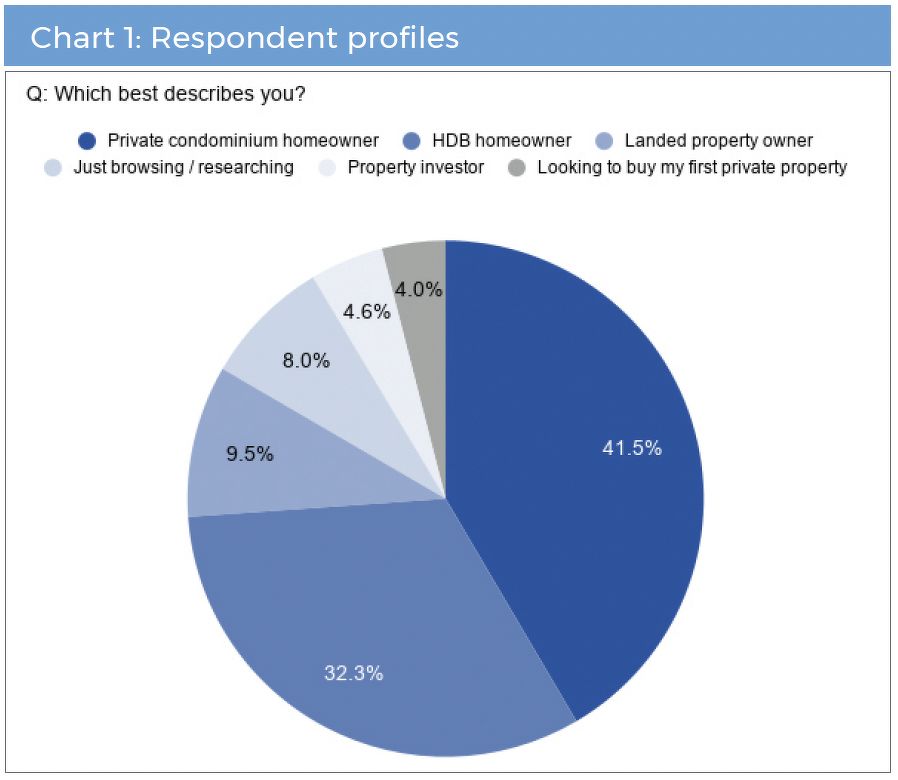
The largest group of respondents were private condo homeowners (41.5%), followed by HDB homeowners (32.3%) and landed property owners (9.5%). The remainder identified themselves as first-time buyers, investors and “just browsing/researching” (see Chart 1).
Charts: “What matters most in your next home?” survey
In terms of their current residential location, respondents were fairly distributed, with the largest group living in the Central/South area (31.4%), followed by the East (26.2%), North (21.8%) and West (20.7%).
At the time of the survey, 40.1% of the respondents intended to buy a property within the next three years, while the rest did not have a fixed timeline.
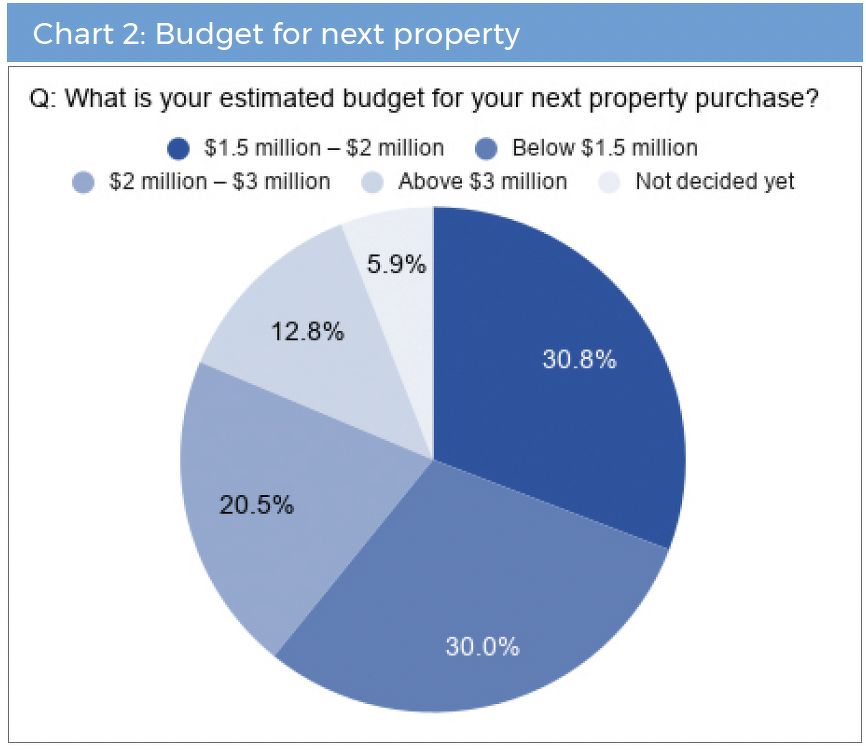
Among those that indicated their intention to purchase a property within the next three years, one in three has a budget of more than $2 million (see Chart 2).
Meanwhile, among those looking to purchase, their most preferred layout was the three-bedroom configuration (48%), followed by two-bedders (27%).
Freehold tenure is not negotiable for landed property owners
Housing options in Singapore are split between leasehold and freehold tenures, but homebuyers value property tenure very differently. An overwhelming 89% of landed property owners consider freehold tenure “important” or “very important/non-negotiable” (see Chart 3).
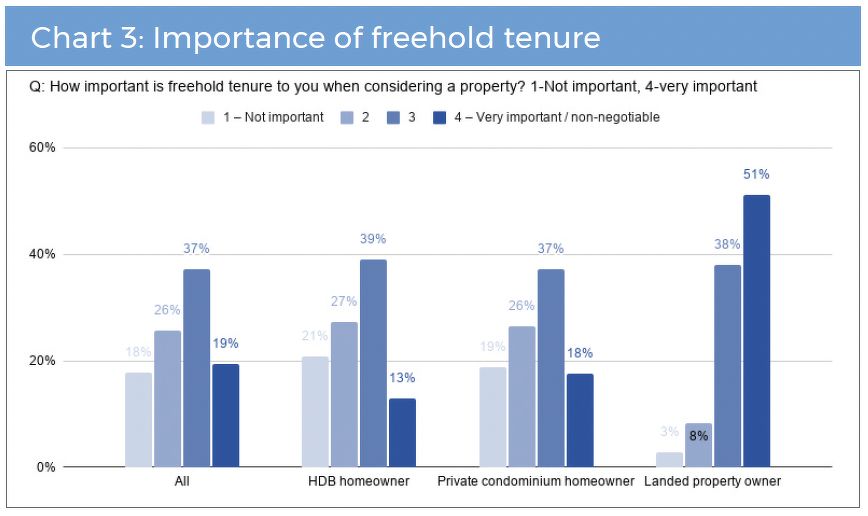
In contrast, this priority drops to 55% for private condo homeowners and 52% for HDB homeowners. This narrow gap shows that moving up to the private market does not automatically make buyers obsessed with tenure. Instead, condo buyers view leaseholds with the same practical lens as HDB owners.
Buyers see freehold as a way to preserve long-term value and leave a legacy. Across all market segments, “long-term value preservation” was the primary reason for preferring freehold properties.
This priority is the most pronounced among landed property owners (71%), followed by private condo homeowners (54%) and HDB homeowners (49%) (see Chart 4).
This variance may be because landed homeowners typically purchase with multigenerational timelines in mind, making value preservation a key concern. Overall, the next most popular reason was the desire to establish a “legacy/generational asset” (40%).
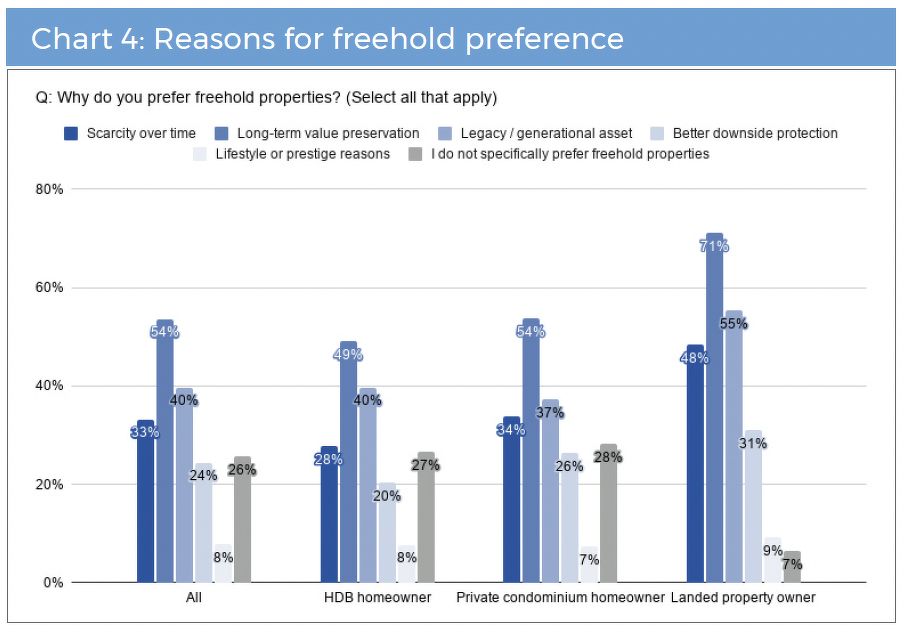
Meanwhile, buying freehold properties for “lifestyle or prestige reasons” was the least chosen motivation across every segment. This suggests that property buyers in Singapore tend to be pragmatic and value-driven, viewing tenure through a financial lens rather than a social one.
Survey findings indicate that as budgets grow, buyers’ investment horizons may shift from immediate utility towards multi-generational wealth preservation.
Among respondents with a budget of above $3 million, 66% cite “legacy/generational asset” as reasons to prefer freehold properties compared to 36% among those with a sub-$1.5 million budget.
High-budget buyers were also notably more focused on long-term value preservation, at 63.6% compared to 52.4% for lower-budget respondents.
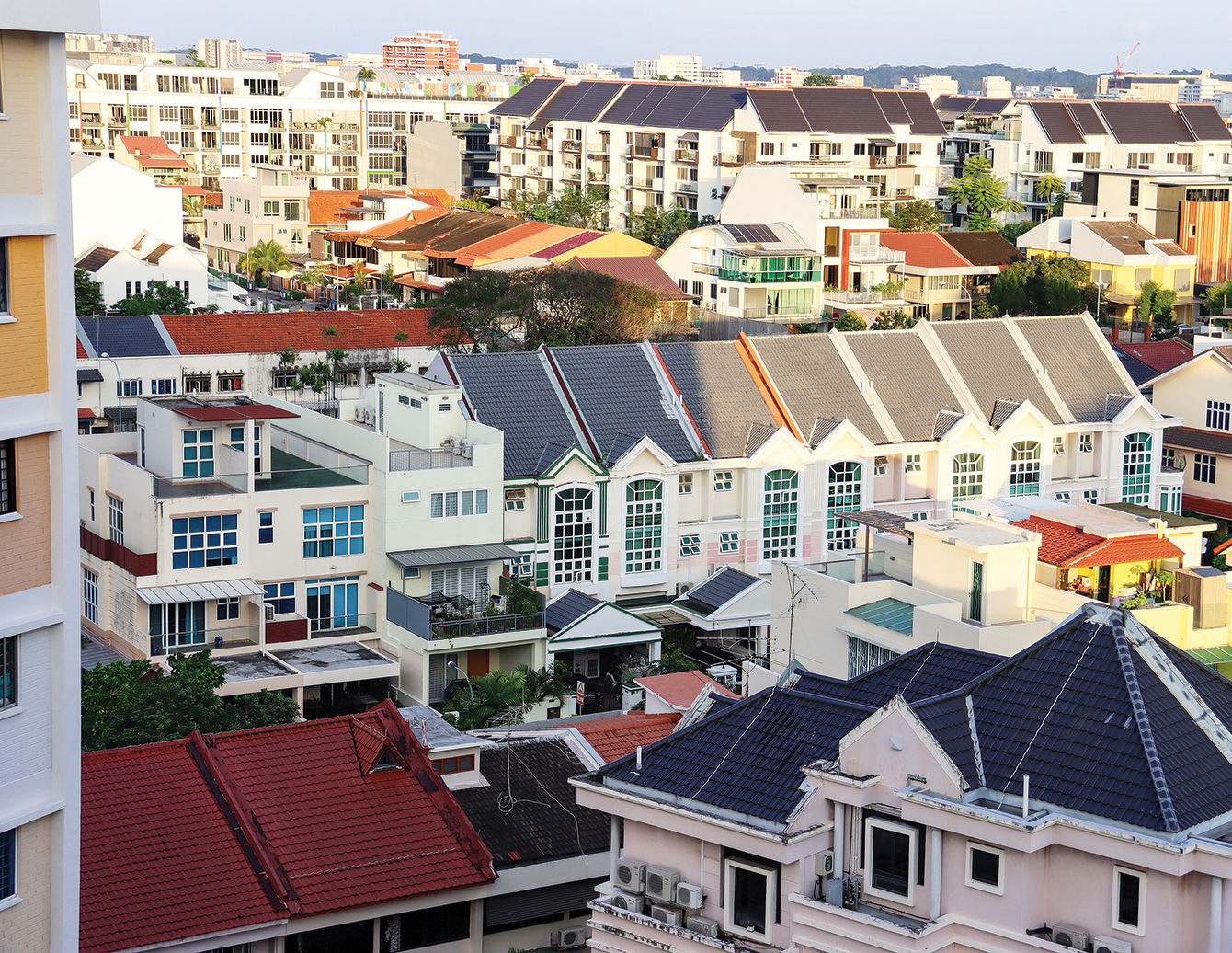
Stock image of private homes in Singapore. Buyers see freehold tenures as a way to preserve long-term value, and this priority is the most pronounced among landed property owners. (Photo: Shutterstock)
Low-density living, high-density convenience appeal
Most respondents (53%) favour a residential environment with both low-density living with high-density convenience, while 30% prefer low-density environments (see Chart 5).
This sentiment suggests that buyers may be receptive to developments that offer the relative quiet of boutique-scale blocks with comprehensive condo amenities and direct transport connectivity.
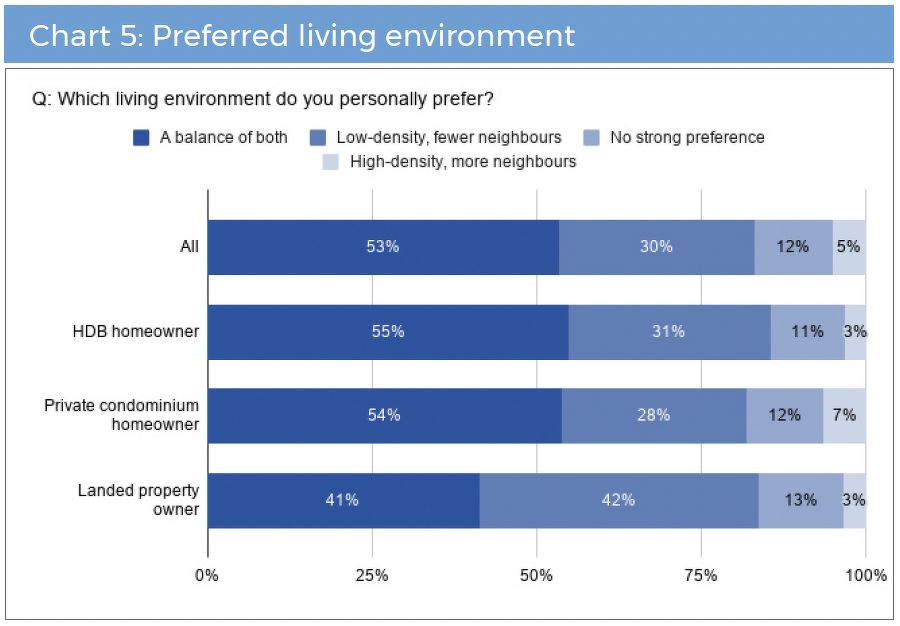
While a balanced environment remains the broader market’s preferred choice, sentiment shifts among higher-end buyers. Landed property owners exhibited a stronger preference for low-density living at 42%, slightly ahead of those seeking a “balance of both” (41%).
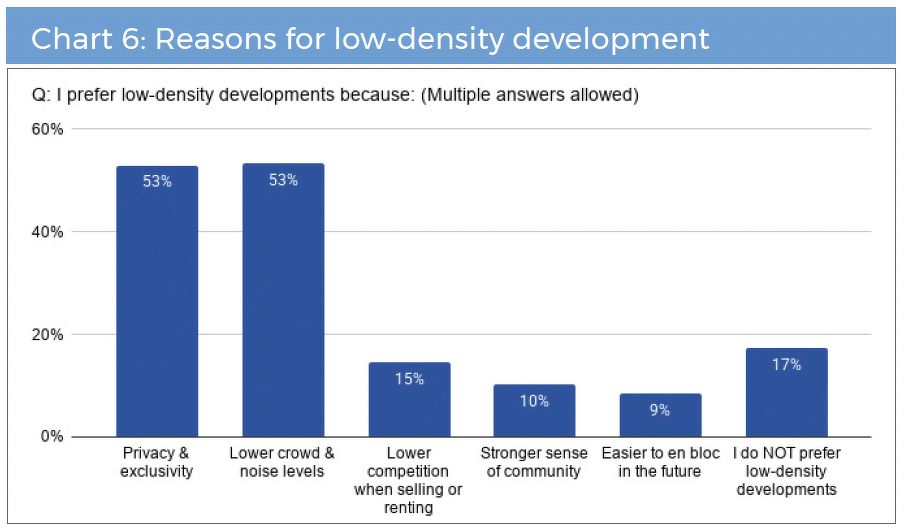
This suggests an appetite for lower-density projects intensifies alongside purchasing power. The preference for low-density may be attributed to two factors: reduced crowd and noise levels (53.4%), and greater privacy and exclusivity (53%) (see Chart 6).
Priorities include convenience and long-term value
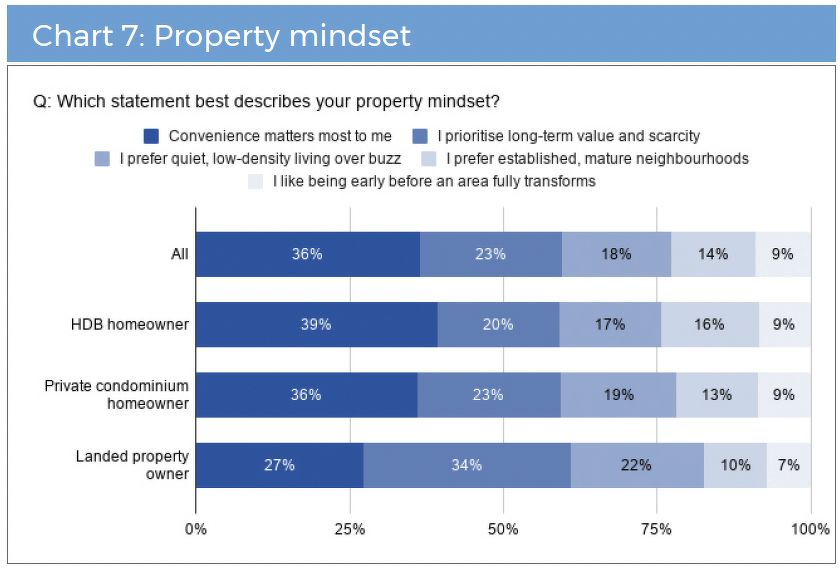
Daily convenience is the primary consideration for 39% of HDB and 36% of private condo owners (see Chart 7).
In contrast, landed property owners focus on long-term value and scarcity (34%), more than convenience (27%). They also place greater emphasis on quiet, low-density living environments (22%) than their HDB (17%) and private condo (19%) counterparts.
Ultimately, these findings suggest that daily utility and asset preservation serve as core drivers shaping buyer mindsets.
MRT proximity and discounted freehold hold equal appeal
In terms of appealing features, a significant majority (84%) of respondents prioritise homes near MRT stations, with one in three willing to walk up to 1km (15 minutes) to a transit node.
Separately, while just over half value freehold tenure generally, interest surges when price premiums are removed (see Chart 8).
Over 80% across all market segments view “freehold tenure at leasehold price” as appealing, matching the demand for MRT proximity.
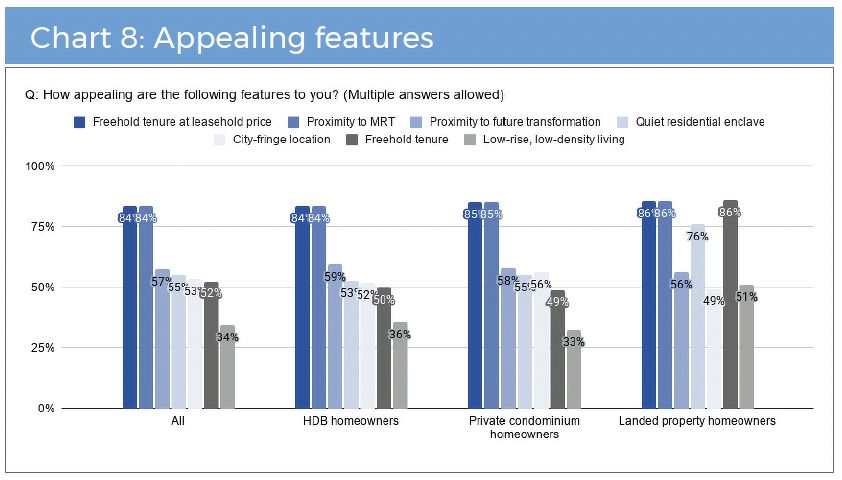
MRT proximity outranks a “quiet residential enclave” and “low-rise, low-density living” across all respondent groups, challenging the assumption that boutique or low-density projects must sit off the beaten path.
About 86% of landed property owners prefer freehold tenure — whether at full price or not, indicating that they may be less price-constrained. Yet, exclusivity remains crucial, with 76% finding a “quiet residential enclave” appealing.
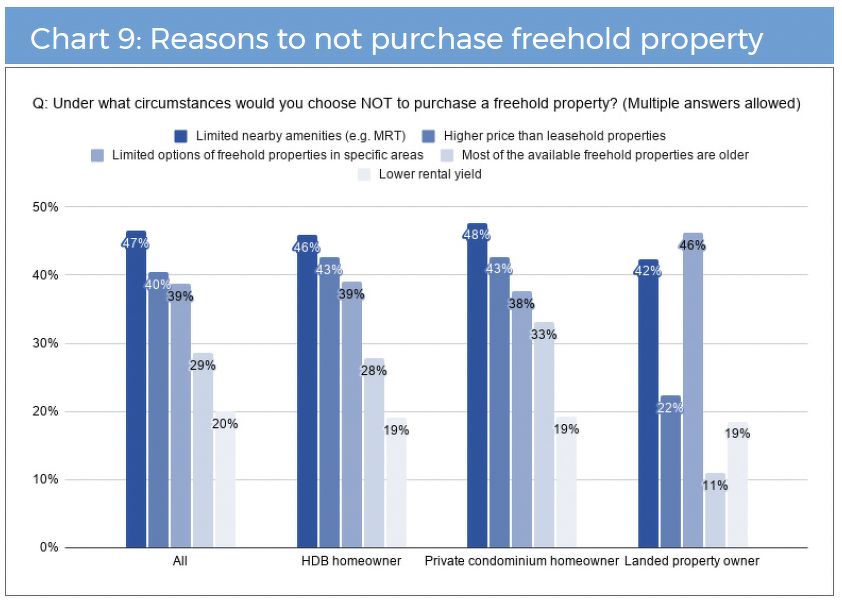
Conversely, a lack of nearby amenities heavily deters buyers. This ranks as the top concern for HDB (46%) and private condo (48%) owners (see Chart 9), but ranks second for landed property owners (42%), who are more concerned with a shortage of freehold options in specific areas (46%).
This points to landed property buyers valuing location and tenure over connectivity.
In addition to the specific property attributes explored above, macro-level factors such as multi-decade transformations remain a primary consideration for buyers.
Future growth plans heavily influence buyer decisions
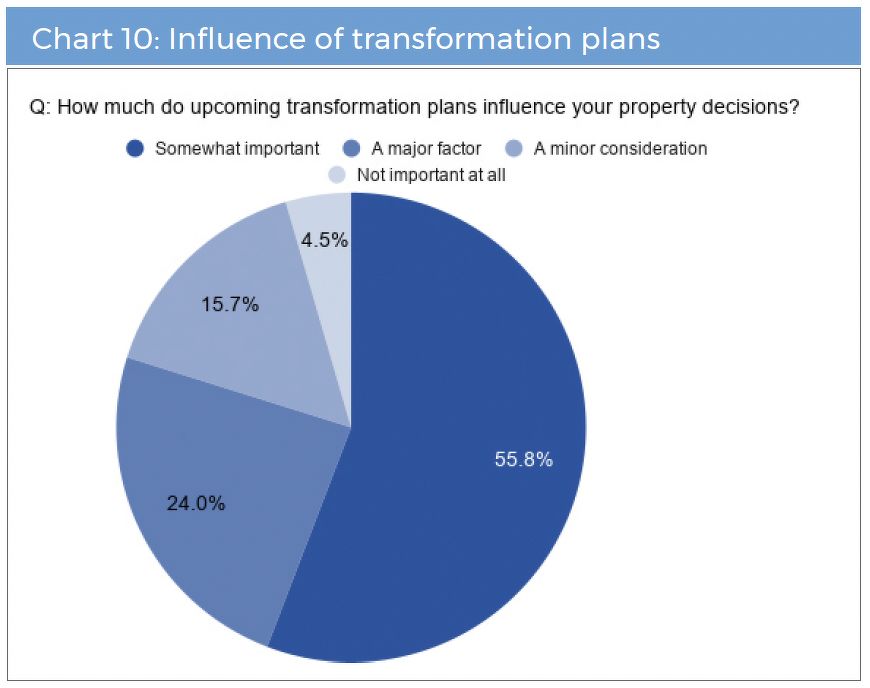
Upcoming transformation plans actively influence the property purchase decisions of 79.8% of buyers, with 24% citing these plans as a major factor (see Chart 10).
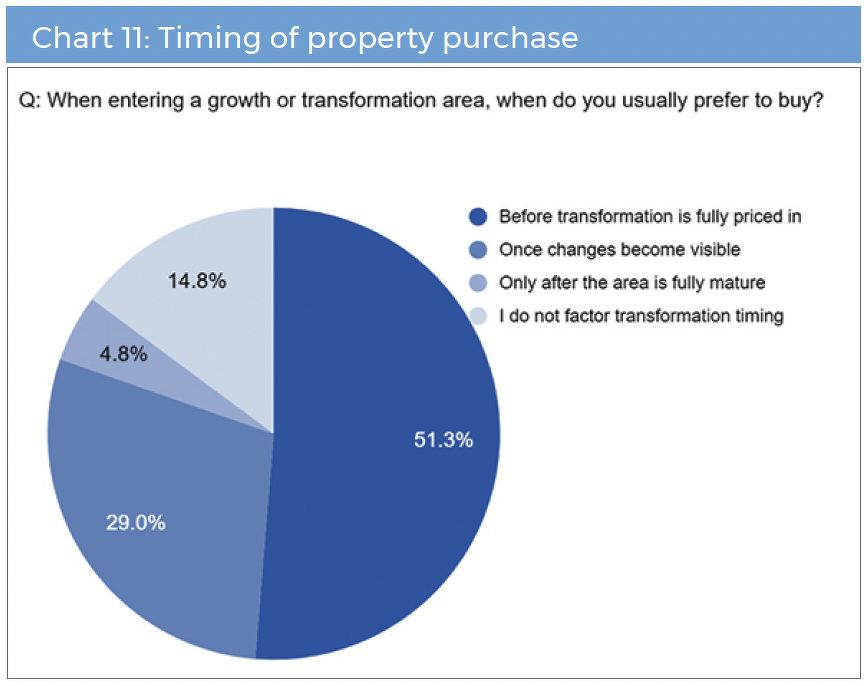
The survey also indicates that slightly over half of respondents prefer to buy a home within a growth area before the future transformation is fully priced in (see Chart 11).
This suggests that property buyers seek a first-mover advantage, aiming to maximise potential capital appreciation.
Jurong Lake District a close second to GSW in market awareness
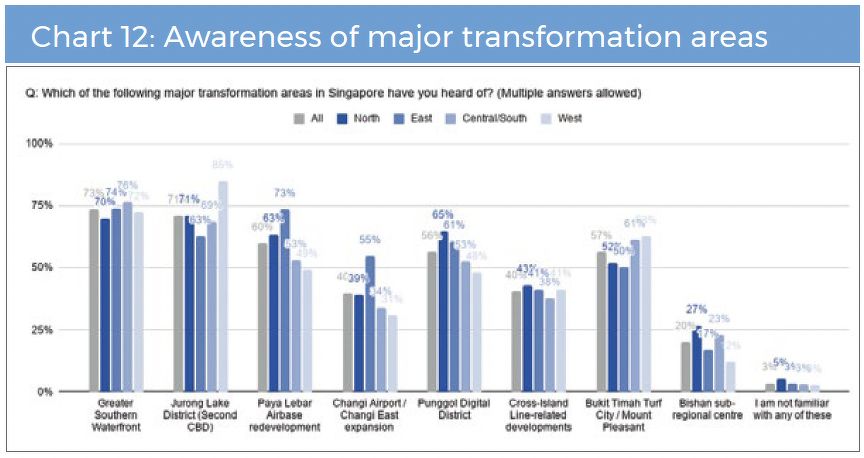
Based on their awareness of major transformation areas in Singapore, overall, 73% of respondents knew of the Greater Southern Waterfront (see Chart 12), with regional proximity a strong influence.
The figure peaks at 76% among residents in the Central/South regions, while the Jurong Lake District reaches 85% among those in the West.
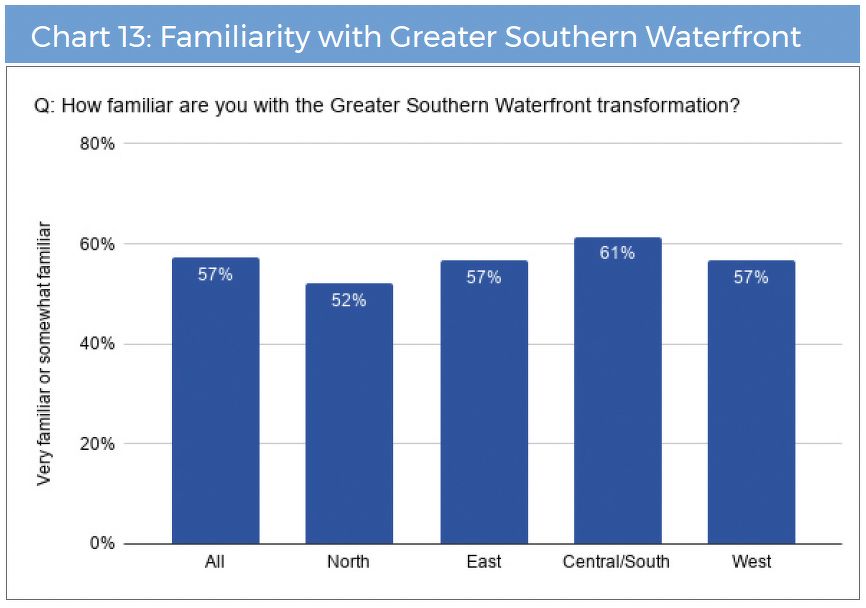
The Greater Southern Waterfront commands broad-based appeal, maintaining balanced public recognition across the island. At least 57% of respondents in the East, Central/South and West regions indicated familiarity with the sprawling project’s master plan (see Chart 13).
Such widespread awareness suggests that upcoming projects in the area could draw interest from buyers beyond the Central/South region.
Lifestyle appeal could drive confidence in GSW
Six in 10 respondents believe that the areas near the Greater Southern Waterfront will outperform the wider market long-term.
This confidence likely stems from its lifestyle appeal, with 54% expressing interest in the upcoming “new waterfront lifestyle precincts” (see Chart 14).
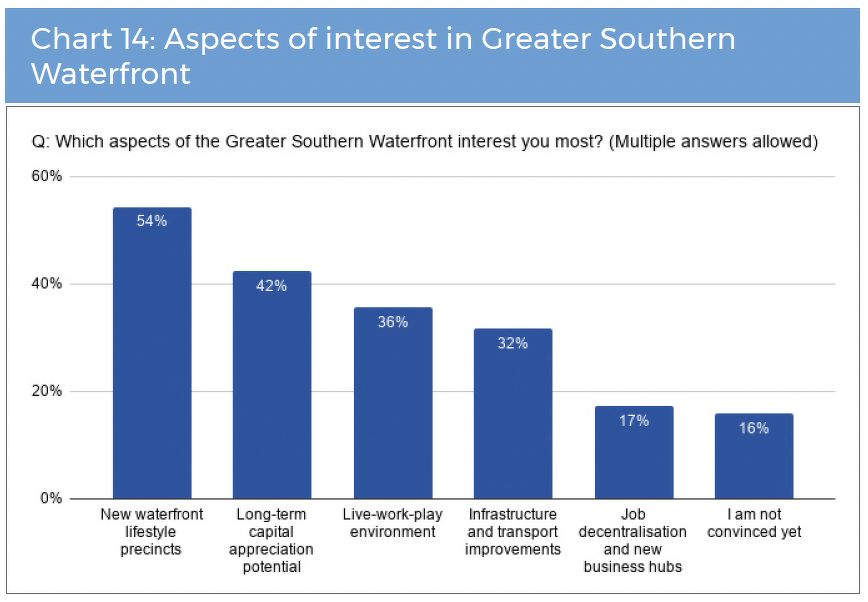
Notably, the lifestyle preference outranks utility-driven aspects such as “job decentralisation and new business hubs”, which suggests homebuyers value the precinct’s lifestyle amenities over its employment hubs.
Key findings
The survey reveals strong market confidence in the Greater Southern Waterfront’s long-term future, potentially driven by its lifestyle rather than business appeal.
While four in five respondents factor upcoming transformation plans into their property decisions, these plans remain secondary considerations rather than primary catalysts.
While freehold status remains a major draw for Singapore homebuyers, its appeal hinges on the presence of nearby amenities and the price premium relative to leasehold options.
Priorities vary by segment. Landed property owners prefer freehold properties for long-term value, exclusivity and low-density living.
Meanwhile, private condo and HDB homeowners share similar preferences, prioritising daily convenience, a balance of both high- and low-density living benefits, and price sensitivity towards freehold properties.
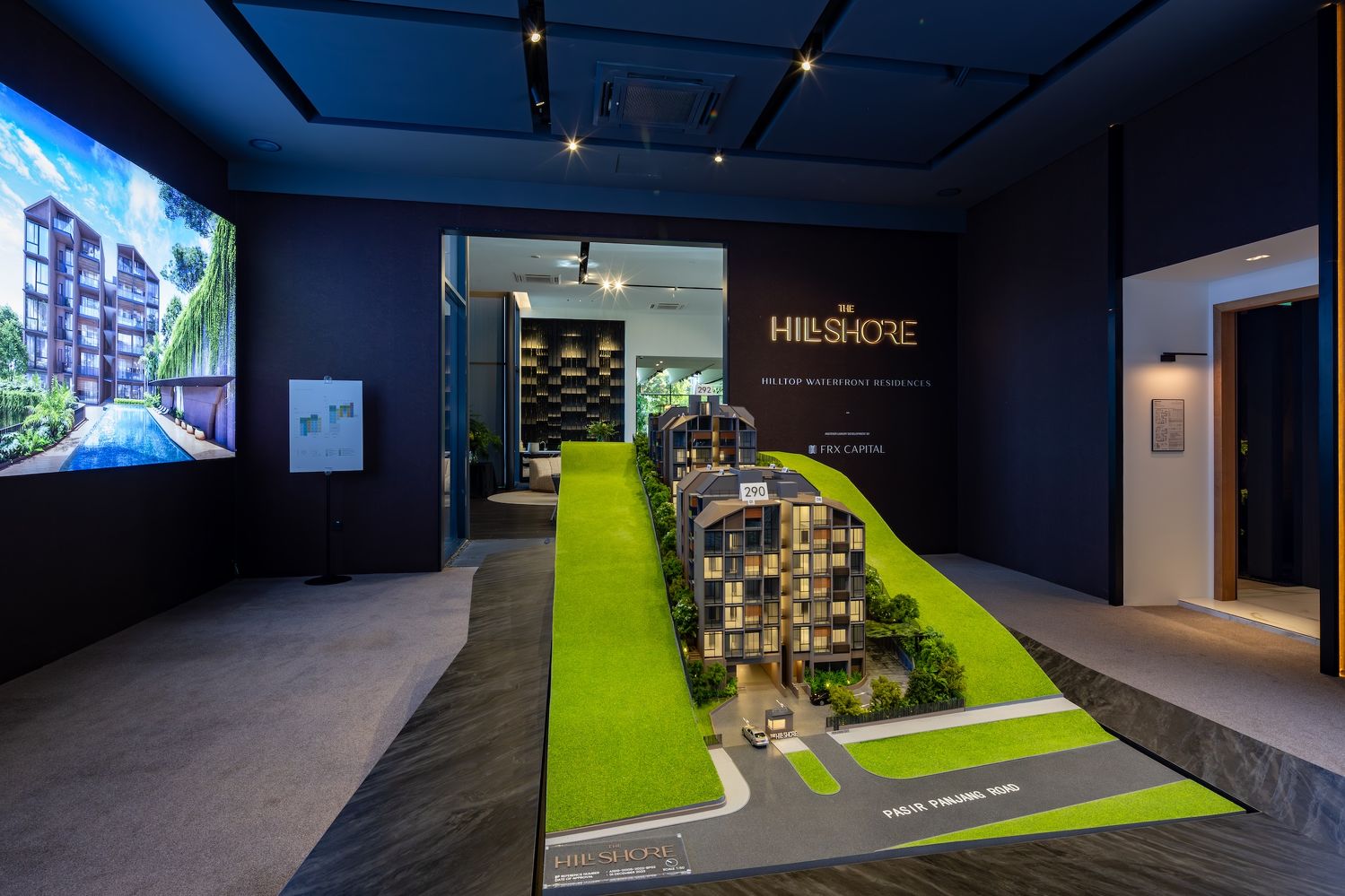
Scale model of The Hillshore, a 59-unit development situated on an elevated site that slopes down towards Pasir Panjang Road (Photo: Samuel Isaac Chua/EdgeProp Singapore)
Homebuyers seeking a balance of exclusivity and growth-zone proximity may look to The Hillshore, a freehold, low-density development by FRX Capital.
Located within walking distance of Haw Par Villa MRT Station in the Pasir Panjang enclave, it is well-positioned near the upcoming Greater Southern Waterfront transformation.
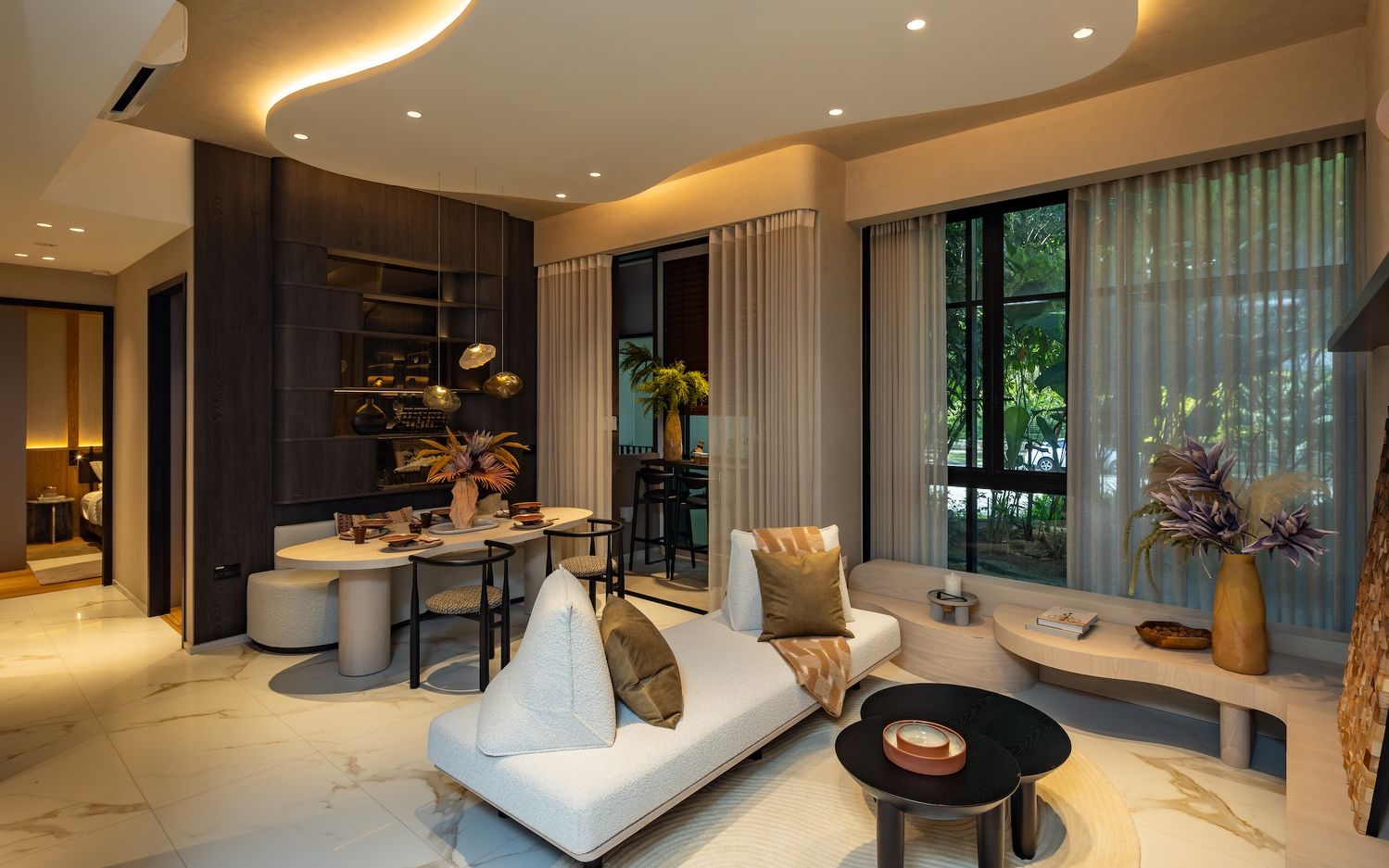
The Hillshore’s showflat. Most units on the fourth and fifth floors of the freehold condo have unobstructed views of the Greater Southern Waterfront and Kent Ridge Park. (Photo: Samuel Isaac Chua/EdgeProp Singapore)
This proximity allows future residents to access the precinct’s planned lifestyle amenities, combining daily connectivity and privacy with access to the green corridors of the Southern Ridges.
For more news and analysis, read our weekly e-paper. Prefer a print copy? Get it delivered to your home every Monday.
Follow Us
Property updates, 24/7.


Subscribe to Newsletter
Market insights, delivered weekly.
Top Articles
Search