
The Peranakan Club: A labour of love and feast for the senses, steeped in heritage
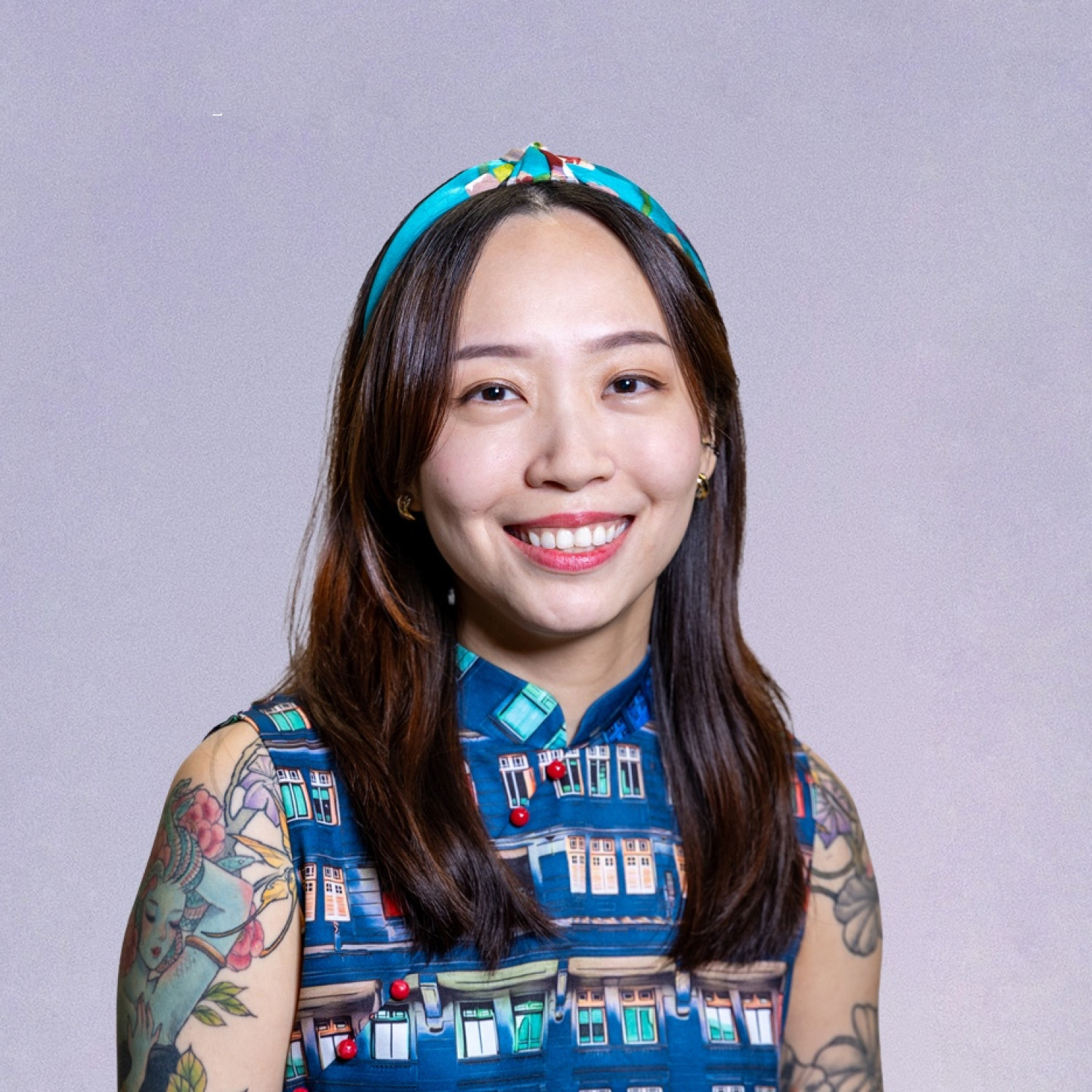
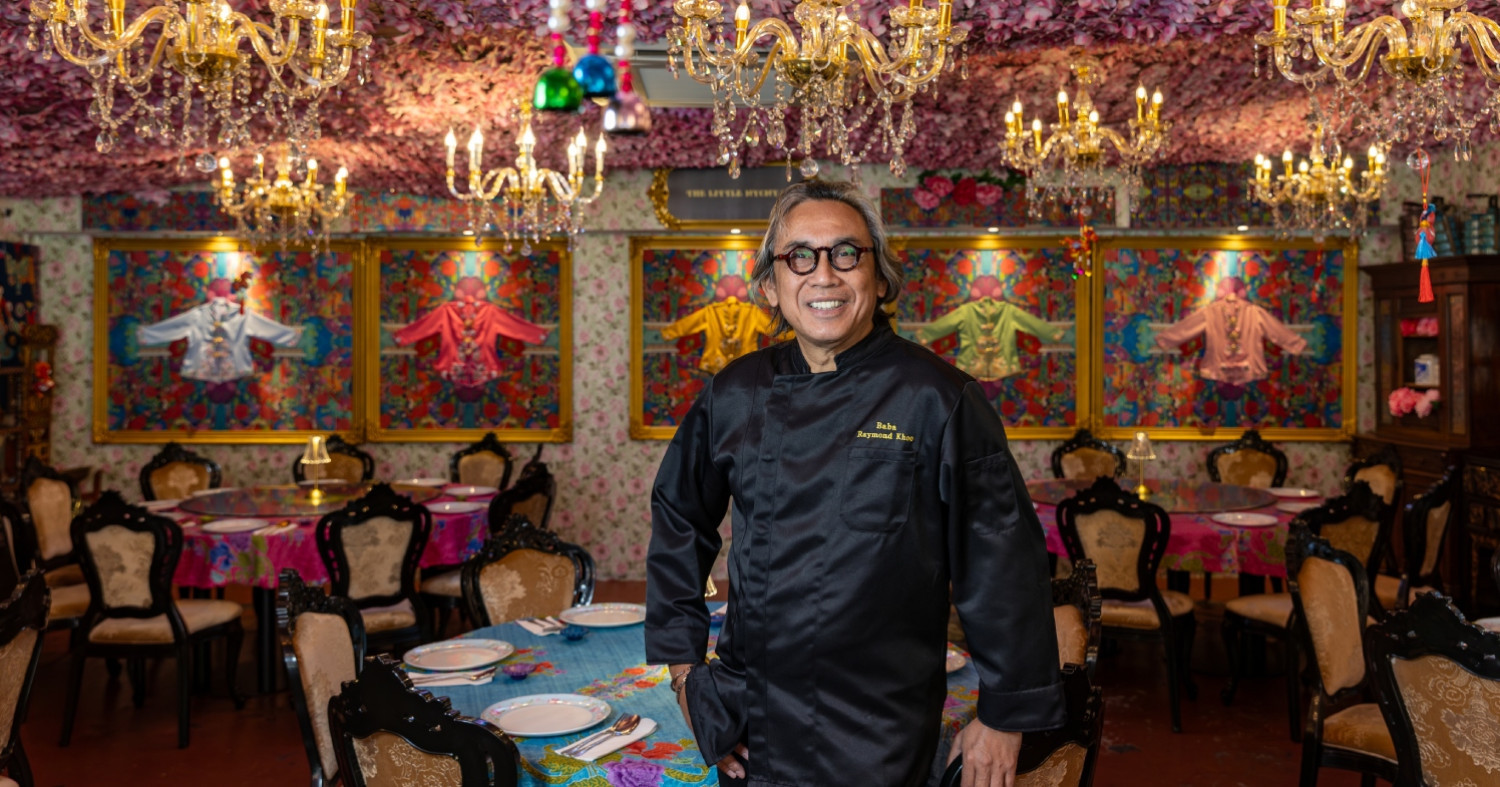
Helmed by Baba Raymond Khoo, the social enterprise blends 'living museum' experiences with Straits Chinese gastronomy at Orchard Towers. (Photo: Samuel Isaac Chua / EdgeProp Singapore)
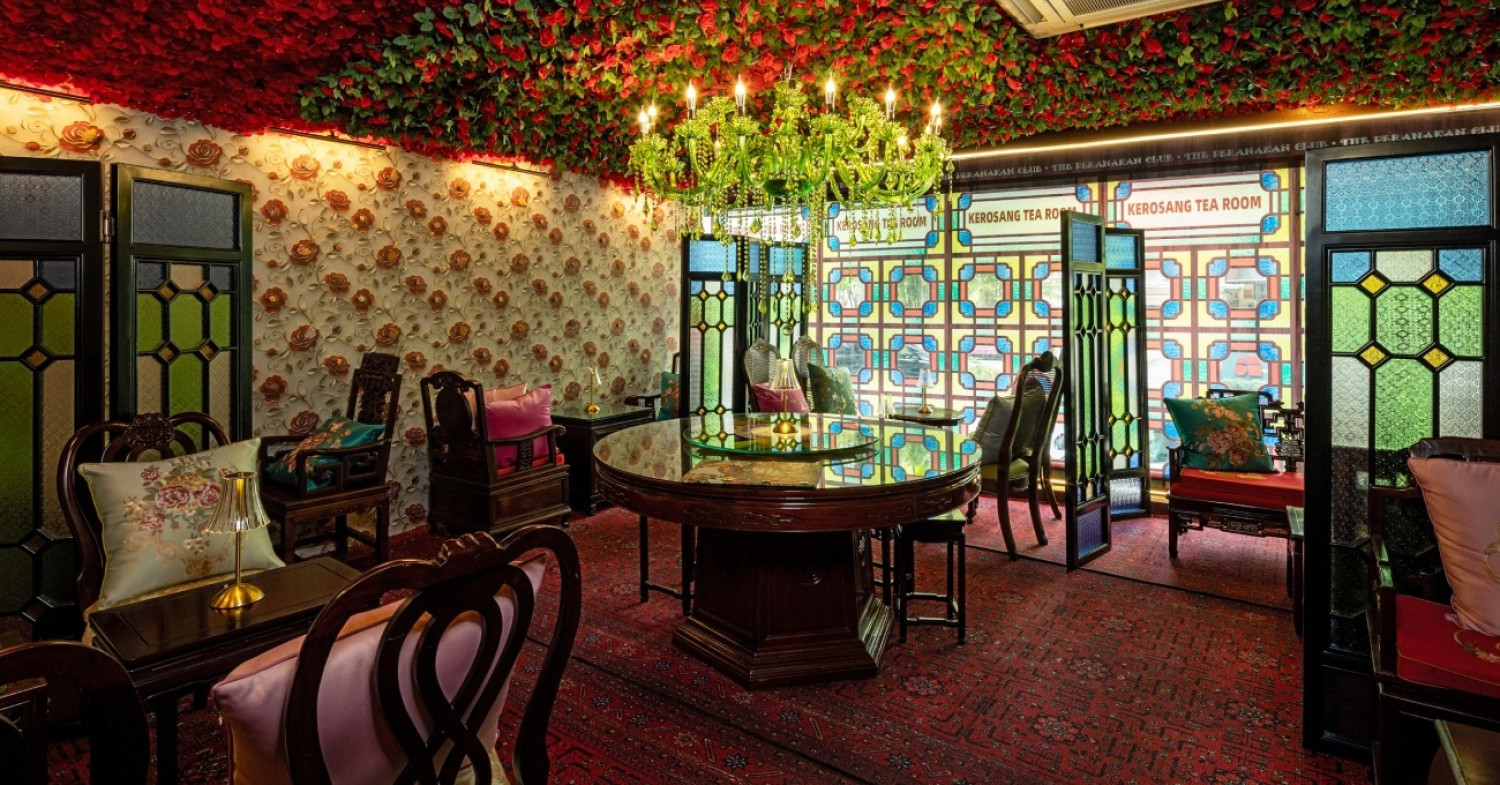
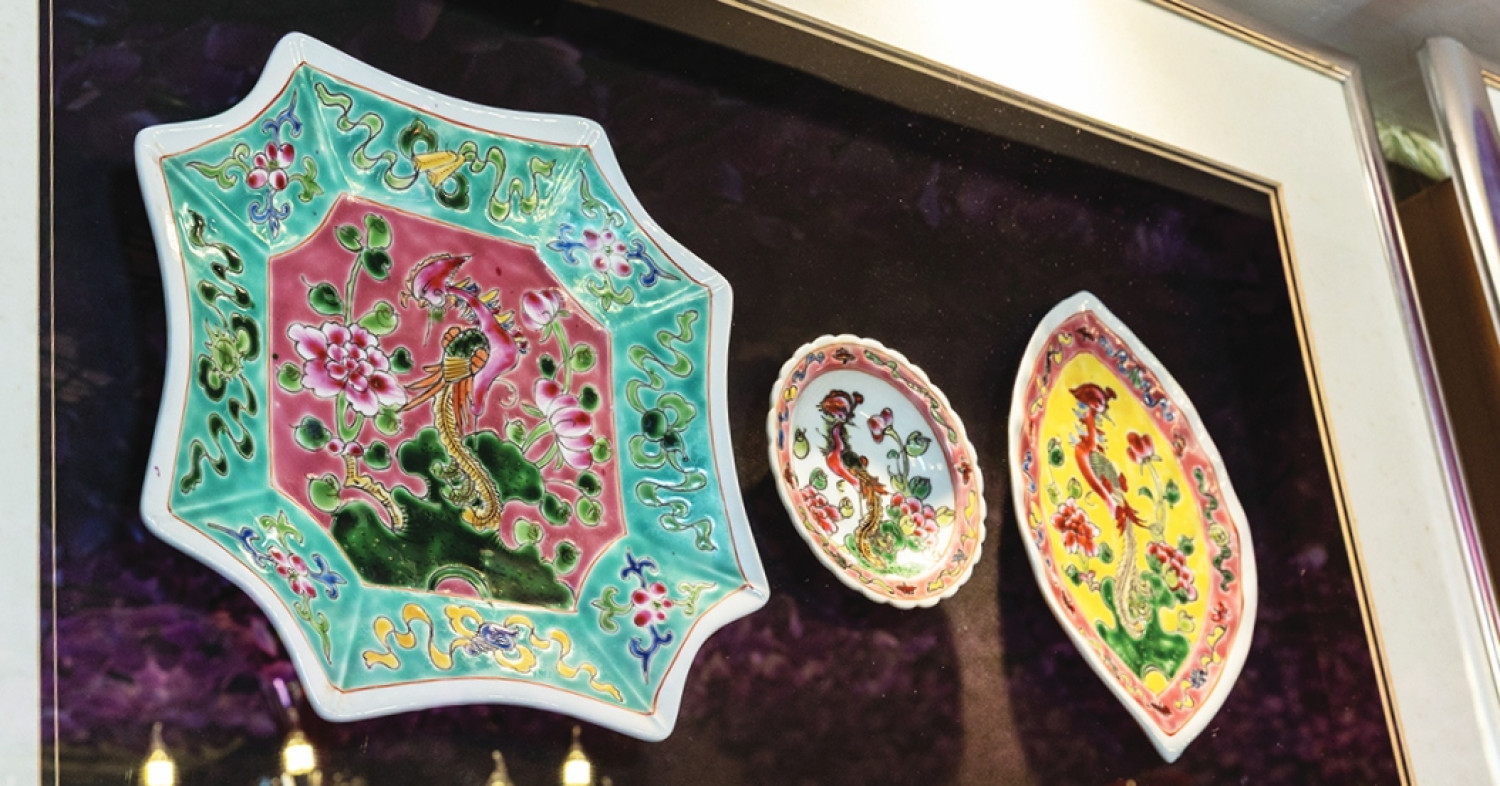
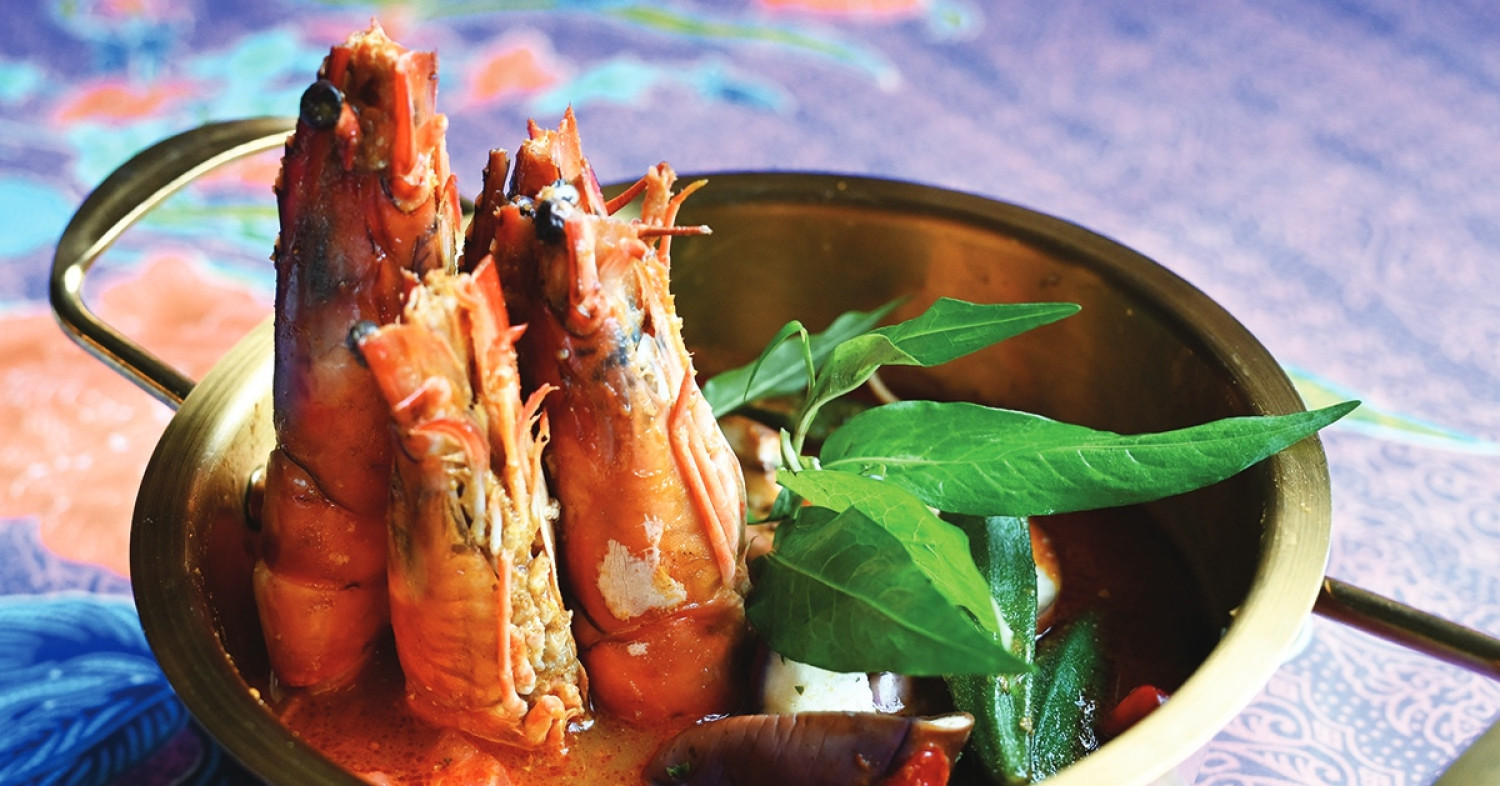
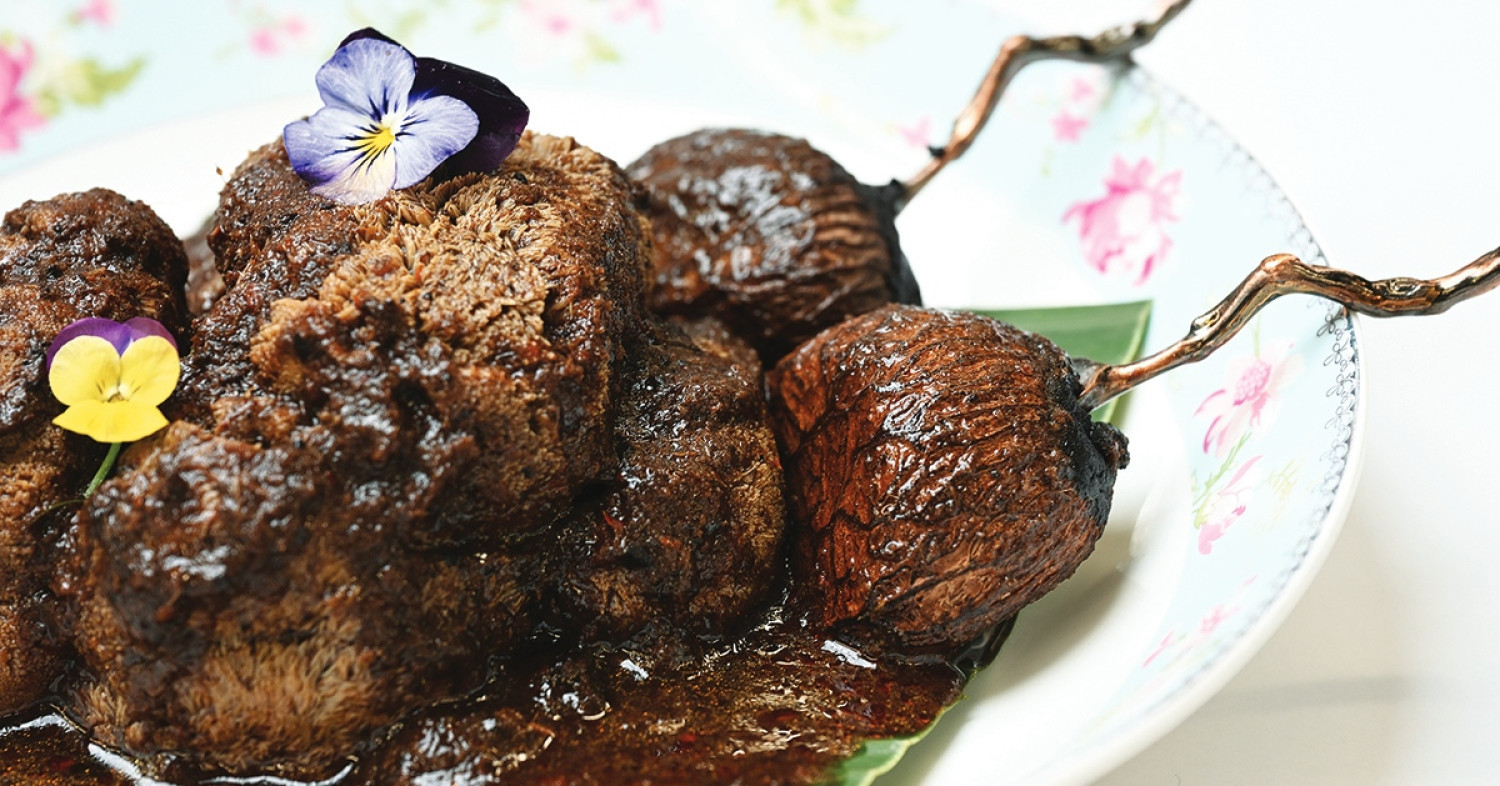
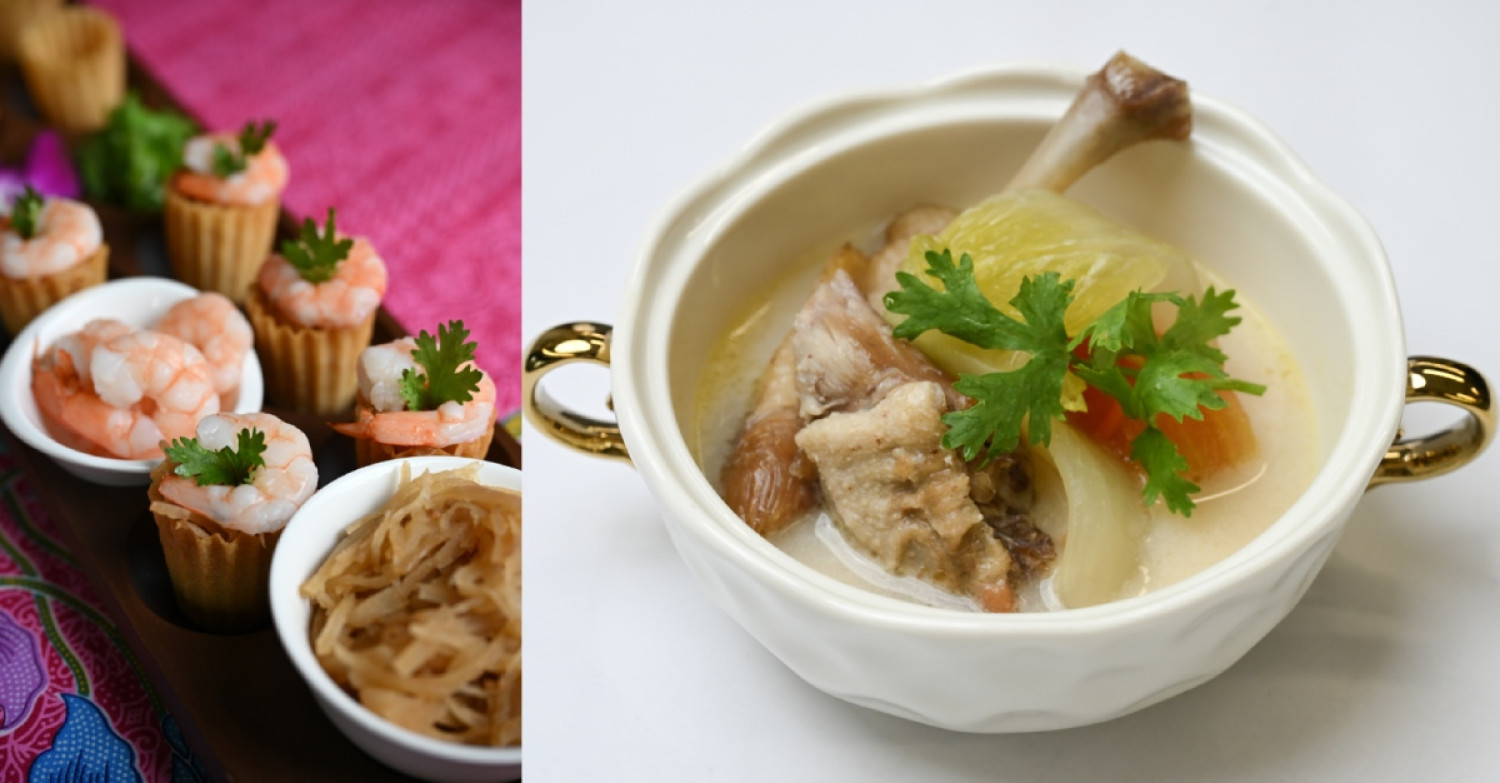
Colour is the first thing The Peranakan Club announces: deep plum and gold, rich crimson, blush pink softened by climbing florals, and cool wisps of powder blue. Kebayas in fuchsia and jade hues hang on mannequins and on walls, framed like paintings.
Tingkat carriers catch the light beside rows of hand-painted porcelain. Chandeliers — some the colour of rubies, others a pale champagne — punctuate the ceilings. Kerosang brooches dot the peony wallpaper, pinned among the blooms, each one glinting like a jeweller’s cabinet left open.
Spread across 5,000 sq ft on the second floor of Orchard Towers' rear carpark block, The Peranakan Club is a newly opened social enterprise registered with raiSE Singapore.
It brings together six concepts: bar, tea room, casual dining, private dining, retail and a “living museum”.
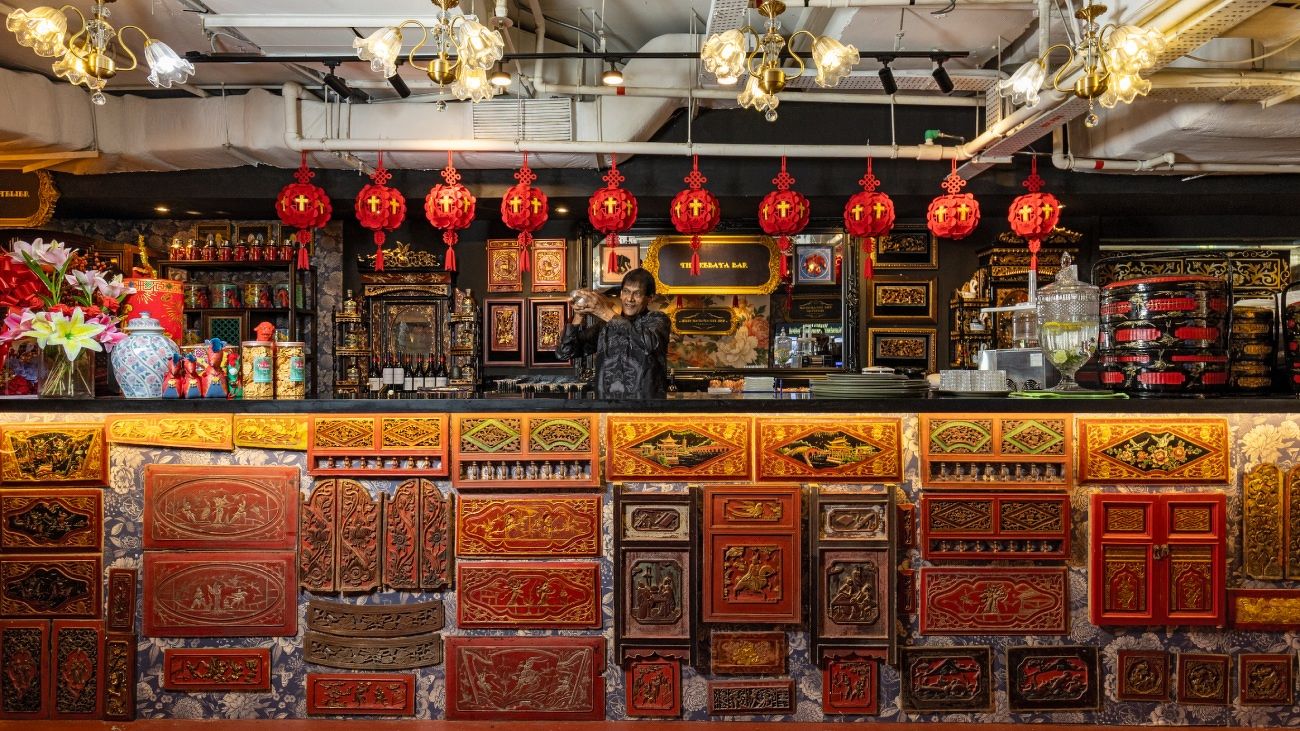
Clad with repurposed vintage bedframes, the Kebaya Bar is a collaboration with the homegrown Brass Lion Distillery. (Photo: Samuel Isaac Chua / EdgeProp Singapore)
Peranakan culture, which has always expressed itself through batik sarongs, intricately beaded slippers and embroidered kebayas, was never going to produce a restrained interior. The result is deliberately, unabashedly ornate.
“It has to be loud. It has to be in your face,” says Raymond Khoo, the social entrepreneur and chef who dreamt up the space.
A Baba who has spent more than three decades building purpose-driven food and lifestyle enterprises, Khoo brings both his personal heritage and professional expertise to the club.
New life at Orchard Towers
At first glance, its address is an unlikely one. Orchard Towers had been for decades better known for its nightlife and seedy reputation than for heritage or social purpose.
That began to change in late 2023, when nightclubs and bars at Orchard Towers shut their doors. Public entertainment licences were no longer issued or renewed for businesses there.
The transformation accelerated in early 2025, when Cornerstone Community Church acquired 19,000 sq ft of space previously occupied by two prominent nightclubs in the front block.
Today, the environment is largely unrecognisable. Both blocks house a mix of restaurants, cafes, and a range of wellness and health businesses.
“We see a lot of families coming in, and about 80% to 90% of the businesses are new tenants now,” Khoo says.
He had chanced upon the unit in the rear block while searching for a suitable space to rent. It used to house a cloud kitchen with 21 stalls; clearing out what remained before renovation could begin was no small task.
Renovation took two months, much of it designed on the fly without drawings or mood boards. Khoo scribbled and sketched what he envisioned, and went shopping and hunting for essential pieces.
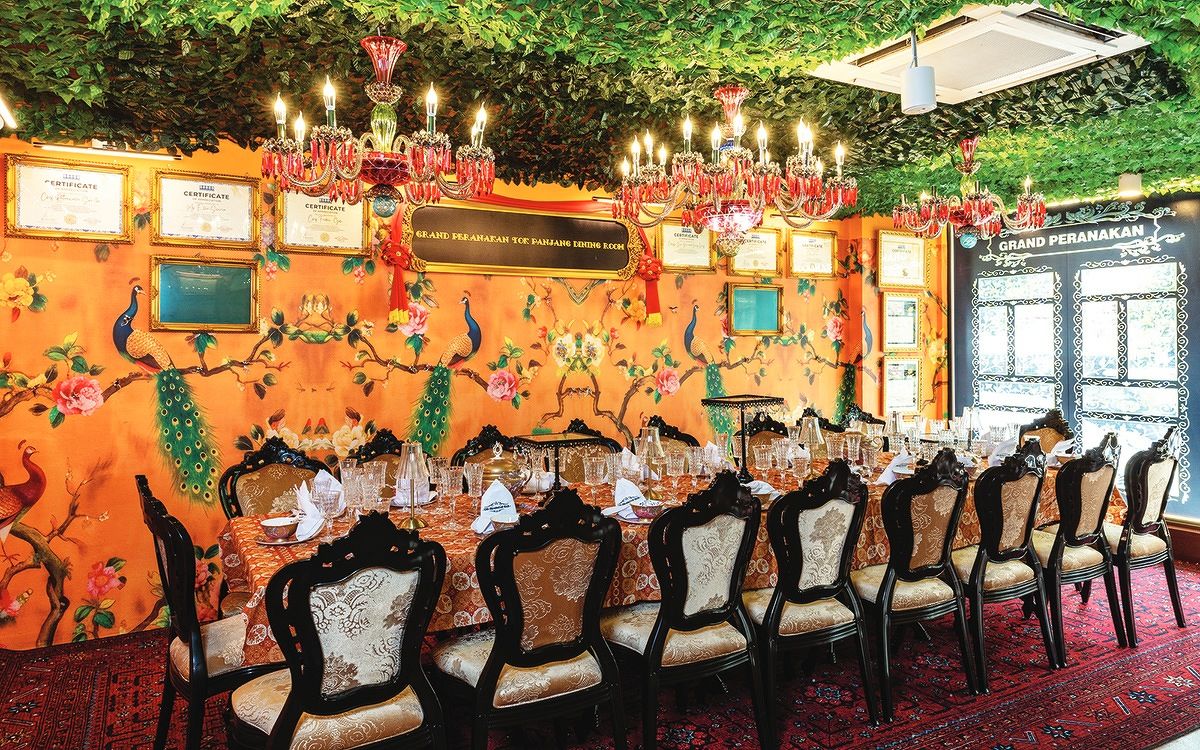
The Grand Peranakan private dining room offers a 10-course degustation menu. It also has a private kitchen, popular with visiting chefs for culinary events. (Photo: Samuel Isaac Chua / EdgeProp Singapore)
A warm welcome home
The Peranakan Club’s debut also marks a homecoming to Orchard.
A decade ago, Khoo launched an earlier restaurant, The Peranakan, at the Claymore Connect mall along Orchard Road. The restaurant shuttered in late 2021 in the midst of the pandemic, before relocating to the Lengkok Bahru neighbourhood in Bukit Merah.
The Peranakan, likewise a social enterprise, is now situated on the ground floor of 57 Lengkok Bahru. At the same HDB block sits S17 Community Kitchen, also founded by Khoo, which has about 600 beneficiaries.
But even as The Peranakan found its footing in Lengkok Bahru, Khoo had not quite left Orchard behind. He knew the area well — regulars who live nearby, and the office crowd who lunch or entertain guests over Peranakan cuisine.
“We’ve got many regular kaki (friends) who live around here, and corporate clients whose offices are in the vicinity, so I thought Orchard will be a good place for us to come back to,” he says. “We’ve been warmly welcomed by them.”
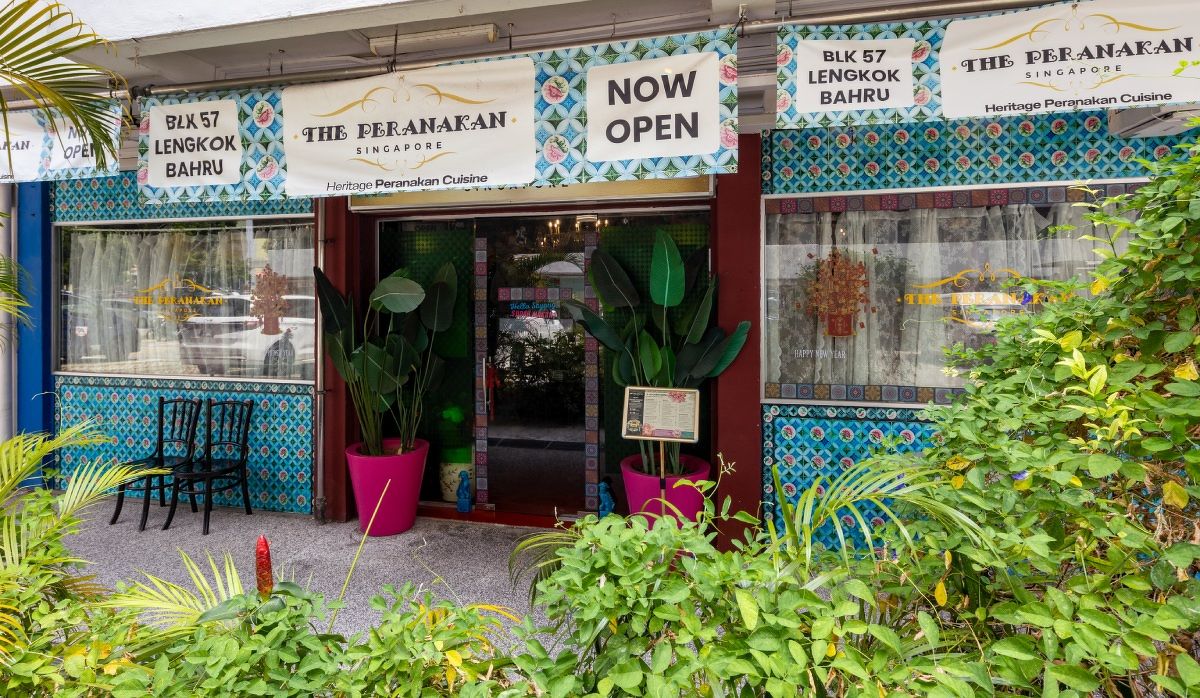
Previously at Claymore Connect, The Peranakan restaurant has relocated to Lengkok Bahru. It also has a garden growing exotic herbs such as 'raja ulam'.
Designing by instinct, rooted in history
Every room and surface at The Peranakan Club were conceived and curated by Khoo.
“My mood board is up here,” he says, tapping his head with a smile. Interior design is a long-standing passion. Over the years, he has designed his own home, taken on residential projects for friends, and worked on hotel interiors.
At the club, pieces from his private trove of antiques — gathered over a lifetime of scouring markets and shops with his wife Janet — rest alongside cherished objects donated by friends or on loan by fellow collectors.
These include traditional brooches, known as kerosang or kerongsang, that belonged to his mother, as well as kasut manik (beaded slippers) and antique belts contributed by collectors.
“These pieces are very precious. We want everybody to be able to showcase what they grew up with, rather than keeping them in storage,” he says. “If someone has items like their great grandmother’s wedding gown, I’d urge them to please come and display it.”
The tea room was conceived as a homage to the Chinese roots of Peranakan culture, from the rosewood furniture — many about 80 to 100 years old — to the kerosangs adorning its walls. Worn by Nyonya women as fasteners on their blouses, the brooches draw on influences including the ornamental clasps once pinned to the Chinese qipao.
Traditional Chinese folding panels, or pingfeng screens, divide and define spaces within the club. Historically, in a Peranakan household, such screens would have served as a vantage point for daughters to discreetly observe visiting suitors.
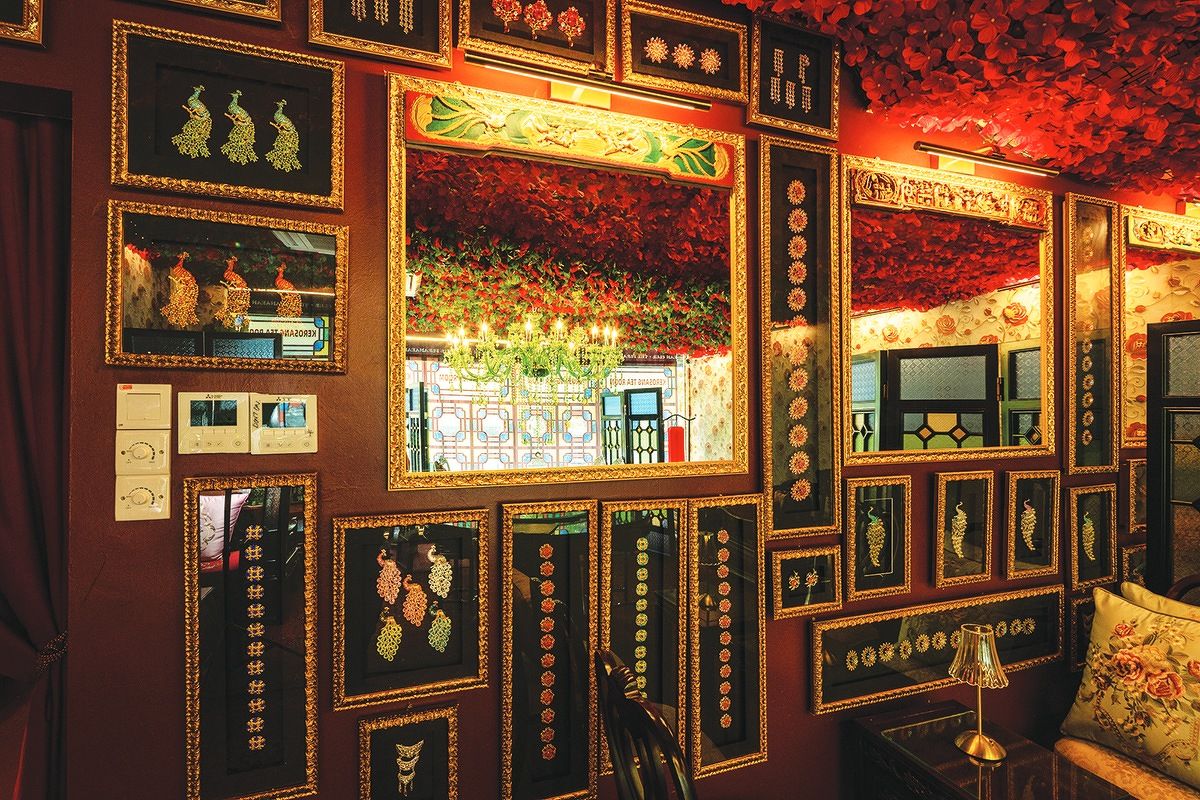
Intricate antique jewellery and accessories line the walls of the tea room, offering a quiet sanctuary for afternoon tea or champagne. (Photo: Samuel Isaac Chua / EdgeProp Singapore)
Collecting with care
The sourcing never stops. Locally, Raymond and Janet trawl Singapore’s antique shops. On holidays, they visit flea markets and antique dealers across Malaysia, Indonesia and Thailand, picking up whatever feels appropriate — brooches, teacups, teaspoons, plates and more.
“The buah keluak spoons and antique plates are very difficult to find now. Anytime we travel and spot very Peranakan pieces, we buy and keep them,” he says. “So as you can imagine, my whole house, the two restaurants, everywhere is just full [of our finds].”
The most demanding element to execute at The Peranakan Club was the bar. Both the counter and the walls are faced with panels assembled from the carved sections of at least 50 vintage wooden bedframes, from different eras and styles of craftsmanship.
Sourcing these pieces from bedframes was challenging; assembling them into something coherent was harder still. “It’s very difficult to replicate this,” Khoo says. “A collection like that has never been seen before.”
Many of the artefacts and furniture, having passed through decades, also needed work before they could be displayed.
A bridal chair over a century old was sent for a month of careful restoration, its gold detailing renewed skilfully to retain the patina of age instead of the shine of new paint.
In the gallery, two wooden panels with bevelled edges were sent to a workshop, where craftsmen restored them and used them as reference for a full cupboard — built to match using traditional joinery techniques without a single nail.
As for the pieces that do not yet have a place at the club to call their own, they are piled up across the Khoos’ home, filling the study, storeroom and even under the bed. The sheer volume of items is more than enough to fill another sprawling restaurant entirely.
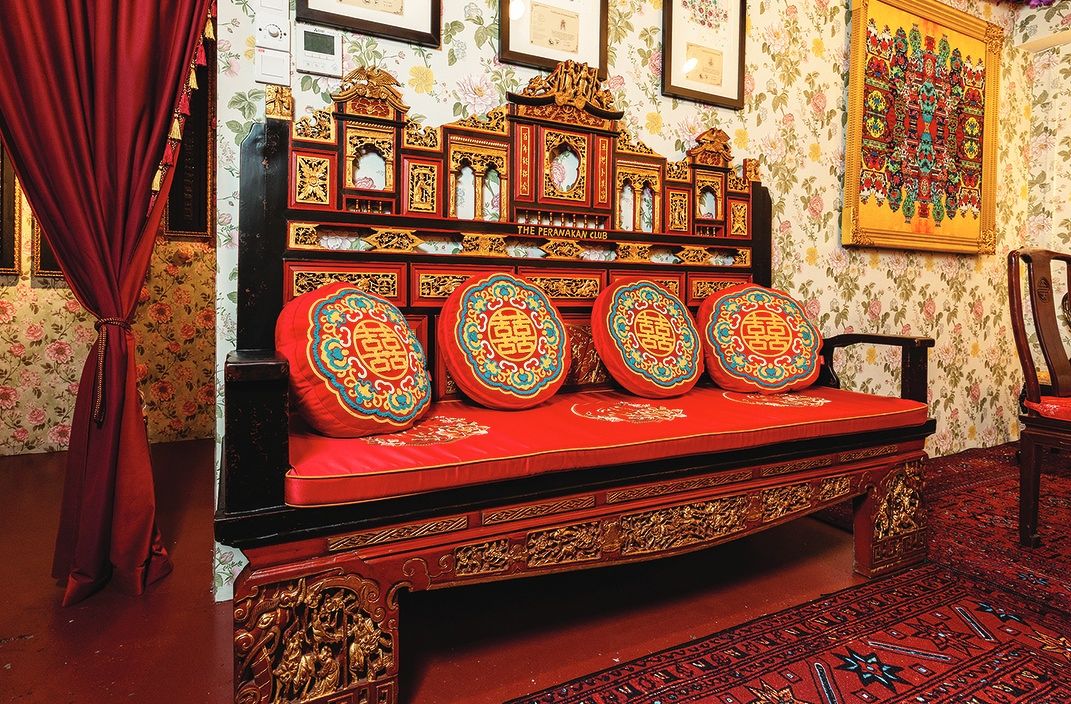
A century-old bridal chair comes with the original cushions that newly wed couples would kneel on to serve tea to elders. (Photo: Samuel Isaac Chua / EdgeProp Singapore)
Shop, sip and savour
The Peranakan Club houses six distinct zones, each with its own name, colour palette and character.
The entrance opens into the Baba Nyonya Atelier, a retail concept offering meticulously crafted kebayas, kerosangs and heritage lifestyle wares.
Beyond it lies the Kebaya Bar, a collaboration with homegrown craft distillery Brass Lion Distillery. Peranakan-inspired cocktails like the “Puteri Salat”, “Bok Kwa Pisang Flip” and “Buah Keluak Kopi O” are served amid the carved bedframe panels.
The Kerosang Tea Room sits adjacent to the bar, offering a quieter, more contemplative space where guests can take afternoon tea or linger over champagne and caviar.
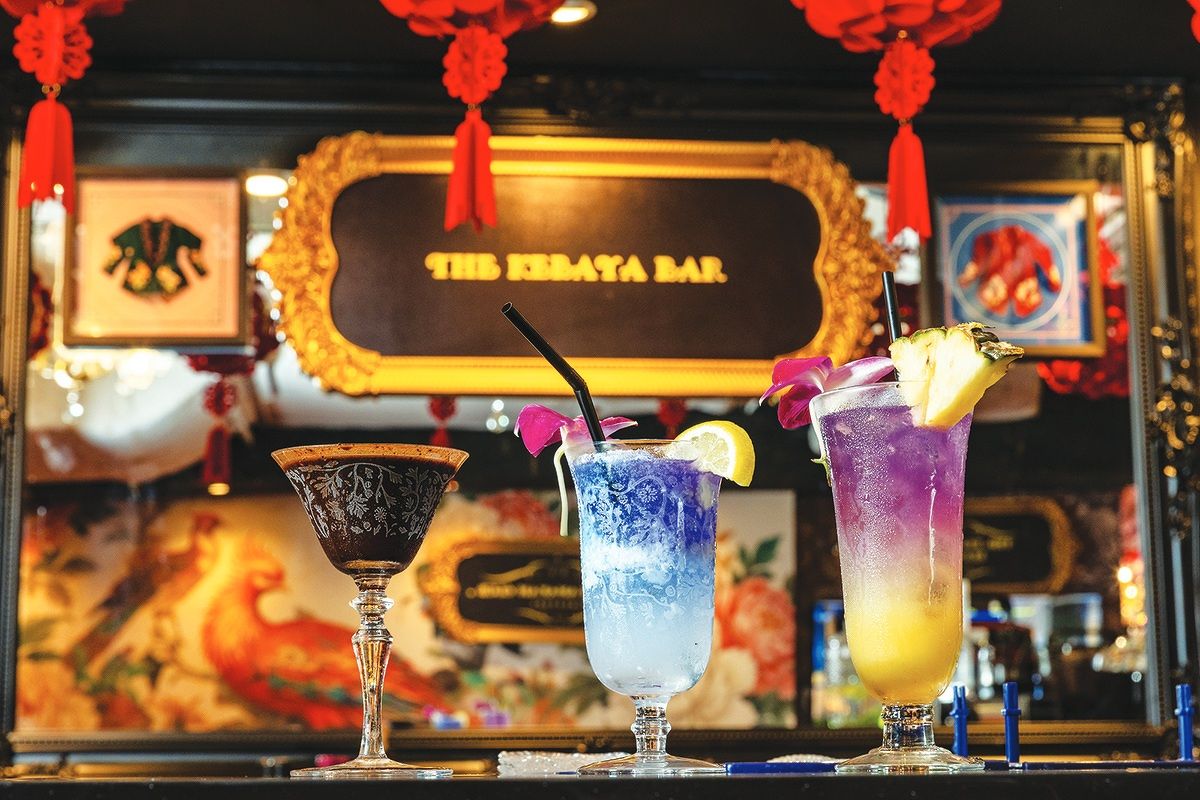
Peranakan-inspired cocktails at the bar include the “Buah Keluak Kopi O” and “Peranakan Sling”. (Photo: Samuel Isaac Chua / EdgeProp Singapore)
Next, The Little Nyonya is the main casual dining area, an 80-seater space designed with a younger crowd in mind and serving family-style recipes. Where the rest of the club leans into deep saturated hues, this room feels lighter and fresher — pale mauve pinks and soft blues paired with a gentle, pastel green in the floral wallpaper.
"When talking about Peranakan food, we always hear, 'I'll bring my uncles, I'll bring my aunties.’ But why not bring your friends too?" Khoo says. The Little Nyonya was thus designed to cater to a younger audience, to make it vibrant and photogenic while retaining the same heritage recipes.
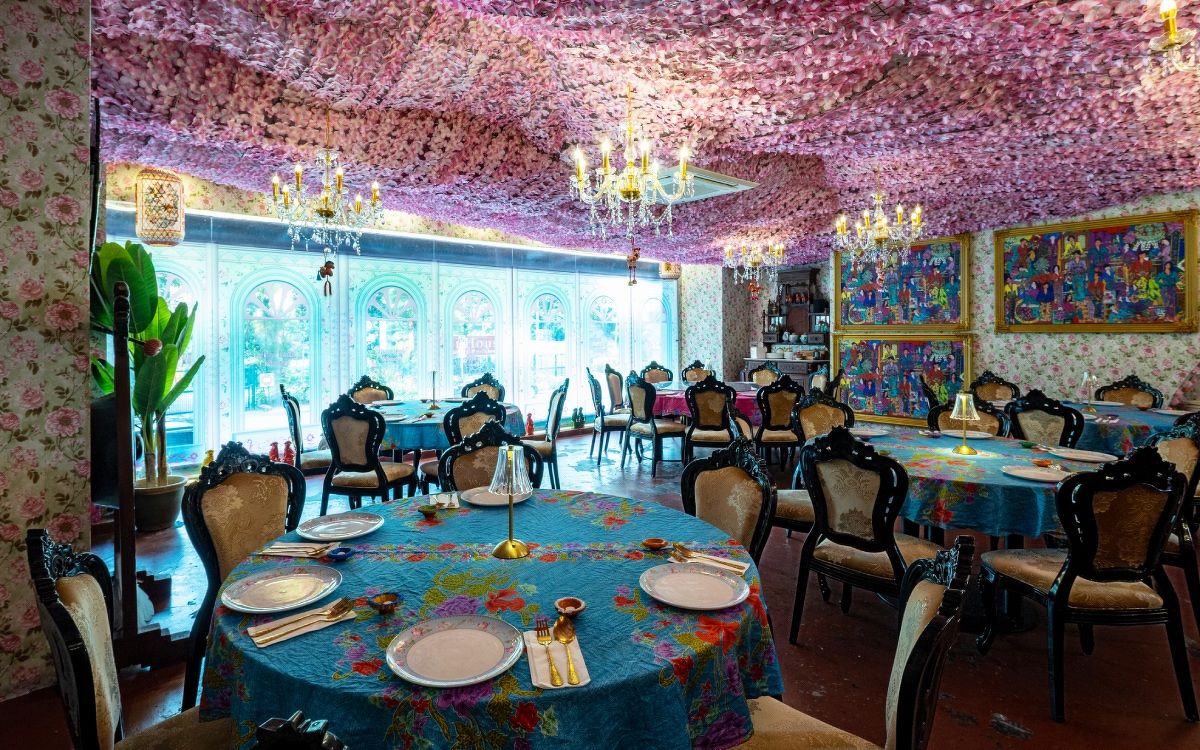
The Little Nyonya casual dining area, designed with a younger crowd in mind. (Photo: Samuel Isaac Chua / EdgeProp Singapore)
The art of the long table
Meanwhile, two private dining spaces are configured for tok panjang — a long-table banquet historically served to royalty, dignitaries and village elders during special occasions.
Each private dining area has a different setup. The one within the gallery takes a more modest home-style approach, its mismatched chairs a nod to the communal kampong spirit of pulling together furniture from neighbours when hosting a feast.
“In those days, nobody had so many chairs and such long tables in one house,” Khoo says. “You would borrow some from next door and some from the neighbouring kampong, hence the different types of furniture.”
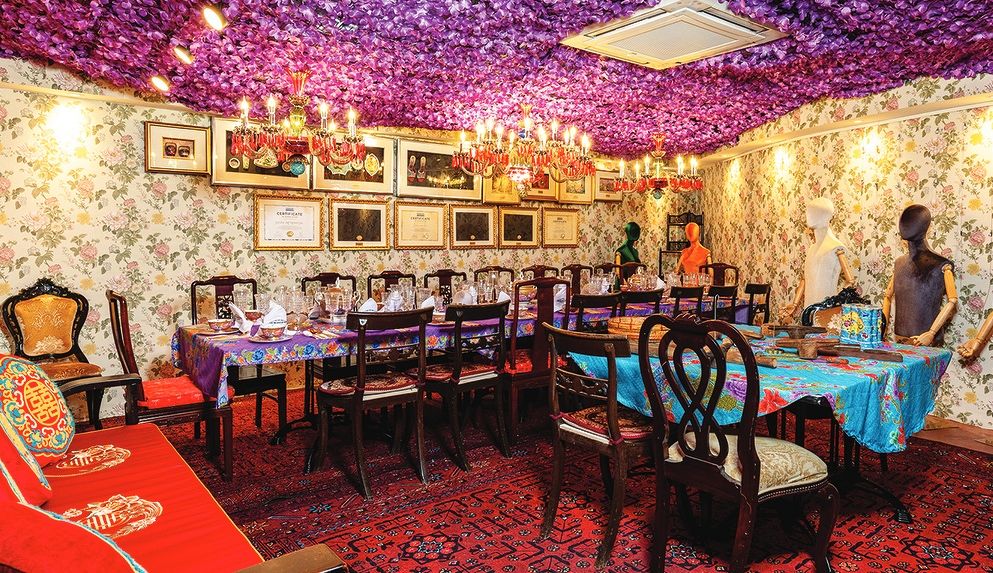
In the gallery, the 'tok panjang' long table is surrounded by a variety of chairs. The mannequins may be fitted with rare wedding ensembles curated from private collectors.
On the other hand, the Grand Peranakan room reflects a later chapter in Peranakan history — one of growing affluence and deeper European influence. Matched chairs with dark wood frames, champagne flutes, and vivid tangerine wallpaper printed with peacocks and peonies speak to a household that had acquired the means to furnish and entertain with some grandeur.
Private dining guests can savour the traditional tok panjang feast menu, including rare dishes such as sambal pisang jantong (banana heart salad) and babi hong (spiced pork dish).
Alternatively, the Grand Peranakan offers a 10-course degustation menu served in single-place style. Khoo has found this to be popular with corporate and foreign diners who may be less familiar with communal dining.
The room’s private kitchen also opens the space up to private cooking events across different cuisines. “We have a Spanish chef, who used to work in Singapore, coming soon to host all his old kaki and makan (eat) here,” Khoo says.
Heritage you can touch
Just steps away, the gallery showcases heirloom wedding outfits, artefacts and collectibles in a setting that evokes the interiors of a Peranakan home.
Unlike in a conventional museum, visitors are encouraged to touch and handle many of the objects. These include moulds used for making ang ku kueh, mooncakes and kueh pie tee. Cherki cards, often played by Nyonya women as a pastime, are also showcased.
Display cupboards, wall-hanging fixtures and mannequins are built to accommodate various objects that collectors contribute, from ceramics to jewellery to garments.
The collection is not fixed, as fellow Peranakans are invited to loan or display their heirlooms on a rotating basis, giving the gallery a life that shifts with the community around it.
Workshops on heritage crafts and recipes — such as nasi ulam, apom berkuah and other kueh — are held here too, and the SG Culture Pass is accepted.
The club also hosts bespoke weddings, offering couples the chance to tie the knot in full Peranakan tradition.
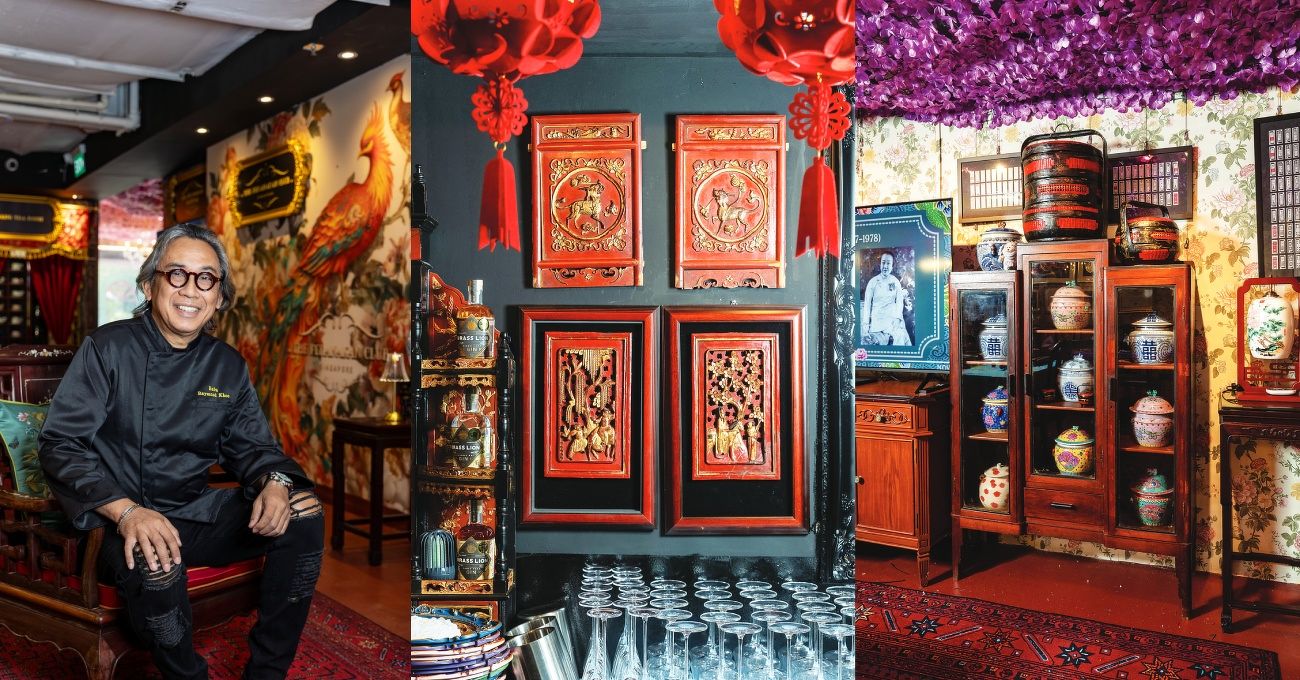
Heirlooms such as vintage bedframe pieces (middle), porcelain 'kamcheng' jars, red-and-black 'bakul siah' auspicious baskets, and 'Cherki' cards are showcased.
What we eat at home
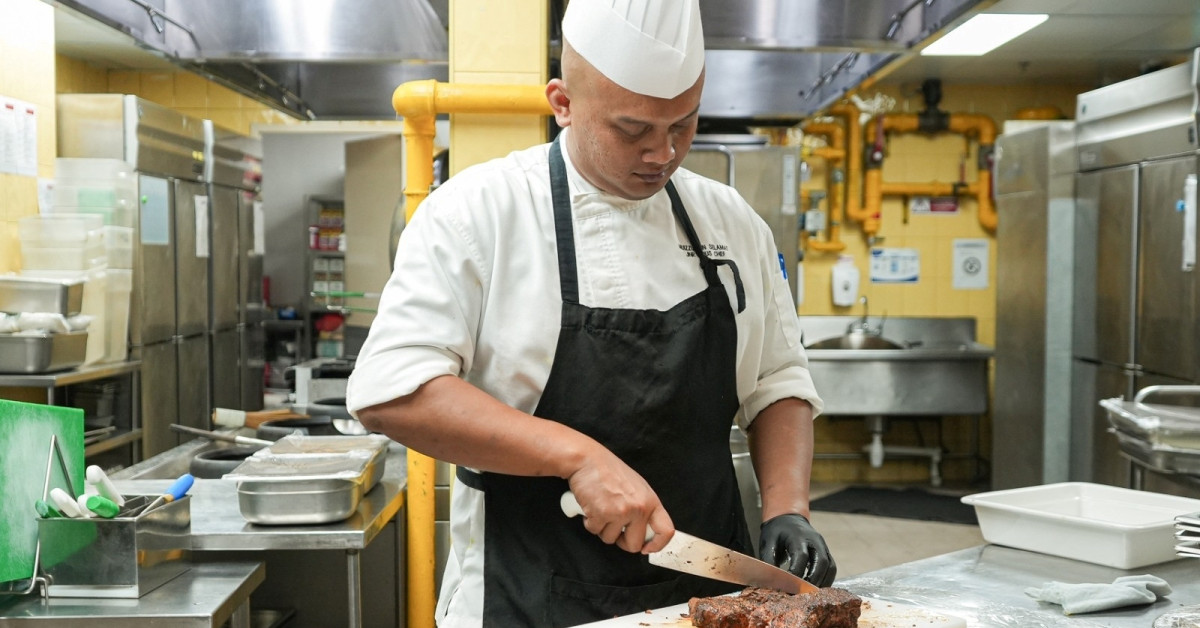
The kitchen is helmed by Khoo as executive chef and supported by Le Cordon Bleu-trained Lily Suriani Lim as head chef.
They spotlight time-honoured recipes passed down through three generations of the Khoo family. “Our main priority is to share our favourites that we eat at home,” he notes.
Take the buah keluak: each shell is packed with the equivalent of two-and-a-half nuts’ worth of filling, exactly how his family has always prepared it.
Nasi ulam is another example. Khoo’s team makes the rice salad, which is rarely found in Singapore today, using 15 herbs. Each herb is cleaned, dried and finely julienned before being tossed with cold-steamed rice and flaked salted fish.
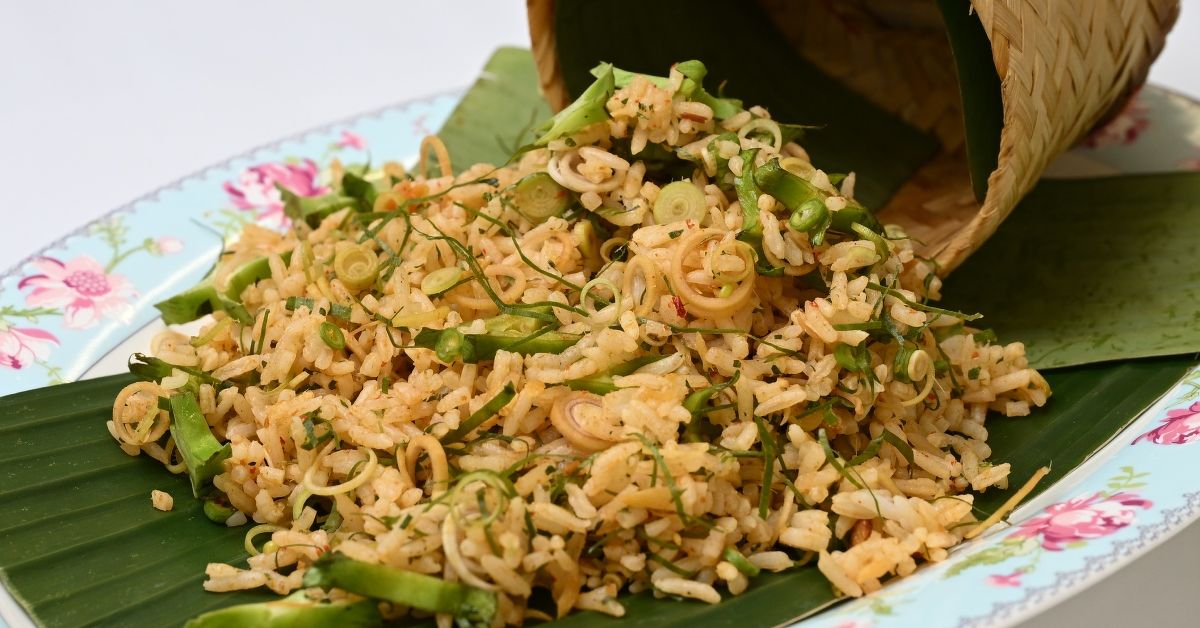
'Nasi ulam dulu kala', one of the most labour-intensive dishes on the menu. Khoo brings an attention to storytelling to every dish. (Photo: The Peranakan Club)
Historically, the dish began as a practical use for leftover rice, tossed with fresh herbs snipped from the garden. Today, nasi ulam is one of the most labour-intensive dishes on the menu. “It takes half a day just to prepare everything,” Khoo says.
The dish is served at room temperature, and the staff will take care to explain why to diners. “If you use warm or hot rice, the herbs cook slightly and turn bitter. You lose the original taste,” he notes.
Khoo brings this attention to storytelling to every dish. The beef rendang, slow-cooked for six hours, is served with fresh turmeric leaves, which doubles as a tenderiser during cooking. The team makes sure the leaves are visible on the plate, as a conversation starter.
“Most people have never seen a turmeric leaf before. So we get to show it to our diners, and they can even tear off a little bit to taste it,” he says.
Giving back
Inclusive hiring is central to how The Peranakan Club operates as a social enterprise.
About 60% of its employees come from groups who tend to face barriers to employment: single mothers, formerly incarcerated persons, spouses of incarcerated individuals, and people with special needs.
"And if a single mother's child is unwell and she can't come in to work, we just go ahead and pay her anyway," Khoo says. "They still need the income."
Beyond the club, Khoo and his team organise an annual Peranakan festival. Chefs from Singapore, Malaysia, Indonesia and Thailand participate in the sellout charity gala on a pro bono basis.
Last year’s edition saw about 500 attendees. All proceeds go to The Saturday Movement, a registered charity Khoo founded in 2010 that befriends and cares for vulnerable communities. This year, the festival is slated for Aug 15.
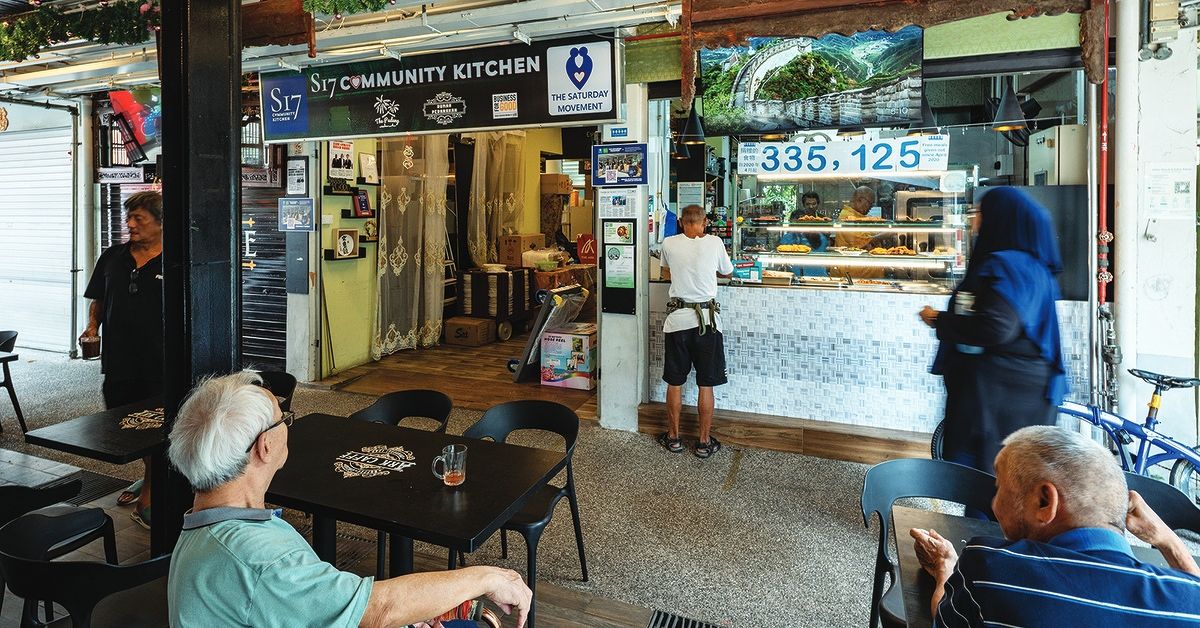
S17 Community Kitchen, which supports The Saturday Movement charity, provides meals for elderly living in the rental flats in Lengkok Bahru.
Eyes on the horizon
For now, Khoo's focus is on settling The Peranakan Club into its Orchard Towers space.
He has already been approached about another location in the CBD, but is setting that aside for the time being.
Outside of Singapore, plans are in place to open in China by the end of this year, and in London sometime in 2027. Both will follow a similar format as the club, and Khoo hopes to bring the Peranakan festival there as well.
He says: “It’s a good way to share our culture and heritage, especially when we can bring all the region’s Peranakan chefs over together. That will be really amazing.”
Check out the latest listings for Orchard Towers properties
Follow Us
Property updates, 24/7.


Subscribe to Newsletter
Market insights, delivered weekly.
Related Articles
Top Articles
Search