
Bright spots in office and retail property markets to boost Singapore’s commercial real estate landscape

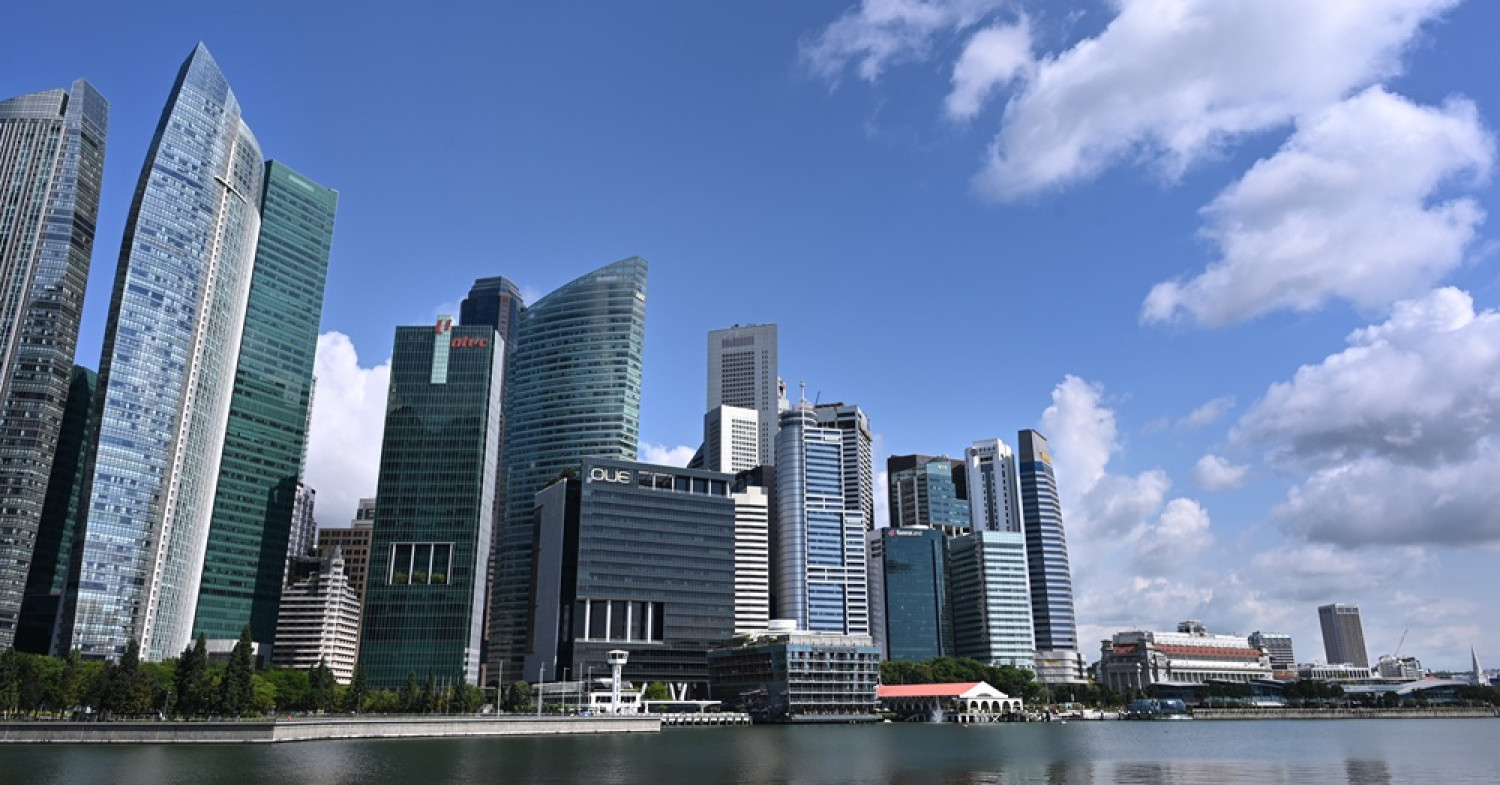
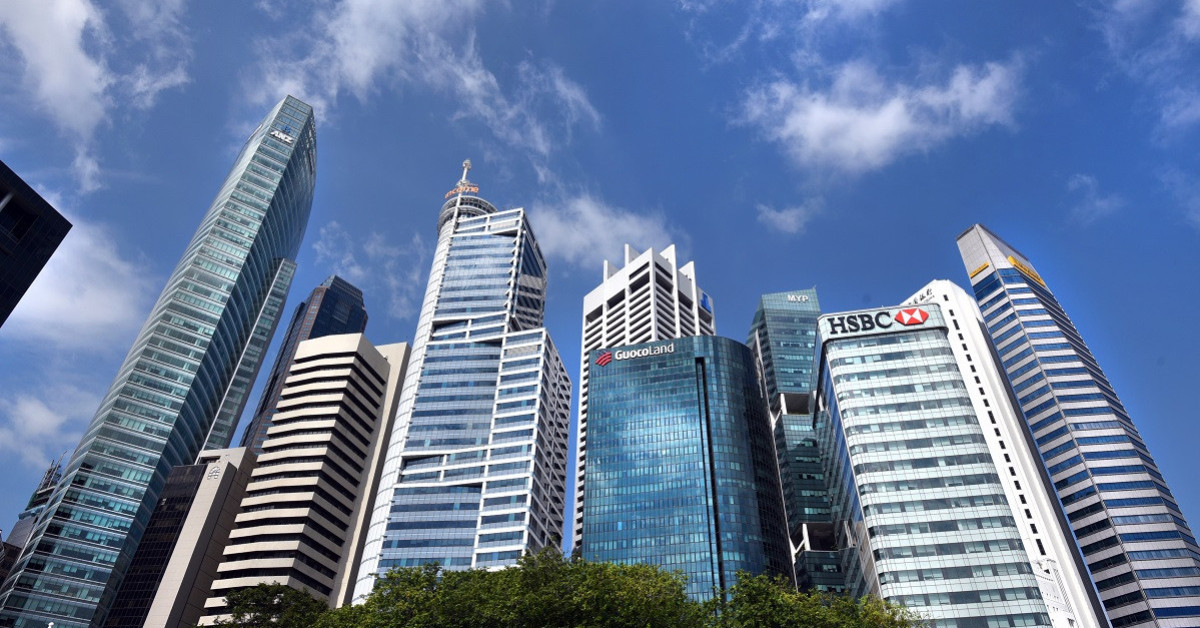
Office spaces in Marina Bay, Marina Centre and Beach Road continue to record below-average vacancy rates, notes Tricia Song, head of research of Singapore and Southeast Asia at CBRE (Photo: Albert Chua/The Edge Singapore)
Within Singapore’s commercial property landscape, both the office and retail sectors have seen ongoing shifts, shaped by evolving market dynamics and economic sentiment. In the office sector, AI and flexible work arrangements continue to shape workplace demand and preferences, notes Tricia Song, head of research for Singapore and Southeast Asia at CBRE.
Speaking at the BCA-REDAS Built Environment and Real Estate Prospects Seminar on Jan 22, Song adds that against this evolving backdrop, the office sector remains resilient, with a cautious yet optimistic outlook for the year ahead.
Meanwhile, the retail sector has been marked by a steady period of closures and consolidations, especially within the F&B segment. However, new openings still exceed closures, while the retail market remains supported by a continued recovery in tourist arrivals.
Search for the latest New Launches, to find out the transaction prices and available units
To that end, Song is similarly optimistic about the retail market’s prospects this year. “Retail sales, coupled with economic growth, are likely to continue into 2026 as tourist arrivals increase, given Singapore’s strong MICE (meetings, incentives, conferences and exhibitions) calendar,” she says.
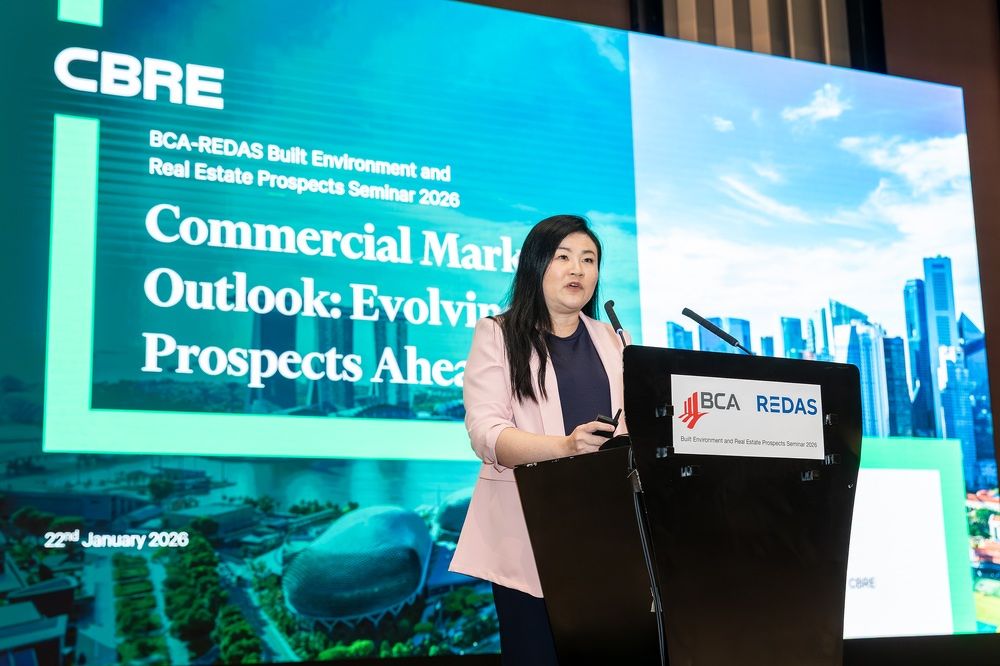
Tricia Song, head of research for Singapore and Southeast Asia at CBRE at the BCA-REDAS Built Environment and Real Estate Prospects Seminar on Jan 22 (Photo: Samuel Isaac Chua/EdgeProp Singapore)
Offices: ongoing flight to quality
According to research by CBRE, office net absorption in 2025 stood at 0.57 million sq ft, with vacancy rates declining across most submarkets in 4Q2025. Nonetheless, performance remains varied across the different submarkets, which Song attributes to the ongoing flight to quality happening within the office market. As of 4Q2025, vacancy rates for Grade A offices in the core CBD stood at 4.5%, tightening from 5.1% the previous quarter.
Other office buildings in the core CBD recorded a vacancy rate of 4.8%, marginally lower than the 4.9% in 3Q2025, while offices in decentralised areas had a vacancy rate of 5.9% in 4Q2025, improving from 6.5% the quarter before. In contrast, offices in the fringe CBD area had a vacancy rate of 6.7%, inching up from 6.5% in 3Q2025.
Performance also diverged across different areas within the CBD. Song notes that office spaces in Marina Bay, Marina Centre and Beach Road continue to record below-average vacancy rates. Marina Bay’s vacancy rate narrowed to 4.2% in 2025 from 5.6% in 2024, while Marina Centre’s vacancy rate edged down from 2.4% in 2024 to 2.3% in 2025. Offices around Beach Road and City Hall also saw tightening vacancies, going from 5% in 2024 to 2.6% in 2025.
Meanwhile, Raffles Place, Shenton Way and Orchard Road recorded higher-than-average vacancy rates — ranging from 5.7% to 5.8% in 2025 — stemming from the larger proportion of older office stock in these areas. BCA research shows that 57% of buildings in Singapore are, on average, at least 26 years old.
Financial sector drives office demand; tech takes a step back
CBRE research shows that the banking and finance sector topped the list of demand drivers in 2025, accounting for 41% of total leasing demand. This was followed by the government sector (11%) and agile spaces (10%), such as co-working spaces, trailing behind.
In contrast, tech companies — historically the dominant demand driver — have slowed down leasing activity, notes Song. This contributed to a lower volume of large leases exceeding 30,000 sq ft in 2023 and 2024, as consolidation within the tech sector constrained market activity.
Although tech companies were more cautious during that period, a growing number of new players are now entering the market. While leasing momentum picked up in 2025, particularly from banks and financial services, overall leasing volumes remain below pre-Covid-19 levels due to the slower recovery of the tech sector.
‘Supply squeeze’
While leasing demand remains relatively muted, tighter supply is expected to lend support to the office market. “While demand does not seem bullish, we expect to see some type of supply squeeze moving forward,” says Song.
Over the next five years, CBRE estimates incoming supply to average around 0.78 million sq ft annually — 39% lower than the historical 10-year average of 1.28 million sq ft. The bulk of new supply is only expected to enter the market around 2028, driven by the completion of major projects such as Singtel’s Comcentre, as well as the office component at the upcoming development, The Skywaters.
The tight supply will help support office rents, notes Song. She anticipates rents to continue rising, carrying on the upward trajectory seen in 2025. CBRE projects core CBD (Grade A) rents to hit $15 psf per month over the next four years — more than 22% higher than the $12.30 psf per month recorded in 2025.
Retail market: Still vibrant, despite closures
Turning to the retail market, Song pointed to the “elephant in the room”: an uptick in store closures in recent years. The F&B sector has been the worst-hit, with over 3,000 closures in 2024, which Song says is the highest in 20 years. Even so, new F&B openings that year were still higher, exceeding closures by 744. This trend has continued into 2025, with all four quarters recording more F&B openings than closures.
Performance has been weaker in the wider retail landscape, with closures exceeding openings in the second half of 2025. That said, Song believes the retail landscape remains “vibrant”, supported by the entry of new players and the expansion of existing brands. Recent notable additions include Kylie Cosmetics, which opened its first standalone store in Southeast Asia at Bugis Junction, while French luxury fashion house Hermès opened its first perfume and beauty store in Southeast Asia at Raffles City Singapore. Meanwhile, Korean beauty brand Jung Saem Mool and Chinese beauty brand Judydoll have both opened their second outlets, at Wisma Atria and VivoCity respectively.
In the F&B space, American chain Chick-fil-A opened its first Asian outpost at Bugis+ last December, while luxury brand Coach debuted a dining concept at Jewel Changi Airport. “Physical retail remains viable, but brands must continue to innovate,” comments Song.
She adds that physical retail spaces stand to benefit from the continued growth in tourist arrivals. From January to November 2025, arrivals totalled approximately 15.55 million, with arrivals in October and November rising 4.9% and 4.8% y-o-y, respectively.
Prime retail rents may grow in 2026: CBRE
Given the robust activity in the retail scene, Singapore retail properties have seen steady demand. CBRE data shows that islandwide private retail property vacancy rates fell to a multi-year low of about 6% at end-2024, down from a peak of around 10% in 2020. Though the rate edged above 7% in 2025, the figure remains below pre-pandemic levels of 8% to 9%, notes Song.
This has underpinned a steady rise in retail property rents. At the end of 2025, islandwide prime rents grew 2.4% y-o-y to hit $27.80 psf per month, surpassing pre-Covid-19 levels.
Looking ahead, Song expects rents to continue growing amid a lull in new supply. Between 2026 and 2029, the annual supply of new retail space is expected to fall below the five-year average of 0.53 million sq ft, with most additions concentrated in the fringe and Outside Central Region areas.
Much of the upcoming supply is set to come from integrated and mixed-use developments, which are well-positioned to benefit from built-in residential catchments. These include Bukit V, the retail podium at The Reserve Residences in Beauty World, scheduled for completion in 2027, as well as the retail component of Parktown Tampines, expected to be completed by 2028.
Entering 2026, Song believes prime retail rents will see modest growth of 1% to 2%, supported by underlying demand for physical retail. However, some spending outflows are expected to persist, driven by cross-border shopping and the upcoming Johor Bahru-Singapore RTS Link, scheduled for completion by 2027
Check out the latest listings for The Reserve Residences properties
Follow Us
Property updates, 24/7.


Subscribe to Newsletter
Market insights, delivered weekly.
Top Articles
Search