
Future office spaces to prioritise learning and well-being in AI era: Gensler

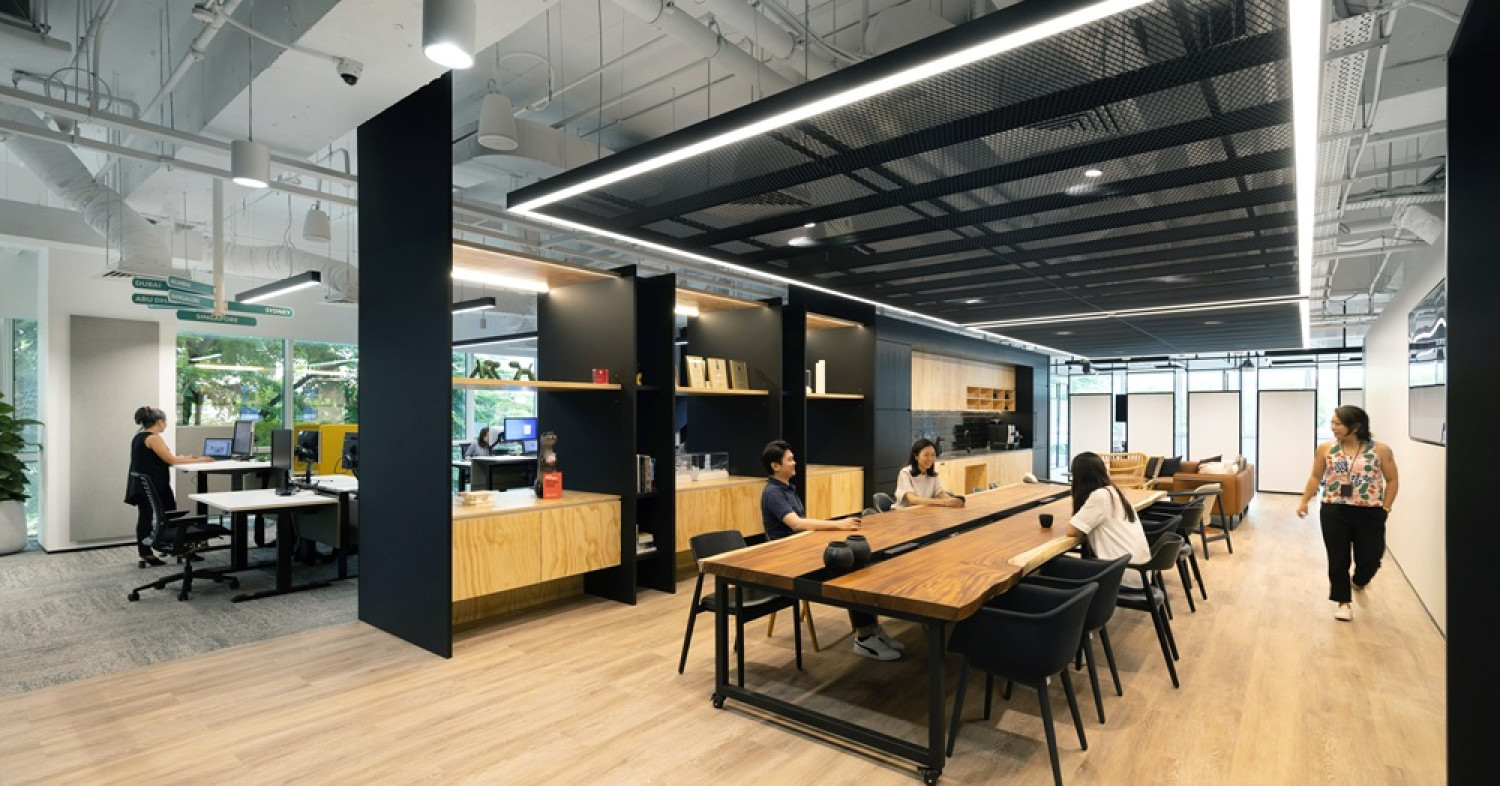
Interior of Gensler's Singapore office (Photo: Gensler)
The Gensler Research Institute, the research arm of global architecture and design firm Gensler, has released its Global Workplace Survey 2026, outlining how AI integration is reshaping workers’ needs and influencing workplace design preferences.
Data for the survey were gathered anonymously from over 16,000 full-time, office-based workers across 16 different countries, including Singapore. The respondents were required to work from an office environment at least some of the time and work for a company, organisation, or firm with a total of at least 100 employees — or above 50 for those in the legal industry. The survey was administered online between July and September last year.
From the survey, Singapore ranked the highest globally for office attendance, with 62% of employees spending their workweek in the office. Meanwhile, around 16% worked from home and the remaining spent their time at coworking places, client sites or travelling.
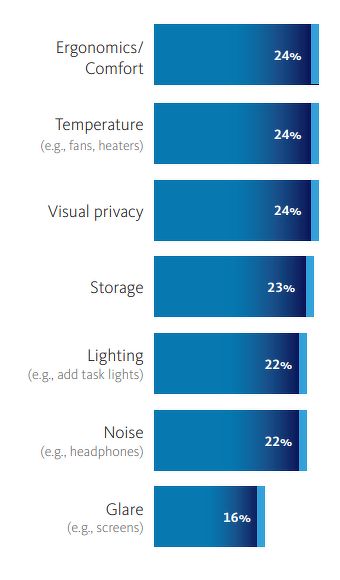
Although hybrid work has stabilised, the office is still important for work activities involving coordination, learning and interaction. Oftentimes, workers have to adapt to the mismatch between their current office designs and their changing work flow by using do-it-yourself approaches. Globally, this involves workers making adjustments to ergonomics or comfort, temperature, visual privacy and storage.
Percentage of respondents who have made the following do-it-yourself fixes to their workspaces to improve design issues.
(Credit: Gensler Research Institute 2026 Global Workplace Survey report)
The report also found limited meeting rooms have led to more than 60% of workers across the globe taking calls in hallways or at their desks, or cancelling meetings entirely. One in five workers have been reported to not have assigned seating, with more than half of them indicating a preference for having an assigned seat..
“The way people are adapting their workplaces suggests our environments have not fully kept pace with how work is evolving,” says Yvette Koh, work sector studio director at Gensler Singapore. This is reflected in workers “hacking” their workplaces to compensate for design gaps, such as using meeting rooms for focus work.
According to the report, AI adoption in work has automated routine tasks thus freeing time for human-centred activities such as collaboration, mentoring, and problem-solving.
“As engagement deepens, so does peer learning and idea exchange,” Koh adds. As AI integration continues to grow, learning will become increasingly important as individuals and organisations need to adapt and upskill.
This has in turn shifted workers’ preferences towards more collaborative and learning-oriented spaces, such as meeting rooms with movable furniture and improved aesthetic appeal.
Looking ahead, more than half of workers surveyed expressed a desire for a workplace that supports well-being and learning. The physical workplace continues to be viewed as a critical investment in people and performance, with spaces that help organisations attract, retain and empower talent.
Gensler believes this “highlights the need for organisations to rethink workplace design to better support collaboration, learning, and wellbeing as AI becomes more embedded in everyday work.”
Follow Us
Property updates, 24/7.


Subscribe to Newsletter
Market insights, delivered weekly.
Top Articles
Search