
IWG targets expansion across Asia Pacific as companies embrace flexible work
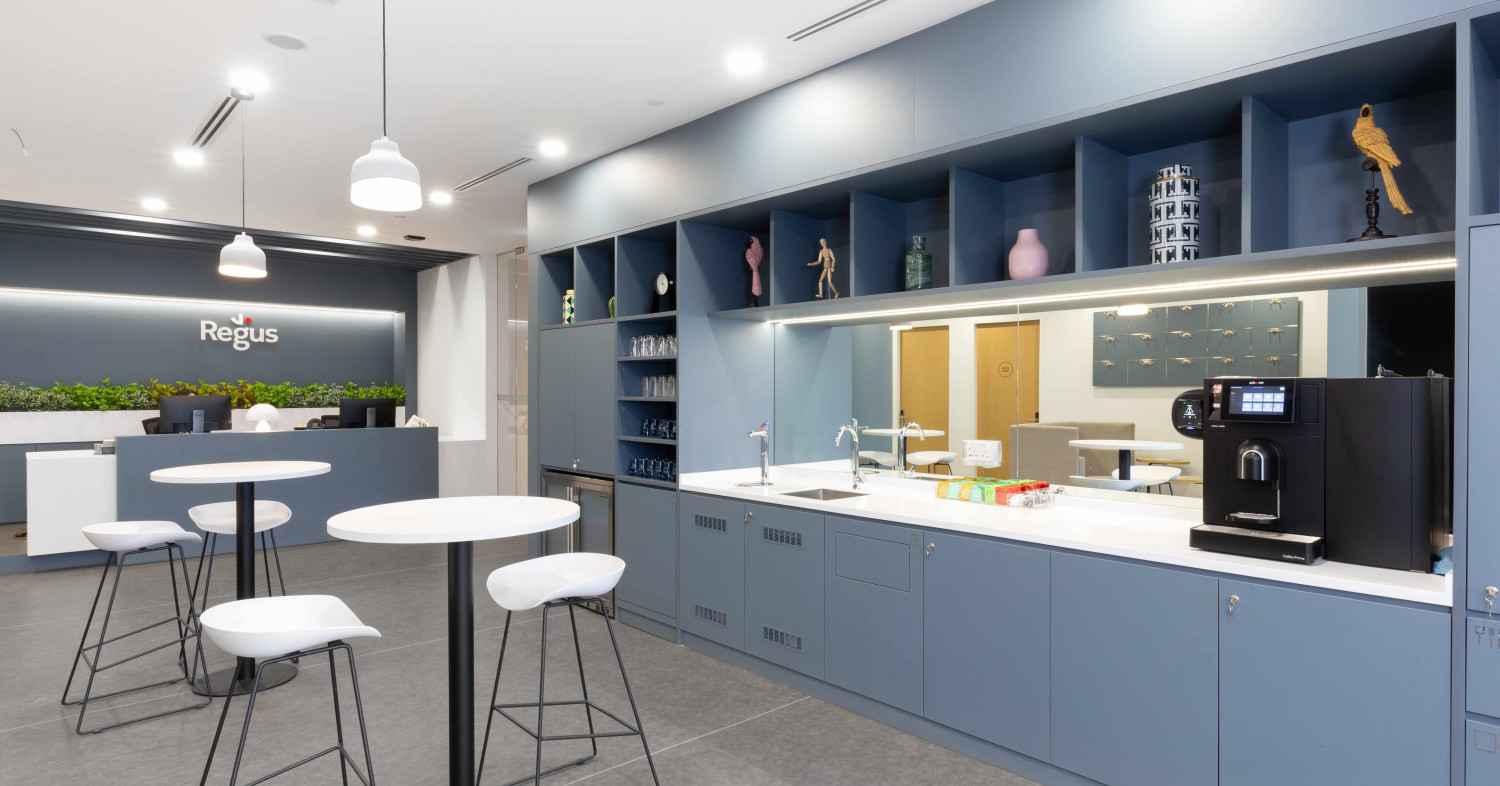
Regus at Hiap Hoe Building @ ZhongShan, opened in 2022, spans 10,328 sq ft (Photo: IWG)
International Workplace Group (IWG), a global provider of hybrid work solutions and flexible workplaces, is set to expand significantly in Asia Pacific (Apac). Last year, IWG signed agreements for 254 new centres across the region, the company said in an April press release.
Nearly all of the new centres will be delivered via managed partnership agreements. This is in line with IWG’s capital-light strategy that focuses on partnerships, management agreements and franchising, rather than leasing or owning properties directly.
The Apac signings make up nearly a quarter of the 1,132 new centres IWG added to its global pipeline in 2025. In terms of completions, IWG opened 782 new workspaces globally last year.
According to Mark Dixon, founder and CEO of the group, 2025 marked a record year for IWG in terms of network expansion. “This provides the foundations for continued growth in the year ahead,” he added.
The rapid expansion comes in response to growing demand for flexible working solutions, which IWG attributes to widespread adoption of formal hybrid working arrangements, even as more employees have returned to the office full time.
JLL’s Workforce Preference Barometer 2025 — which surveyed 3,100 office workers across nine Apac markets in sectors such as finance, technology, manufacturing and public services — found that on average, 34% of Apac office employees have a structured hybrid policy, nearly on a par with the 37% that have a full-time return-to-office mandate.
This figure is even higher in countries like Singapore, Australia and India, where over 40% of respondents adopt a hybrid policy.
Embracing flexibility
The rising demand for flexible working solutions also reflects a broader shift in workplace expectations, with flexibility seen as a way to boost productivity, improve employee satisfaction and support long-term business success, said IWG.
This shift is also being reflected in Singapore. At a Committee of Supply debate in March, the Ministry of Manpower (MOM) highlighted plans to enhance support for flexible and inclusive work arrangements, including the extension of a grant for employers offering part-time re-employment to senior workers. MOM is also exploring the expansion of the grant to bolster flexi-load jobs for more segments, including caregivers.
Additionally, the Singapore Workforce Flexibility Survey, jointly carried out by the National Trades Union Congress (NTUC) and the People’s Action Party Women’s Wing, found that three in four respondents have workplaces that offer flexible work arrangements. The survey, conducted between November to December last year, polled 1,508 respondents, with findings published in March this year.
Against this evolving landscape, office demand is moving away from traditional, long-term leases to spaces that can better cater to companies and employees embracing flexibility, said IWG. It added that property owners with vacant and underutilised spaces are choosing to partner with IWG to convert these spaces into productive work environments under its diverse portfolio of flexible workspace brands.
IWG has a total of 18 brands globally, which include Regus, Spaces, HQ, Signature and the newly-launched Humanly — a UK-based brand catering to healthcare and well-being industries by providing “treatment-ready” spaces such as consultation rooms and gyms.
In Singapore, IWG’s spaces are operated through the Regus, Spaces, Signature and No18 brands.
Presence in heartlands
A significant portion of IWG’s spaces are located outside city centres. In Singapore, the firm has steadily built up its presence in decentralised areas — including the heartlands — with centres in places like Tampines, Balestier, Paya Lebar and Novena.
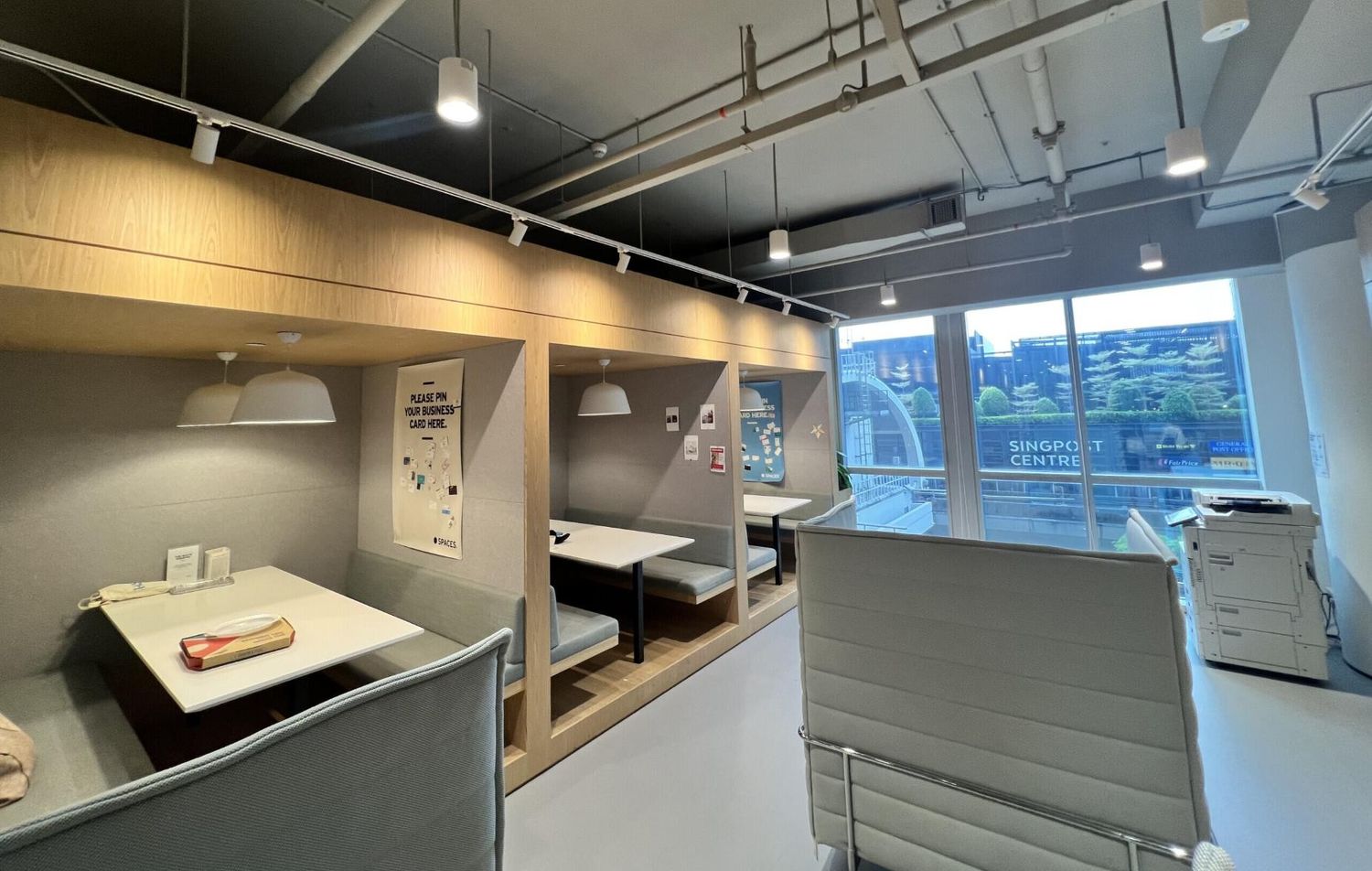
The business lounge area of Spaces Paya Lebar Quarter, a 51,333 sq ft workspace that opened in 2019 (Photo: IWG)
These include Spaces Paya Lebar Quarter, a 51,333 sq ft workspace that opened in 2019, and Regus United Square, a 9,644 sq ft centre in Novena that opened in 2015. In Tampines, Regus Tampines Junction, located in the NTUC Income Building on Tampines Avenue 5, opened in 2012 and spans 8,062 sq ft.
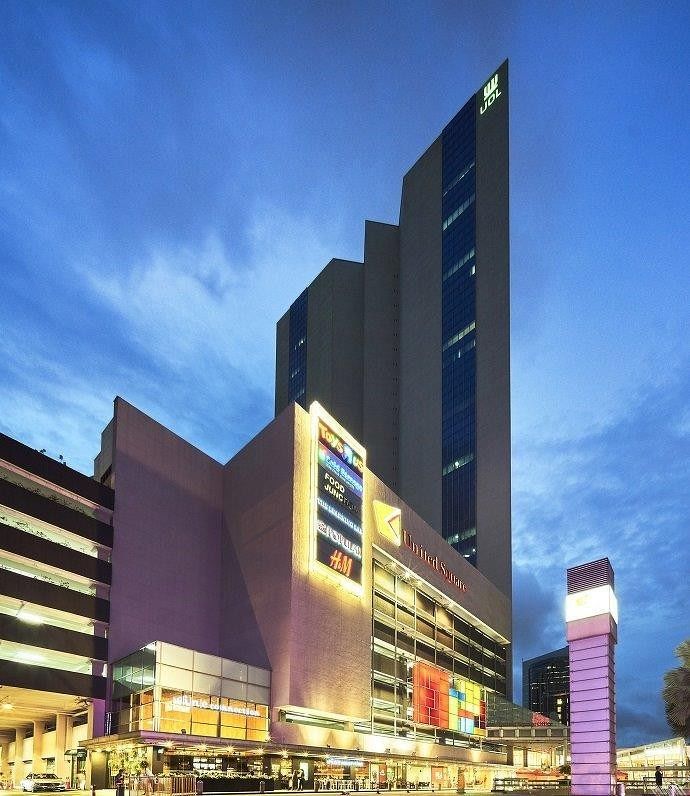
IWG operates a 9,644 sq ft Regus centre at United Square (pictured) in Novena (Photo: IWG)
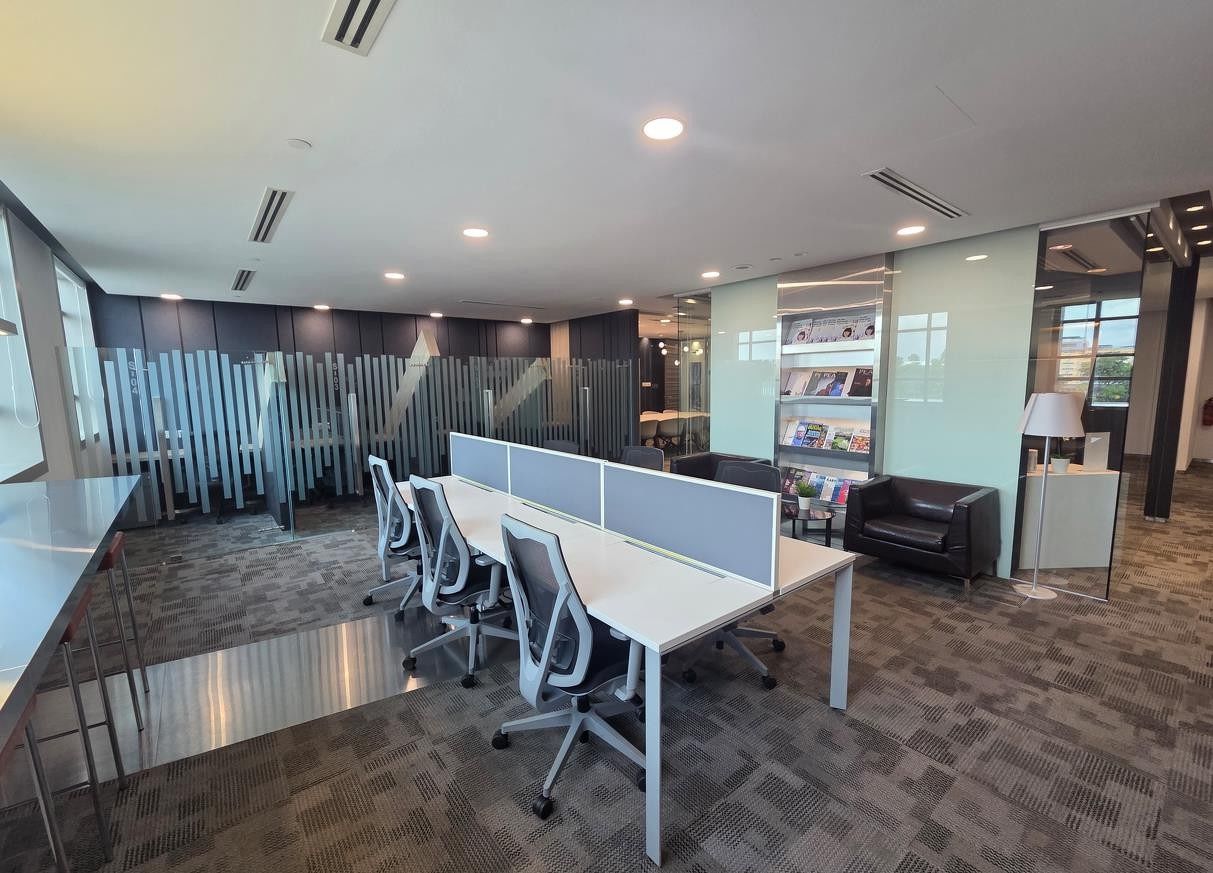
Regus Tampines Junction. In Singapore, IWG has built up its presence in decentralised areas. (Photo: IWG)
More recently, IWG opened Regus @ Hiap Hoe Building at Zhongshan Park in Balestier in 2022. Occupying 10,328 sq ft, it offers 154 workstations and 49 private offices. Meanwhile, IWG’s newest workspace in Singapore, located at HarbourFront Tower Two, opened in 2023. Spanning 11,000 sq ft, it occupies an entire floor in the 16-storey office building.
IWG believes its focus on city-fringe and heartland locations aligns with a broader global movement towards decentralised workspaces, where employees can access high-quality work environments closer to their residences, thus reducing travel time and supporting work-life balance.
In Singapore, such shifts are being propelled through the development of new commercial hubs outside the city centre, such as the Jurong Lake District and Woodlands Regional Centre under the URA Master Plan 2025.
As these plans materialise, so will the need for workspaces that support evolving demands and preferences. Globally, IWG expects the flexible workplace sector to grow 600% by 2030. With its healthy pipeline of new locations, the group said that its potential for further growth is “exponential”, backed by a total addressable market of “more than $2 trillion”.
For more news and analysis, read our weekly e-paper. Prefer a print copy? Get it delivered to your home every Monday.
Follow Us
Property updates, 24/7.


Subscribe to Newsletter
Market insights, delivered weekly.
Top Articles
Search