
At Temasek Shophouse, century-old buildings save energy, bees find shelter, and pavements cool

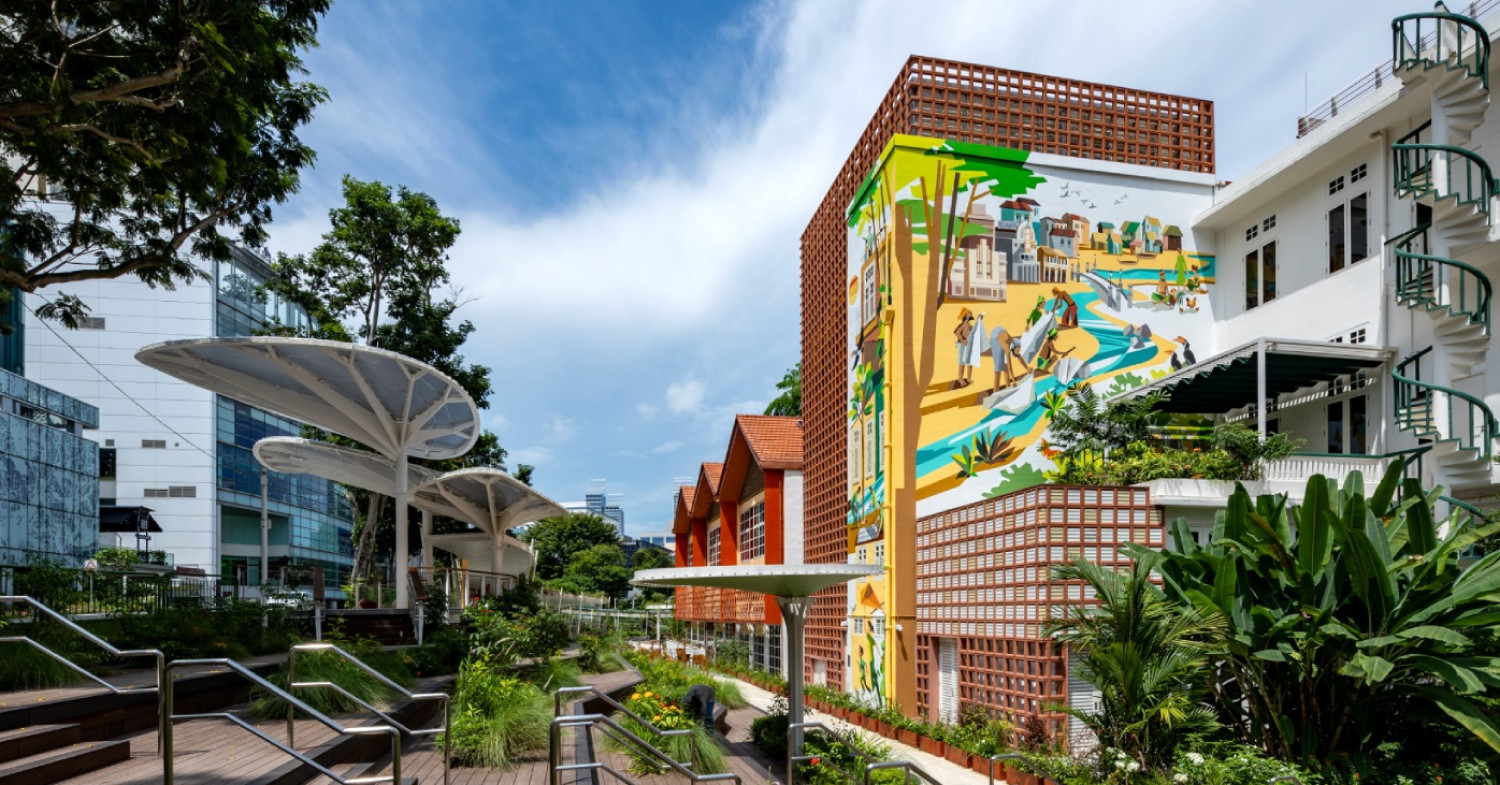
Heritage conservation meets climate-responsive design, biodiversity and green innovation at the social impact hub along Orchard Road. (Photo: Samuel Isaac Chua/EdgeProp Singapore)


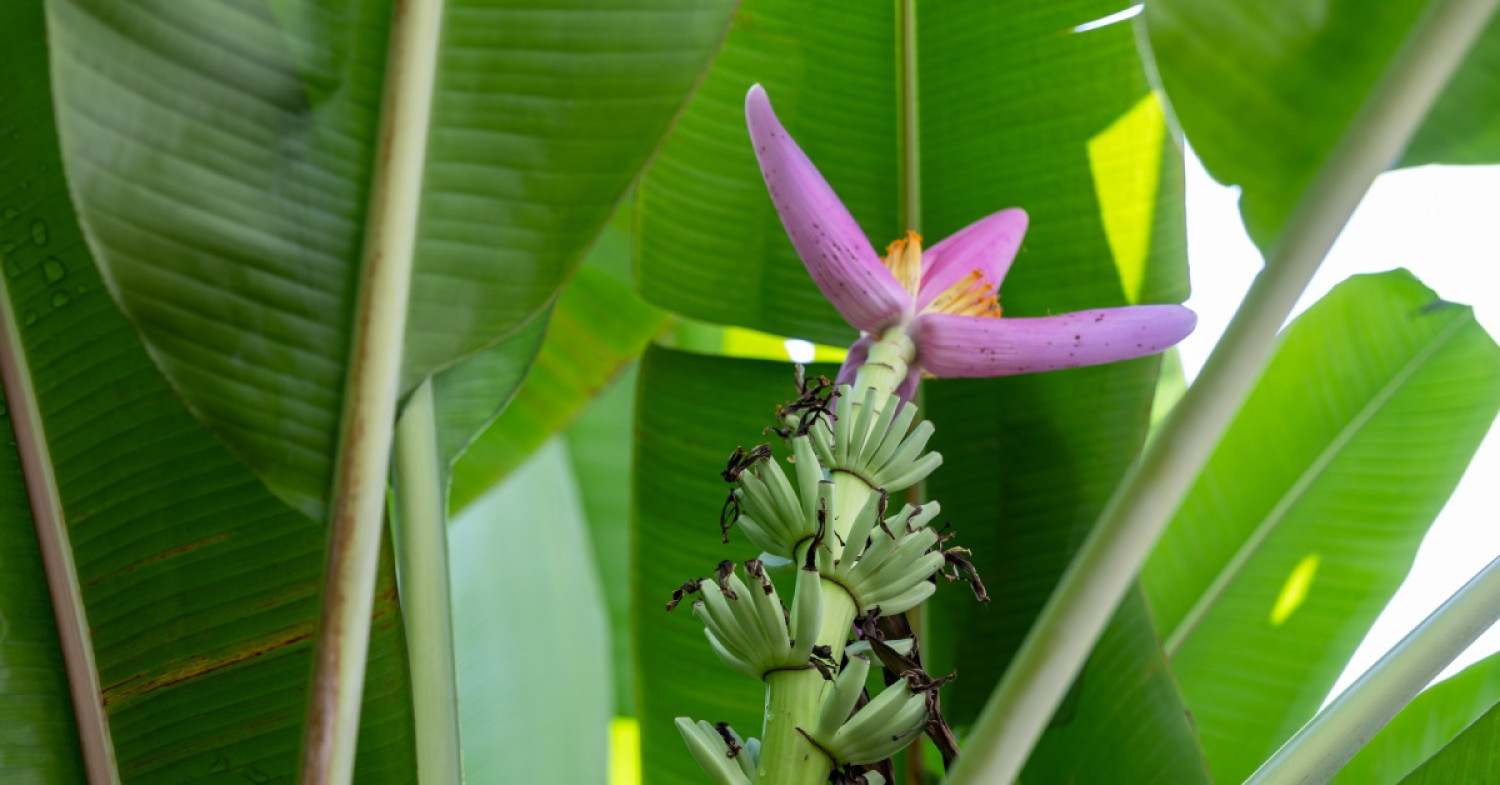
Beneath the feet of visitors walking through Temasek Shophouse's public outdoor spaces is a pavement that behaves more like a meadow than a hard surface.
Known as Climate Stone — or Klimastein in Bavaria, where it was developed — the permeable paving lets rainwater seep through and releases it gradually through evaporation, cooling the ground.
The innovative material is being piloted in Singapore for the first time at Temasek Shophouse, a social impact hub along Orchard Road.
Nearby, a locally engineered system called Airbitat cools the air through an advanced evaporative process, using a fraction of the energy that traditional air conditioning requires.
Rain gardens collect and filter rainwater before it flows into Stamford Canal, while salvaged glass and roof tiles have been crushed and reused as paving.
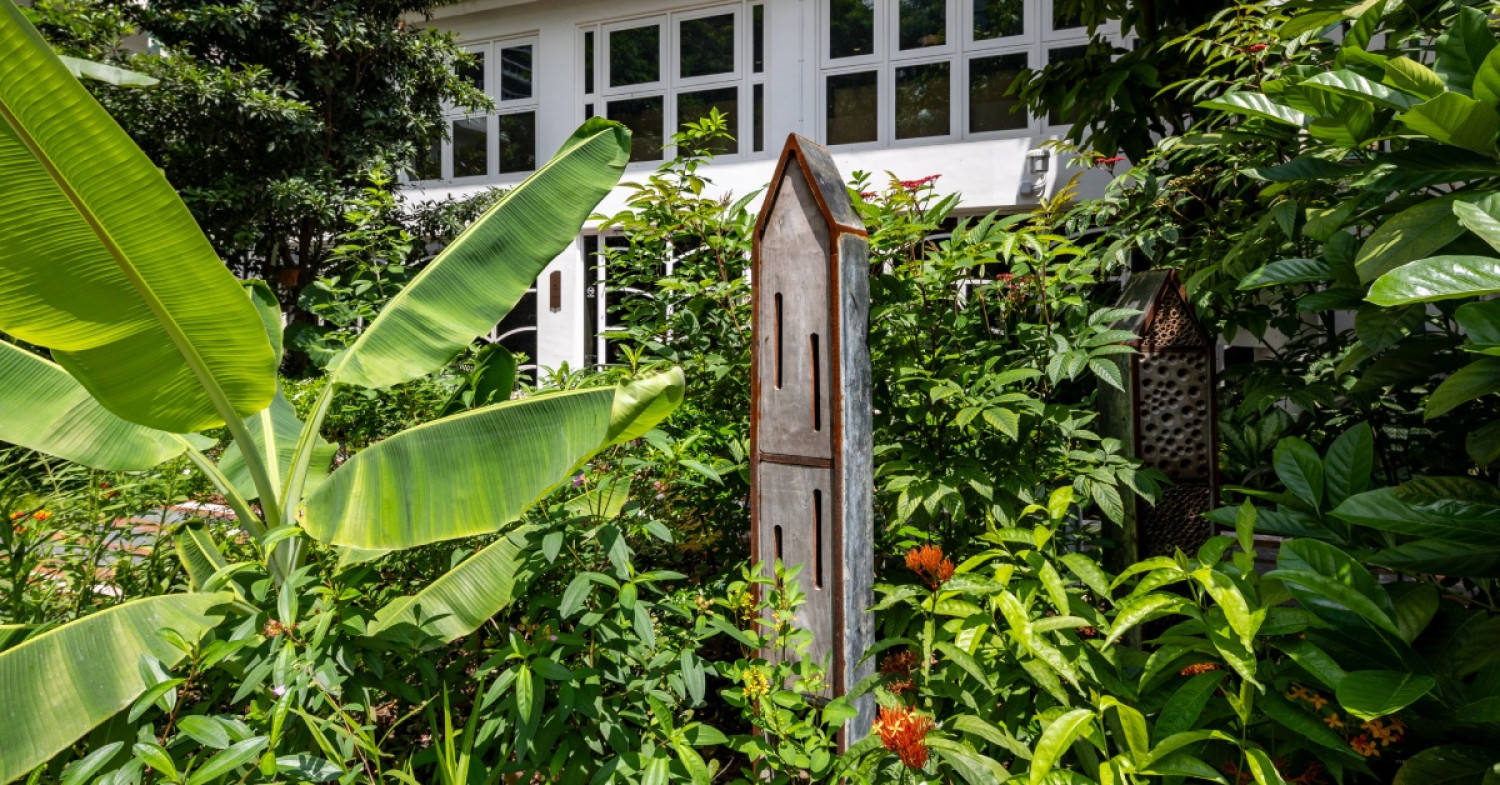
Bug hotels assembled from recycled steel offcuts from the former interior green wall stand among native plants meant to attract butterflies, bees and birds.
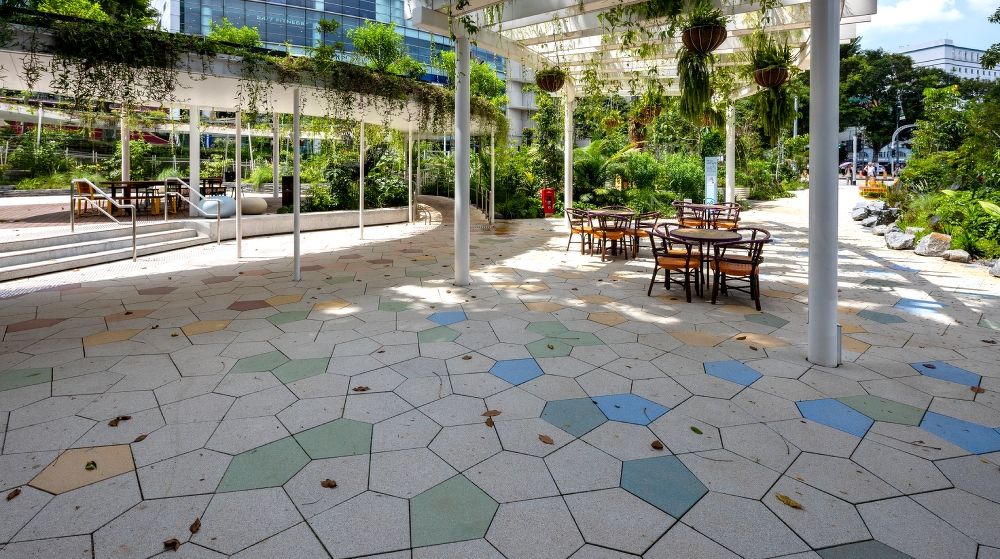
The Climate Stone permeable pavement actively contributes to urban cooling. Temasek Shophouse is the first in Singapore to pilot this innovation. (Photo: Samuel Isaac Chua/EdgeProp Singapore)
The outdoor areas at Temasek Shophouse are designed to manage heat, water and biodiversity within the same system — ingenuity that reveals itself to those who take a closer look, in the texture of the paving, the opening kept in the canal deck, and the salvaged materials given a second life as shelter for wildlife.
Inside the buildings, a hundred years of architectural history and a raft of innovative sustainability measures occupy the same walls.
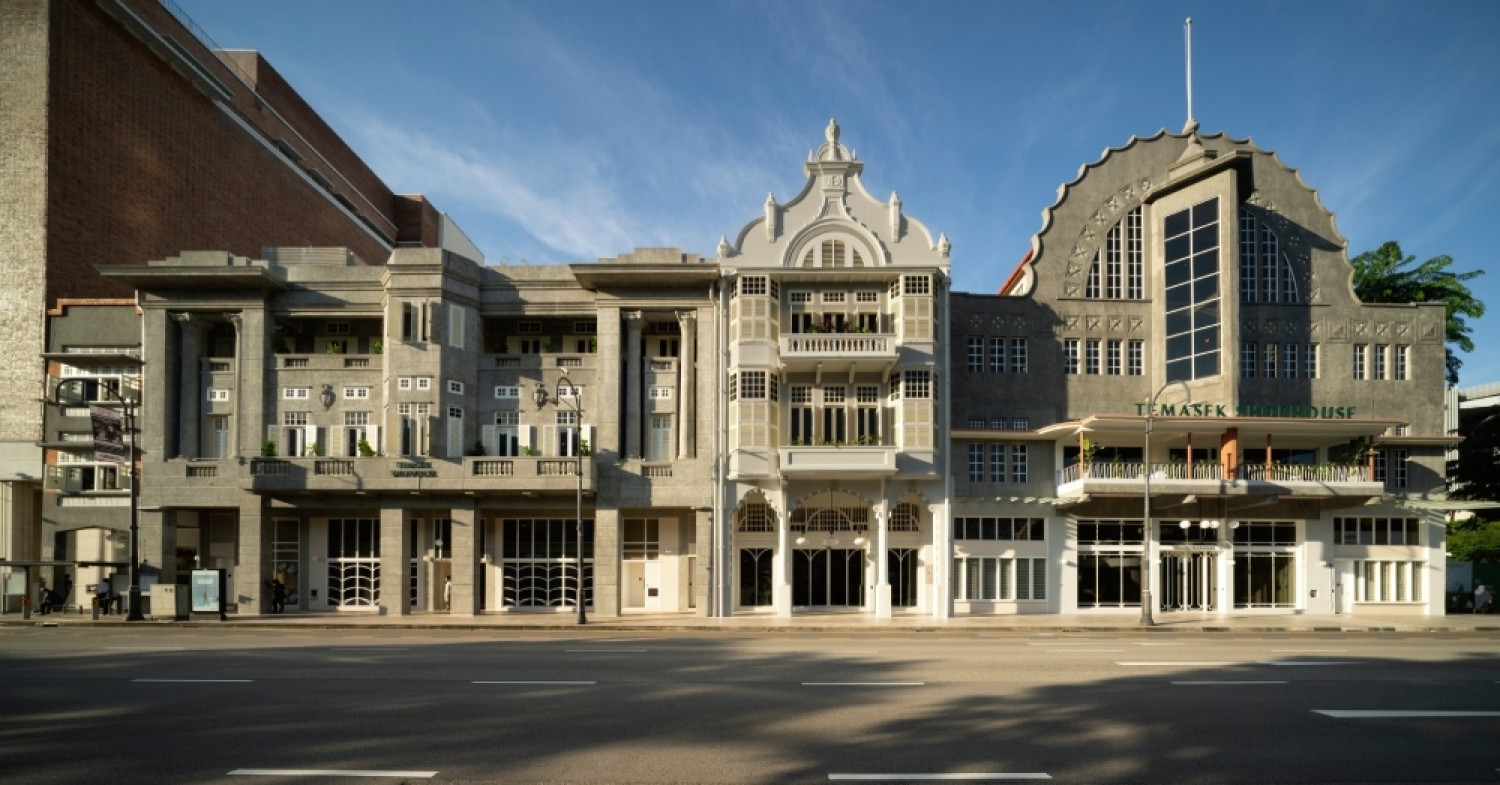
Completed recently after a multi-year renovation, Temasek Shophouse has expanded from one shophouse to now span four adjoining historic blocks along Orchard Road. Together, they function as a testbed for sustainable and regenerative design.
The project explores how far heritage buildings can meet modern environmental standards without sacrificing the architectural character accumulated over a century, and serves as a potential reference point for future conservation projects.
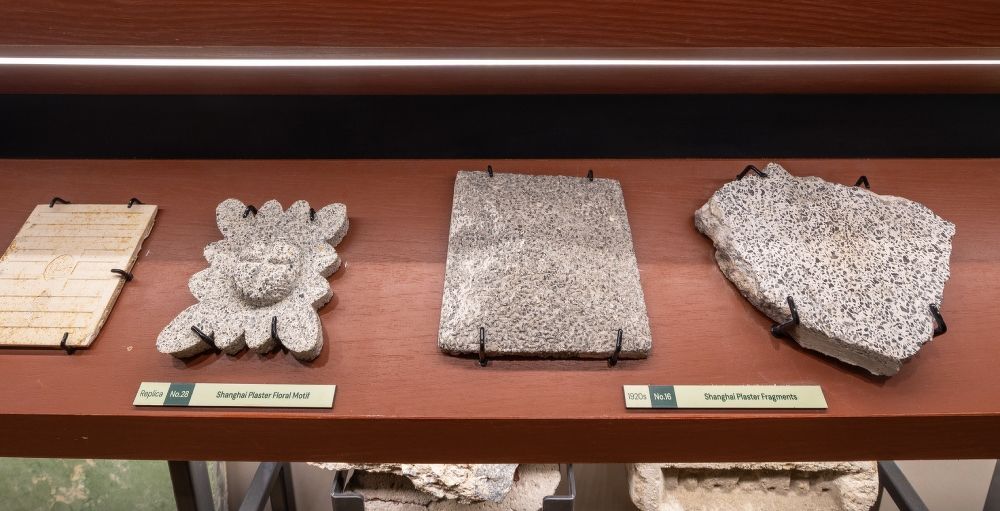
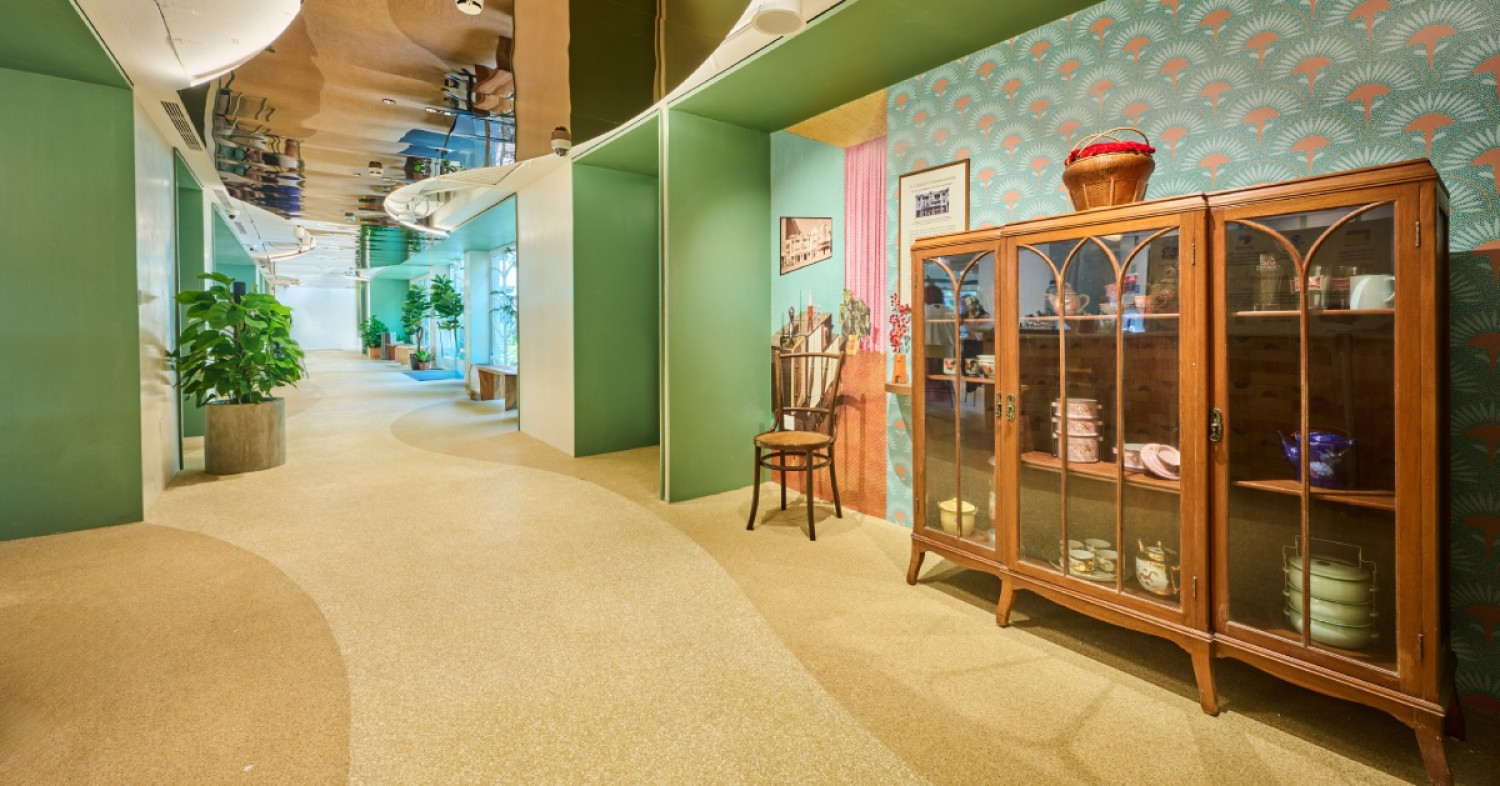
Visitors can take a closer look at heritage materials such as Shanghai plaster on display at the 'material library' at Block D. (Photo: Samuel Isaac Chua/EdgeProp Singapore)
Rethinking what is possible
Built in the 1920s and 1930s, the four shophouses at 16, 22, 28 and 38 Orchard Road were once home to Rolls-Royce showrooms, a pioneering film distributor, apartments and offices.
Bringing them together cohesively required architects, conservation specialists, sustainability consultants, engineers and landscape designers working in close coordination and within the constraints of heritage buildings that were developed in different decades, by different architects and for vastly different purposes.

Naree Phinyawatana (left), Atelier Ten, an SJ Group company: "The project creates positive environmental and social value, and serves as a reference point for how heritage buildings can evolve responsibly." Chum Jia Xin (right), Henning Larsen Apac: "We approached ventilation, greenery, and water as an integrated system to improve microclimate."
The usual playbook for new developments did not apply here, as many conventional strategies were not feasible in a conserved shophouse.
Instead, the team worked with what the buildings already had — focusing on adaptive reuse, introducing new systems within existing structures without extensive physical intervention, and improving how the buildings performed day to day.
"Rather than seeing this as a conflict, we reframed sustainability around what could be achieved within the constraints," says Naree Phinyawatana, director of environmental design consultancy Atelier Ten, an SJ Group company.
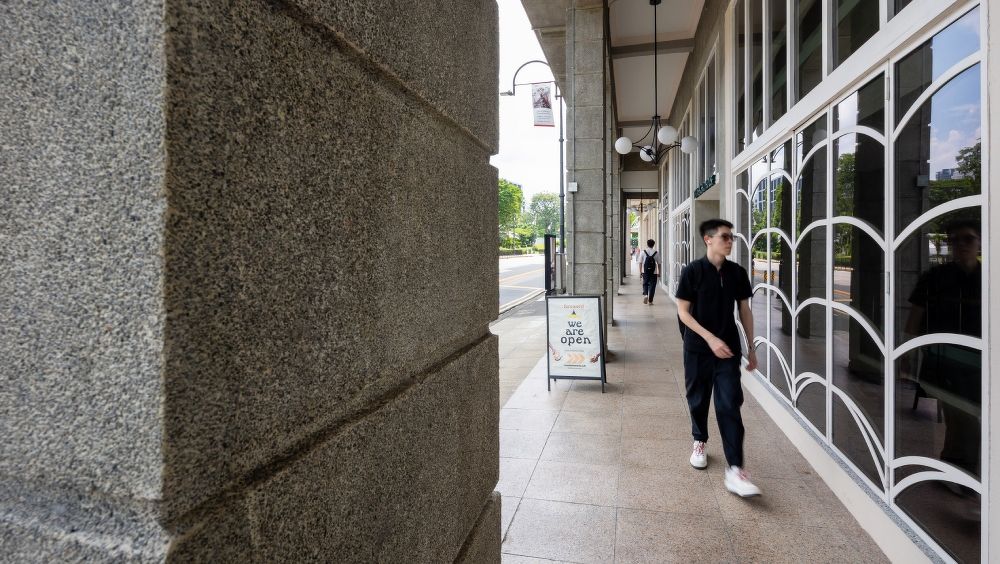
The facade treatment (as seen on the pillars) showcases the historic Shanghai plaster finish, a durable artificial stone material that was popular in interwar Singapore. (Photo: Samuel Isaac Chua/EdgeProp Singapore)
Outdoors, there was an opportunity to test innovative approaches in real urban conditions, albeit at a smaller scale.
"Singapore's climate is demanding, so it is important to understand how new solutions perform here," notes Chum Jia Xin, regional director at Henning Larsen Apac, which led the landscape design.
Located within a highly urbanised area with significant heat build-up, the site provides a "valuable" setting to evaluate whether materials such as Climate Stone can improve thermal comfort in meaningful ways, she adds.
Adaptive reuse with modern, tailored systems
Heritage properties are sometimes seen as difficult candidates for sustainability upgrades, as conservation guidelines tend to limit what can be altered.
While new buildings can be designed around performance targets from the get-go, heritage shophouses come with fixed constraints around structure, envelope, roof form and visual appearance.
"We had to find ways to improve the building's day-to-day performance that are in line with rigorous modern environmental standards, while respecting its original character and integrity," says Yvonne Tay, CEO, Temasek Shophouse.
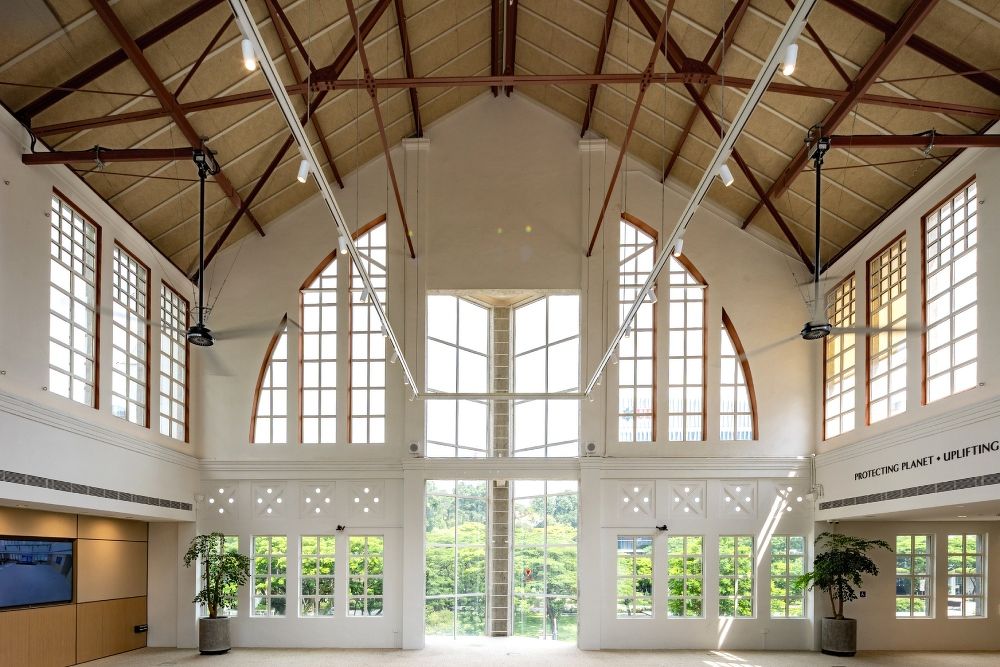
Hybrid cooling systems and energy-efficient lighting with smart controls are implemented at indoor spaces including the restored Tembusu Canopy hall (pictured). (Photo: Samuel Isaac Chua/EdgeProp Singapore)
The team thus shifted their focus to high-performance systems, data-driven design and operational efficiency, notes Praveen Hassan Chandrashekar, regional director (Asia), sustainability and resilience office at Surbana Jurong (SJ) Group.
For example, they put in place hybrid cooling, energy-efficient lighting, demand-controlled ventilation and digital monitoring — which help deliver meaningful energy savings while preserving the buildings' historic character.
"In that sense, conservation constraints did not prevent sustainability outcomes, but required them to be realised through more precise and targeted strategies," Chandrashekar says.
Carefully retaining the original structures was also one of the most significant sustainability decisions on the project.
Adaptive reuse avoids the embodied carbon — emissions tied to materials and construction processes throughout a building's lifecycle — that demolition and new construction would have generated. It also reduces demolition waste from the outset.
"Relying on the original load-bearing structure and introducing mostly lightweight materials allows us to work with, rather than against, the existing fabric," says Ivy Koh, executive director, architecture and design at SJ Group.

Praveen Hassan Chandrashekar, SJ Group: "Conservation constraints required sustainability outcomes to be realised through more precise and targeted strategies." Ivy Koh, SJ Group: "The restoration and expansion were guided by a comprehensive historical study with conservation specialist Studio Lapis."
Besides, the shophouses' many original passive design strategies — the way the buildings had already been designed to manage heat, light and airflow naturally while relying less on mechanical systems — worked in the team's favour.
By augmenting these existing qualities, the team could improve the buildings' environmental performance without compromising conservation intent, Koh says.
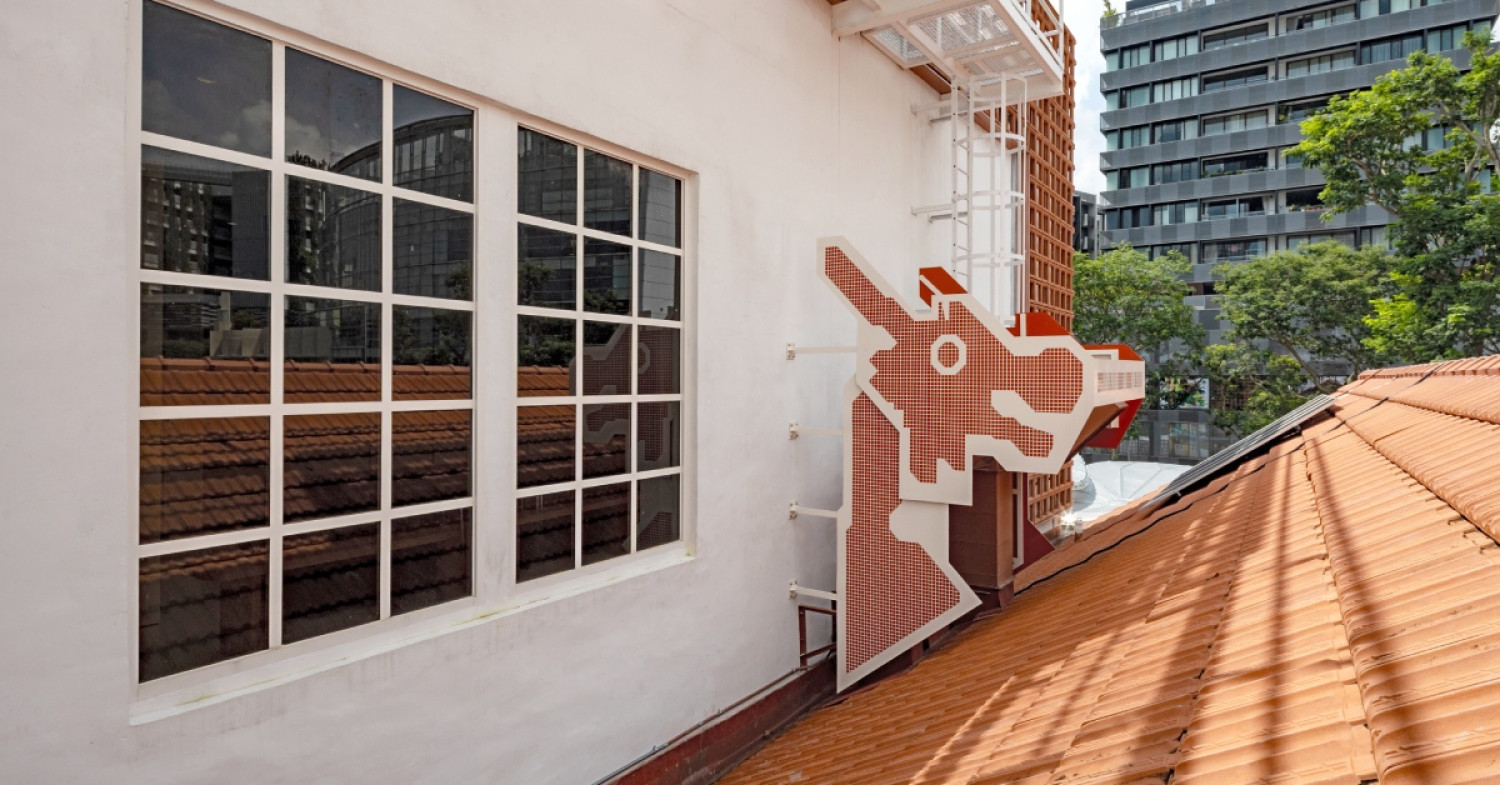
It was not without challenges. The pitched clay-tile roof, for one, could not accommodate standard solar-panel mounts. The team responded by creating custom photovoltaic (PV) mounting systems, and worked closely with the authorities to meet renewable energy requirements while conserving the historic roof form.
While some interventions such as the PV mounts and double-glazed window frames required bespoke solutions, they were important to make the building more energy-efficient in daily use, Koh adds.
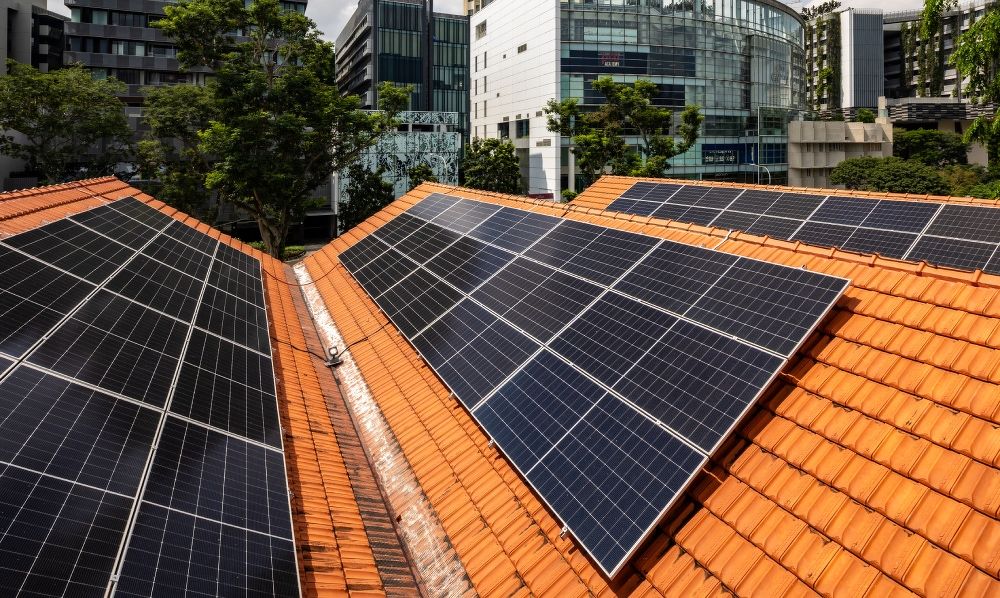
The pitched clay-tile roof required custom mounting systems for the solar photovoltaic panels. (Photo: Samuel Isaac Chua/EdgeProp Singapore)
New life for old materials
In total, the project diverted about 75% of construction waste from landfill. This was enabled by adaptive reuse and the clear segregation of waste streams during construction. The latter allowed recyclable materials to be recovered and sent to off-site recycling facilities, notes Phinyawatana from Atelier Ten.
"This embedded circularity into construction processes, which is especially critical in a conserved heritage project," she says.
Where retention was not possible, the team looked for ways to give old materials a new life.
They crushed old terracotta roof tiles into aggregates to be repurposed as red-speckled paving in the outdoor spaces. "This created patterns and colours on what may otherwise be dull and monotone," says Tay.
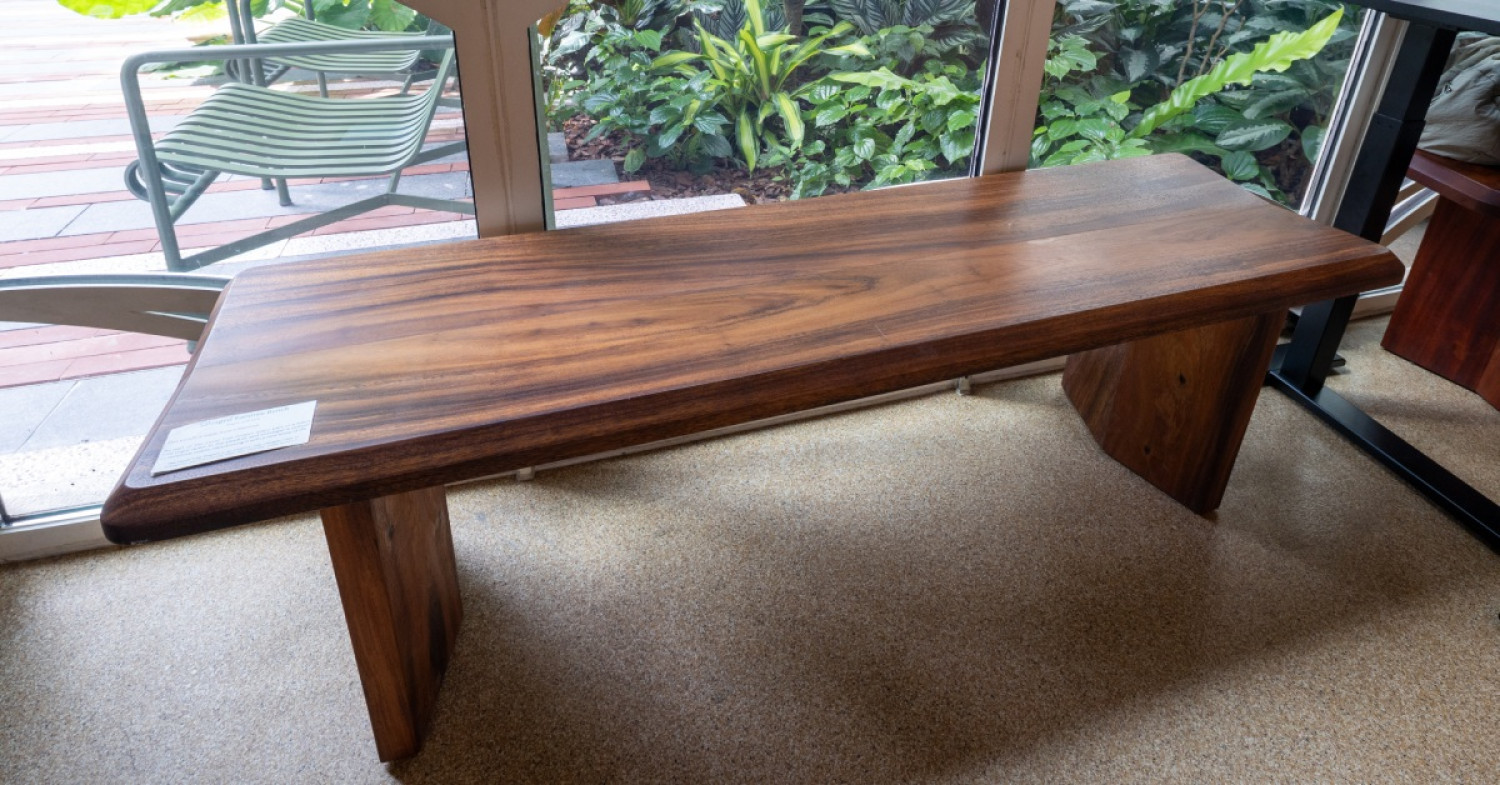
Similarly, when an old tree was identified as diseased during a site inspection, the team worked with ethical furniture makers, Roger & Sons, to turn the salvaged wood into benches and tables that are now used within the property.
The project is on track to become Singapore's first heritage shophouse to obtain the Building and Construction Authority’s Green Mark Platinum Zero Energy certification.
Temasek Shophouse is expected to achieve up to 47% in energy savings, which exceeds the current Singapore Super Low Energy standard of 40% savings.
It is also working towards being certified under international benchmarks such as LEED and WELL, which consider factors besides energy efficiency, including occupant health, wellbeing and responsible resource use.
Beyond certification, the project also reflects a regenerative intent, according to Phinyawatana. "It creates positive environmental and social value, and serves as a reference point for how heritage buildings can evolve responsibly," she remarks.
The hidden work of the landscape
Spanning roughly 3,000 sq m (32,292 sq ft), the outdoor areas opened this March as the final phase of Temasek Shophouse's transformation. They function as a series of courtyards for people to gather, work and spend time, and are designed to perform environmentally as well.
Most parts of the landscape contribute to cooling, water management or ecological value, Chum from Henning Larsen points out.
Shaded areas reduce heat gain, while water systems slow, filter and reuse rainwater. Planting supports evapotranspiration — the cooling effect created when water evaporates from soil and plants — and biodiversity.
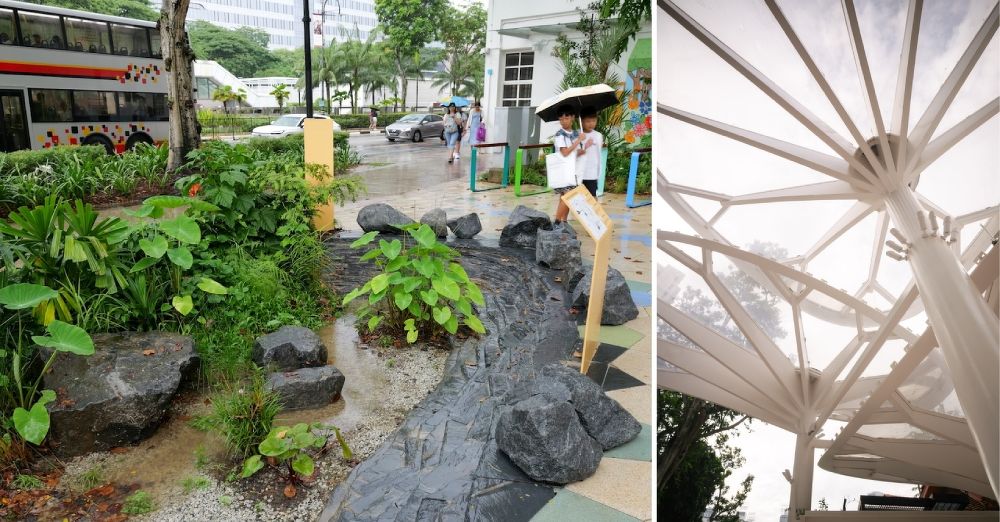
The rain garden (left) collects and filters stormwater while attracting amphibians and dragonflies. (Photo: Bernd Michael Schernau/Temasek Shophouse); Rainwater harvesting (right) at the arrival shelter. (Photo: Temasek Shophouse)
As part of a water-sensitive urban design approach, rainwater is treated as a resource, instead of being discharged quickly. It is collected and filtered before being reused on-site.
Phinyawatana explains that the rain garden helps slow run-off and improve water quality before the water is stored in a rainwater harvesting tank and used for landscape irrigation. "This reduces reliance on potable water and supports healthier planting across the outdoor spaces," she notes.
In tandem, the Climate Stone paving absorbs water and releases it gradually through a three-layered structure, which helps regulate microclimatic conditions at the ground level, reduce peak run-off and supports flood mitigation. It also channels rainwater to the rain garden for reuse.
Chum describes Climate Stone — developed by Godelmann, a concrete block manufacturer based in Bavaria, Germany — as functioning like a "natural meadow surface".
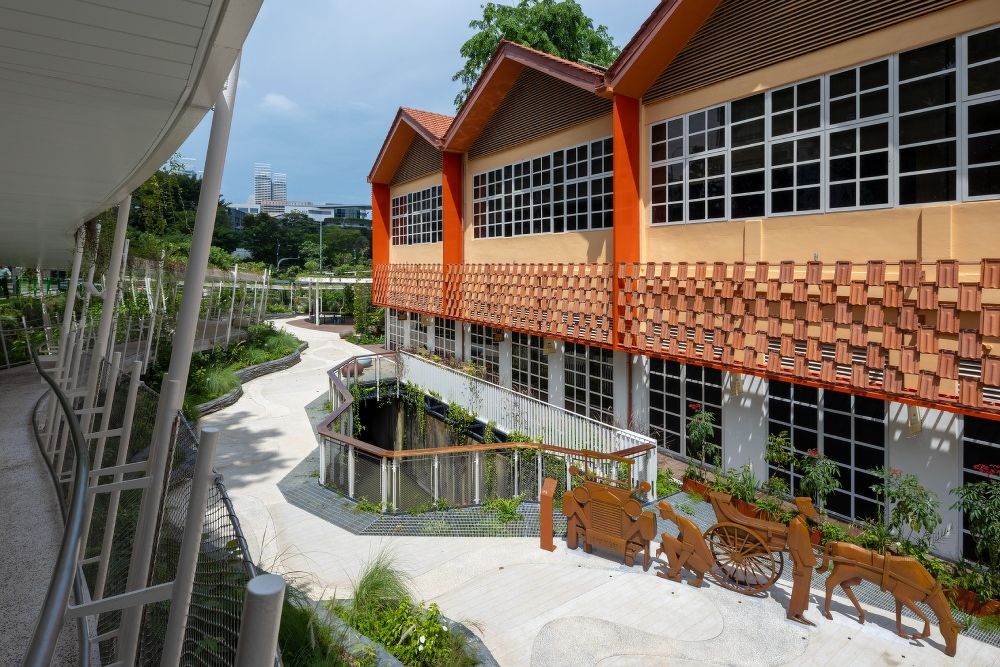
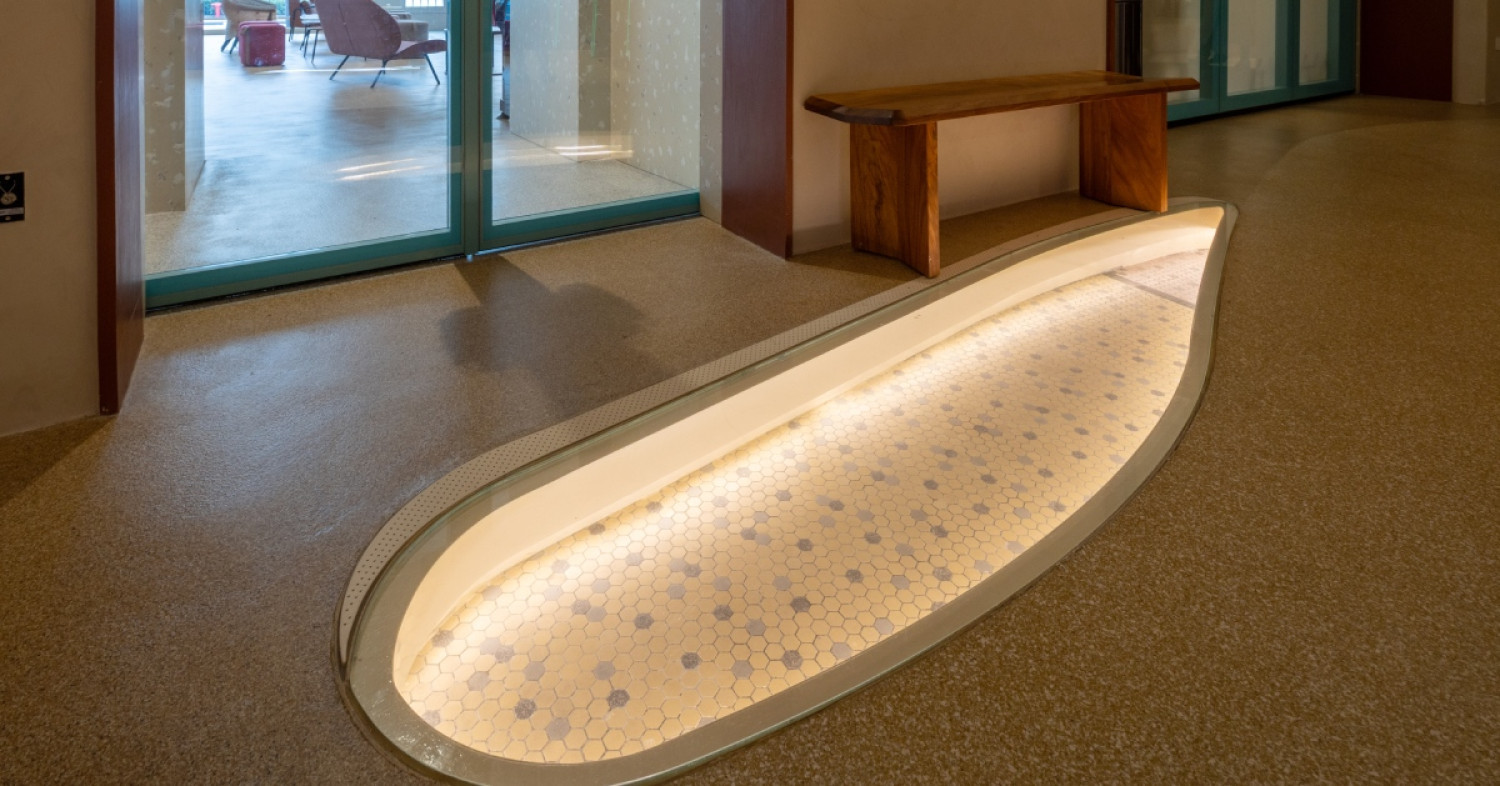
A lightweight deck was placed over Stamford Canal, with a deliberate opening (middle) to bring daylight down and keep the water visible. (Photo: Samuel Isaac Chua/EdgeProp Singapore)
The Stamford Canal is another integral part of the water management system. Rainwater collected and guided through the site is later discharged via gravity into the canal.
There was an opportunity to stitch the site into the wider precinct, including connections towards the Handy Green park, where the community farm sits. From the outset, the aim was to transform the underutilised rear of the shophouses from a standard back-of-house area into a shared civic space, says SJ Group's Koh.
A bridge was placed across the canal to allow the outdoor areas to be read as one cohesive landscape. Due to the narrow embankment and the presence of multiple public utilities behind the shophouse, a lightweight micro-piled deck was used, allowing it to sit lightly above the canal with minimal structural intrusion.
"This opens the Stamford Canal frontage as an active social edge that extends the programmes into the public realm," Koh notes.
The team was careful not to fully conceal the canal. An opening in the deck keeps it visible and lets daylight reach the water, while highlighting the ecological presence in the canal — including fish and turtles that were observed early in the project.
Keeping the canal visible also gestures at a longer history. From the 1830s, Indian dhobi washers had cleaned garments along this waterway — a practice that gave Dhoby Ghaut its name.

Passers-by can observe fish and turtles in the Stamford Canal through the opening in the deck. (Photos: Samuel Isaac Chua/EdgeProp Singapore)
Cooling a tropical heritage building
Shading and greenery are fundamental to the outdoor thermal comfort strategy. However, in a dense urban environment, there are conditions, especially during peak heat periods, where such passive strategies alone may not be sufficient.
For those moments, the outdoor spaces are equipped with the Airbitat cooling system, which is developed by ST Engineering Urban Solutions and engineered in Singapore for tropical urban conditions.
With the Airbitat, water first pre-cools the air, which then passes through a second stage that reduces its temperature further. The cooled air is delivered into the outdoor environment without conventional refrigerants or energy-intensive mechanical cooling.
"It allows us to introduce targeted, active cooling in selected areas where people gather or dwell," Chum says.
She adds that while passive and nature-based solutions remain a priority, active systems that are selectively deployed can bridge performance gaps, as advanced low-energy technologies such as radiant cooling continue to evolve.
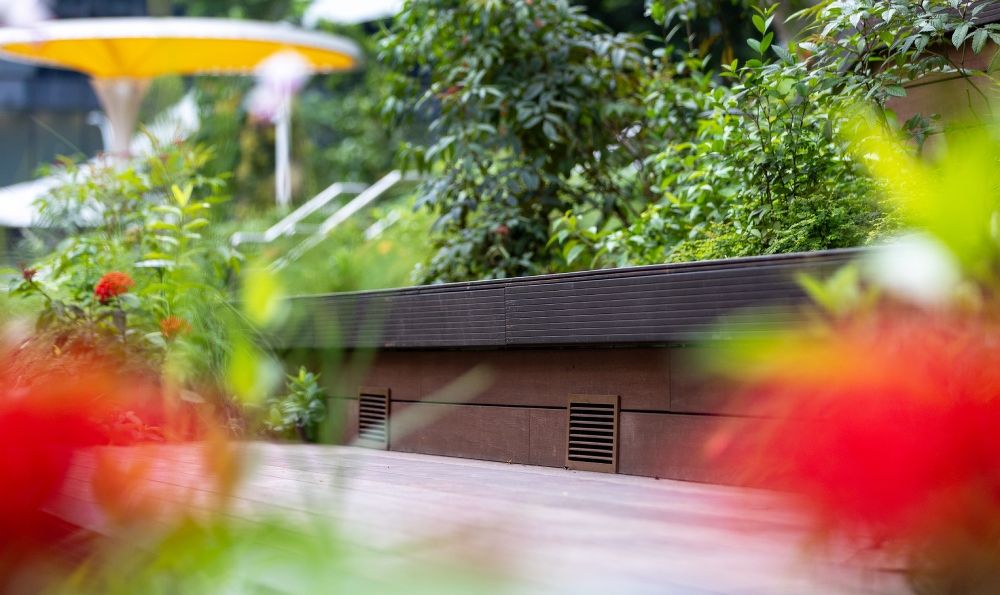
The Airbitat outdoor cooling system's vents blend in nondescriptly as part of the landscape at the terraces. (Photo: Samuel Isaac Chua/EdgeProp Singapore)
Indoors, the original century-old shophouse layouts likewise presented both opportunities and challenges when it came to thermal performance.
Across the four blocks, the variations in ceiling heights, room proportions and retained architectural features made it difficult to achieve consistent air distribution and keep the occupants comfortable.
"These made conventional air-conditioning strategies less effective in a conserved building," says Chandrashekar from SJ Group.
In response, the team designed a hybrid cooling system that combined air conditioning with ceiling fans and demand-controlled ventilation linked to carbon dioxide sensors. This way, ventilation and cooling can respond to occupancy and indoor air quality without over-conditioning.
The team used environmental modelling and airflow simulations when selecting the system and determining where it should be placed, which can help improve thermal performance without making intrusive changes to the historic buildings, Chandrashekar adds.
Renewal guided by discovery and rich history
Renovation rarely proceeds as planned in buildings of this age. At Temasek Shophouse, what the team unearthed behind false ceilings, beneath layers of screed and along the facades influenced the conservation approach and design outcome.
Several "high-quality discoveries" expanded opportunities for retention and material reuse, Koh shares. Original materials such as cement and mosaic tiles were carefully dismantled and repurposed within the properties.
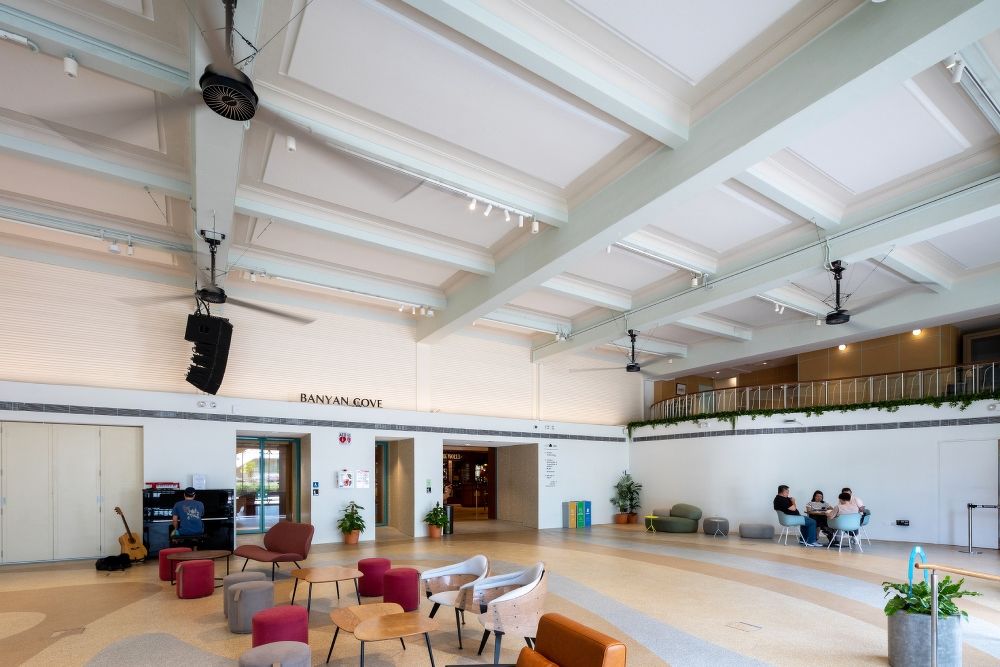
On the ground floor of Block C sits Banyan Cove, where architectural features were conserved. It has a capacity of 180 guests in theatre-style seating. (Photo: Samuel Isaac Chua/EdgeProp Singapore)
Tay cited the Banyan Cove double-volume hall as an example of distinct features and materials being meticulously restored and retained. The space has a colourful history as the former showroom of Malayan Motors, where cars, minibuses and even airplanes were once displayed.
"Today, key architectural features [in Banyan Cove] have been conserved, including restored reeded walls, a coffered ceiling edged with elegant cornices, and a mezzanine floor added in the 1950s," Tay says. The hall now serves as a flexible event space.
Meanwhile, an unexpected extent of intact Shanghai plaster — a durable faux-stone finish popular in interwar Singapore — was uncovered across the gable end wall, around the clerestory windows, and on the interior prism surface. This guided the eventual facade treatment, which showcases the historic finish, Koh says.
Imprints of past signages, or so-called "ghost signages", found were also preserved as a nod to earlier occupants.
"The conserved discoveries allow the shophouses' historical layers and material memory to remain visible as part of its evolving narrative," Koh adds.
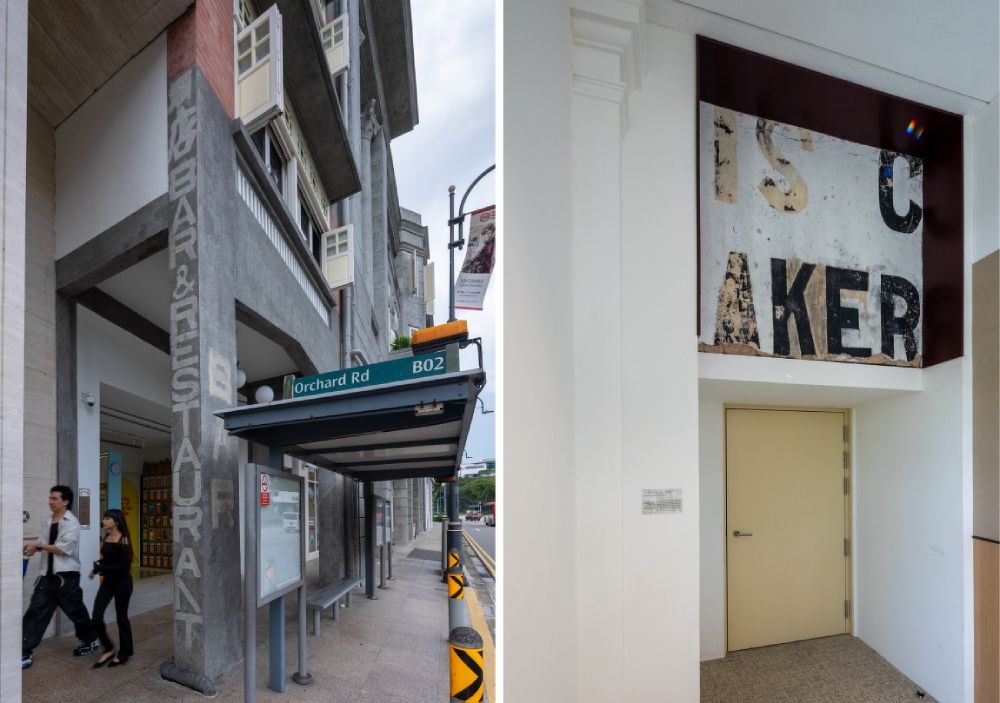
"Ghost signages", or imprints of faded signs by previous tenants, were preserved. They include one for The Orchard Restaurant And Bar on a pillar, and another that used to read: "Wearne Brothers Morris Car Baker Car". (Photos: Samuel Isaac Chua/EdgeProp Singapore)
Revitalising buildings for a sustainable future
Temasek Shophouse is not the only heritage building in Singapore being reimagined into new, functional spaces.
New Bahru, the old Nan Chiau High School campus, has been transformed into a creative enclave. Kada, originally a hospital, has become a lifestyle and wellness hub. Vidacity, at the former Loyang Primary School, is now a sustainability and agritech innovation hub.
Pointing to these examples, Tay notes the growing role of adaptive reuse in shaping Singapore's built environment alongside new developments.
"It contributes to architectural diversity, giving cities more character and texture, rather than becoming overly uniform or dominated by modern skyscrapers," she says.
But it is not always straightforward, and Tay is measured about what the Temasek Shophouse project may demonstrate about heritage conservation and sustainability.
"Achieving this balance requires time, iteration and a willingness to work through constraints creatively,” she says. “There's no single way to solve every challenge."
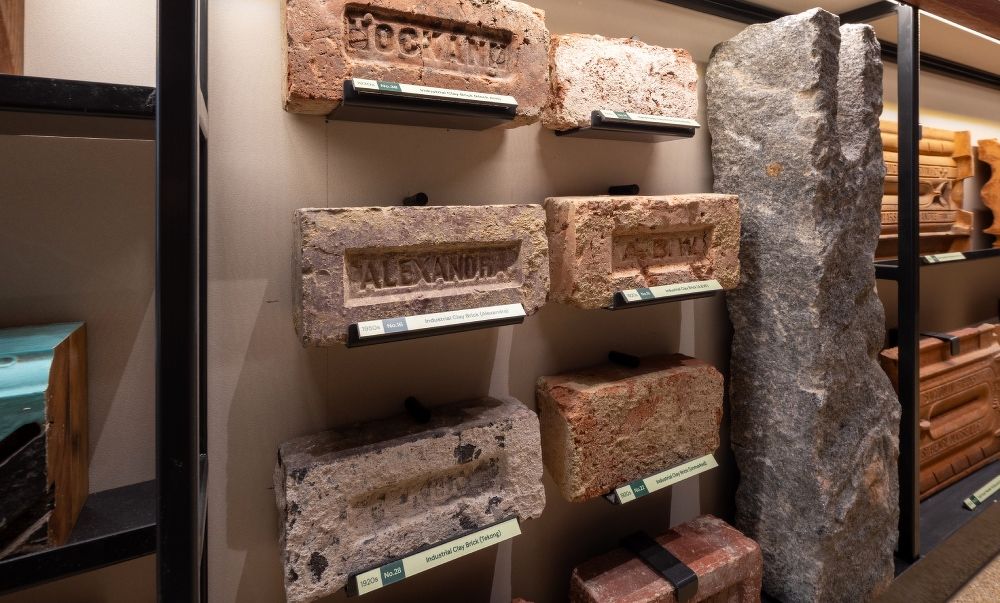
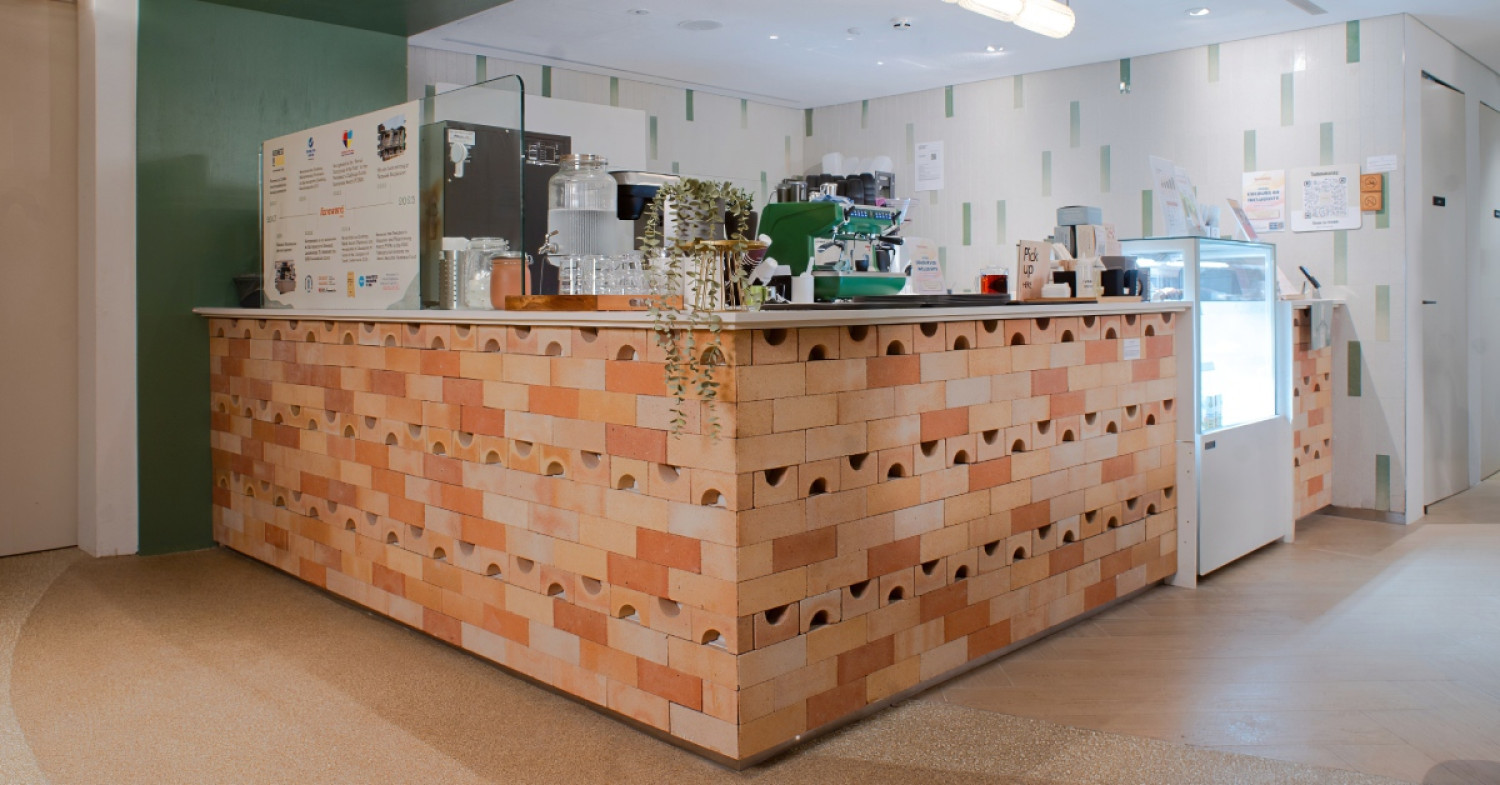
The 'material library' features heritage materials such as bricks from various historic kilns in Singapore. (Photo: Samuel Isaac Chua/EdgeProp Singapore)
The work does not end with the completion of the revamp. Building performance will be tracked with integrated monitoring systems that capture energy use, occupancy patterns and indoor environmental indicators such as air quality and control.
Such data allows the team to understand how the systems behave in a conserved heritage context.
"Over time, the insights will help identify where energy demand can be further optimised, how hybrid cooling and controls respond to real use patterns, and what lessons can be applied to future heritage projects," notes Phinyawatana.
In Tay's view, the project shows that heritage conservation and sustainability are not competing priorities but can and should go hand in hand.
"We hope our projects can encourage others in Singapore and beyond to continue pushing the boundaries of what’s possible," she adds. "While we are honouring the past, we are also inspiring a regenerative future in the way we build."
----------
A mosaic of habitats for wildlife
The planting palette is predominantly native and regionally adapted, selected for its suitability to Singapore's climate and ability to support local biodiversity.
"The intention was to move beyond ornamental planting towards a system of functional habitats," Chum says.
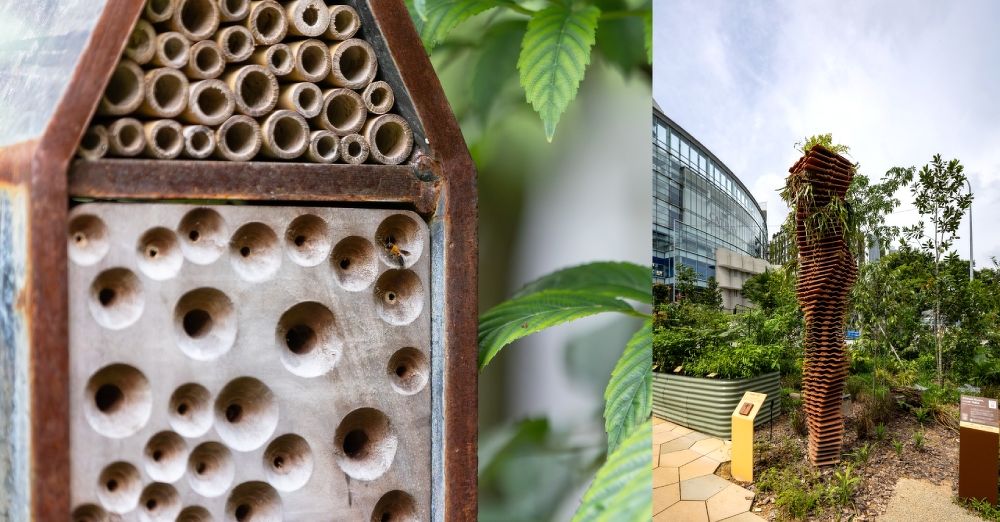
Bug hotels (left) offer sheltered spaces for beneficial insects to rest and breed. Made entirely from repurposed heritage roof tiles, the 'Habitat Tree' structure (right) offers birds a place to roost and surfaces for climbing plants. (Photos: Samuel Isaac Chua/EdgeProp Singapore)
She adds that Henning Larsen structured the landscape as "a mosaic of ecological conditions" — wet and dry, shaded and exposed — with habitat structures designed to respond to different species' key life stages, including nesting, shelter and foraging.
A pollinator garden in a protected but sunny courtyard combines nectar-rich and host plants to support pollinators across their life cycles. It is complemented by bug hotels to provide shelter, which honey bees are already using.
The rain garden is designed as a more moisture-driven system, incorporating swales and shallow trenches with water-tolerant planting, alongside rocks and gravel zones that create potential microhabitats for amphibians and insects such as dragonflies during wetter periods.
On the more elevated and exposed terraces is a drier, sun-exposed planting mix of flowering and grass species, adapted to higher heat and lower moisture conditions.
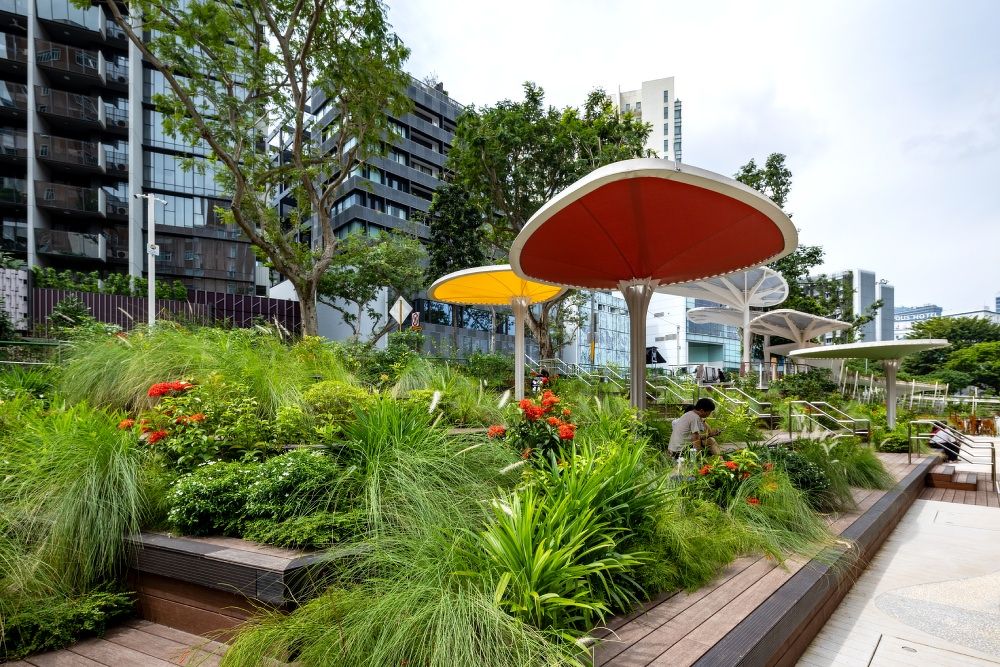
The drier, sun-exposed planting mix on the terraces. The public space's biophilic design connects people to nature. (Photo: Samuel Isaac Chua/EdgeProp Singapore)
A tiny forest at Handy Green serves as a bird habitat, with fruiting and berry-producing trees. In the same area is a 'Habitat Tree' sculpture — created from excess and salvaged roof tiles, its cavities encourage nesting and roosting by birds and can serve as surfaces for climbing plants.
These environments allow for a degree of openness and change over time. "Not every space is fully controlled. Some areas are intentionally left to evolve," Chum notes.
In a dense setting like the Orchard shopping belt, "the goal is not to recreate wilderness, but to embed small, distributed ecological opportunities into everyday infrastructure so that biodiversity can persist and gradually strengthen", she adds.
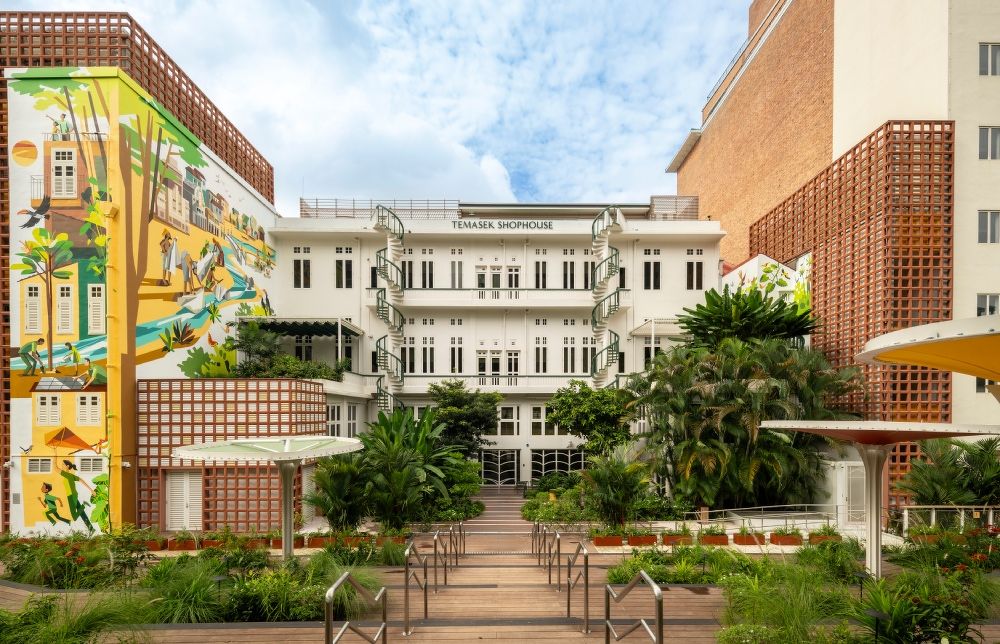
The outdoor community area behind the shophouses is now a shared civic space. Previously, it was underutilised and defined by service roads and exposed water pipes. (Photo: Darren Soh/Temasek Shophouse)
Follow Us
Property updates, 24/7.


Subscribe to Newsletter
Market insights, delivered weekly.
Top Articles
Search