
Ng Sze Oun on reclaiming green spaces for humans and nature
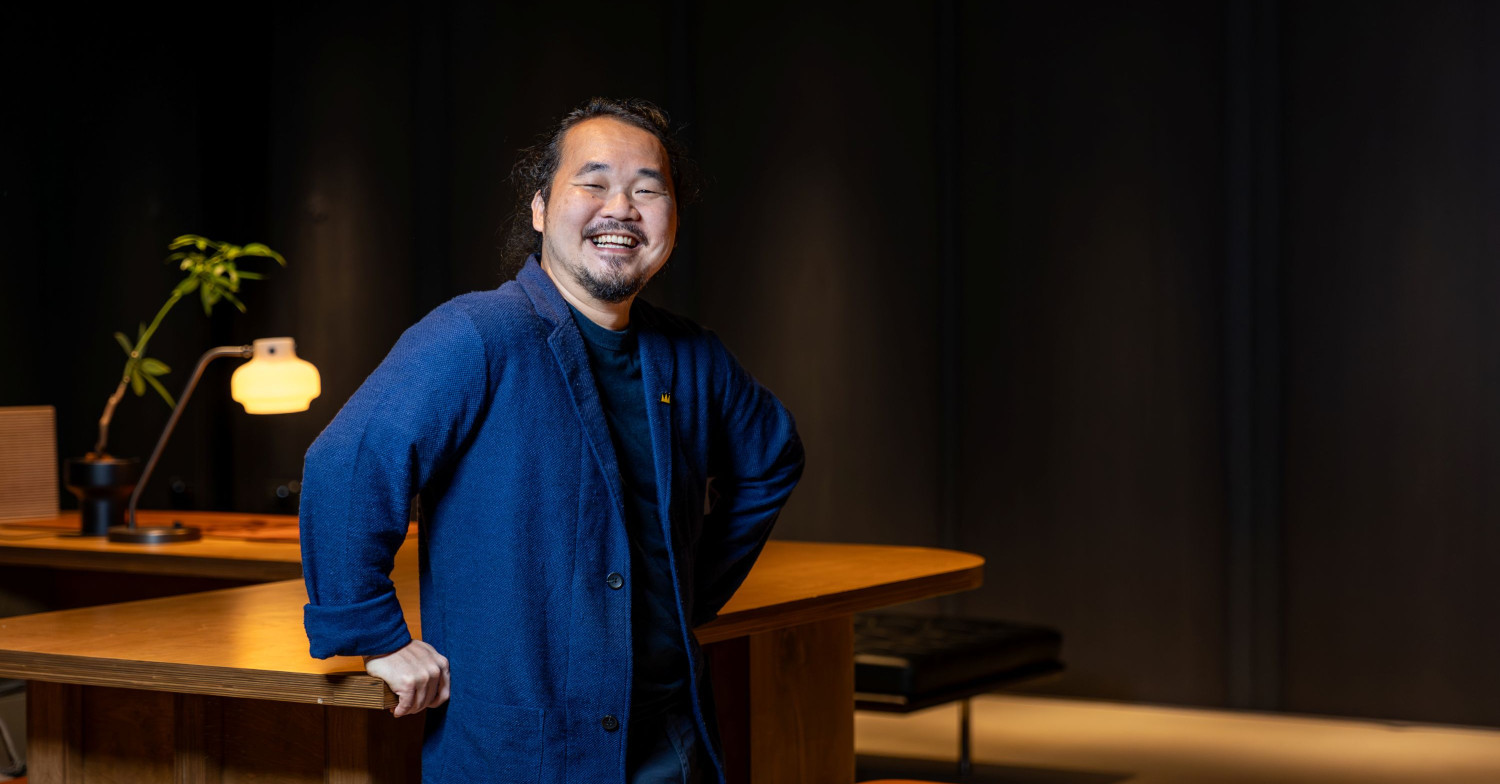
Ng: As we promote a more natural-looking landscape in our gardens and public spaces, we should see a greater acceptance among the population for a thriving network of green spaces where nature is restored into our urban environment. (Picture: Samuel Isaac Chua/The Edge Singapore)
When Ng Sze Oun, director of landscape studio Compound Collaborative, lived in a walk-up apartment along King’s Road a few years ago, he would walk to the Singapore Botanic Gardens at least once a week to enjoy the greenery and admire the landscape design.
It is still his favourite park to visit in Singapore. He has since moved to be closer to his office at BCA Academy in Braddell, and although he lives within walking distance of Bishan-Ang Mo Kio Park, he hardly gets a chance to visit it. “These days, I only get to spend time in gardens or parks during site visits to developers’ projects or private clients’ properties,” he says.
Ng has a deep respect for the resilience and diversity of nature. In each project he undertakes, he aims to design landscaped spaces that both people and wildlife can enjoy and benefit from.
One of Compound Collaborative recent projects is the landscape design of TMW Maxwell, a mixed-use development built around a 20-storey vertical garden concept. It demonstrates how innovative design can create new spaces for people while reclaiming lost ground for nature, says Ng.
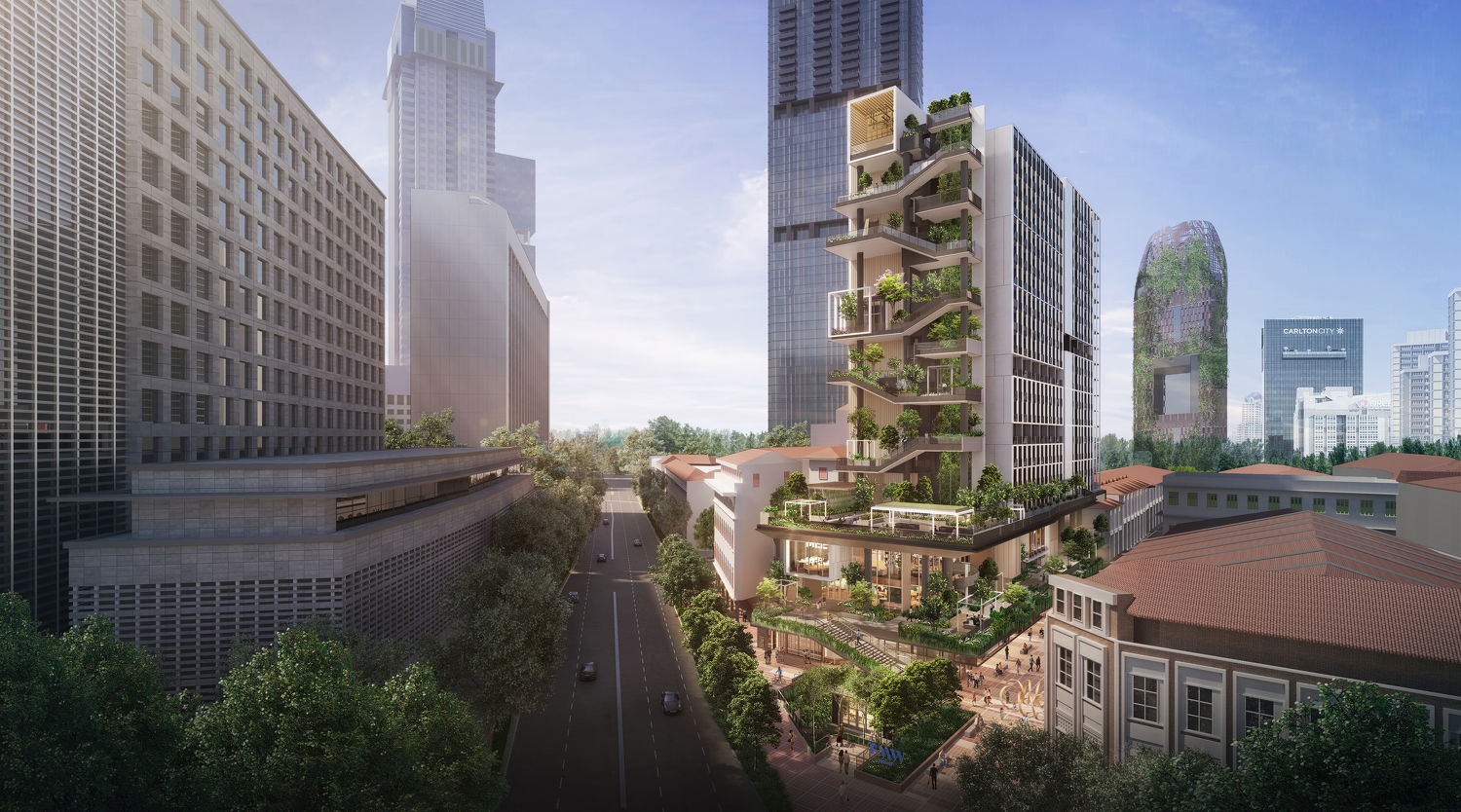
The vertical garden concept at TMW Maxwell creates spaces for nature to thrive. (Picture: Compound Collaborative)
This year, he brings his expertise to the EdgeProp Singapore Excellence Awards (EPEA) 2025 as a judge. It is the second year he has joined the judging panel of six industry experts.
“The EPEA has been an eye-opening experience for me to see how far landscape design in Singapore has matured and evolved, and it is an opportunity to see how different landscape designers and developers apply urban design policies onto their projects,” says Ng.
He notes that most of the award-winning projects in the landscape excellence category demonstrated a clear respect for the surrounding nature and landscape, and incorporated them meaningfully into their landscape design.
For example, The Reef at King’s Dock showcased a marine element, using corals in its landscape design to highlight its waterfront location. The project also features a 180m floating deck which includes a marine viewing hammock for residents to observe the marine life.
Jointly developed by Keppel Group and Temasek Holdings, the 429-unit luxury condo was completed last year. At the EPEA this year, the project won three awards — Landscape Excellence, Innovation Excellence, and Top Development.
Progress in incorporating urban greenery into the built environment has been a top-down approach, and the Singapore government has taken the lead in transforming the city-state’s urban landscape into a greener and climate resilient built environment.
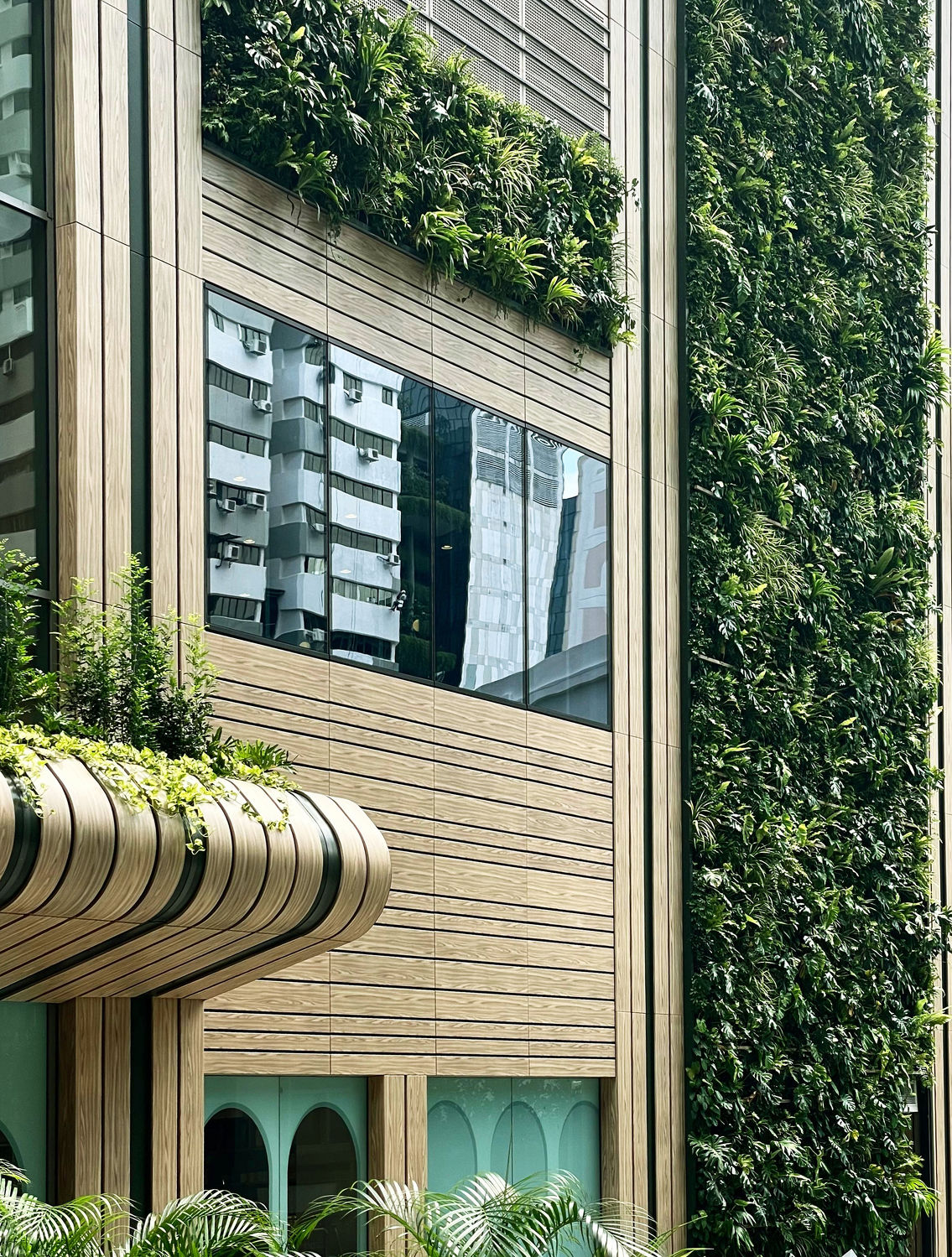
Vertical green walls bring greenery closer to humans and serve as safe spaces for wildlife and pollinator insects, says Ng. (Picture: Compound Collaborative)
Policymakers have outlined development guidelines that require new projects to adhere to strict landscape replacement area (LRA) requirements, as well as incentives to provide green communal spaces. Today, LRA requirements ensure that at least 40% of the development site area is set aside for greenery like gardens and landscaped areas.
These policies are instrumental in our long-term goal of balancing our urban landscape with greenery and nature, says Ng. He adds that this also helps developers work with landscape consultants to better integrate green communal spaces within their development. For example, vertical green walls bring greenery closer to humans and serve as safe spaces for wildlife and pollinator insects.
In recent years, landscape design in Singapore has increasingly focused on rewilding urban green spaces. This involves transforming manicured landscapes into an intentional, managed state of wildness — one that balances planned and spontaneous plant growth to foster an ecologically rich environment.
“This is a trend which many landscape architects in Singapore are incorporating into our work, and it has garnered a lot of support from developers and private clients,” says Ng. He adds that urban rewilding helps people to feel more engaged with nature at home and at work.
“As we promote a more natural-looking landscape in our gardens and public spaces, we should see a greater acceptance among the population for a thriving network of green spaces where nature is restored into our urban environment,” he says.
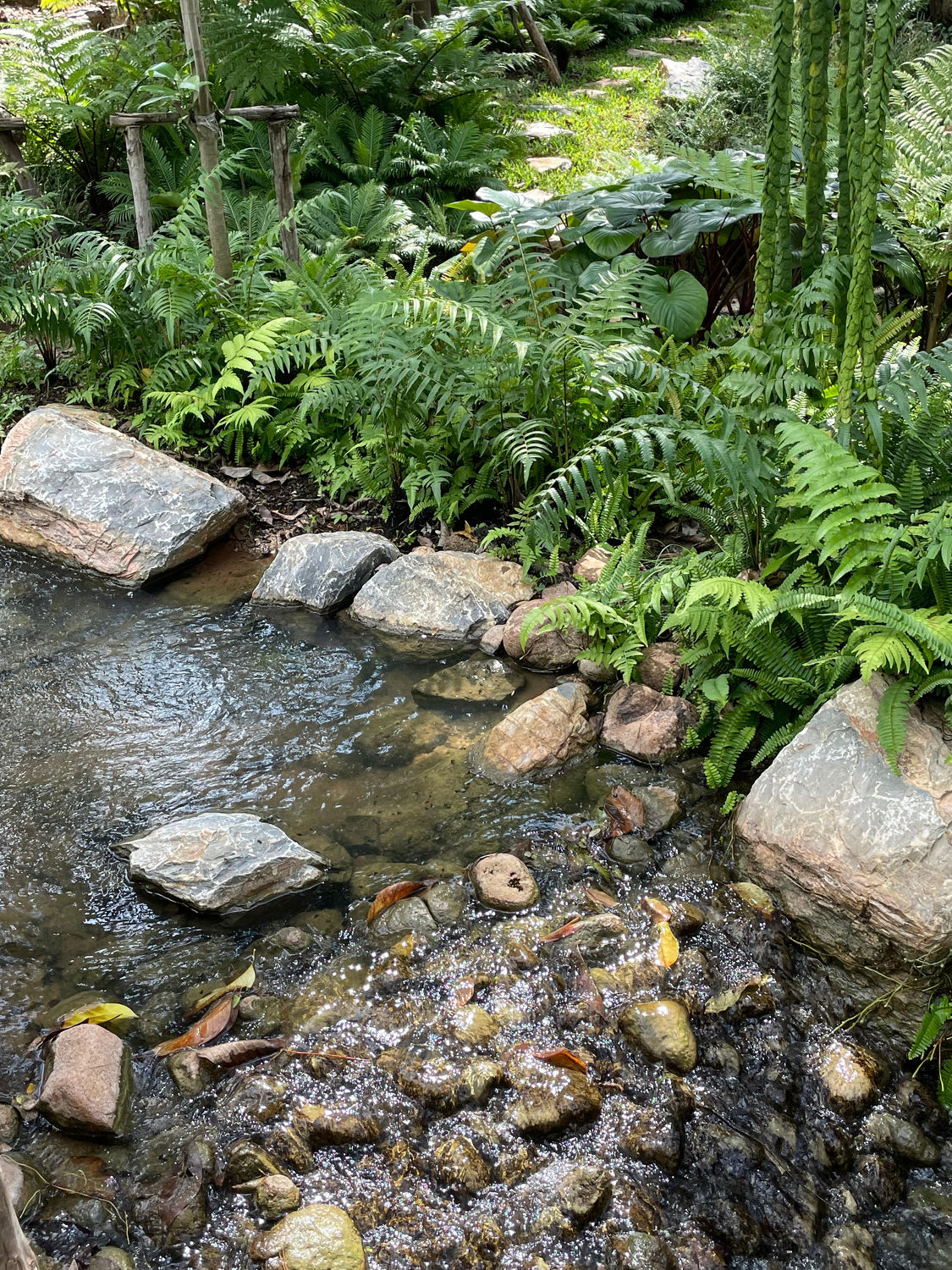
Landscape design embraces a re-wilding concept, transforming manicured landscapes to an intentional and managed state of wildness. (Picture: Compound Collaborative)
This aligns with Singapore’s pursuit of its national urban landscape design as a City in Nature, as part of the Singapore Green Plan 2030. The plan aims to increase the network of public parks, naturalise the biodiversity of green spaces, restore nature in urban areas, and improve the physical connection between green spaces.
In land-scarce Singapore, planners must balance the demand for land among various groups and societal needs, like residential development, commercial, and transportation. Landscape architects are among the handful of voices who try our best to represent nature, and to fight for its right to be protected, says Ng.
Over the past 30 years, Singapore’s urban greenery strategy has focused on developing green buildings. “We’ve gained extensive experience in using technology to control our environment,” he says.
Ng adds that the next generation of landscape planners and architects will have to explore new ways to harmoniously integrate nature and human spaces.
Follow Us
Property updates, 24/7.


Subscribe to Newsletter
Market insights, delivered weekly.
Top Articles
Search