
Property upgrading has built wealth for many, but what is the full cost of the dream?

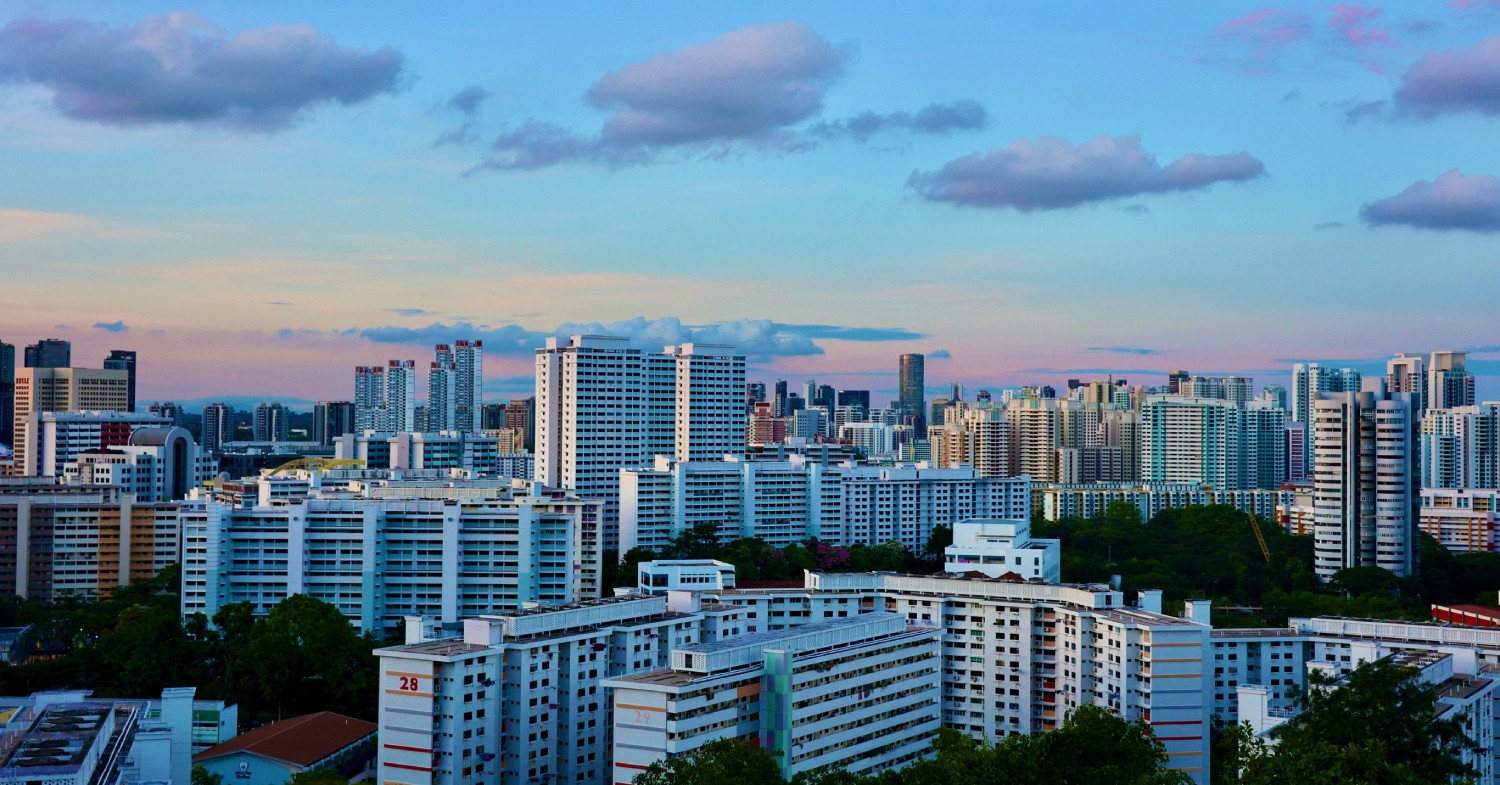
The property upgrade path deserves a harder look; few talk about the risks, hidden strain and how it does not always mean upgrading your quality of life. (Photo: Unsplash)

Ask Buddy
Consider a couple who just moved into a private condo from a HDB flat, and now work demanding hours to keep up with the mortgage and replenish their cash reserves.
They sold their five-room flat for $750,000 and bought a two-bedroom condo in the city fringe for $1.5 million. After forking out the down payment, they face a monthly mortgage that has more than doubled, from $1,800 to $4,600.
The husband moonlights as a private-hire driver after his nine-to-five job, often clocking off only at midnight. The wife regularly stays late at the office to chock up more overtime pay.
They have a balcony with a breathtaking unblocked view they only ever see after dark, a high-end condo gym they are too tired to use, and an Olympic-sized pool they have not visited in months. The child needs to stay in daycare longer than they would like — adding another recurring cost to an already taut monthly budget.
With a combined household income of $13,000 a month, they are technically within borrowing limits. But once maintenance fees, childcare, insurance premiums and a car loan are factored in, their fixed monthly obligations eat up the bulk of what they bring home.
After daily and discretionary expenses, the remaining cash buffer of about $2,500 a month is quickly earmarked for an emergency fund, retirement savings and their child’s education.
Asked why they push themselves this hard, the couple answers with a weary certainty: that they are playing the long game; when they eventually sell the property, the profit will make it all worth it.
Maybe it will. But a profit is never guaranteed and, in the meantime, life is passing them by.
Versions of this trade-off are not uncommon across Singapore. Some of us may know — or be part of — households that are making ends meet but feeling chronically overwhelmed, thinking twice before eating out, and unable to leave jobs that leave them emotionally or physically depleted.
It is worth asking what we actually mean whenever we use the word “upgrade”. If the move leaves us more stretched, burnt out and with less room to live on our own terms, does the label still hold?
How many of us pause to ask that question before signing? How many are simply moving with the tide?
Sellers who net a profit may find the returns surprisingly modest after accounting for costs. Losses are also more common than many realise. (Image: Unsplash)
Well-worn path, but whose?
The HDB-to-condo-to-landed-property path did not come out of nowhere. Decades of rising property prices gave the script credibility, and a national home ownership policy made housing accessible and aspirational.
The very visible success of many Singaporeans who bought early and upgraded steadily has also shown that it is, in fact, possible to build wealth through real estate in the city-state.
When our parents’ generation did well by following a certain path, it is natural to take that path as a given. In some families, the parents even chip in to help their children buy a first condo, normalising the aspiration further.
Christopher Tan, CEO of wealth advisory firm Providend, says this upgrading script persists because it contains some truth. For certain cohorts, upgrading helped build wealth, especially in periods of strong property appreciation and lower entry prices.
"But the mistake is turning a historical success into a timeless rule," he notes.
Buyers today face higher entry prices, steeper stamp duties, tighter financing rules and a very different interest-rate environment than earlier generations did.
What worked for one generation, under different market conditions, is not automatically the right playbook for the next.
Jeremy Ko, an entrepreneur in the sports and fitness industry who chose not to upgrade to a condo, tells EdgeProp Singapore: "Just because something is common wisdom does not mean it is still the best wisdom for the times we live in."

Christopher Tan (left), Providend: "If after buying a property, you do not have financial freedom and you lose your 'ikigai', is the upgrade still worth it?"; Jeremy Ko, entrepreneur and homeowner: "In my experience, deploying capital into a business we understand well can produce far stronger returns than stretching for property."
Hidden cost of upgrading
For many buyers, the upgrade decision is only partly financial. Prestige often plays a role too — the address, allure of luxury facilities and social signalling.
But that can come at a price beyond the sticker value of the unit.
For some, upgrading may mean that over time the financial headroom shrinks and the stress quietly accumulates. The mortgage gradually comes to influence decisions that have nothing to do with property.
In a March 10 blog article, Ko describes vividly the psychological toll of a mortgage that must be continuously serviced at the expense of the buyer’s internal ease. Over the years, it can "reduce a person without his fully noticing it", until the home he bought to improve his life can begin to weigh on his consciousness instead, Ko writes.
Tan from Providend highlights that "being able to ‘afford’ according to regulations is not the same as living affordably".
In testing whether we can service our debts, prescribed rules encourage financial prudence. But whether we can still save consistently, support our parents, absorb childcare costs, maintain insurance, and invest for retirement or live with peace of mind, is less clear-cut.
Clive Chng, associate director at Redbrick Mortgage Advisory, notes that frameworks such as the total debt servicing ratio (TDSR) are designed to prevent overleveraging at the point of purchase.
"At the outset, servicing ability is usually not an issue. Banks also stress-test borrowers to ensure they can still manage payments if interest rates rise," he says.
Where strain can often arise is if circumstances change later on, such as with retrenchment, pay cuts or new financial commitments.
If that happens, there is some flexibility within the system. "Borrowers can typically refinance or adjust their loan, such as by extending the tenor to reduce monthly installments, as long as they remain in good standing and have not fallen into bad debt," Chng says.
That said, some buyers do choose to stretch themselves, be it financially or psychologically.
This tends to show up as chronic pressure and not as immediate default. The household cuts back on emergency savings, pauses investing, skimps on insurance, delays family decisions, avoids career moves, or feels trapped in a lifestyle they thought would feel like success.
Tan says: "Financially, they may still ‘pass’. Emotionally, they are exhausted."
He finds that the assumption of, "If the bank approves it, I can afford it," captures only part of the picture.
A more holistic way to think about it may be to ask whether, after buying the home, you can still fund the rest of your life, live it meaningfully and retain some margin for joy.
Tan points to the Japanese concept of ikigai — a life worth living — to which freedom is indispensable. If buying a property puts a squeeze on that financial freedom and you lose your ikigai, is the upgrade still worth it?
Daphne Lye, MoneyOwl’s senior lead for solutions, research and investment management, recommends applying a stricter or “more kiasu” threshold than what the rules allow, such as targeting a TDSR of 35% instead of the regulatory ceiling of 55%.
This can help provide additional headroom to stay more comfortable through interest rate increases or unforeseen expenses.
She also suggests keeping non-mortgage debt repayments to under 15% of take-home income, and setting aside liquid emergency funds of six to nine months of expenses (or up to 12 months if you are self-employed).
"Additionally, retaining about $20,000 or at least six months’ worth of mortgage repayments in your CPF Ordinary Account will mean the payments can continue even when there is a temporary break in your employment," Lye says.
Ko, speaking from his own experience as a homeowner, has a personal rule of thumb. He asks himself if a 30% drop in income tomorrow would make him lose sleep.
"If the honest answer is yes, I wouldn't sign on the dotted line. That discomfort will compound over a 25-year loan, and it tends to surface at the most difficult moments."
Upgrading can be the right call, but ideally as less of a social reflex and more of a conscious decision. (Image: Unsplash)
What else could your money do?
The opportunity cost of capital tied up in an illiquid asset is equally worth reckoning with.
In his blog, Ko argues that cash is not merely idle or dormant: "it is optionality in its purest form" — the ability to act when life presents an opening that was not visible before.
It could be a chance to buy into a business, to snap up an undervalued asset or simply to walk away from a job that has run its course. None of these would be possible if a heavy mortgage payment is a primary call on each dollar earned.
Ko’s personal experience illustrates this point. After he and his wife sold their 1,000 sq ft Build-To-Order flat for about $715,000, they bought a 20-year-old 1,500 sq ft executive apartment for $730,000 instead of reaching for a condo.
The move improved their quality of life — gaining 500 sq ft of space — without meaningfully increasing their monthly commitments or tying up significantly more capital into property.
It also preserved flexibility for the future. Having been an entrepreneur for more than a decade, Ko has long understood the value of being ready when the right opportunity comes along. Arkkies, a gym chain he co-founded in 2021, has since grown from one outlet to more than 20 by early 2026.
"Had I been locked into a large condo mortgage, I would have had far less room to help fund that expansion," he says.
"In my experience, deploying capital into a business we understand well can produce far stronger returns than stretching for property," Ko opines.
In the sports and fitness industry, a well-run outlet can typically break even in three to five years. To him, that kind of return profile is more attractive than most property purchases.
Ko also reckons there are other investment instruments that can offer better risk-adjusted returns with less concentration risk than property.
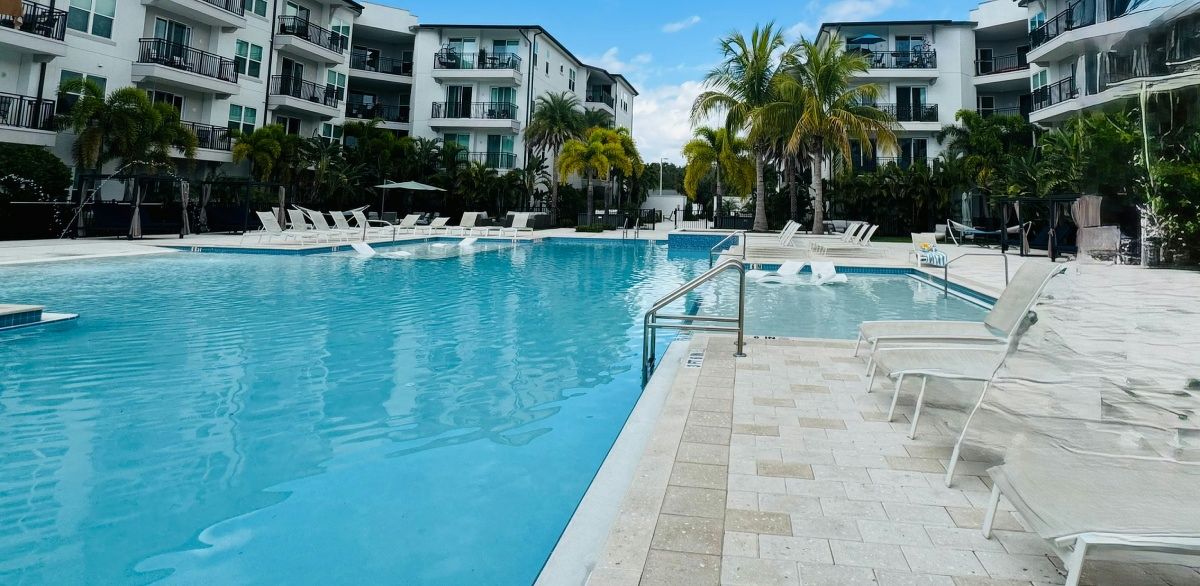
It is worth asking what we actually mean whenever we use the word "upgrade". If the move leaves us more stretched and with less room to live on our own terms, does the label still hold? (Image: Unsplash)
Not every deal is a winner
Property forms the cornerstone of many households’ long-term wealth plan, and historical numbers offer some basis for that confidence.
But as an investment, there is more to the picture than headline appreciation figures may suggest. The downside risks deserve as much attention as the upside potential.
Over the past 20 years, median prices of HDB resale flats nearly tripled, representing a 5.2% per annum (p.a.) rate of return, while the private residential segment rose by 4.8% p.a.
There is the question of costs too. Stamp duties, mortgage interest, maintenance fees, agent commissions, renovation expenses, property taxes and other costs can erode the actual return, says Lye from MoneyOwl.
Those who reap a profit from selling their properties may find the eventual returns surprisingly modest, especially on an annualised basis.
Losses are also more common than many realise. In some cases, sellers who have held their units for many years still walked away with hefty losses, as EdgeProp Singapore’s coverage of each week’s most profitable and unprofitable condo resale deals shows.
Take the condo resale transactions in March as an example. Among the worst-performing deals, losses ranged from 0.4% to 25.6%. The biggest gains in the month ranged from 22% to 287.4% — tidy profits, to be sure, albeit translating to annualised returns of 1.6% to 7.6%, mostly over lengthy holding periods of up to 31 years.
For landlords, rental income can offset holding costs. But it may be subject to income tax and also comes with vacancy risk, tenant management and higher property tax rates on non-owner-occupied homes, notes Lye.
Other considerations for landlords include minimum stay regulations and the minimum occupation period for HDB flats.

Clive Chng (left), Redbrick Mortgage Advisory: "Borrowers can typically refinance or adjust their loan... as long as they remain in good standing."; Daphne Lye, MoneyOwl: "A balanced approach is to build up one's financial assets on top of owning a property."
Stable does not mean risk-free
"Singapore has strong institutions, a high home ownership rate and a tightly regulated financing system, which together make the housing market feel more stable than many others," says Providend’s Tan.
"But 'stable' is not the same as 'risk-free'," he adds. Property prices can stagnate, fall or underperform other asset classes after accounting for costs.
As with any investment, past performance is not indicative of future results.
Lye highlights that many economies go through housing and financial crises: "So we can never say that there is no risk."
Tan also thinks Singaporeans should weigh the risk of loss or even foreclosure "more seriously than they usually do". In particular, most purchases involve leverage, which magnifies both gains and losses.
Rules such as TDSR prevent over-borrowing. "Those guardrails matter. But they are default-prevention tools, rather than guarantees of comfort or profitability," he says.
A buyer can remain technically compliant with the rules and still be one job loss, health event or new caregiving responsibility away from added strain.
Don’t put all your eggs in one postcode
By its nature, property concentrates a household’s wealth in a single, illiquid asset in a single market.
A real estate purchase is lumpy, leveraged, illiquid and expensive to reverse, as Tan puts it. In contrast, a diversified portfolio of equities and bonds can be built gradually, rebalanced, partially sold when needed, and spread across markets and sectors.
A property is also indivisible. "You cannot sell part of it to free up cash. Owners have to sell the entire asset to unlock its value," Lye says. She adds that it is a "chunky risk", requiring a large initial downpayment and ongoing mortgage payments and maintenance fees.
Property should thus be treated as a concentrated, leveraged asset and compared against the household’s total portfolio, not judged in isolation.
"Diversification matters, and over-concentration in one asset class can weaken an overall plan," Tan says.
When weighing property versus other asset classes, the questions ought to be: What role is each asset meant to play? Is the household already overexposed to any?
Property can offer tangibility, potential rental income and leverage. Equities offer diversification, liquidity, lower entry cost and easier scaling, while bonds and cash support stability and liquidity. REITs can give property exposure without concentrating all the risk in one physical unit, Tan notes.
The key is to recognise that property is not the only way to build wealth.
"A balanced approach is to build up one’s financial assets on top of owning a property," Lye says.
She highlights several key principles of investing: find a portfolio mix suited to your risk appetite, diversify globally, stay invested instead of timing the market and keep costs low.
In the past two decades, globally diversified balanced investment portfolios have historically delivered returns broadly comparable with Singapore property, with more liquidity and before taking into account the impact of leverage, Lye notes.
What kind of life are you buying into?
None of this is to say that upgrading is the wrong call. It can be the right one, but ideally as less of a social reflex and more of a conscious decision.
The bar ought to be high: solid financial foundations, a genuine lifestyle need and recurring costs that remain comfortable over time, even as financial conditions and life circumstances evolve.
Besides, HDB living has numerous advantages that tend to get overlooked in the excitement of upgrading. Many estates are well-served by amenities and public transport, you get a more spacious home for your budget, and conservancy fees are lower.
And for households with multiple cars, multistorey carparks in HDB estates actually offer more lots than many condo carparks or car porches, Ko points out.
The questions that matter most may not be how much a property could fetch in five or 10 years, but what else your capital, time and freedom could be put towards — and whether the life inside the upgrade is actually the one you want.
For more news and analysis, read our weekly e-paper. Prefer a print copy? Get it delivered to your home every Monday.
Ask Buddy
Follow Us
Property updates, 24/7.


Subscribe to Newsletter
Market insights, delivered weekly.
Top Articles
Search