
Special Feature
Redefining food infrastructure: Inside Singapore’s first integrated food hub
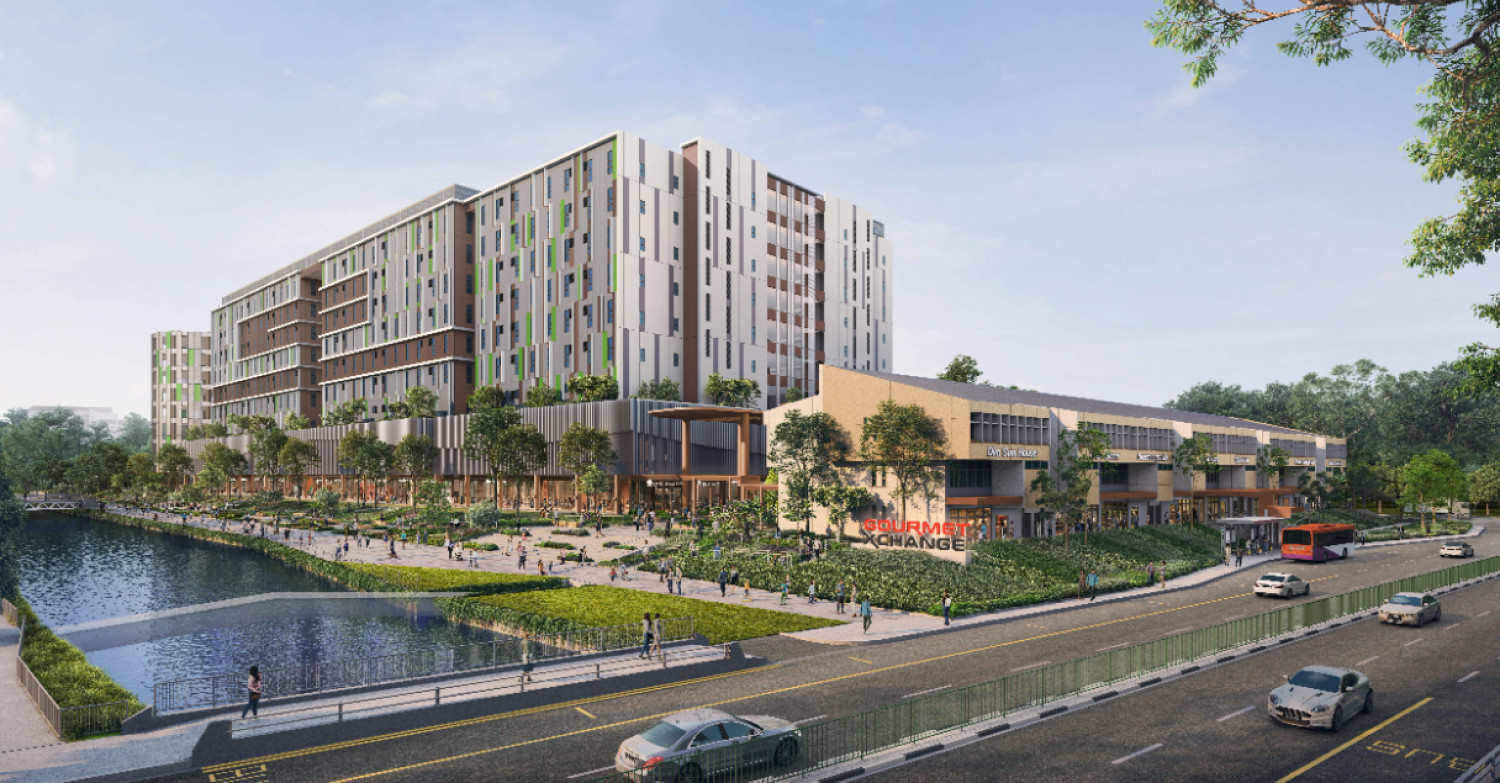
At Gourmet Xchange, deluxe and standard production units will be seamlessly integrated with F&B and heritage terraces (Photo: CapitaLand Development)
Singapore’s food sector is undergoing a structural shift. What was once centred on traditional kitchens and standalone food factories has evolved into a more complex ecosystem spanning central kitchens, cloud kitchens, food-tech pilots, alternative proteins, ready-to-eat meal production and direct-to-consumer brands. As consumer preferences diversify and operators scale across multiple outlets and platforms, the operational demands placed on food businesses have expanded well beyond basic production space.
Responding to these shifts, Gourmet Xchange makes its entry into the market. Positioned as Singapore’s first integrated, strata-titled food development, it is designed to support a broad span of the food value chain — from production and processing to distribution, innovation and selective food retail — within a centrally located riverfront precinct. Developed by CapitaLand Development (CLD), Gourmet Xchange reflects a considered response to how the food industry now functions: vertically integrated, logistically intensive and increasingly brand-facing.
Beyond kitchens: why food development needs to evolve
While demand for food-related space remains resilient, the nature of that demand has changed. Today’s operators are no longer seeking kitchens in isolation. Central kitchens are critical for standardising taste, scaling production and enabling consistency across multiple outlets. Cloud kitchen operators require efficient distribution and last-mile access. Meanwhile, direct-to-consumer brands increasingly require fulfilment capabilities alongside consumer touchpoints.
Yet much of Singapore’s existing food factory stock remains production-only or retrofitted from older industrial formats, and is often located in more peripheral industrial zones, including in areas such as Mandai and Bedok. These limitations translate into higher logistics costs, longer delivery times and reduced flexibility as businesses grow. The challenge, therefore, is not demand, but suitability.
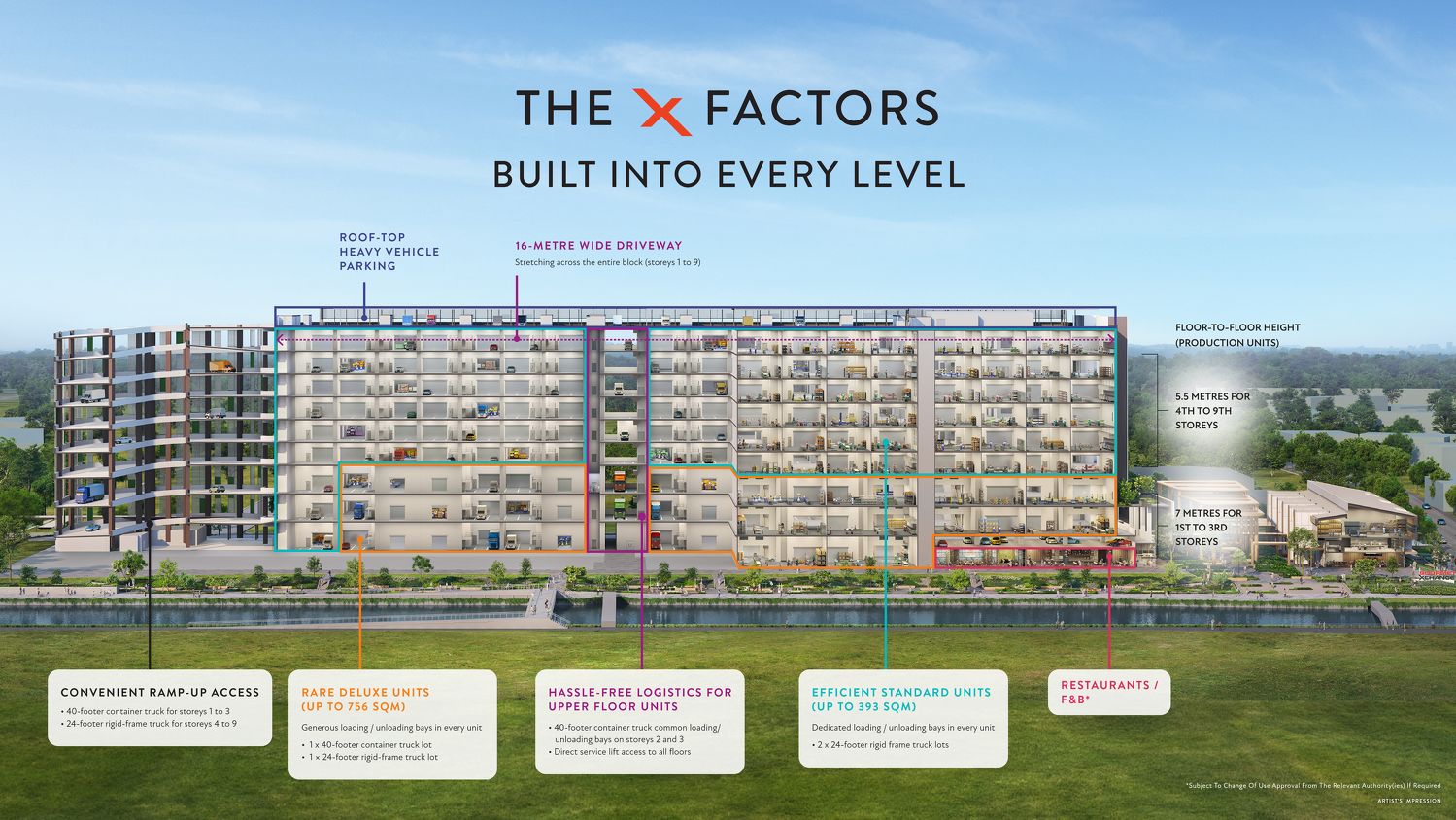
Gourmet Xchange features production, logistics, retail and community-facing elements within a single development (Photo: CapitaLand Development)
Gourmet Xchange is conceived as an integrated environment that responds to these operational realities. By combining production, logistics, retail and community-facing elements within a single development, it reflects the evolving needs of modern food businesses rather than the constraints of legacy infrastructure.
Location as a commercial advantage
For food operators, location is a commercial consideration with direct implications for cost, efficiency and branding. Situated within the Kallang River precinct, Gourmet Xchange offers a level of centrality that is not widely available among food production facilities. Its proximity to major expressways — including the Pan-Island Expressway, Kallang-Paya Lebar Expressway, Central Expressway and the East Coast Parkway — enables efficient islandwide distribution, while three MRT stations within a 1km radius make it more accessible to workers.
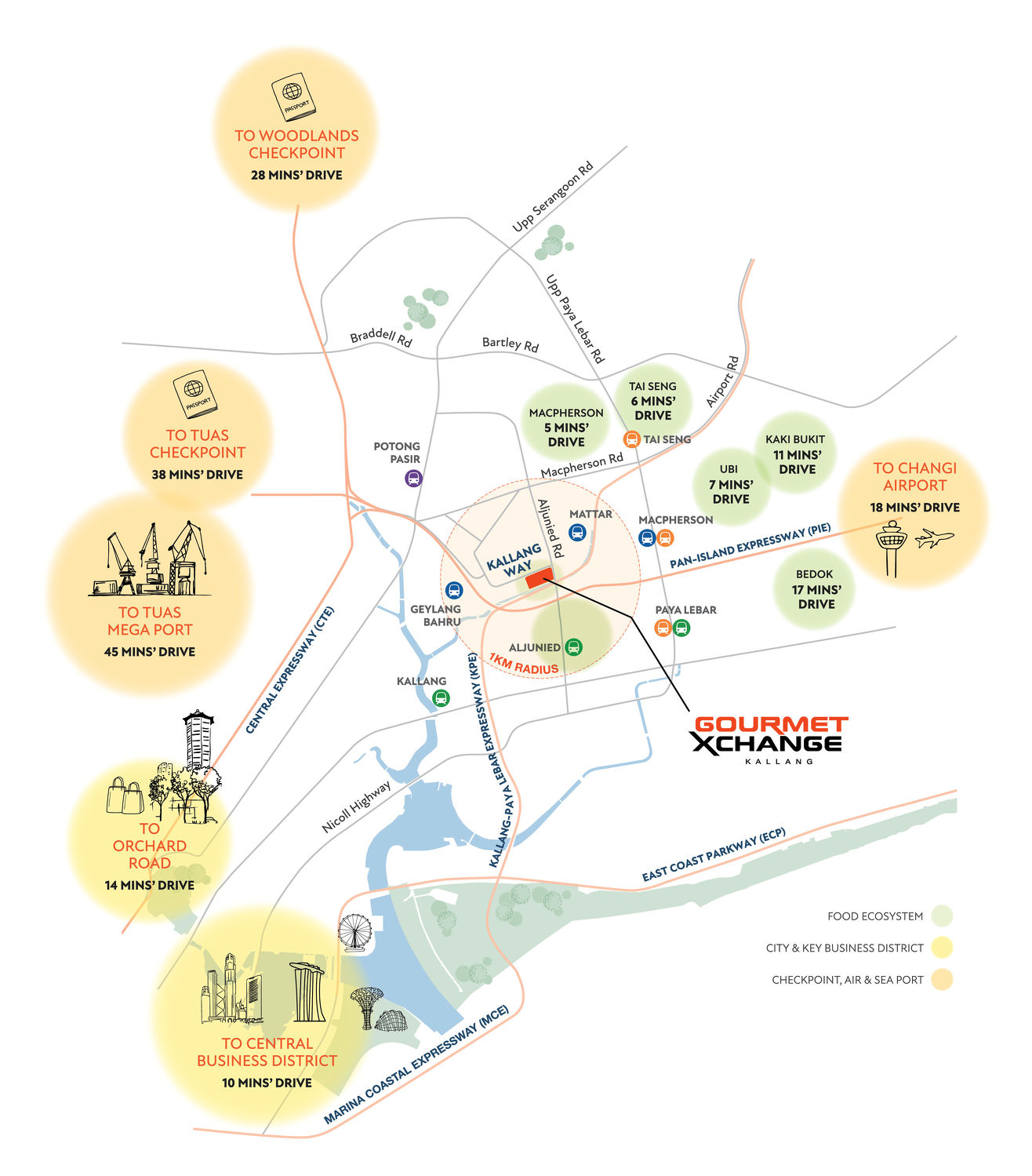
This central location shortens delivery routes, reduces travel time for staff and improves responsiveness to demand across multiple outlets.
More than an industrial block: Activating the Kallang River waterfront
Gourmet Xchange is aligned with the broader objectives of URA’s Kallang River Master Plan, which seeks to strengthen the waterfront as a mixed-use corridor with community spaces, public amenities and improved connectivity for those living and working along the river.
Gourmet Xchange is positioned as one of the first food developments to activate the waterfront, extending beyond conventional industrial typologies. It introduces public-facing elements such as a central plaza designed for events and food-related activities, alongside riverfront promenades and lifestyle amenities that support both workers and visitors.
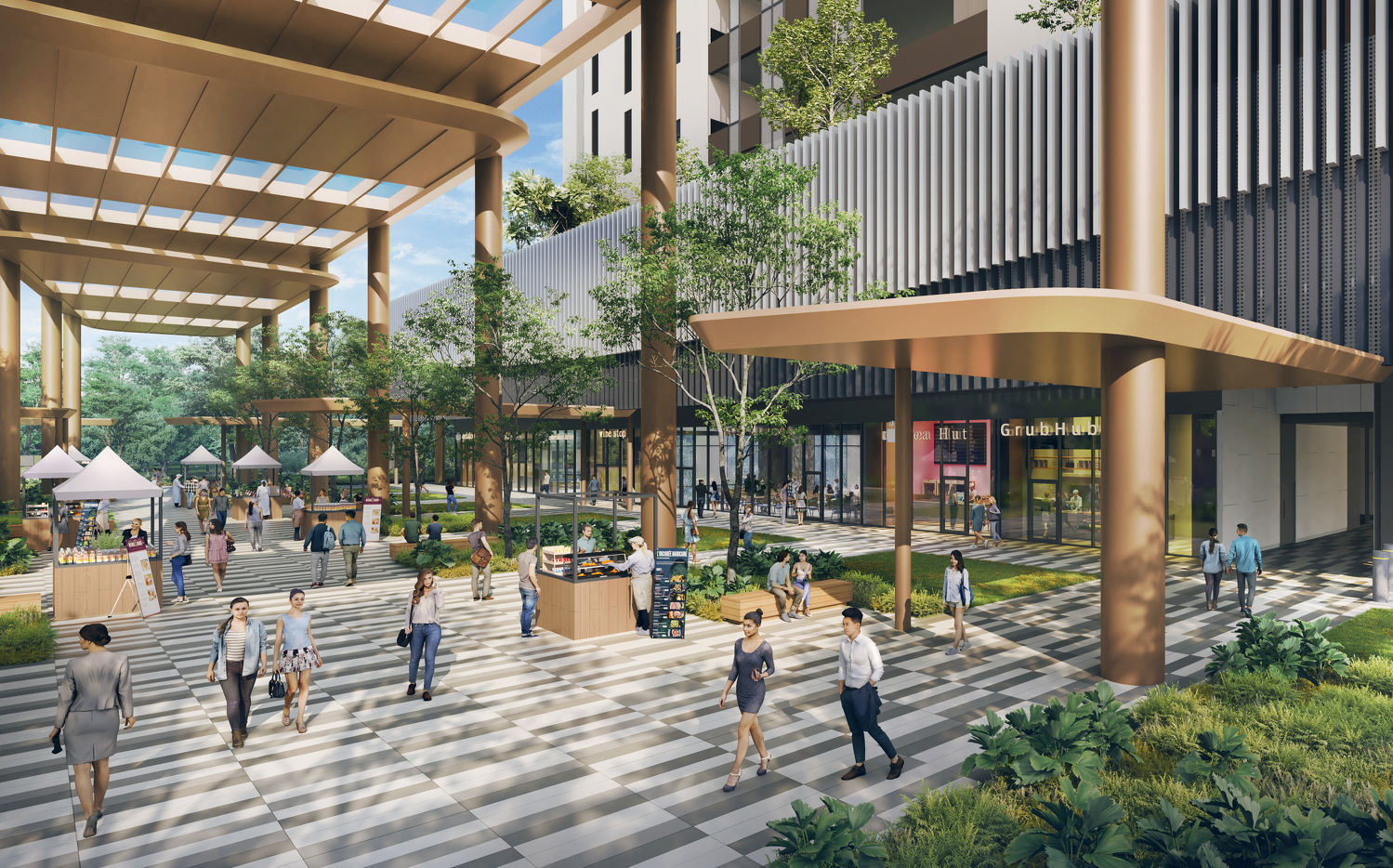
The vibrant Central Plaza will be the centre of activity for social interaction and events, and will be lined by F&B outlets on both sides (Photo: CapitaLand Development)
This approach draws on CLD’s experience in placemaking and integrated developments, applying similar principles to an industrial context where human experience and operational performance are increasingly intertwined.
A diversified product mix supporting the full food value chain
A key differentiator of Gourmet Xchange lies in the breadth of its product mix. As the largest strata-titled food development in Singapore, it is designed to support both upstream production and downstream engagement within a single precinct. The development accommodates food processing, central and cloud kitchens, packaging, cold-chain operations, research and development, as well as consumer-facing dining and retail components.
Notably, the inclusion of three-storey heritage terrace stacks enables vertical integration under one roof. This allows businesses to operate production, research and office functions on upper levels, while activating ground-floor spaces for dining or tasting counters. Such configurations enable food businesses to produce, showcase and serve from one address, aligning operational efficiency with brand visibility.
This integrated model supports a wide spectrum of occupiers, particularly businesses seeking larger or amalgamated spaces to support current operational requirements at the point of purchase.
Dr Charles Chen, founder and project director of FoodNet International Holdings, says the development addresses a long-standing gap in the market. He notes that many food operators have historically been constrained by peripheral locations and limited unit sizes, resulting in higher logistics costs. Gourmet Xchange, with its centrally located and larger-format units, offers a viable alternative for businesses looking to expand without incurring disproportionate capital expenditure.
Engineered for efficiency: Operational and logistics advantages
Beyond its integrated concept, Gourmet Xchange is purpose-built to support the logistical demands of food operations. Its infrastructure is designed to accommodate high-volume workflows, with features that improve turnaround times and reduce operational friction. These include container ramp-up access for larger 40-footer vehicles, generous loading provisions at every unit, wide 16m driveways and robust floor loading and ceiling-height specifications suited to food production requirements.
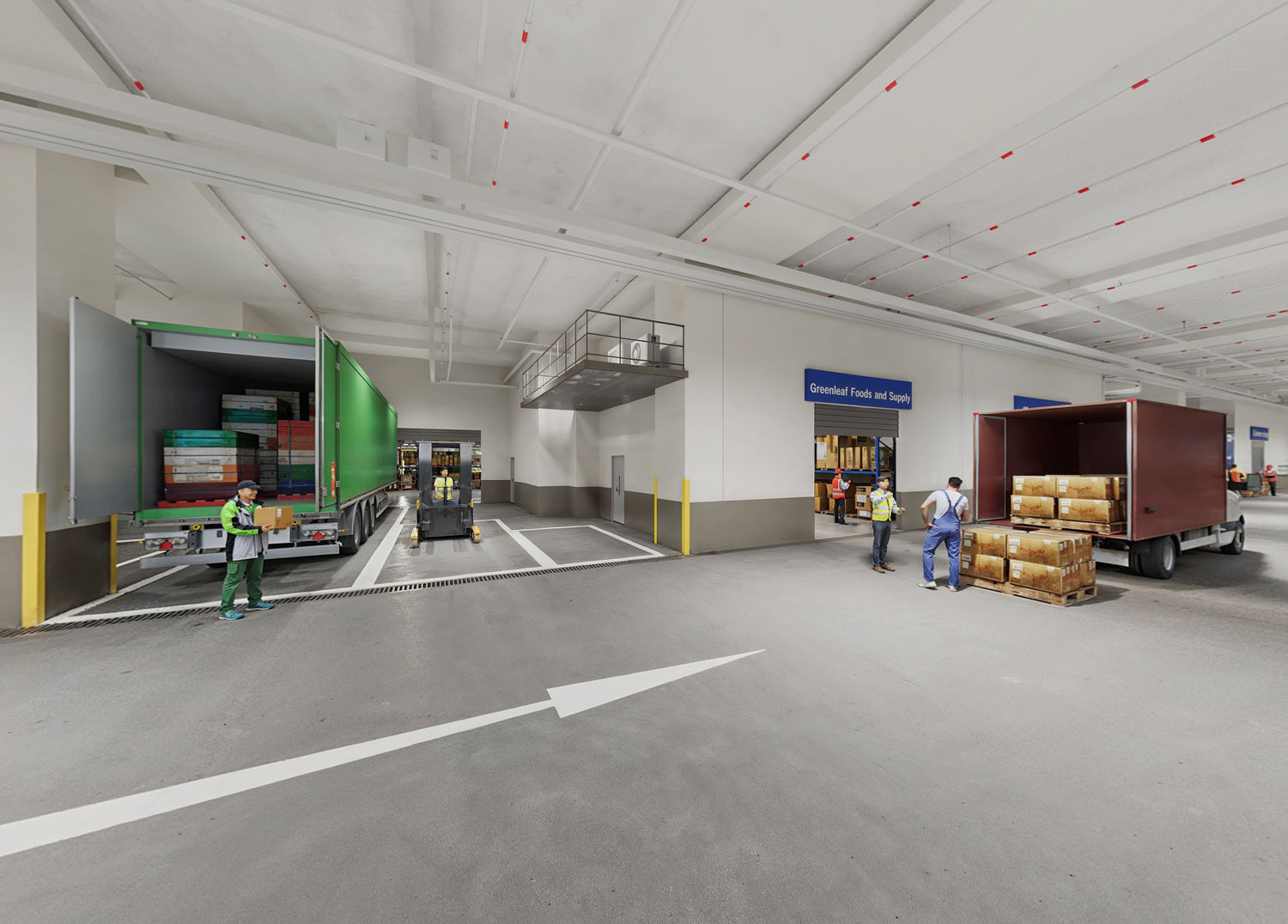
Large deluxe units will feature dedicated loading/unloading bays for up to 40-footer container trucks, and dual-roller shutters for separate in/out flow of raw and finished goods (Photo: CapitaLand Development)
The availability of rare large units, alongside modular layouts that can be amalgamated as businesses grow, further enhances scalability. For operators managing frozen foods, central kitchens or multi-outlet distribution, such design considerations translate into measurable commercial advantages, from reduced downtime to higher throughput. This is particularly relevant for businesses managing cross-border supply chains, where a centrally located Singapore facility can function effectively as a distribution hub or satellite kitchen, balancing operational efficiency with brand presence.
Ownership as a strategic decision, not a tenure choice
For many food operators, the decision to own rather than lease is driven by the scale of investment required for food production. Fit-outs often involve substantial capital expenditure in mechanical and electrical systems, cold-chain facilities and regulatory compliance. Leasing introduces uncertainties around rental escalation and relocation risk, while eroding the value of sunk capital over time.
Ownership offers greater control over infrastructure and allows businesses to amortise investments across longer production cycles. In practice, many operators do not consider relocation for a decade or more unless expansion becomes necessary. Gourmet Xchange offers larger and configurable units that allow growing companies to plan for scale at the point of purchase, reducing the need for premature relocation.
A new generation of food hubs
Gourmet Xchange reflects a broader shift in how food businesses operate and position themselves. Rather than functioning as isolated production sites, modern food facilities are increasingly connected, visible and embedded within their communities. By integrating production, logistics, retail and public spaces within a single precinct, Gourmet Xchange represents a new generation of food hubs designed to support both operational performance and human experience. Backed by CLD, it is positioned as a platform for food businesses to scale and adapt within an increasingly competitive and dynamic industry landscape.
Call to find out more or arrange for a preview at the sales gallery at: 1 Kallang Way 5 (+65 6713 3688) www.gourmetxchange.com.sg
Follow Us
Property updates, 24/7.


Subscribe to Newsletter
Market insights, delivered weekly.
Top Articles
Search