
Rising costs cloud Singaporeans’ satisfaction with quality of life: Knight Frank-Ipsos Survey
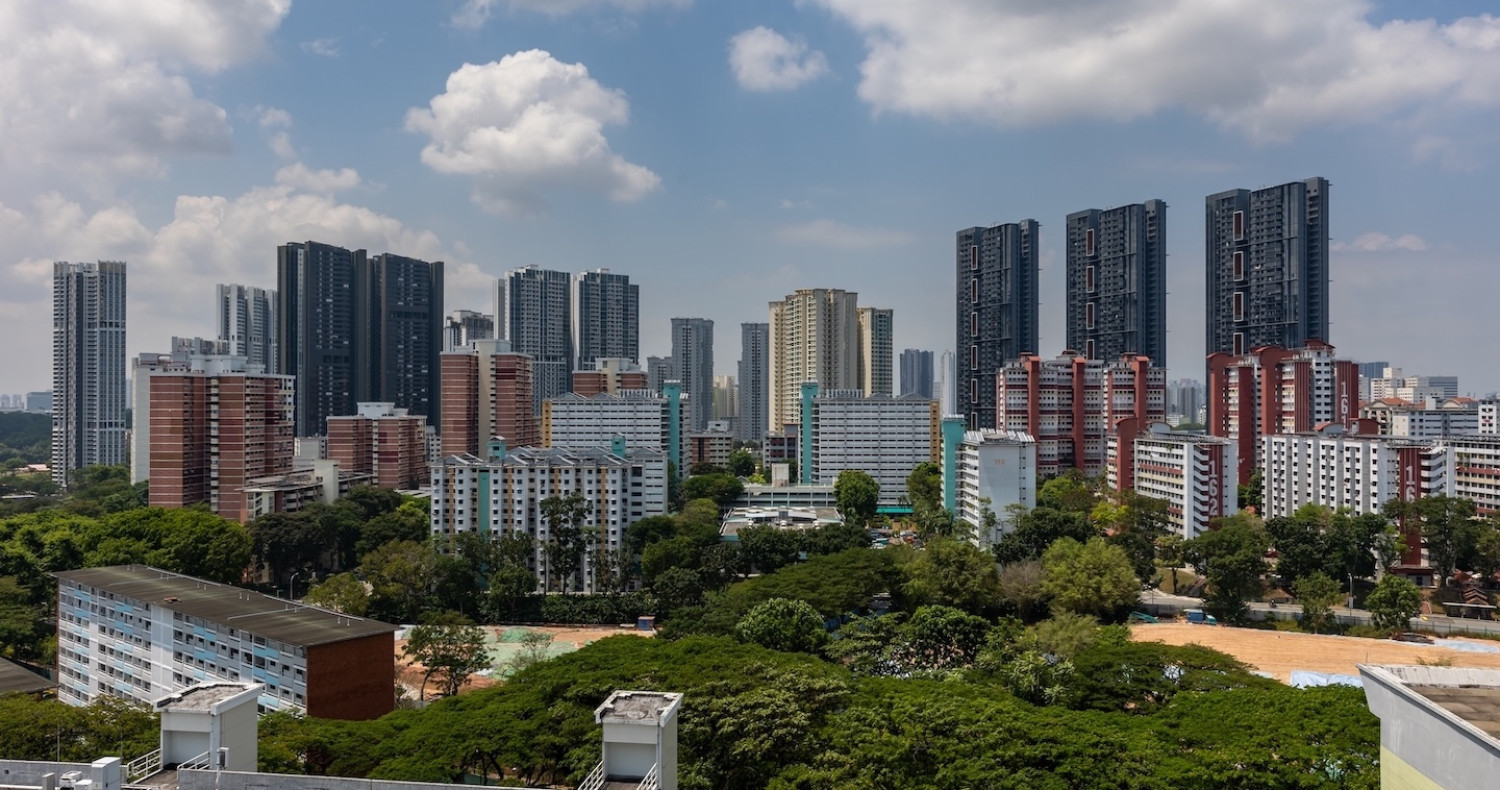
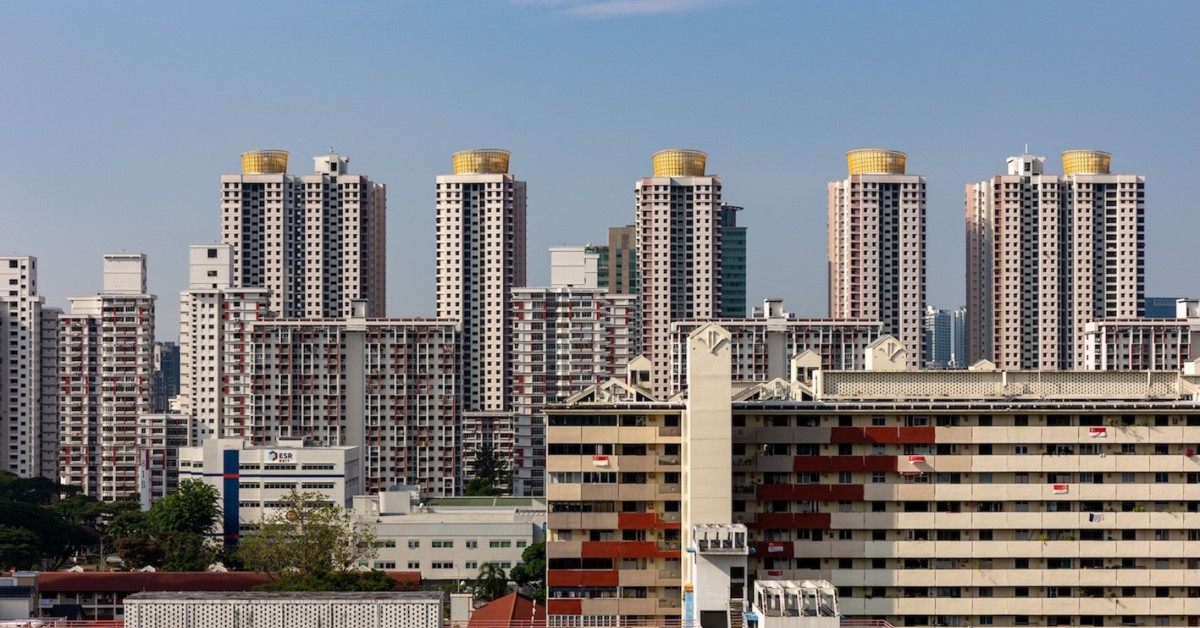
Singapore residents value affordable homes in convenient, green, and wellness-oriented neighbourhoods, with a clear preference for developments that enhance both individual and community well-being (Photo: Albert Chua/EdgeProp Singapore)

Ask Buddy
Having achieved rapid development over the past six decades to become a high-income economy, Singapore now stands at a crossroads in charting its next phase of transformation.
What really matters to people today? What are their hopes, concerns, and aspirations regarding the spaces where they live, work, and play?
According to Knight Frank and Ipsos’ inaugural Quality of Life (QoL) Report, while three in four Singaporeans express satisfaction with their living conditions, many remain anxious about the future, particularly about job security.
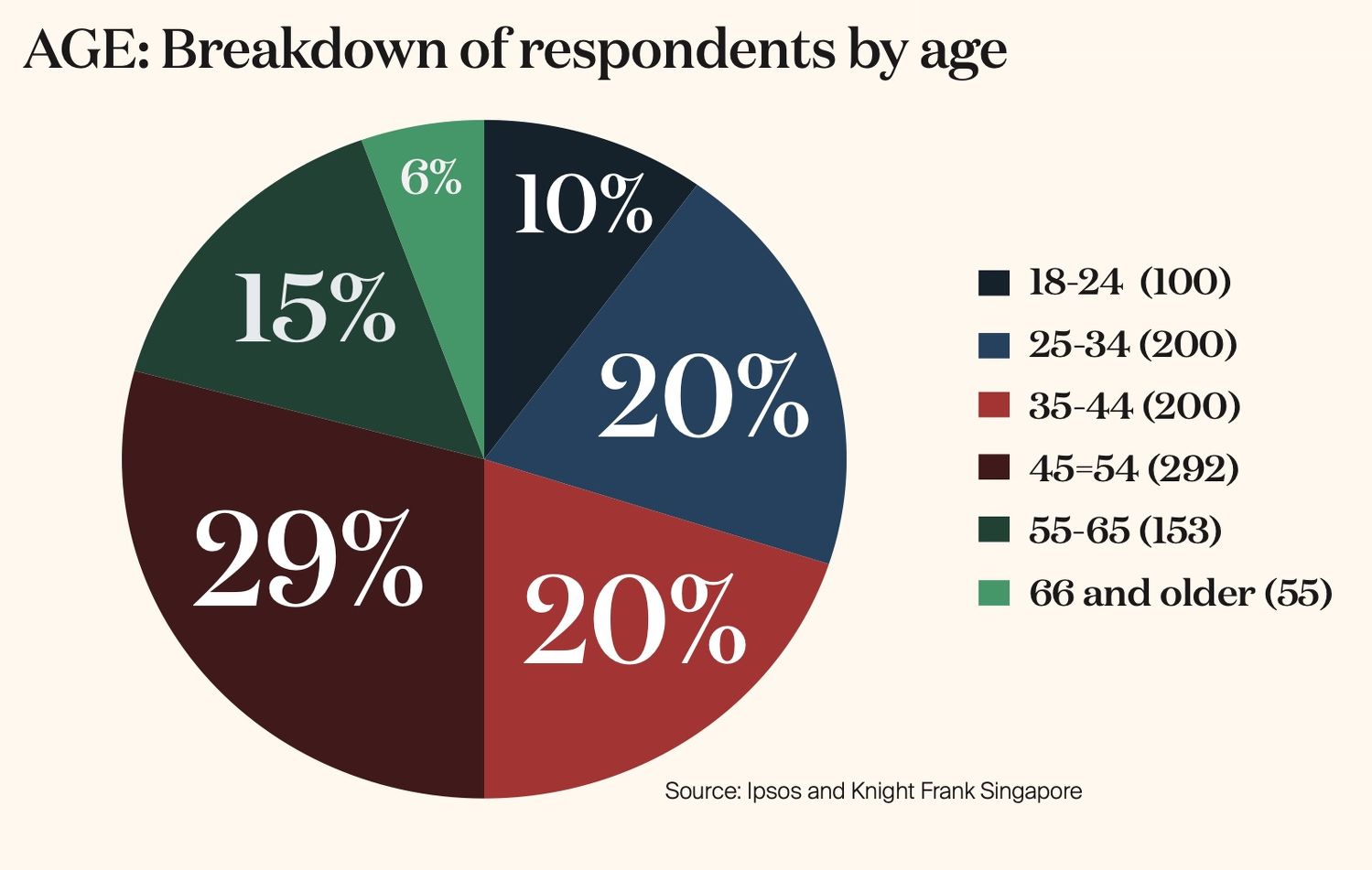
Across housing, work, and recreation, a clear majority of respondents are content with Singapore’s development in these areas. Yet the survey also highlights gaps and emerging concerns that could shape future expectations.
Notably, rising costs were the most significant worry, cited by 52% of respondents, permeating all aspects of life.
The sections that follow explore what residents value most, where they see room for improvement, and how cost concerns may influence future urban planning and housing preferences.
Housing priorities
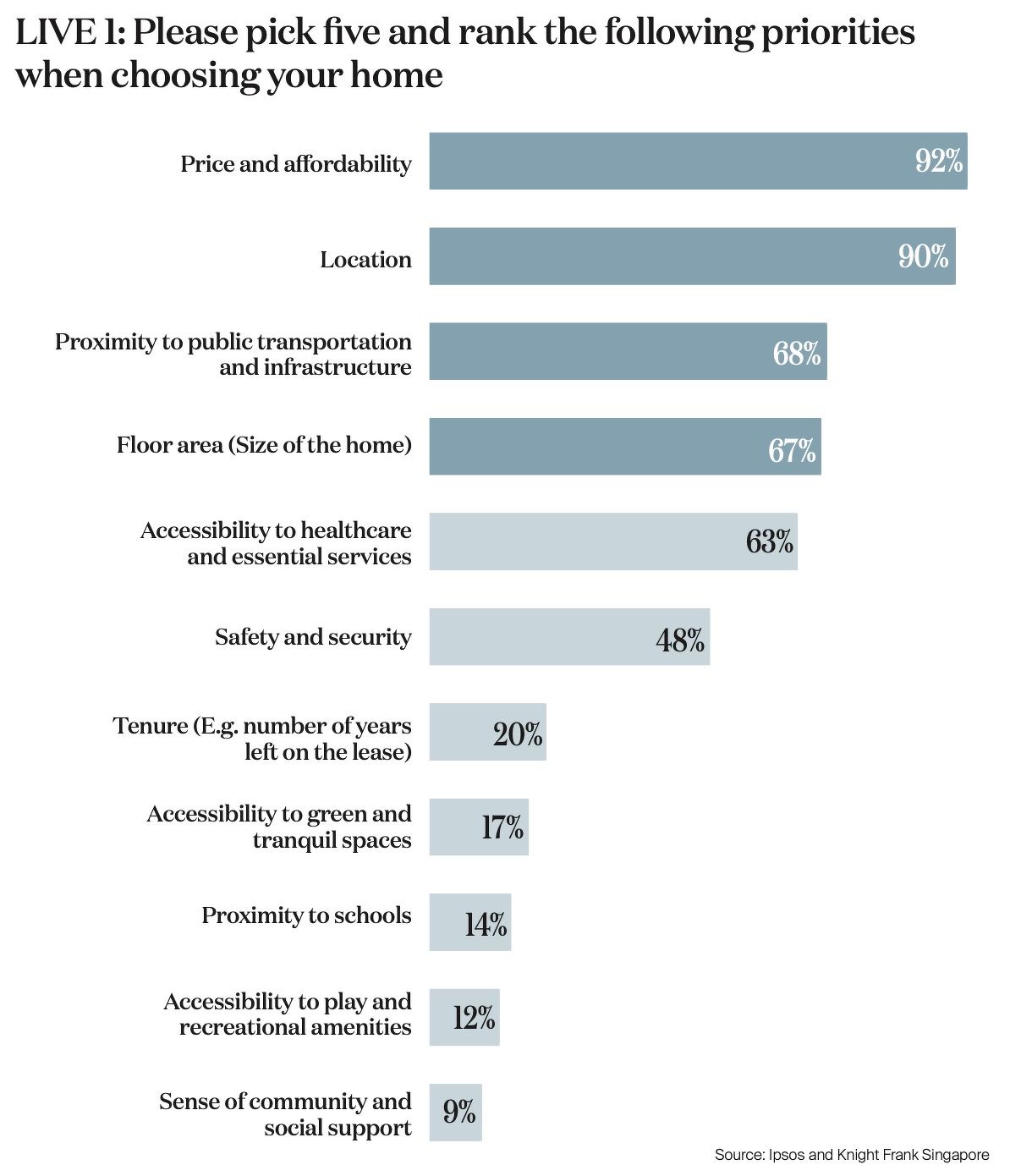
Housing is foundational to quality of life. The survey shows that price (92%) and location (90%) remain the top considerations when choosing a home. Proximity to public transportation (68%) and floor area (67%) ranked third and fourth, respectively.
Green and tranquil spaces (17%) have become increasingly important, outranking schools (14%) and recreational amenities (12%). This reflects a growing desire for wellness-oriented environments within the built landscape.
The relatively lower priority placed on schools could stem from government efforts to raise education standards island-wide, giving families greater confidence in schools across neighbourhoods.
Interestingly, proximity to parents (30%) emerged as a significant factor outside prescribed options. This highlights evolving family dynamics: young parents rely on grandparents for support, while adult children seek to live near ageing parents to provide caregiving. This trend reinforces demand for homes in mature estates, where intergenerational support is easier to manage.
Communal and wellness facilities
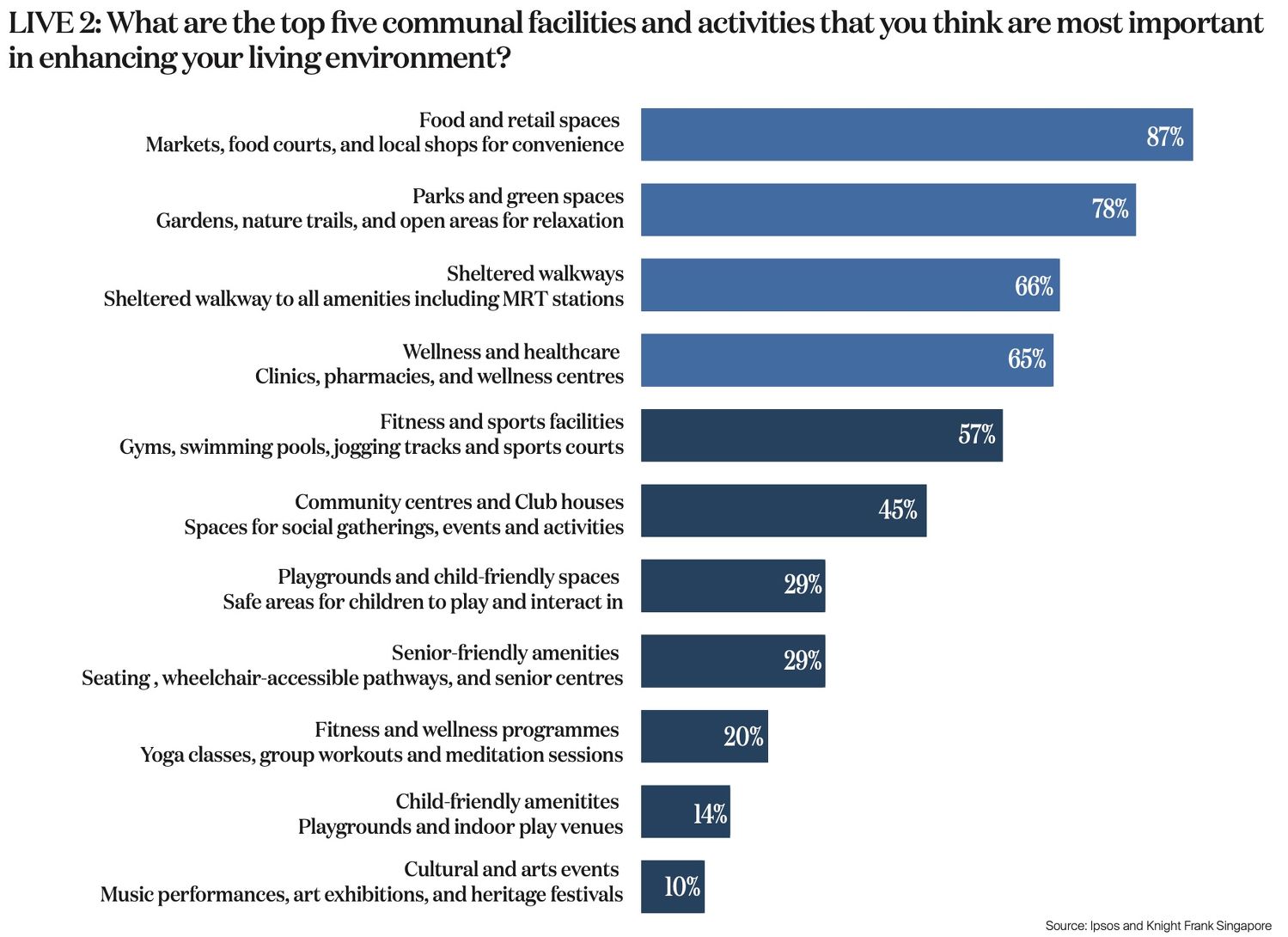
In line with housing priorities, food and retail spaces (87%) rank as the most essential amenities, underscoring the importance of daily convenience. Parks and green spaces (78%) came in second, reflecting residents’ desire for nature as both a form of recreation and a respite from urban stress.
Sheltered walkways (66%) also ranked highly, aligning with Singapore’s tropical climate and its push for active mobility networks. Wellness and healthcare facilities (65%), fitness and sports facilities (57%), and community centres (45%) further emphasise the value placed on holistic, health-conscious living.
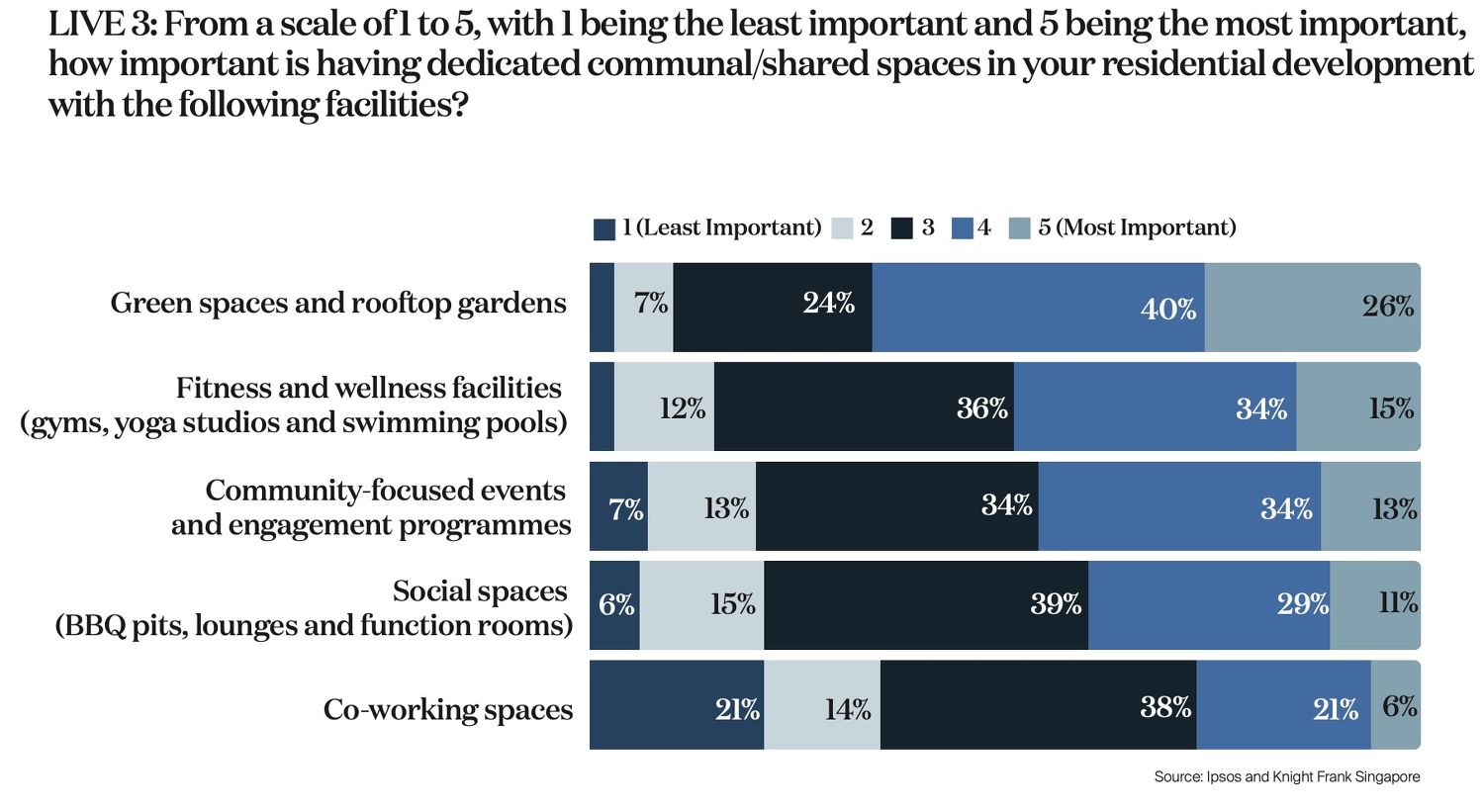
When ranking communal spaces, respondents favoured greenery and rooftop gardens (66%), followed by wellness and community spaces. Co-working spaces near home scored lowest (27%), suggesting that residents prefer a clear separation between work and home life.
These findings suggest that residential developments integrating green spaces, healthcare, retail, and weather-protected connectivity will resonate strongly with buyers.
Trade-offs
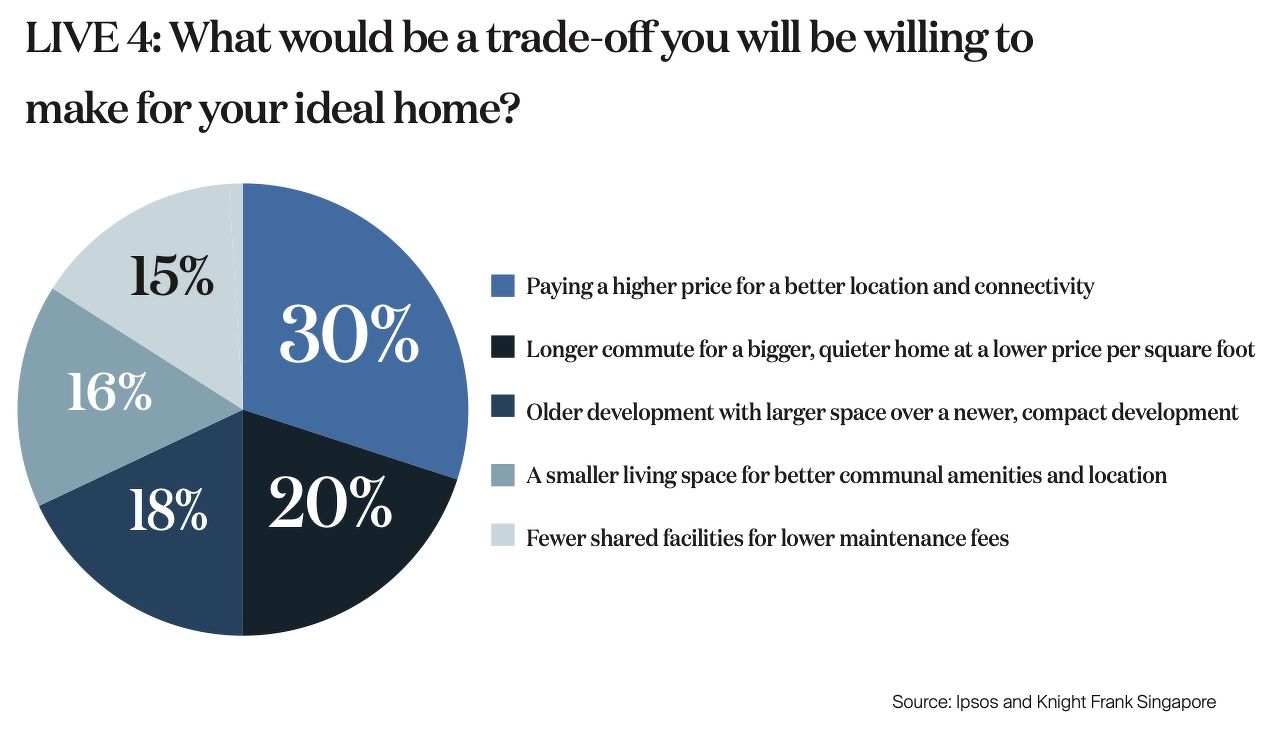
The survey reveals the trade-offs residents are willing to make. Thirty percent would pay more for better location and connectivity—the most common trade-off—underscoring the enduring importance of “location, location, location.” Meanwhile, 20% are open to longer commutes in exchange for larger homes at lower psf prices, valuing space and tranquillity over centrality, especially as hybrid work arrangements take hold. Eighteen percent prefer older developments with larger layouts over newer, smaller units, highlighting a pragmatic appreciation for space and the durability of older housing stock.
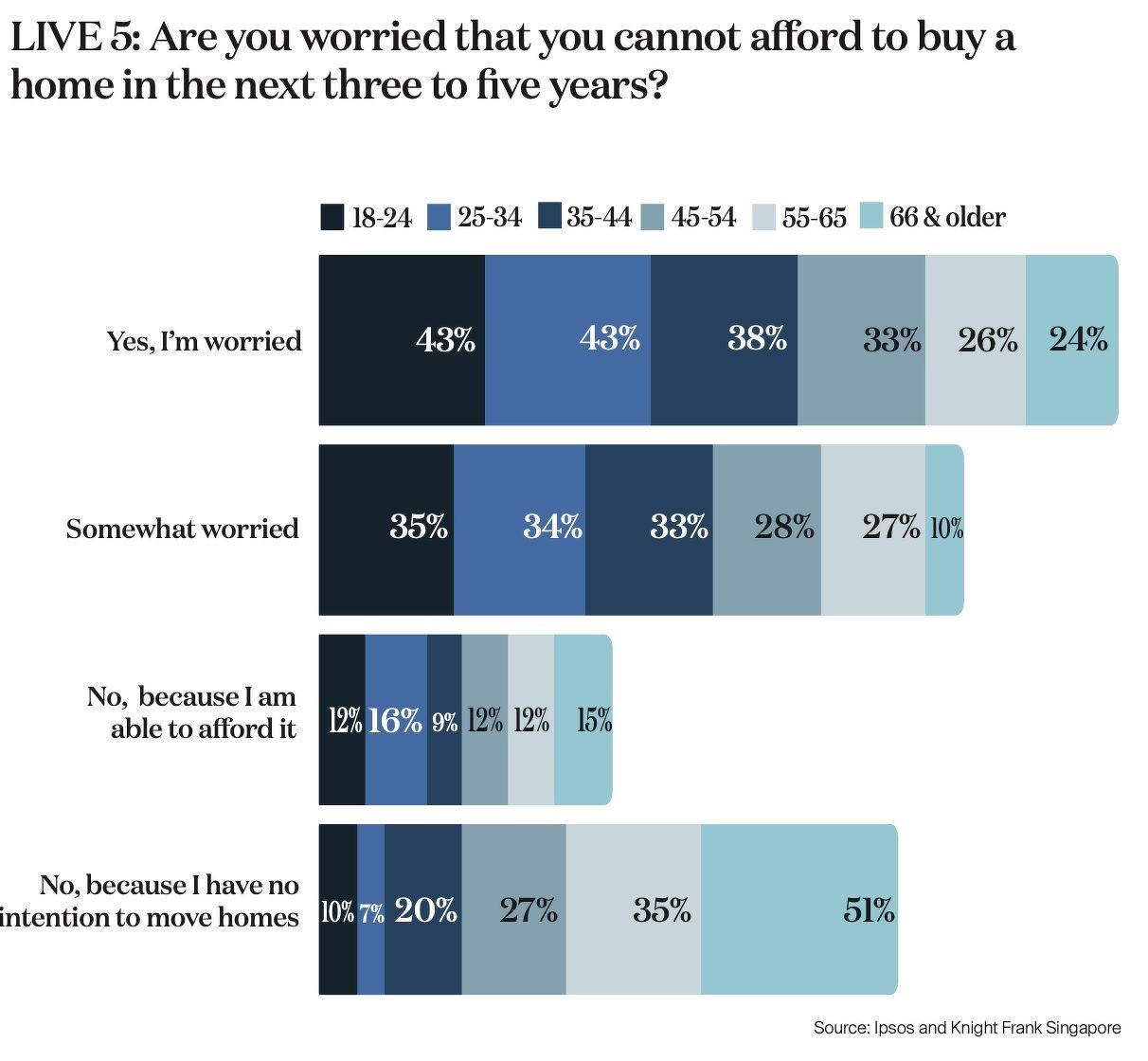
Despite high satisfaction levels (75% scored 4 or 5), 65% still worry about future housing affordability. Concerns are strongest among younger buyers and upgraders.
Private versus public housing
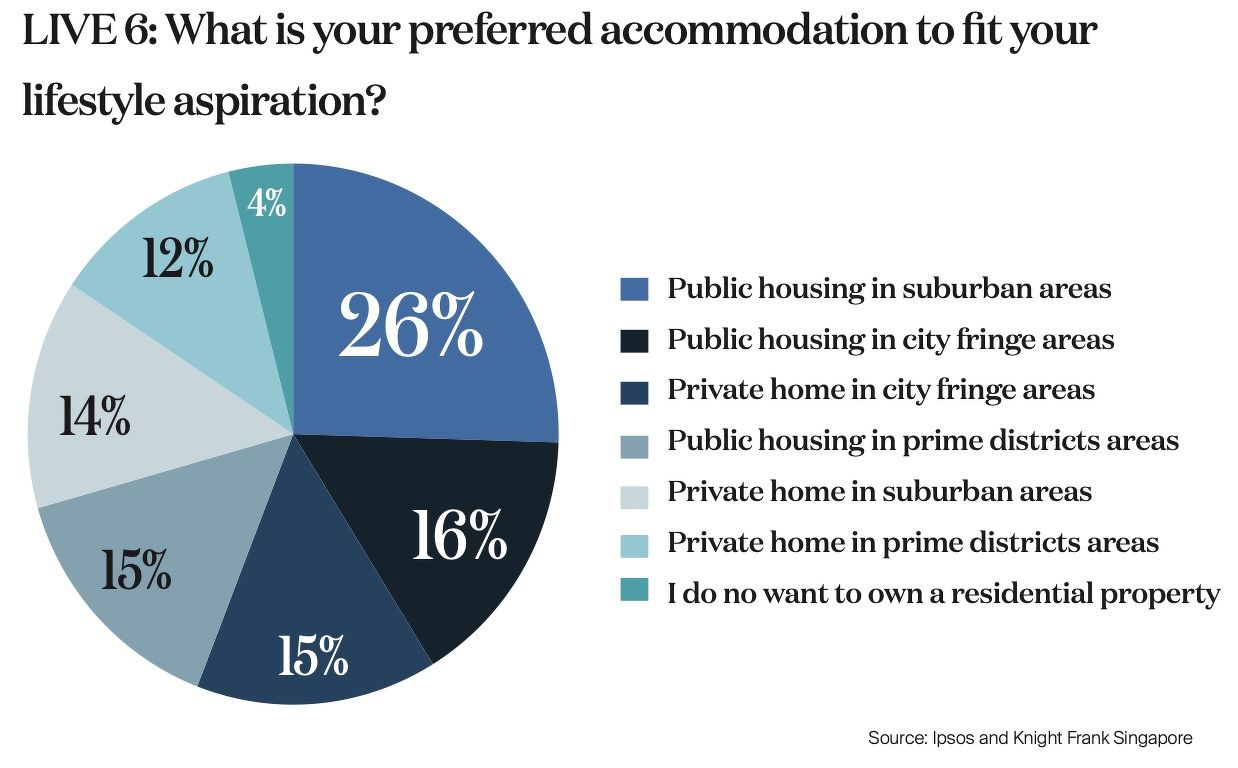
Affordability concerns likely explain why 26% of respondents chose public housing in suburban areas as their preferred option. While over 40% aspire to live in private homes, aspirations for prime locations remain muted—only 15% desire prime public housing, and 12% prime private homes. This reflects general contentment with non-prime, well-connected neighbourhoods.
Given the dominance of public housing (over 70% of total stock), the survey suggests upgrading aspirations remain moderate. The findings also hint at a potential policy discussion around the 60% Additional Buyer’s Stamp Duty (ABSD) on foreigners, which has dampened foreign demand in prime areas.
Residents seek not just a house but a holistic living experience—balancing private comfort with accessibility, greenery, and wellness infrastructure. This aligns with URA and HDB’s planning efforts to integrate mixed-use developments, active mobility networks, and community facilities into estates.
For developers, the message is clear: successful projects must go beyond unit design to deliver location efficiency, seamless connectivity, and high-quality communal spaces.
Private housing prices and affordability
Price and affordability remain overriding priorities, with 92% selecting them among their top five factors. Despite slower price growth, two-thirds of respondents are somewhat concerned about affordability, with 35% expressing explicit worry.
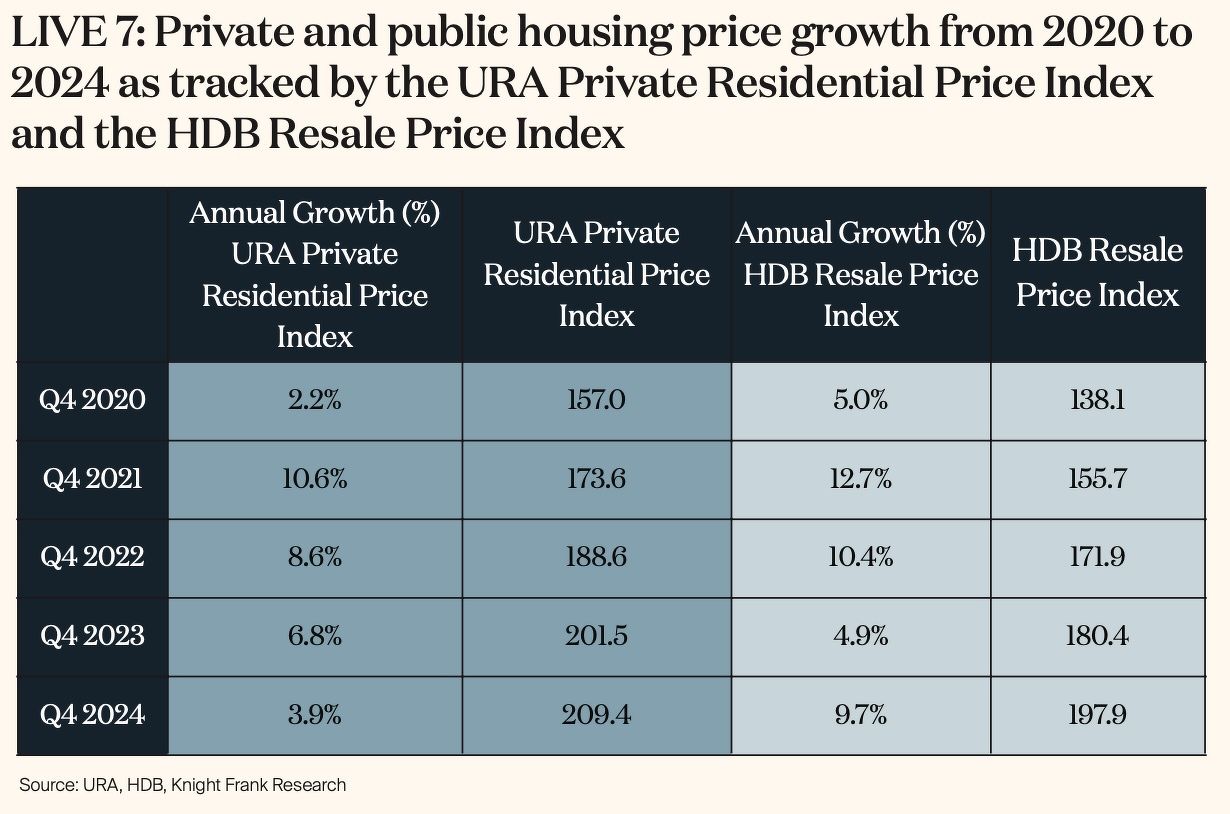
Analysis of the price-to-household income ratio reveals that new private home prices have outpaced income growth, rising from 11.8 in 2019 to 18.9 in 2024. This surge was driven by post-pandemic pent-up demand, land scarcity, and rising construction costs, as well as intergenerational wealth transfers supporting higher prices.
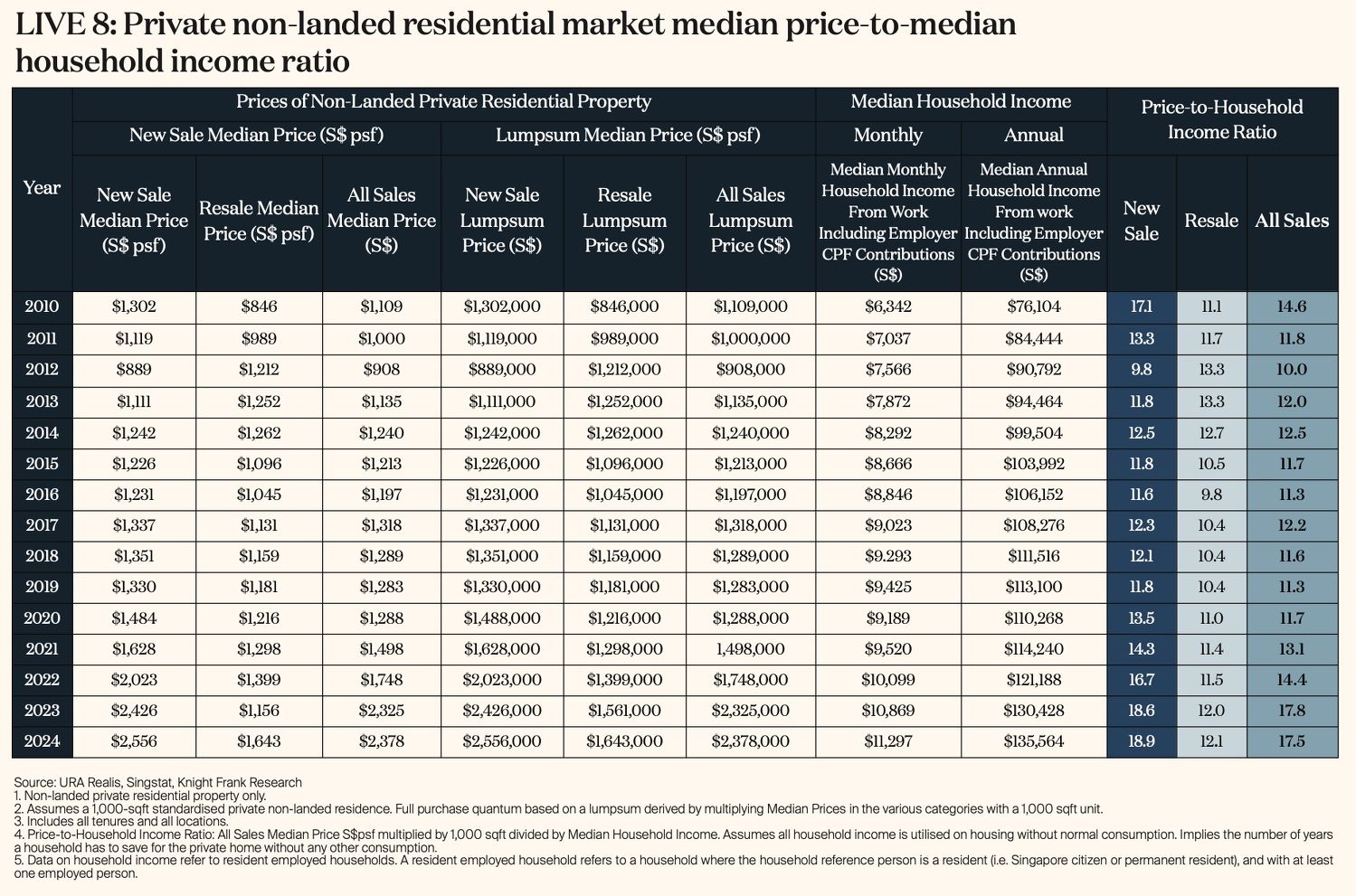
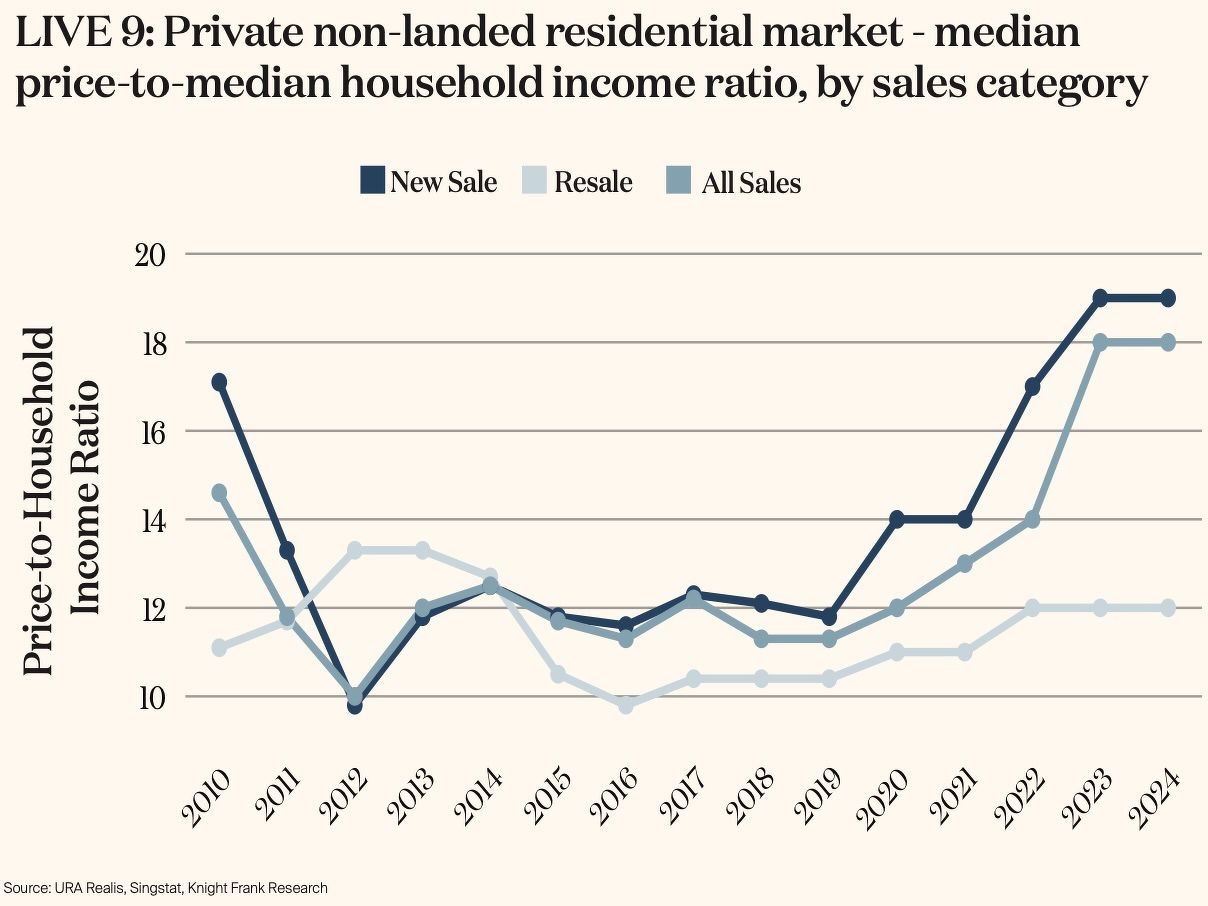
By contrast, the private resale market has remained more stable, with ratios fluctuating between 9.8 and 13.3 over the past 15 years. This suggests resale homes still offer relatively affordable options for buyers seeking completed stock with established amenities.
HDB resale prices and affordability
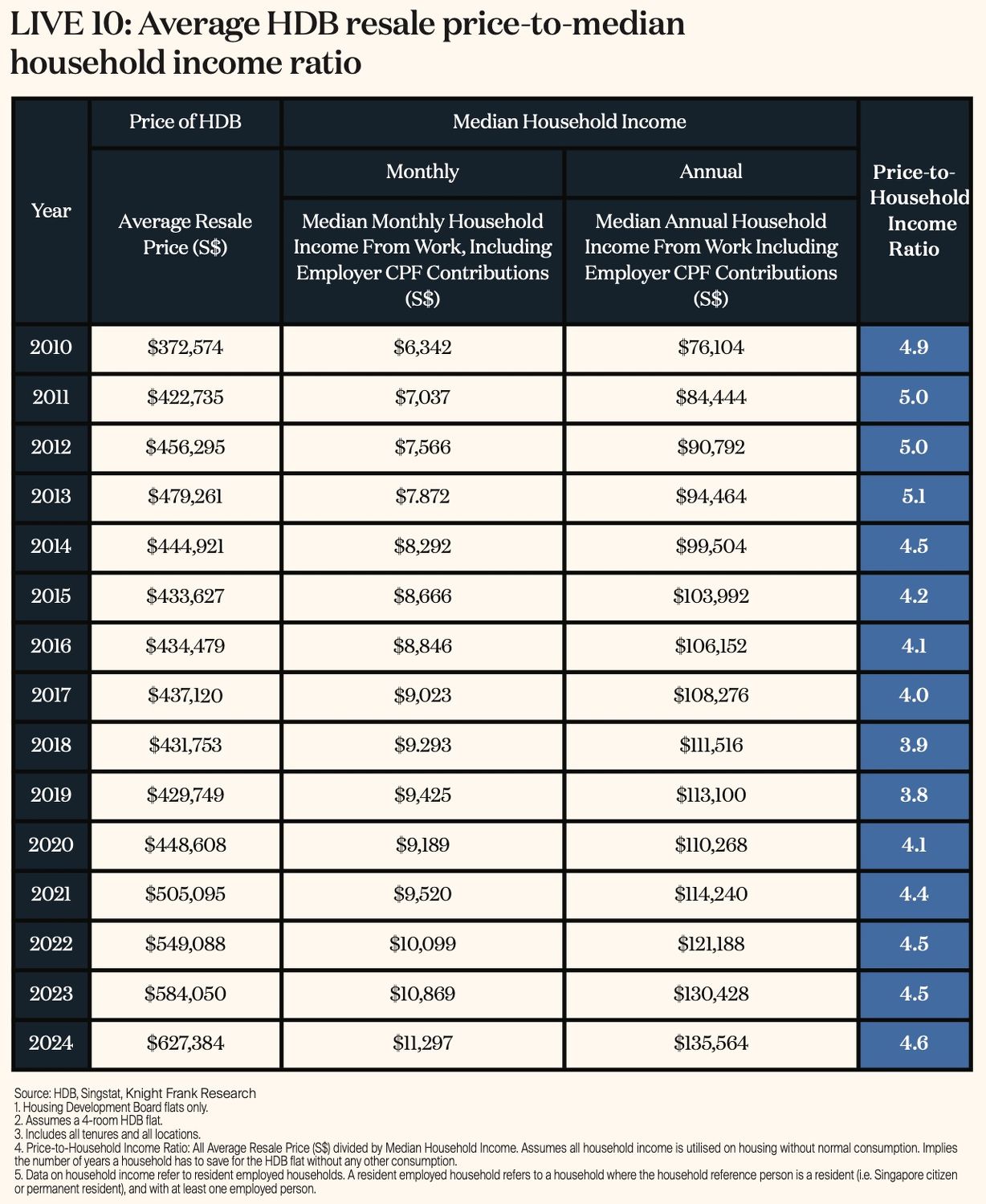
For HDB flats, the 4-room resale price-to-income ratio rose to 4.6 in 2024 but remains below the peak of 5.1 in 2013. While still much more affordable than private homes, HDB resale prices have risen sharply since 2019.
The willingness of 30% of respondents to pay premiums for better locations likely fuels price growth in mature estates, where demand remains robust. Conversely, older flats in less central areas continue to provide more affordable options.
Conclusion
The inaugural QoL survey paints a picture of a nation largely satisfied with its housing and living environment, yet increasingly concerned about rising costs. Singapore residents value affordable homes in convenient, green, and wellness-oriented neighbourhoods, with a clear preference for developments that enhance both individual and community well-being.
For policymakers and developers alike, the findings underscore the need to strike a balance between affordability and aspirations, ensuring that future urban spaces remain inclusive, vibrant, and resilient.

Alice Tan, head of consultancy, Knight Frank Singapore

Leonard Tay, head of research, Knight Frank Singapore
Alice Tan and Leonard Tay of Knight Frank Singapore collaborated with Ipsos, a leading global research and polling firm, in conducting the inaugural Quality of Life survey in Singapore.
Check out the latest listings for HDB properties
Ask Buddy
Follow Us
Property updates, 24/7.


Subscribe to Newsletter
Market insights, delivered weekly.
Top Articles
Search