Will Japan's tourist visa fees, interest rate policy impact its booming property market?
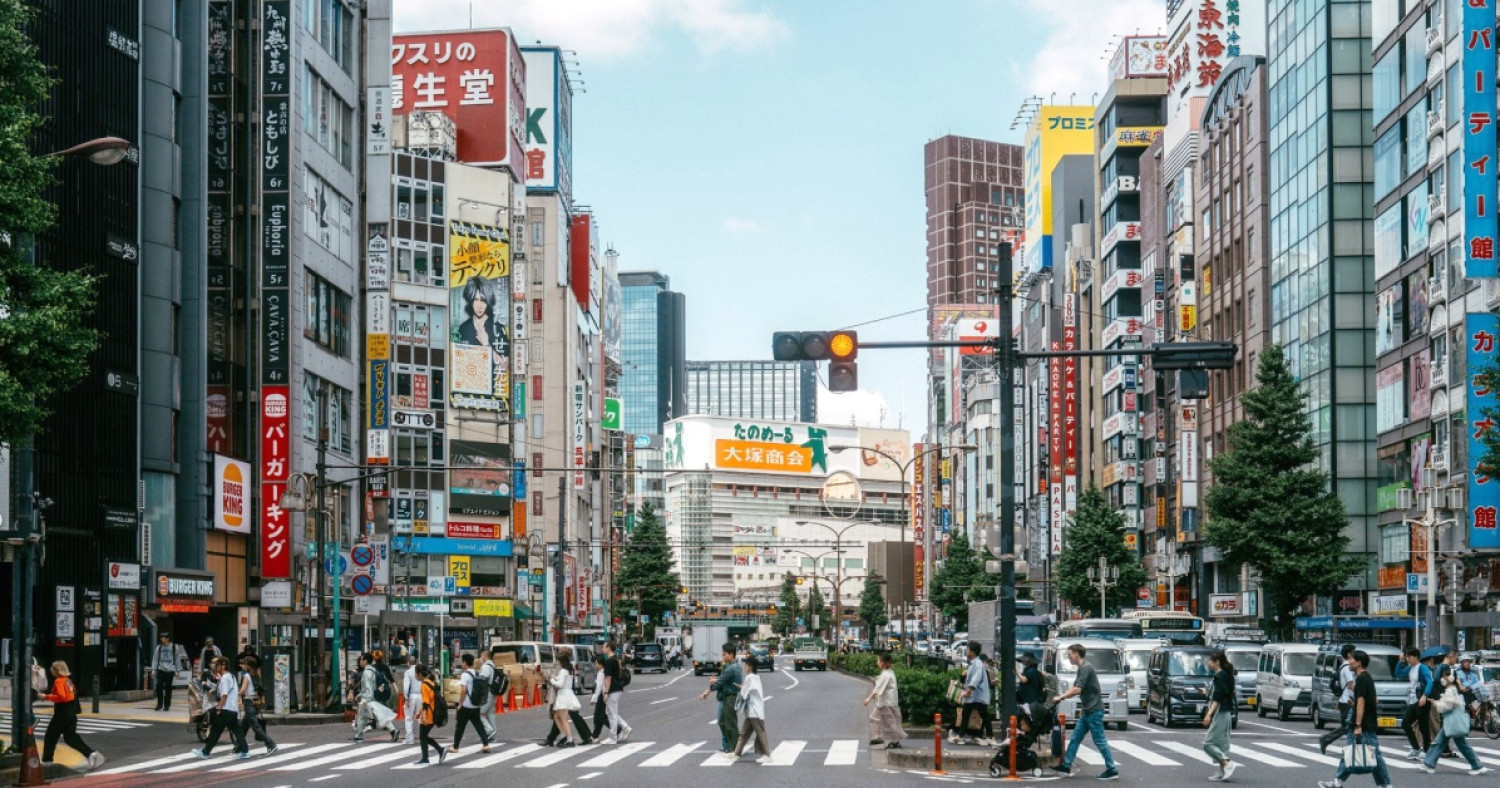
A street in Tokyo. Last year, Japan was the top real estate investment market in Asia Pacific, according to MCSI. (Photo: Pexels)
With Japan imposing higher visa fees for tourists from July while moving away from an ultra-loose monetary policy, foreign investors must prepare themselves for both direct and indirect impacts on their real estate assets, according to agents and analysts.
There is a dearth of data on the total number of homes bought by non-residents in Japan, but agents said the two main reasons for purchasing were to either use them as a primary base while they explored the country’s tourist destinations, or as an investment to be rented out on short- and long-term leases.
For now, rising interest rates in Japan could have a bigger impact on investors, as it applies to individuals in the residential property sector as well as institutional investors in commercial real estate.
Advertisement
Advertisement
The Bank of Japan (BOJ) raised interest rates to 1% on June 16, with analysts forecasting that a next round of increases may be in the offing in October due to inflation pressures.
Kohei Kawai, a research senior director at Colliers International Japan, said the BOJ’s effort to normalise its monetary policy by raising interest rates had narrowed the advantage of a wide yield gap — the spread between property yields and borrowing costs.
The tightening monetary policy also comes amid the government’s closer scrutiny of foreign investment in property.
Tokyo has rolled out measures that include “tightening of existing administrative processes [such as] the introduction of mandatory nationality registration at the time of property transfer, more rigorous identity verification, enhanced beneficial ownership disclosure and stricter transaction reporting requirements”, Kawai said.
"The effect is to make the process more burdensome rather than to close the door entirely."
The ruling Liberal Democratic Party, however, has proposed further restrictions on land purchases for foreign nationals.
A Japanese government survey in December identified 113,827 property transactions in the 12 months that started on April 1, 2024, in areas within 1km of a designated "critical facility", such as a military base for Japanese or US forces, a government building or key infrastructure, such as an airport, power plant, seaport, major road or rail bridge.
Advertisement
Advertisement
It added that 3,498 of these properties, or about 3%, were bought by foreign individuals or organisations. The 1,744 parcels of land and 1,754 buildings were close to 583 sites listed as "monitored areas" or "special monitored areas" under a 2022 law.
Of these transactions, mainland Chinese bought 1,674 properties, the highest proportion, while 414 were purchased by Taiwan residents, 378 by South Koreans and 211 by Americans. The Mainichi newspaper reported that 1,558 of the transactions were for flats in Tokyo.
In 2025, Japan was the top real estate investment market in Asia Pacific, pulling in US$51.1 billion ($66.2 billion) in capital, according to US finance company MSCI.
Starting on July 1, visitors to Japan from 100 countries – including China, India and Vietnam – will have to pay a higher visa fee, the first fee hike since 1978. Single-entry visa fees will increase to JPY15,000 ($119) from JPY3,000, while multi-entry visas will be up to JPY30,000 from JPY6,000.
"The higher visa fee will certainly have some impact on tourists," said Kingston Lai, founder and CEO of Hong Kong-headquartered Asia Bankers Club, a direct investor sales company. However, he noted the overall impact could be limited.
Lai estimated that 80% of his group’s clients who bought property in Japan did so for investment purposes.
Advertisement
Advertisement
The rate impact could affect Chinese tourists and investors the most, he added, since they were one of the groups that required visas to enter Japan. Still, Japan was cheaper for many tourists in terms of accommodation, dining and shopping, given the weak yen.
But Kantaro Aoki, real estate adviser at List Sotheby’s International Realty Japan, said "most foreign buyers in the luxury segment do not rely on financing".
Aoki added that, "in fact, some international buyers may view the current environment as an attractive opportunity, particularly if slower domestic activity creates more favourable purchasing conditions".
Despite all these changes, Japan remained an attractive property investment destination, with foreign investors drawn to its stability, safety and strength in attracting tourists, according to analysts.
"There is no doubt that Japanese real estate remains highly sought after globally," Aoki said. "Overseas demand continues to be strong, and we have recently completed a number of transactions with clients from Southeast Asia, many involving budgets exceeding JPY1 billion."
The "persistent weakness" of the yen makes real estate investment in Japan more attractive as "Japanese assets are cheaper in US-dollar terms than they were a decade ago", Kawai of Colliers said.
"When benchmarked against comparable assets in other global gateway cities such as New York or London, Japan offers what many investors regard as a meaningful valuation discount for equivalent asset quality," he added.
The yen’s weakness made a compelling case to turn their "emotional connection" with Japan into a tangible investment for markets such as Hong Kong and Taiwan, according to Lai of Asia Bankers.
"For these investors, it is no longer just about visiting Japan. It is about owning a piece of it and securing a smart asset for the future," Lai added.
For more news and analysis, read our weekly e-paper. Prefer a print copy? Get it delivered to your home every Monday.
Follow Us
Property updates, 24/7.
Subscribe to Newsletter
Market insights, delivered weekly.