
This small business owner renovated her shophouse studio for $3,700

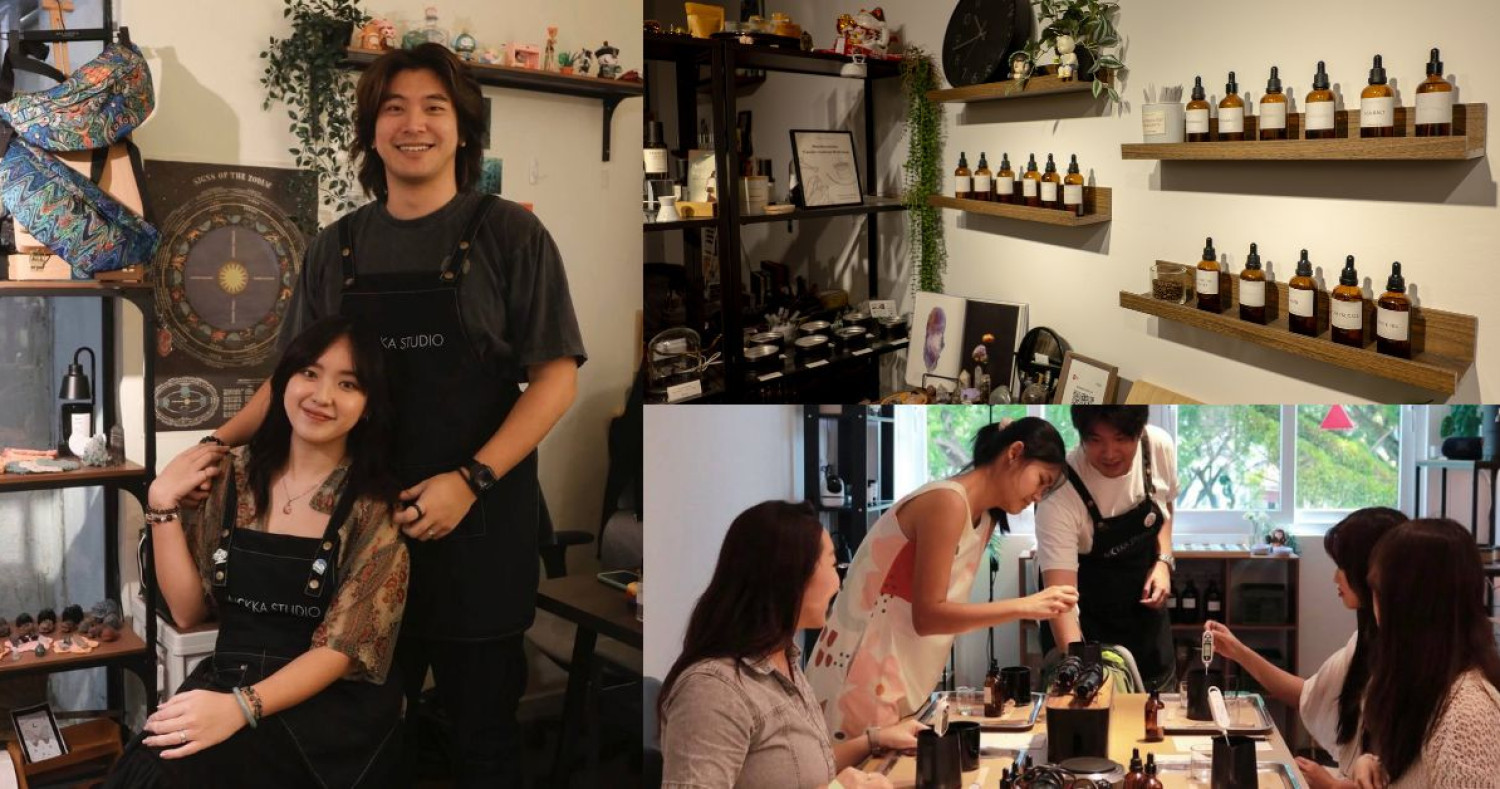
Megan Chan and Jerald Tan with customers at Nailfested’s and Wickka Studio’s premises along Lavender Street. (Photos: Kendra Tan/EdgeProp Singapore, Megan Chan)
- Megan Chan and Jerald Tan transformed a 500 sq ft Lavender Street shophouse into a dual-purpose studio with a $3,700 DIY renovation, prioritising essentials like flooring and lighting to maximise comfort and ambience.
- Upgrading from a cramped 300 sq ft basement at Excelsior Shopping Centre, Chan’s new shophouse lease at $2,200 monthly offers natural light and a calmer environment, enhancing client experience.
- Compared to her previous $1,600 monthly rent for a smaller, windowless unit, Chan’s move to a larger, brighter shophouse reflects a strategic shift towards intentional space planning and client-focused design.
AI generated
Small business owner Megan Chan, 25, spent $3,700 setting up a new physical space for her nail studio, Nailfested, and Wickka Studio, where she hosts crystal-infused candle-making workshops.
In March 2025, she moved both businesses into a 500 sq ft shophouse along Lavender Street, taking on a two-year lease at $2,200 a month.
The space was rebuilt over four weeks, largely by her and her boyfriend and business partner Jerald Tan, 28.
Leaving a space that no longer worked
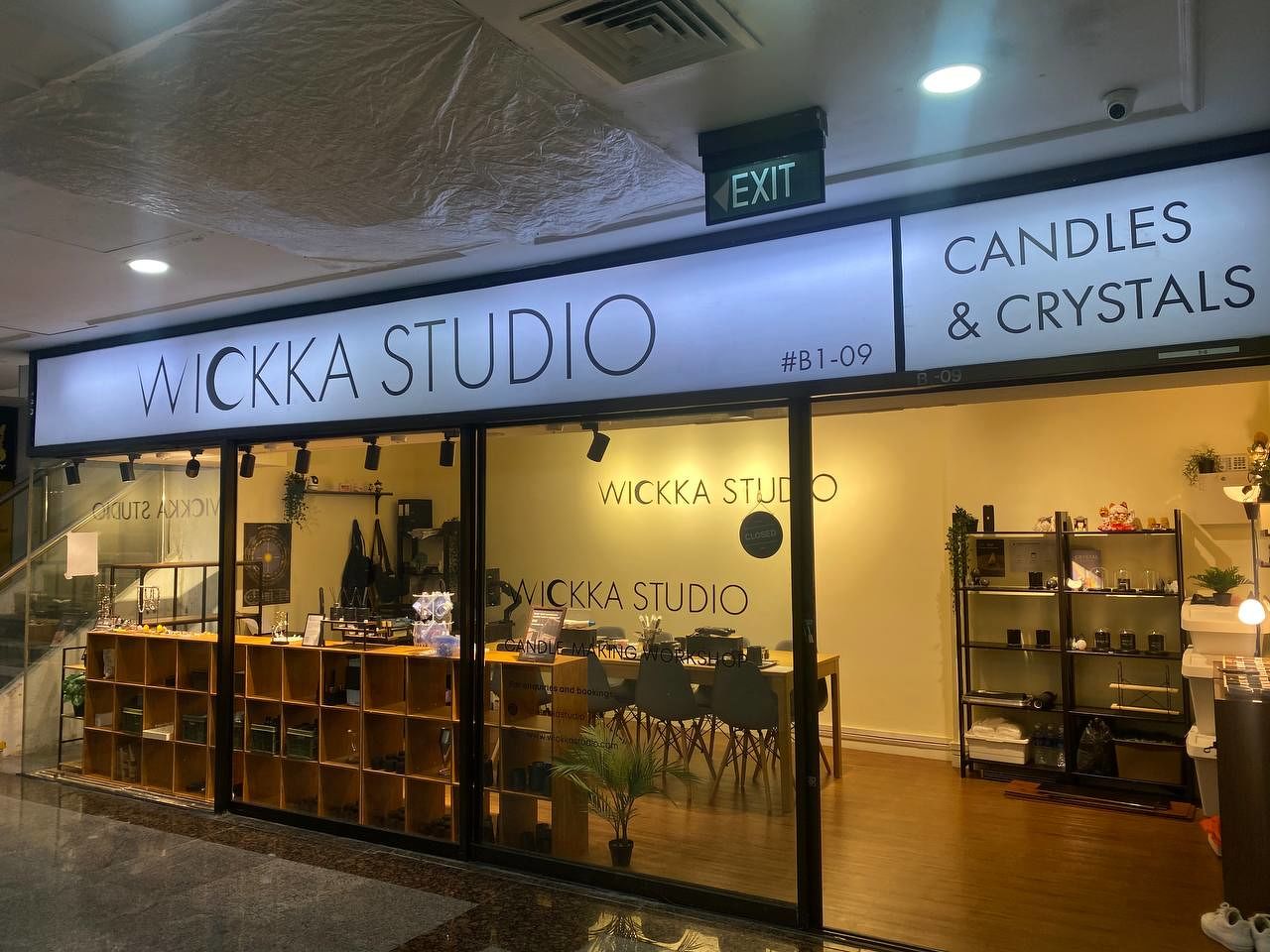
Wickka Studio’s previous unit. (Photo: Megan Chan)
Before this, Chan had been operating out of a 300 sq ft basement unit at Excelsior Shopping Centre, where her monthly rent was around $1,600 a month.
“The biggest limitation was the lack of natural light,” Chan says. “Even during the day, the space relied entirely on artificial lighting, which made it feel flat and less inviting.”
At that size, the layout also became a constraint. When accommodating multiple clients, the space could feel tight, with little room to move or pause. Combined with the hustle and bustle of the mall — constant foot traffic, noise and short interactions — the experience often felt more transactional than intentional.
Over time, that contrast became clearer.
“These factors combined made me realise I wanted a space that felt more open, grounded, and slower in pace,” Chan says.
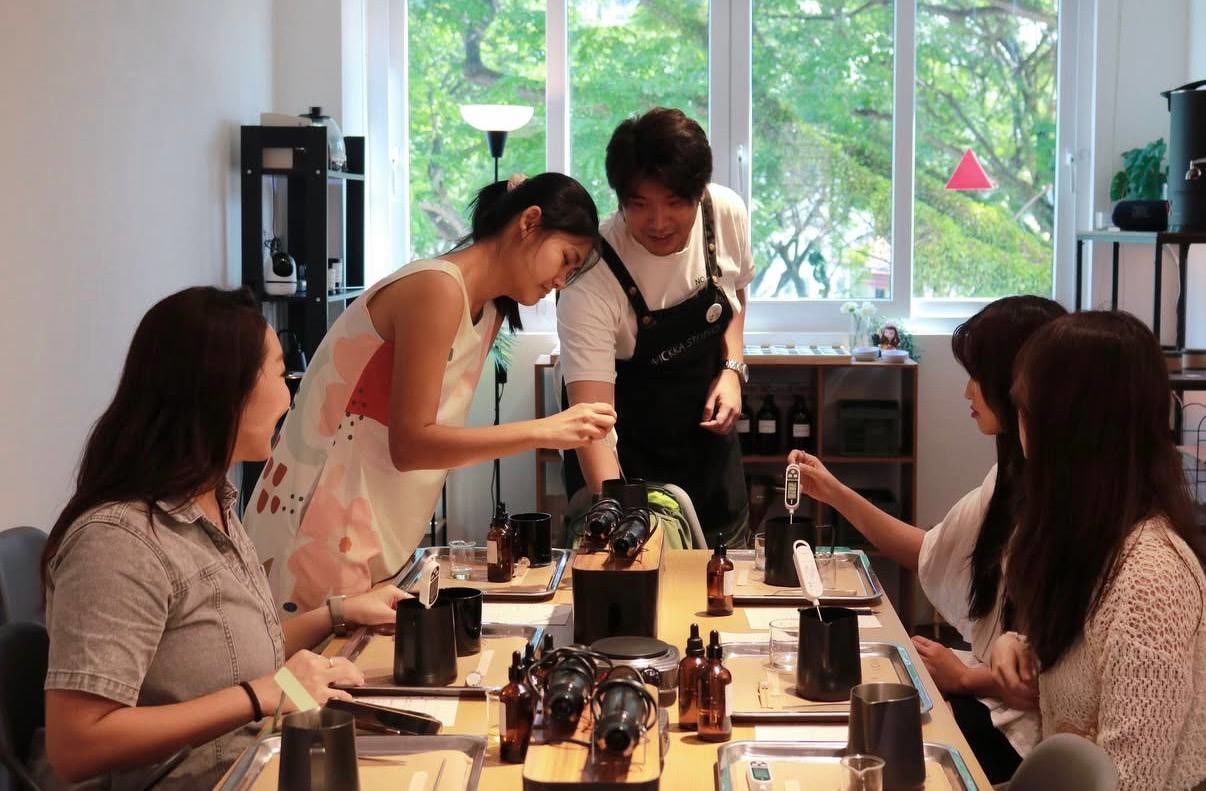
A candle-making workshop in progress. (Photo: Megan Chan)
Moving into a shophouse changed that completely. “With natural light and views of greenery, the space feels more open and calming, allowing our clients to slow down and be more present in the experience,” she notes.
A budget that set the boundaries
The couple bought mainly ready-to-assemble furniture. (Photo: Kendra Tan/EdgeProp Singapore)
With only less than $4,000 to spare, there was no room to build freely.
Spending was kept to the essentials, with most of the budget going into flooring, lighting and furniture.
Here’s how the $3,700 was allocated:
- Flooring: $1,200
- Lighting: $600
- Furniture: $1,000
- Paint and materials: $600
- Miscellaneous: $300
“We knew from the start that we had to be very clear about what we were spending on,” Chan says. “If it didn’t influence how the space functions or feels, we wouldn’t include it.”
She also avoided spending on things like custom carpentry or expensive decor, and looked for pieces that could still create warmth and ambience without breaking the bank.
Where possible, furniture from the previous unit was reused, such as the main work tables and a few storage units. The new purchases mainly comprised smaller furniture pieces and styling elements to fit the shophouse space. These were sourced from Chinese online shopping platform Taobao, home furnishings retailers Ikea and Nitori, as well as local hardware shops.
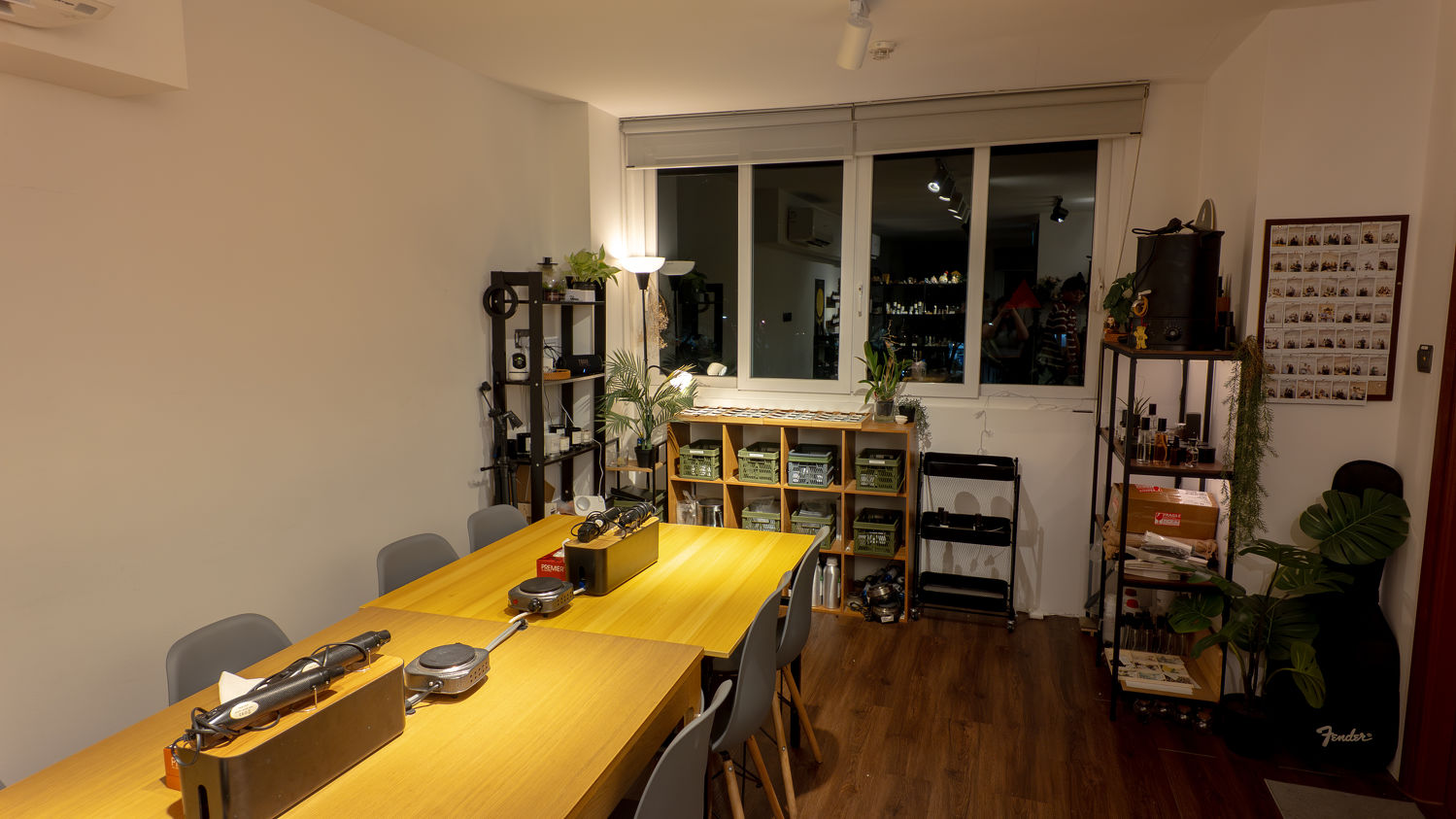
The studio by night. (Photo: Kendra Tan/EdgeProp Singapore)
Pushing through a DIY renovation
Most of the renovation was handled without a contractor. The couple handled the flooring, painting, furniture assembly and layout planning themselves. Professional help was brought in only for electrical work.
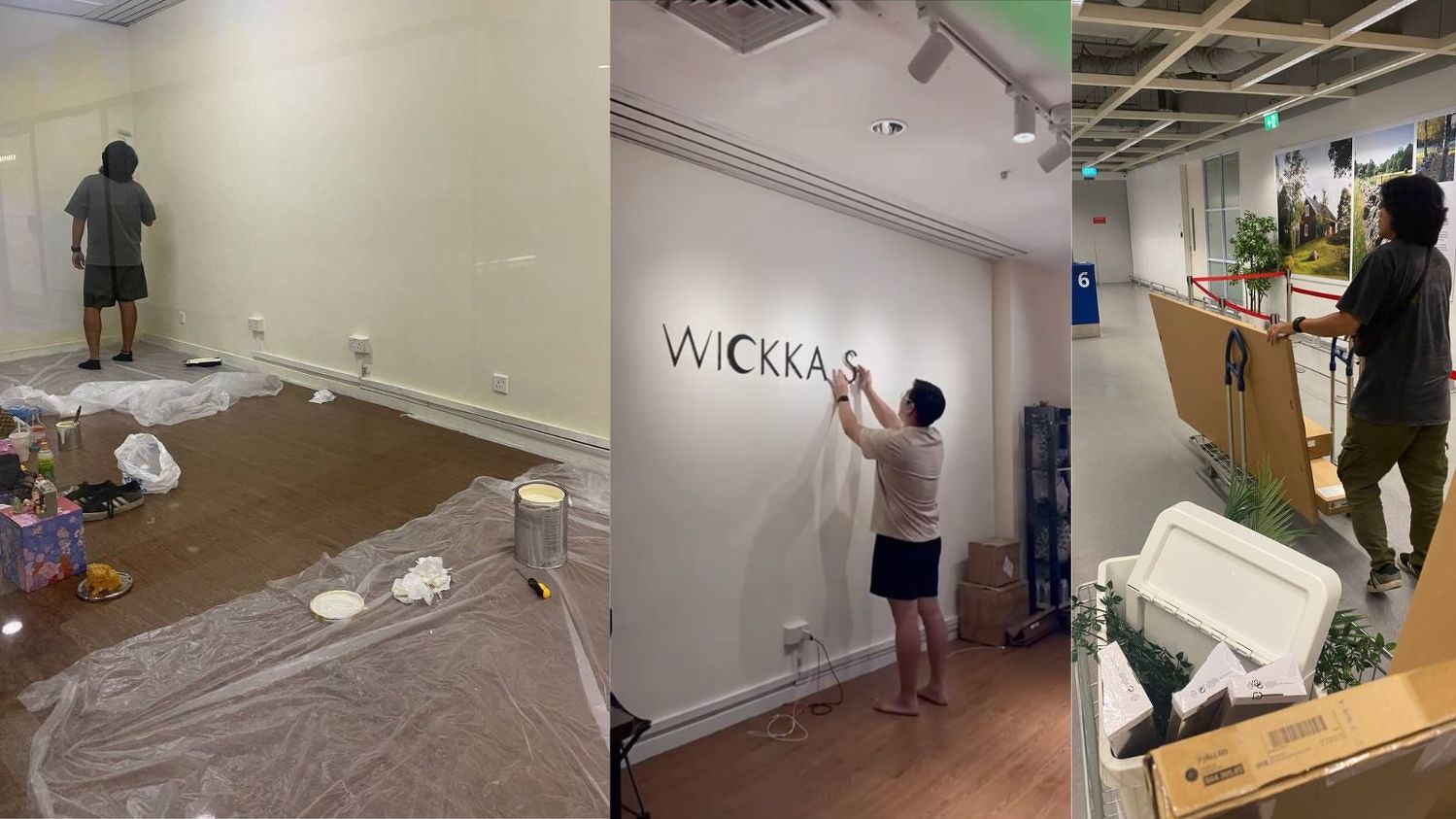
Tan painting the walls of their shophouse unit, installing Wickka’s sign and shopping for materials at Ikea. (Photo: Megan Chan)
Neither of them had formal experience with renovation, but they share a similar sense of style and a strong interest in interior design.
“We didn’t really know what to expect at the start,” she says. “A lot of it was learning along the way.”
That learning curve became most apparent with the flooring. To keep costs down and speed things up, they chose click vinyl — where planks lock into place without the need for glue — sourced from Taobao, and installed it over the existing floor.
Compared to peel-and-stick options, Chan reckoned click vinyl would offer better stability and durability, which made it more suitable for a workspace that sees regular use.
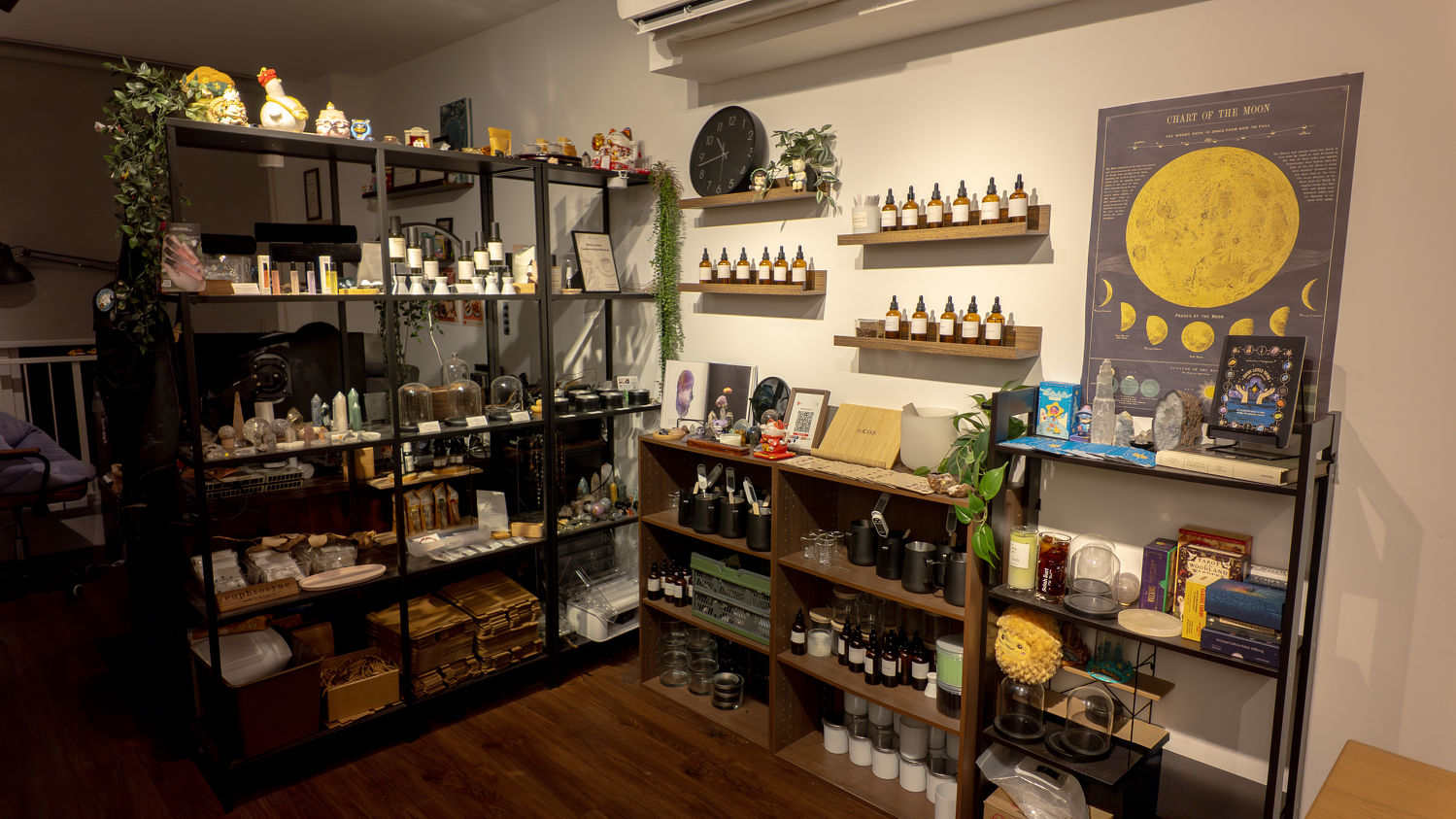
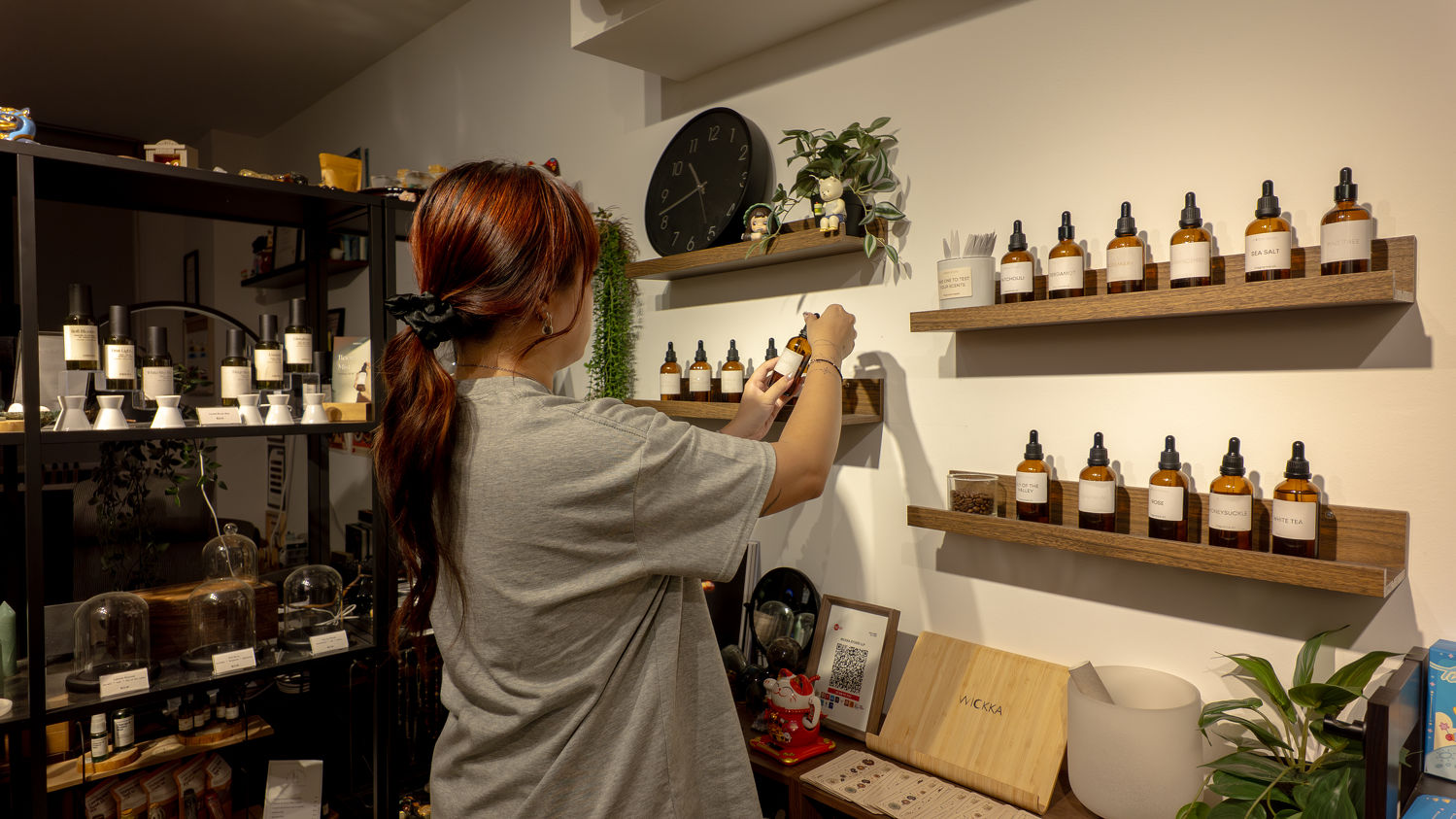
Shelves of fragrances and crystals at the shophouse unit. (Photo: Kendra Tan/EdgeProp Singapore)
However, while the installation of click vinyl initially looked manageable based on online tutorials, once they started, Chan and Tan quickly realised the process required precision. “Even small alignment issues are immediately visible, which meant we had to work slowly and rework some sections,” she says.
Carrying out the renovation works within the small unit meant having to constantly change materials and adjust layouts. Progress was slow, and some sections had to be redone.
“There were moments when it felt quite overwhelming,” Chan, a self-proclaimed perfectionist, adds. While the idea of bringing in professional help came up more than once, they persevered, and there were no regrets.
“Pushing through with DIY renovation made the space feel even more personal,” Chan says with pride.
‘Grounded, calm and lived-in’
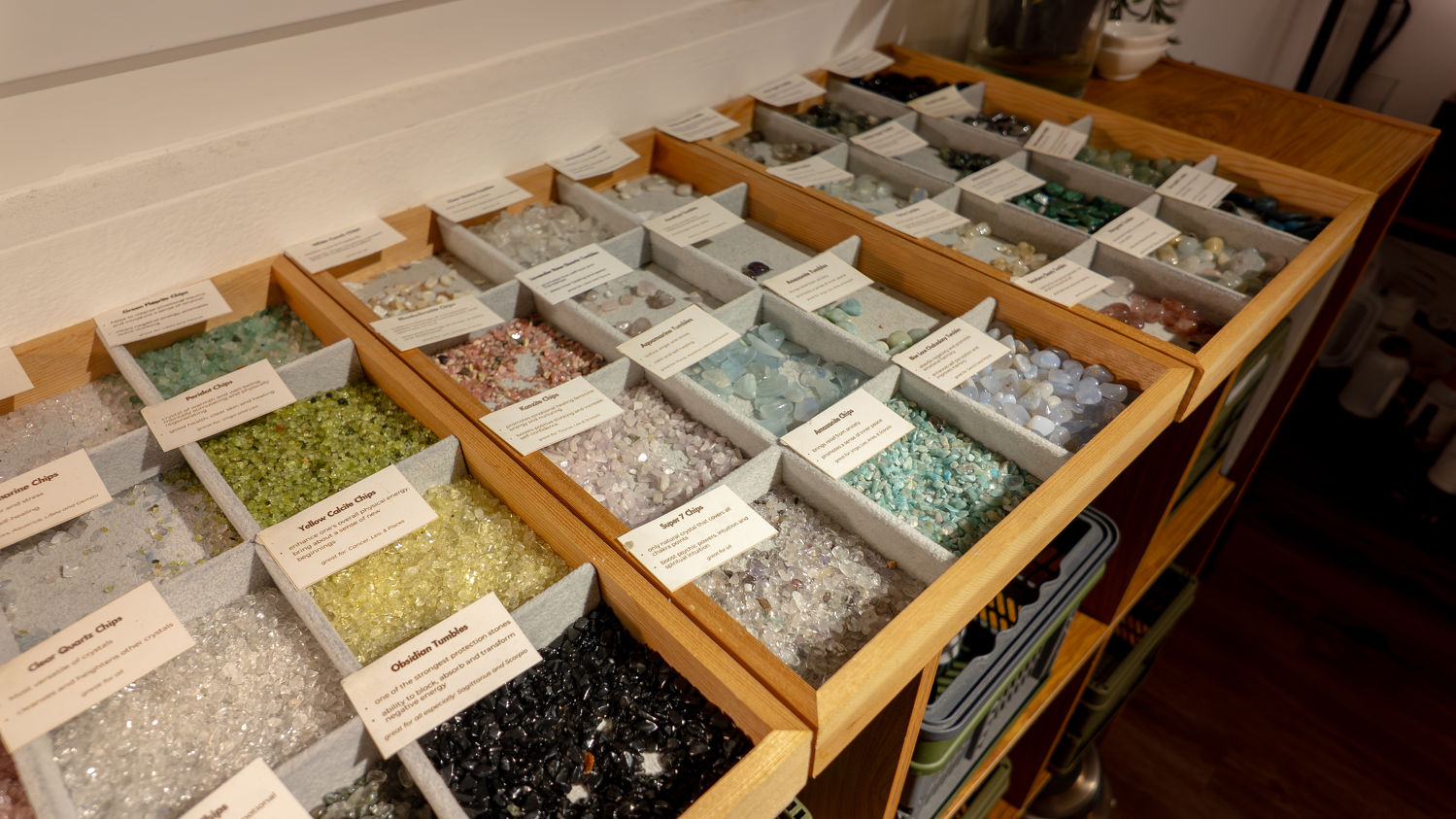
Pick your own crystals for your candle. (Photo: Kendra Tan/EdgeProp Singapore)
Without an interior designer, Chan, who studied fashion media at Lasalle, approached designing the space through online research and by observing other spaces — paying attention to how lighting, materials and layout were used to create a more enclosed, comfortable setting.
She points out: “All in all, I’ve learnt that what people actually remember is how a space makes them feel. Nobody will remember the little trinkets you place in random corners.”
The duo decided to have their studio centred around natural wood tones, warmer lighting, and a layout that leaves room for people to move about.
“That direction became our foundation. We focused on textures and materials that would make the space feel grounded, calm and lived-in, rather than overly polished,” she says.

Simple, yet cosy. The studio's sign was installed by Tan. (Photo: Kendra Tan/EdgeProp Singapore)
From there, the layout went through several rounds of adjustments.
They measured the unit, mapped it digitally using free planning tools, and tested different arrangements on-site before arriving at a final configuration.
“Space planning turned out to be more complex than we expected,” Chan notes. “It was not just about fitting things into the room, but understanding how people would move through it and how the space would feel once in use.”
Prioritising comfort, lighting and flow

Chan hosting a workshop at the current studio premises. (Photo: Megan Chan)
Three priorities guided most of the decisions: comfort, lighting and flow.
Lighting, in particular, required time to refine. The studio uses warm track lighting alongside softer ambient sources. Placements and brightness were adjusted several times before they settled on something that felt right.
“We tested quite a few setups,” she shares. “Lighting changes the mood more than we had thought.”
Materials were kept simple. Laminate and wood-like finishes run through the space, paired with warm neutral paint. More textured finishes were considered at one point, but were eventually set aside.
“If we had more budget, we might have explored other finishes such as limewash,” she says. “But this works for what we need.”
Scaling back expectations

These shelves were brought over from the previous unit. (Photo: Kendra Tan/EdgeProp Singapore)
Early on, there was a tendency to add more seating, display shelves and decorative elements into the space.
“At one point, we were trying to maximise the space by fitting in more functional pieces, but it started to feel quite tight,” Chan says.
Over time, that approach shifted.
Pulling back by removing non-essential items like extra shelving, decor, and reducing the number of workstations made a noticeable difference. Ultimately, the space felt more open and became easier to manoeuvre in, contributing to a calmer overall environment.
“It feels slower and more intentional. I’m more present with each client,” Chan says. Similarly, her clients have also responded in the same way.
“I have gotten feedback that they really love my space. They tell me that they feel relaxed and don’t want to go home,” she says with a laugh.
Follow Us
Property updates, 24/7.


Subscribe to Newsletter
Market insights, delivered weekly.


Top Articles
Search