
$115 mil R&D boost for land use, urban heat and liveability; new climate alliance led by CDL

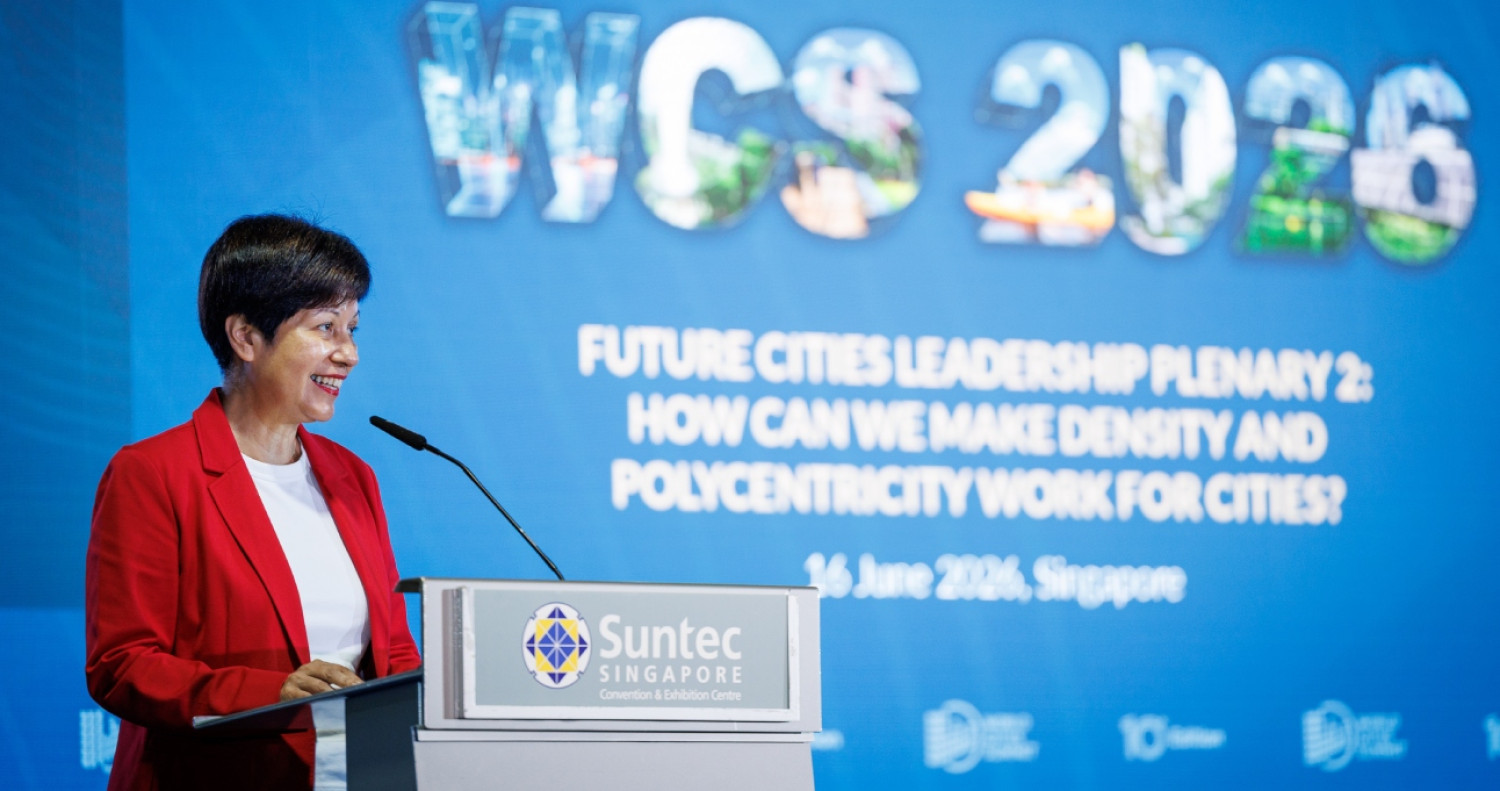
Indranee Rajah, Minister in the Prime Minister's Office, Second Minister for Finance and Second Minister for National Development. (Photo: World Cities Summit 2026)
Singapore is committing a further $115.4 million to support research and innovation to tackle urban challenges ranging from land constraints and rising temperatures to liveability.
The next phase of the Cities of Tomorrow R&D Programme was rolled out on June 16, focusing on three areas:
- Optimising the use of land, sea and underground space;
- Managing urban heat, noise, and residents’ health and well-being as the city grows denser;
- Advancing nature-based solutions to improve liveability and adapt to a changing climate.
"We invite international partners to work alongside our local researchers and companies, and tap on this funding programme together," said Indranee Rajah, Minister in the Prime Minister's Office, Second Minister for Finance and Second Minister for National Development.
Speaking at the closing plenary of the World Cities Summit (WCS) 2026, she also noted that the fresh funding injection is part of Singapore's continued push to build the tools and knowledge to manage the density of the built environment without compromising liveability.
The Cities of Tomorrow programme is a multi-agency effort launched in 2017 with an initial sum of $150 million.
Of the latest $115.4 million amount, roughly a third or $39.4 million will go into land and space resilience. Led by the Ministry of National Development, this initiative will focus on four main research areas: underground, reclamation, sea space, and mitigation science.
It includes research on overcoming cost and technical challenges to continue developing Singapore’s underground spaces and unlock new underground uses.
Next, $32 million will enable Singapore to plan and design a city that remains liveable, healthy and resilient in the face of urban change, demographic shifts and climate pressures.
Led by URA, this will focus on upstream planning and urban design, including research on how the built environment shapes healthier and more active lifestyles, stronger social connections, and ageing-in-place.
Noise mitigation and heat resilience, such as how urban planning, design and infrastructure can improve thermal comfort, are other key research areas.
About $44 million will then fund urban nature solutions and advance the City in Nature vision, led by the National Parks Board.
This will be centred around improving the understanding of public perceptions, behaviours and attitudes towards nature, wildlife and pets; improving the climate resilience of trees to heat and drought; and making urban nature management safer, more effective and more sustainable.
WCS Knowledge Council: New members
In her speech, Indranee also announced the third iteration of the WCS Knowledge Council, comprising 15 industry and thought leaders across diverse backgrounds and sectors.
The council discusses future-oriented solutions to foster liveable, sustainable and resilient cities amid complex global issues. They advise on strategic innovation and research priorities and initiatives, and shape the WCS agenda and strategic objectives.
The new line-up of members, led by Cheong Koon Hean, chair of the Lee Kuan Yee Centre for Innovative Cities, will have their first meeting and discussion on June 17, focusing on regenerative urban development and urban liveability for future cities.
Members are appointed for two years — from June 1, 2026 to May 31, 2028 for the new council.
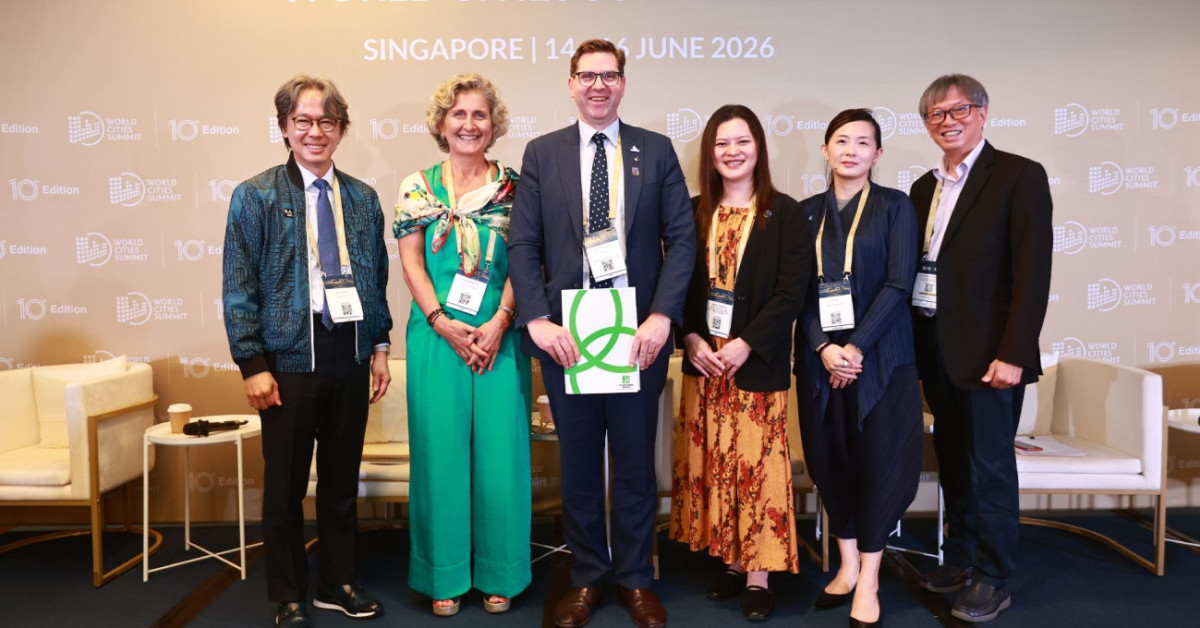
They include: Amanda Sturgeon, CEO of non-profit Biomimicry Institute; Cheng Hsing Yao, CEO of developer GuocoLand; Frederick Teo, CEO of Temasek’s GenZero investment platform; Jordi Vaquer, secretary-general of Metropolis, an international association of the world’s largest cities and metropolitan areas; and Steven Lewis, global head of insight at real estate consultancy JLL.
Global alliance to conserve glaciers and oceans
Also at the Summit, City Developments Ltd (CDL) and its partners launched the Saving Glaciers and Oceans Alliance on June 16.
Initiated by CDL, the global platform aims to drive collective action, partnerships and solutions to protect glaciers and oceans, which are among the world’s most vulnerable ecosystems. It will bring together the public, private and people sectors to accelerate meaningful solutions.
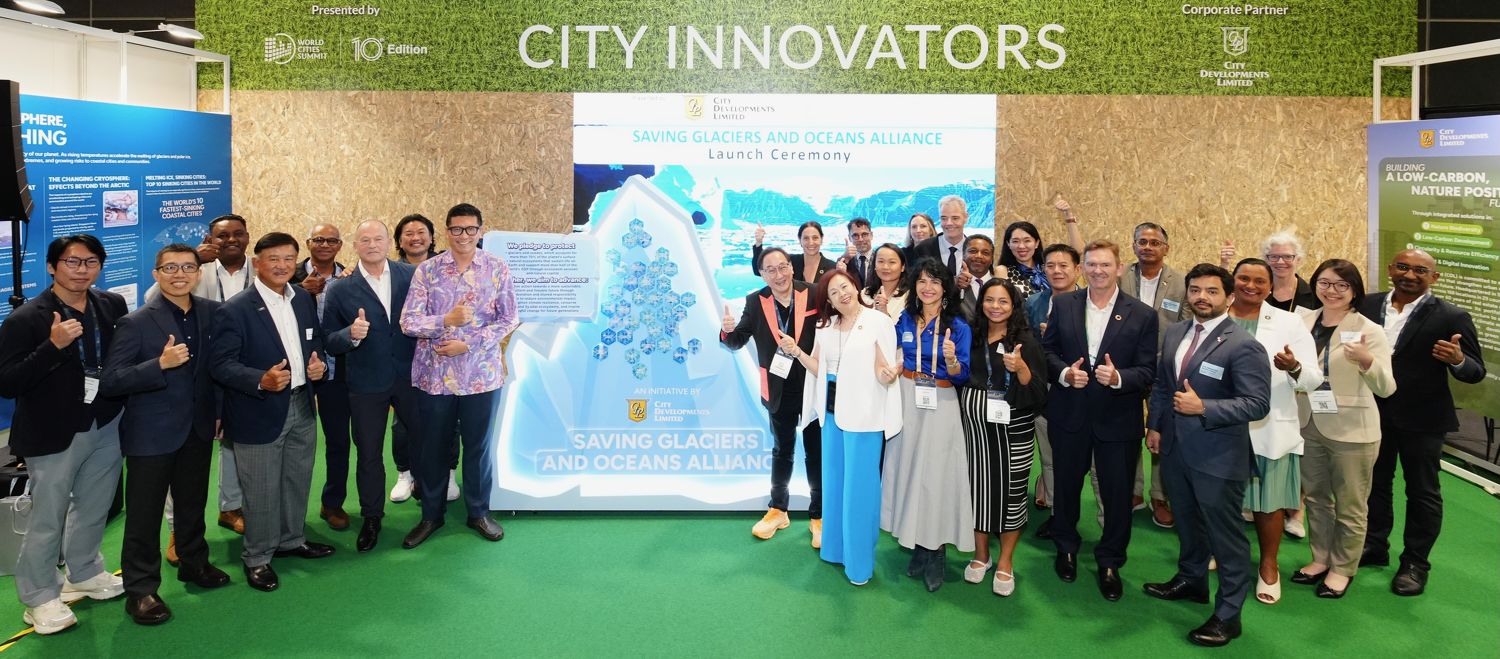
Representatives take a ceremonial pledge to strengthen collective action for glacier and ocean conservation. (Photo: CDL)
The alliance is part of the real estate developer’s ongoing efforts to raise climate awareness and foster international dialogue on polar and ocean conservation, CDL said in a June 16 release.
To mark the launch, keynote presentations and discussions on collective climate action were held, and 35 country representatives took a ceremonial pledge to affirm their commitment.
They include diplomats representing Australia, Cambodia, Colombia, the European Union Delegation to Singapore, Indonesia, Leos and Panama, as well as representatives from global organisations such as the World Business Council for Sustainable Development and the World Green Building Council.
CDL chief sustainability officer, Esther An, noted the scale and speed of glacier melt, which requires urgent collaborative action.
"As a built environment leader, CDL is committed to accelerating climate action and mitigating our industry's environmental impact," she added.
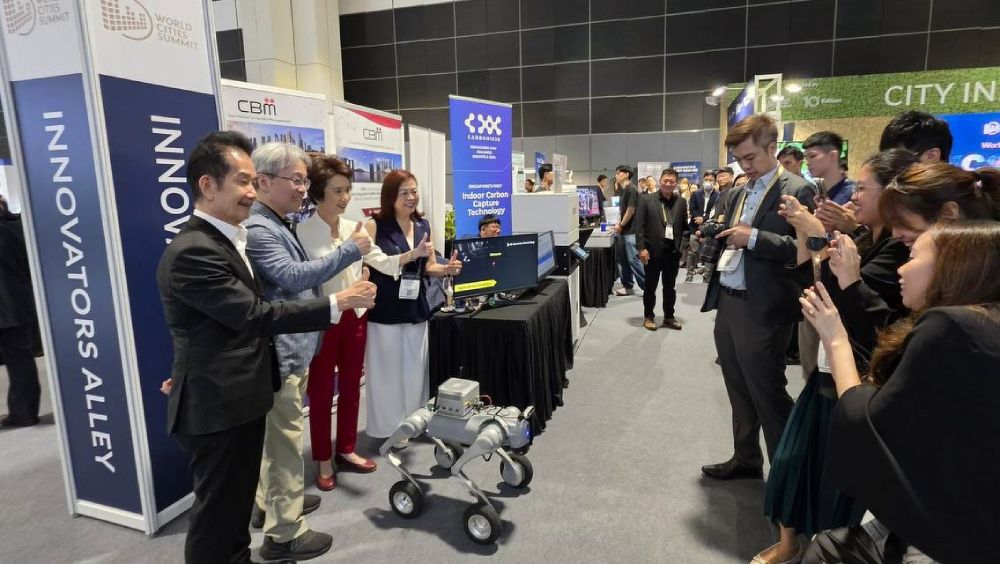
The Innovators Alley at the World Cities Summit 2026 exhibition floor. (Photo: CDL)
At the Summit’s exhibition, the City Innovators Stage and the Innovators Alley — by CDL and Enterprise Singapore — highlighted solutions and strategies by startups and entrepreneurs to address urban living challenges.
The Innovators Alley featured 11 Singapore companies presenting advancements in nature-based solutions, property technology, carbon reduction technologies, and sustainability tools.
Among them were climate-tech startup Carbon1010, which looks to decarbonise the built environment; Greenphyto, one of the world’s largest and tallest agri-tech farms; and facility management firm CBM, which showcased its innovations in automation, AI and sustainable technologies.
For more news and analysis, read our weekly e-paper. Prefer a print copy? Get it delivered to your home every Monday.
Follow Us
Property updates, 24/7.


Subscribe to Newsletter
Market insights, delivered weekly.
Top Articles
Search