
Asia private markets court retail and wealth capital, from real estate to private credit

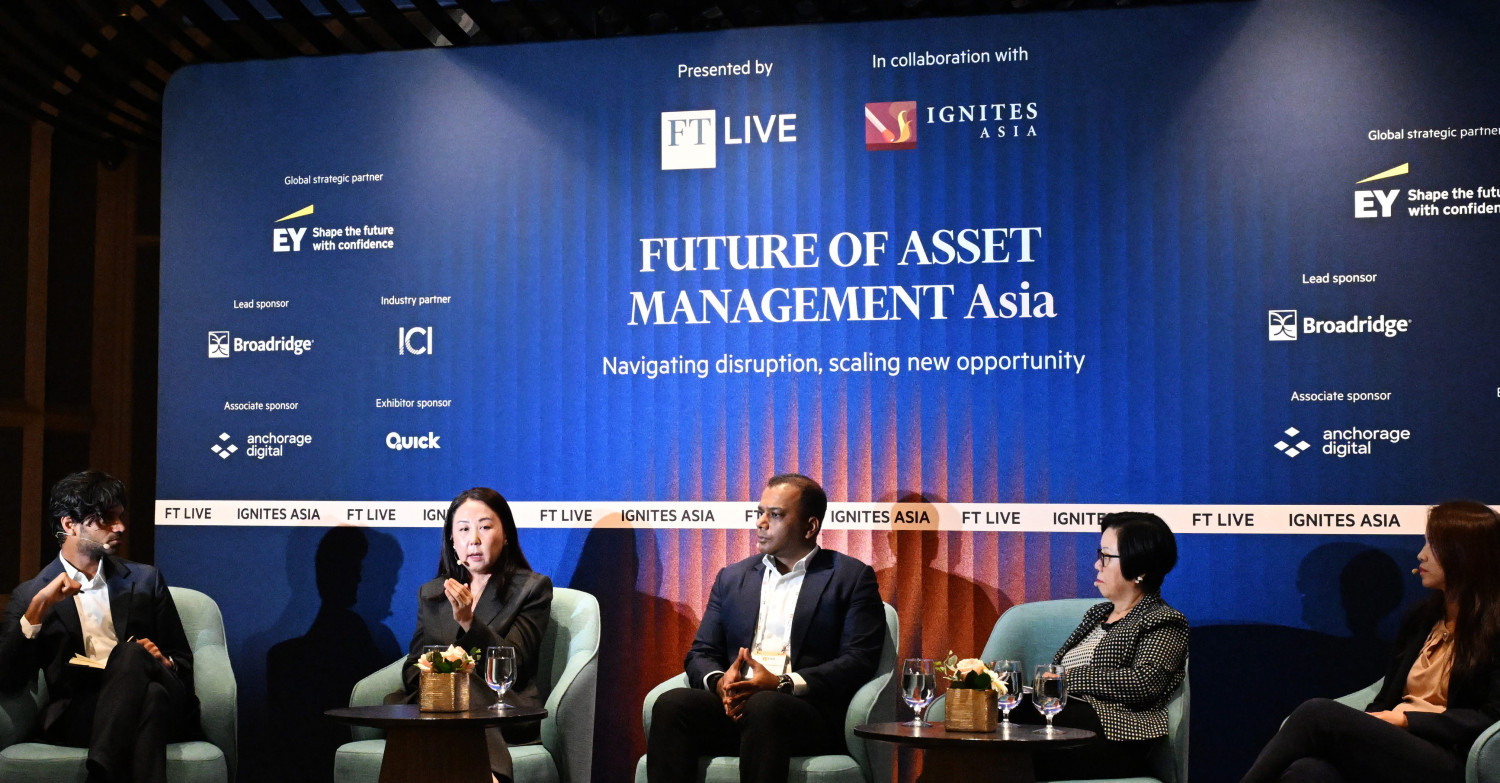
From left: Arjun Neil Alim, moderator and FT Asia financial correspondent; Fiona Cho, PGIM; Sanket Sinha, Lighthouse Canton; Eugenie Shen, Asia Securities Industry & Financial Markets Association (ASIFMA); Kerrine Koh, Hamilton Lane (Photo: FT Live)
Private markets in Asia are growing briskly and attracting rising interest from private wealth and retail investors. But the region remains under-represented relative to its economic heft, and meaningful access to these markets is still some way off for many of these investors.
This opportunity, and how to capture it across asset classes from private equity to real estate, was a focus at a recent session of the Financial Times Future of Asset Management Asia conference.
The panel discussion examined where the next wave of capital is likely to come from, and what asset managers can do to broaden and deepen private markets activity in the region.
With private wealth, retail investors and long-term savings pools waiting in the wings, the challenge for the industry now lies in unlocking that capital and building the structures and product designs to support it.
Asia accounts for roughly 25% of assets under management (AUM) in global private markets, against the US at 57%, said Eugenie Shen, managing director and head of asset management at the Asia Securities Industry & Financial Markets Association (ASIFMA). This gap points to both the room for growth and the work that needs to be done.
Part of the explanation lies in the institutional base, which remains thin in many Asia Pacific (Apac) markets, outside more developed ones such as Japan, Australia and South Korea.
"Traditionally, you won't see pension funds and insurance companies investing heavily [in Apac]," Shen said.
Among the changes underway is the introduction of new retirement savings schemes in the region, and the long-term capital they are starting to channel into investment markets, she added.
Appetite is growing, but access lags
Alternative asset manager Hamilton Lane's 2026 Global Private Wealth Survey found that 86% of advisors and wealth professionals worldwide plan to increase their allocations to private markets this year.
But in Apac, despite strong and growing interest from retail and high-net-worth investors, the capital has largely not flowed into Asian private assets, said Kerrine Koh, managing director and head of Southeast Asia at Hamilton Lane. Much of the interest has instead found its way into global, predominantly US-focused, products.
Koh attributed this to a structural gap instead of a lack of appetite. "There just haven't been enough pathways," she said.
For example, she estimated that more than 90% of Asian assets, particularly in private equity and private credit, are still accessible only through closed-ended funds — which suit institutional investors better than retail or high-net-worth ones, who typically want some degree of interim liquidity.
While innovations such as semi-liquid funds and tokenisation have tried to bridge the gap, Asian private assets have generally not been packaged at scale into these structures.
“A lot of times, the pathways have yet to be fully created by asset managers for Asian investors to be able to connect and invest into Asian assets,” Koh added.
Even in real estate, for which Asian investors have long had an affinity, widening access also has its own set of nuances. Real estate ownership in this region has traditionally been concentrated among family offices, corporates and conglomerates, and government-linked entities — all of whom tend to want to retain control.
This preference for control can similarly be observed in Asian private equity. Koh shared that it has historically reduced buyout activity and suppressed the volume of companies being sold into private equity ownership, though Japan and South Korea are increasingly producing deal flow in the buyout space.

In Asian private equity, buyout activity has historically been low, as owners tend to want to retain control: Kerrine Koh, managing director and head of Southeast Asia at Hamilton Lane (Photo: FT Live)
Fiona Cho, Apac chief operating officer and senior portfolio manager for real estate at global investment manager PGIM, sees it as an opening.
If the industry is able to design and provide the right financing and capital solutions tailored to these asset owners’ terms, it could also “create avenues and access for third-party investors, institutional and retail, to enter the space” and grow the region’s private markets, Cho said.
Building the structures to channel capital
Getting capital into private markets presents a sizeable opportunity, but the mechanics are “still clunky” in Asia, as Cho put it.
Aggregators and wrappers — intermediary structures that pool smaller investments into a single, larger ticket — are one solution that could allow asset managers to receive capital from private wealth distributors, such as private banks and wealth platforms, more efficiently. However, such structures are still nascent in Asia.
"It's difficult for us to accept small cheque sizes," Cho said, noting that such pooling would allow asset managers to deal in tickets of $50 million to $100 million, instead of smaller, separate tickets of $5 million or $10 million.
“There is a lot of interest, but that sort of framework still has room to develop and be refined … to grease the wheels so that [private wealth] can enter,” she added.
For retail investors, the gap is even wider, as minimum investment sizes in private markets can go as low as $10,000 — far below the $100,000 more typical of high-net-worth products.
Shen from ASIFMA said that although lowering entry points will mean a very different play and drawing a very different pool of investors, it is necessary if the industry is serious about appealing to the retail segment.
“For a lot of long-only asset managers, which are our members [at ASIFMA], it is really exciting that there is this possibility,” she added.
Long-dated savings meet illiquid assets
In particular, the pension space lends itself well to private markets investing.
Defined-contribution savings plans — where individuals set aside a portion of their income into personal retirement accounts — are gaining ground across the region. Japan’s Nippon Individual Savings Account (Nisa) programme is a prominent example, with equivalents emerging in Taiwan and other Asian markets, the panellists said.
Given that the capital accumulating in such accounts is long-dated retirement money — which the savers do not need immediately and cannot withdraw easily — it is suitable for the illiquidity terms typical of private market investments.
That makes it “perfect” for these individuals to get “at least a little exposure” to alternative assets, said Shen.
As these programmes take root, the pool of long-term retirement capital is set to deepen, making Asia increasingly ripe for more private-market investments, she added.
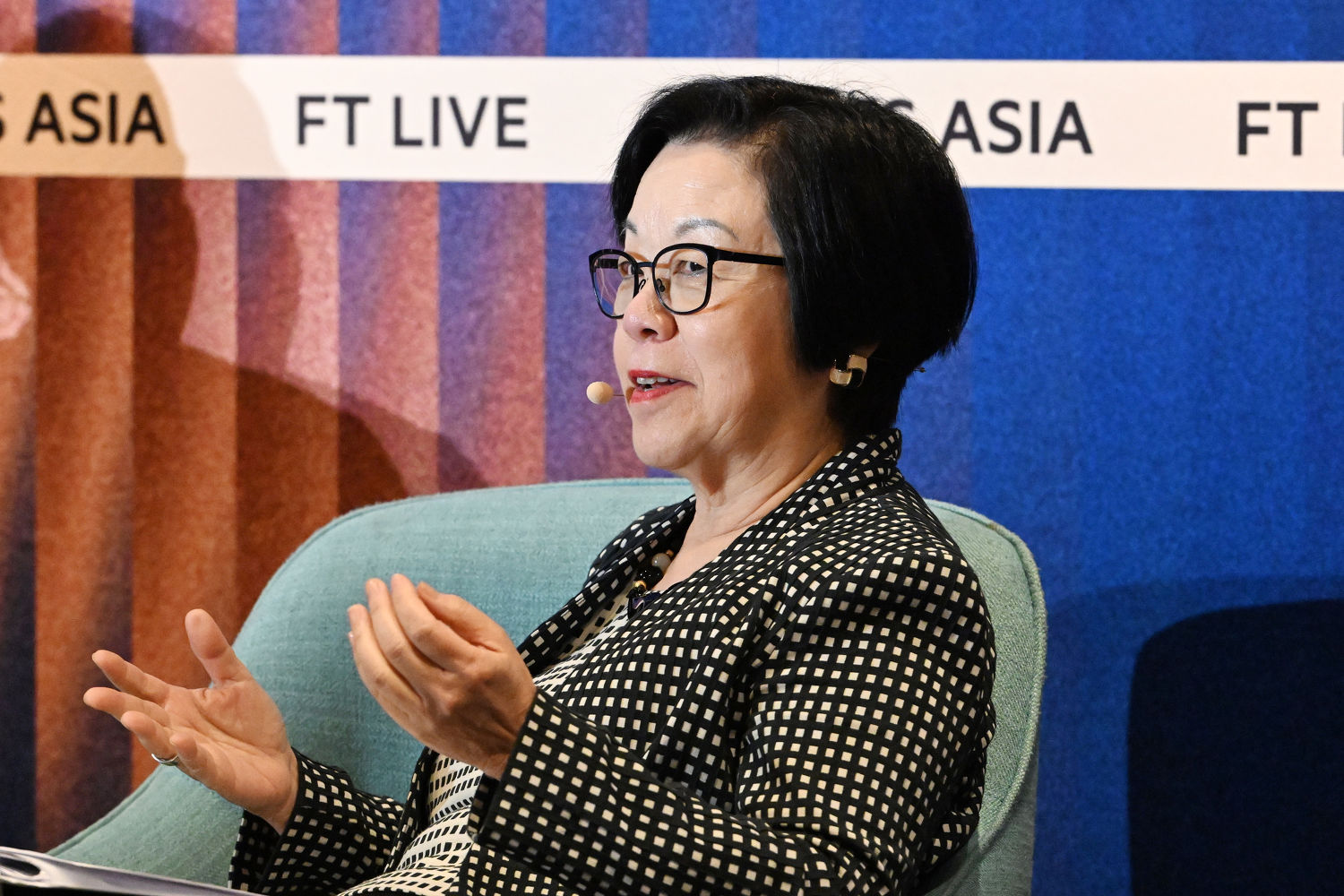
With the pool of long-term retirement capital set to deepen, Asia is increasingly ripe for more private-market investments: Eugenie Shen, managing director and head of asset management at ASIFMA (Photo: FT Live)
Why an Asia-wide product remains elusive
Meanwhile, panellists acknowledged that the concept of a truly pan-Asia private-markets product will be hard to pull off.
A US dollar-denominated fund spanning multiple markets will likely introduce currency risk, regulatory fragmentation, and geographic concentration issues that make it a complicated proposition.
“The notion is very, very difficult,” said Cho of PGIM Real Estate. Instead, she has observed that investors, whether institutional or private wealth, are increasingly zoning in on specific markets, strategies and platforms, as opposed to seeking a single diversified pan-Asia fund.

Investors are zoning in on specific markets, strategies and platforms, as opposed to seeking a single pan-Asia fund: Fiona Cho, Apac COO and senior portfolio manager for real estate at PGIM (Photo: FT Live)
Koh from Hamilton Lane said it is easy to design an investment product around a one-market asset class, such as US private equity.
In contrast, “whether it's real estate, private equity or credit, it's generally very hard for the individual investor to get a true pan-Asian experience”, she remarked, noting that even the most established private equity managers in the region tend to be skewed heavily to one market.
As a result, to build a pan-Asian exposure, investors may need to stack several funds together.
Koh sees this as an opportunity for the industry to fill a gap — by creating products that give broad Asian exposure with the ease and simplicity of a single investment, be it through open-ended, evergreen or tokenised structures.
In Cho’s view, having a range of product offerings is also key. Private wealth and retail investors should be able to choose according to their needs and investment horizons, whether a closed-ended structure for those willing to lock up capital for several years, or an open-ended one for those looking for recurring income with some ability to exit.
“[The investors] will have to make a selection, but there has to be a variety,” Cho said.
Asian private credit is not the US story
Recent unease surrounding US private credit — centred on software loan exposures, sell-offs in business development companies (BDCs) and redemption pressures on semi-liquid vehicles — has begun to spill over into sentiment in Asia, even though the underlying dynamics are markedly different.
Sanket Sinha, managing director and CEO of global asset management at Lighthouse Canton, emphasised that the troubles in US private credit and the state of the asset class in Asia are two distinct stories.
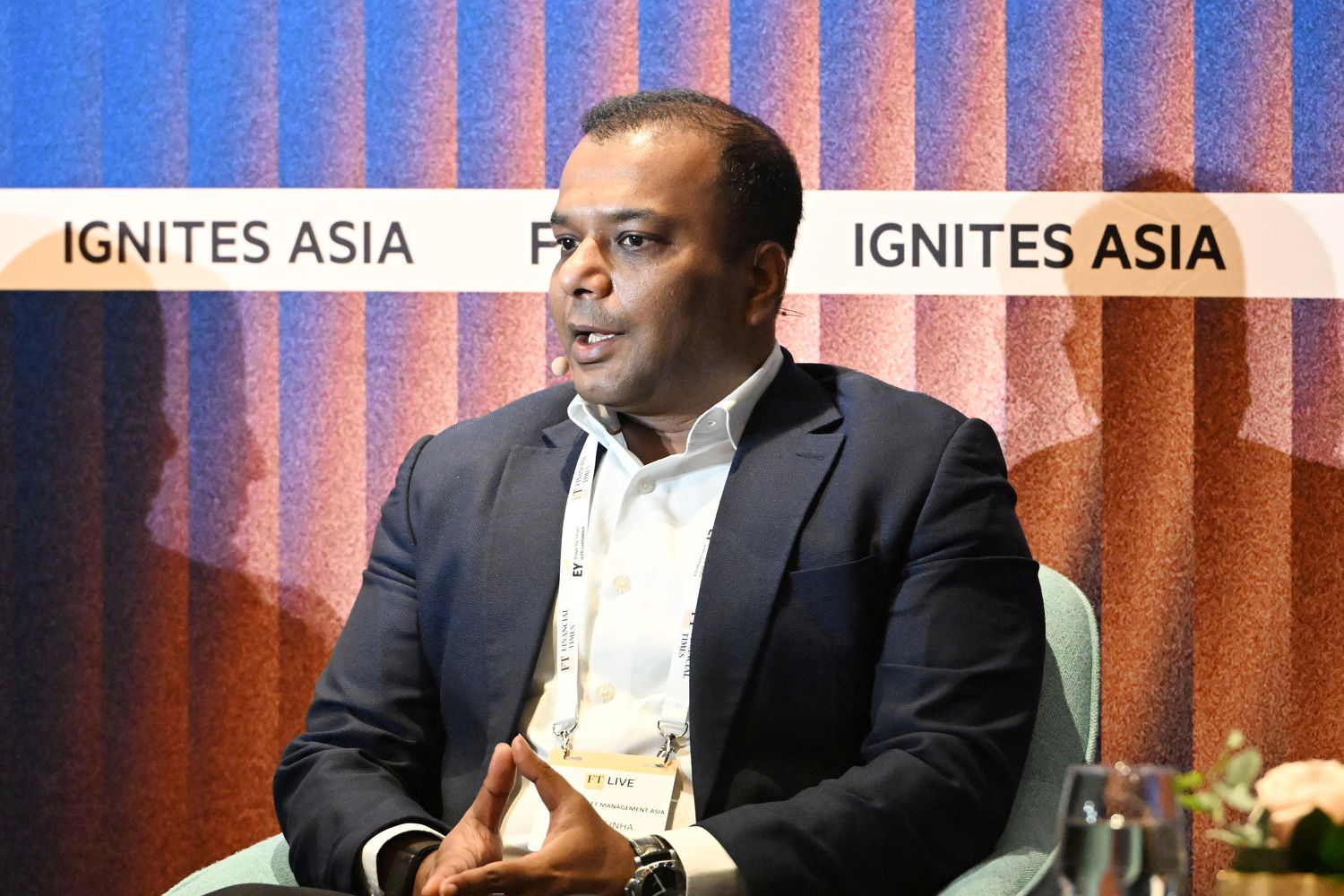
Jitters surrounding US private credit have spilled over into investor sentiment in Asia, but the two markets are very different: Sanket Sinha, managing director and CEO of Lighthouse Canton (Photo: FT Live)
Asian private credit structures are predominantly closed-ended, unlike the evergreen and BDC structures in the US that have faced redemption pressures. Moreover, private credit in this region carries little or no back-leverage — the practice of borrowing against a loan portfolio to amplify returns, which has been prevalent in the US.
And unlike the US, where software companies account for a significant share of private credit exposures, Asia has limited concentration in sectors being disrupted by AI.
While these issues are US-specific, they have nonetheless cast a shadow on investor sentiment in Asia, Sinha pointed out.
Many high-net-worth and mass-affluent investors lack the institutional infrastructure, such as a dedicated CIO or investment team, to look beyond headlines and work through the differences between the two markets.
“A lot of [private] wealth clients don’t have the bandwidth or ability to peel the layers and try to understand what’s happening in the US versus in Asia,” Sinha said. “The decisions they are making are more sentiment-driven. It’s more psychological.” He stressed that investor education is therefore key.
Agreeing, Cho described the US situation as “a completely different landscape” from Asia.
With banks in this region continuing to pull back from lending, she sees ample room for private credit to grow — and with it, the opportunity to step in to provide lending solutions for asset owners.
That said, such growth should always be pursued carefully; vigilance and discipline in underwriting, investment selection, capital structure and governance remain essential, Cho added.
For more news and analysis, read our weekly e-paper. Prefer a print copy? Get it delivered to your home every Monday.
Follow Us
Property updates, 24/7.


Subscribe to Newsletter
Market insights, delivered weekly.

Top Articles
Search