
EC rules have changed — here’s what your financial plan needs to catch up on

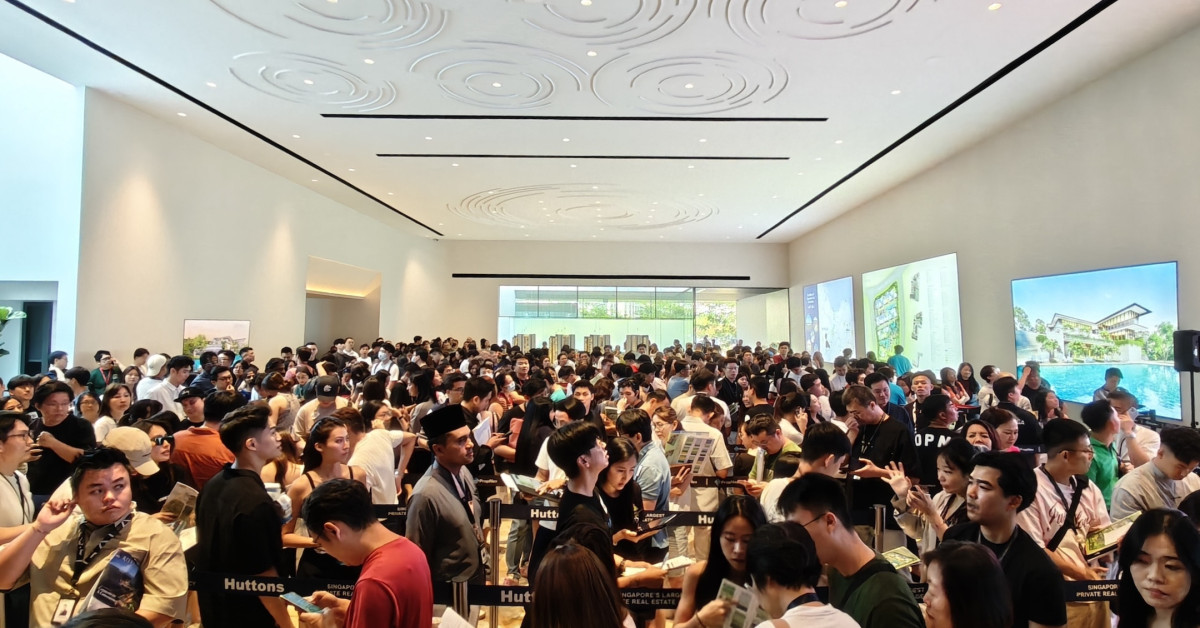
Prospective EC buyers at a project’s preview weekend. The financial foundation you build your EC purchase on needs to be far more robust than before. (Photo: Samuel Isaac Chua/EdgeProp Singapore)
By now, you have likely read about the sweeping changes to the executive condo (EC) scheme announced on May 8. The minimum occupation period (MOP) doubles to 10 years. The Deferred Payment Scheme (DPS) is removed entirely. First-timer priority expands significantly.
The news has been well covered.
What has been conspicuously absent from the conversation is what these changes actually demand of you — not at the point of purchase, but across the decade that follows. That is the part worth paying attention to.
You are no longer buying a stepping stone, but a home
For years, the EC was Singapore’s worst-kept secret in wealth building. Buy at a subsidised price, fulfil a five-year MOP, sell into the private market, and pocket a gain that, in recent years, has frequently crossed seven figures.
Explore comprehensive data about all ECs, including the average profit at 5 and 10 years
It was a strategy that was rational, legal and, for many families, life-changing.
That playbook is now closed.
The five-year MOP aligned naturally with life’s rhythm: a young couple buys a home, starts a family, hits the MOP and upgrades. The financial plan was forgiving because an exit was never too far away. If circumstances changed, you had options.
But 10 years can change everything. Careers shift. Families grow. Interest rates move through entire cycles. The version of yourself who walks out of that property after a decade may look very different from the one who walked in. The property you are buying today cannot just fit your life now; it has to fit a version of your life you cannot fully see yet.
That does not mean you should not buy. It means the financial foundation you build the purchase on needs to be significantly more robust than it would have been under the old rules.
The question is no longer just: “Can I afford this today?” It is: “Am I structured well enough to hold this through whatever the next 10 years throws at me?”
DPS removal will hurt upgraders more than they realise
The MOP extension is getting all the headlines. However, for HDB upgraders, the removal of the DPS is the change that deserves far more attention but is receiving far less.
Under the scheme, the deal was straightforward and attractive: pay 20% of the purchase price upfront and defer the remaining 80% until the project has obtained its temporary occupation permit (TOP).
It meant you could commit to a new EC unit while still living in your HDB flat, without the pressure of servicing two loans at once. It was a cashflow bridge that made the upgrader journey feel manageable — even comfortable. That bridge has been demolished.

Previously, under the Deferred Payment Scheme, you could commit to a new EC unit while still living in your HDB flat, without the pressure of servicing two loans at once (Photo: Unsplash)
Under the Normal Payment Scheme, progressive payments kick in from the first construction milestone, the foundation stage, typically within six to nine months of the project launch. From the moment you sign, the loan clock is running. Your existing home situation does not pause while you wait.
For upgraders, this creates a sequencing decision that must be resolved before you commit, not after.
Do you sell your HDB flat first? That clears the double-loan pressure, but leaves you without a home through the construction period, with rental costs quietly eroding the capital you just unlocked.
Do you hold your HDB flat and carry both obligations? That requires an honest, unsentimental look at your mortgage servicing ratio (MSR) and total debt servicing ratio (TDSR) positions, your CPF runway and your monthly cashflow — under realistic assumptions, not optimistic ones.
While there is no universally correct answer for everyone, there is a right answer for your specific situation. It requires mapping the full picture before you even commit, and not after the option to purchase has been signed.
The bank says you qualify, but your cashflow might disagree
EC purchases are subject to both the MSR cap of 30% of gross monthly income and the broader TDSR framework of 55%. For buyers near the household income ceiling of $16,000 per month, this can meaningfully constrain the loan quantum available.
Here is where it gets particularly important, and where many upgraders are caught off guard.
When the bank assesses your EC loan eligibility, your existing HDB loan commitment is not factored into the calculation. The reason is regulatory: because ECs fall under HDB’s purview, you cannot legally own two HDB-classified properties simultaneously. Banks therefore treat the HDB flat as an obligation that will be exited, and exclude it from your debt servicing assessment.
On paper, your EC loan eligibility looks clean. In reality, you are carrying both loans at once. The HDB flat’s mortgage continues until you sell, while the EC’s progressive payments have already started. The bank does not see both obligations. Your bank account does.
This gap between what the bank recognises and what you are actually shouldering is one of the most underappreciated financial pressures in the EC upgrader journey. It does not appear in your TDSR. But it appears in your cashflow, unfailingly, every single month.

The crowd at an EC project’s preview. The gap between what the bank recognises and what you are actually shouldering is one of the most underappreciated financial pressures in the EC upgrader journey. (Photo: Samuel Isaac Chua/EdgeProp Singapore)
Do not let a clean loan approval give you false confidence. Model the full picture. What does your cashflow look like at the project’s TOP, three to four years from now, especially if interest rates are higher than they are today? What is your buffer if income dips temporarily?
These are not worst-case scenarios. In a 10-year commitment, they are baseline planning assumptions.
Five versus 10 years: The wealth gap nobody talks about
Here is the part of this story that has received almost no attention, and it may be the most consequential of all.
Under the old framework, an EC buyer who purchased in year zero could realistically upsize to a private property by year eight or nine. This is after factoring in three to four years of construction — by a conservative estimate, as construction periods can be as short as 2½ years with modern building methods — before TOP, followed by the five-year MOP.

Under the old framework, an EC buyer could realistically upsize to a private property by year eight or nine. The activation point is pushed to year 13 or 14 with the new rules. (Photo: Samuel Isaac Chua/EdgeProp Singapore)
Under the new framework, that same journey cannot begin until year 13 or 14 at the earliest. The construction timeline has not changed; only the MOP has. But that single change pushes the entire wealth-building clock back by five years.
This five-year delay is not just an inconvenience. In property wealth-building terms, it is a meaningful setback, and the reason comes down to compounding.
When you upsize from an EC into a private condo, you are not simply buying a bigger home. You are deploying a larger asset base into a market that appreciates over time. Every year you delay that deployment is a year the larger base is not compounding for you.
Consider a simplified illustration. A family sells their EC unit at year eight or nine under the old rules, realising about $500,000 in equity and deploying it into a $1.5 million private property. Over the following decade, at a modest 3% annual appreciation, the private property’s value grows to about $2 million. Their wealth compounds on a larger base, across a longer runway.
Under the new rules, the same family does not make that move until year 13 or 14. They have lost five years of compounding on a significantly larger asset. The EC unit itself may have performed well, but those five extra years of holding a smaller, restricted asset instead of a larger, privatised one represent a real and quantifiable opportunity cost.
But upsizing is only one part of what the old MOP unlocked. For financially savvy EC owners, the end of the five-year MOP was not just an exit point. It was an activation point.
Once the MOP was fulfilled, homeowners could approach their bank to extract equity from the appreciated value of their EC through a term loan. That capital could then be redeployed into other investments, used to fund business ventures, cover children’s education or tuition fees, or simply provide a financial buffer that did not exist before. The EC was no longer just a home; it became a lever.
Under the new rules, the activation point is pushed from year eight or nine to year 13 or 14. That is five additional years where the equity sitting in your property remains locked, unavailable and undeployed.
For families who had built their broader financial plan around accessing that equity at a certain point in their lives, the delay can do more than inconvenience — it can disrupt an entire timeline.
This is the wealth gap that the MOP extension can create, and it is substantially larger than the headline change suggests. Beyond a delayed upgrade, it is about a delayed activation of your entire financial strategy.
The government’s intent is legitimate: ECs are homes, not short-term wealth vehicles. But for buyers who understand how property compounds over time, the new rules raise the stakes on getting the entry decision right — the right price, the right financing structure, and a clear-eyed view of what the full 10-year journey looks like from day one.
Five EC projects still under the old rules
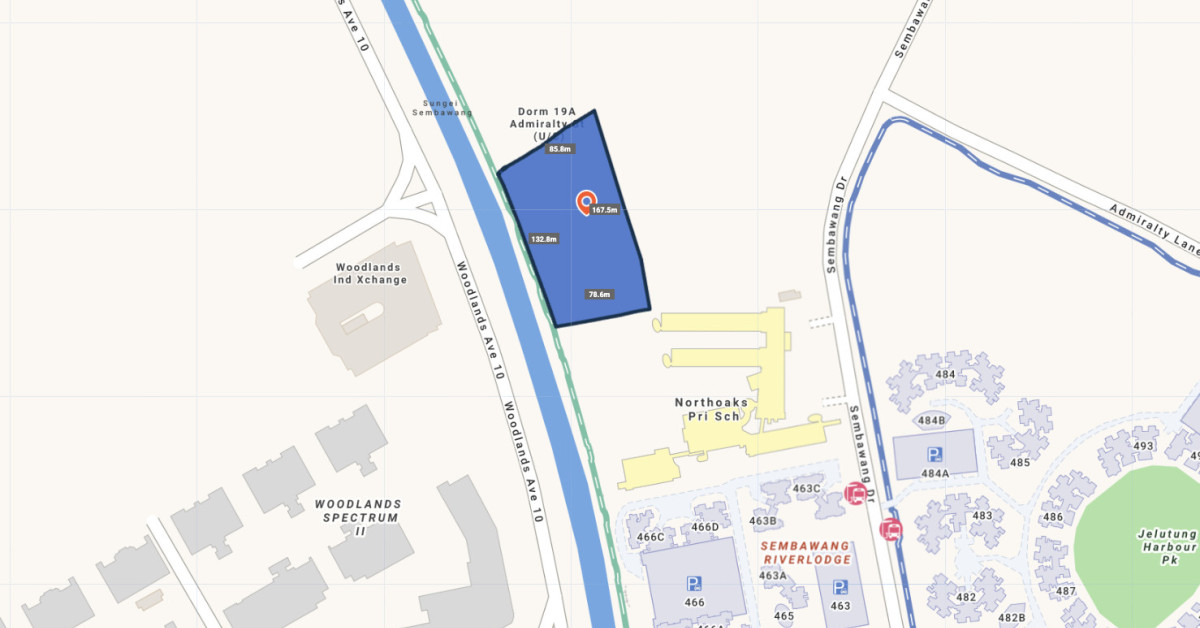
The five EC projects already in the pipeline — in Senja, Woodlands, Sembawang and Miltonia — are not subject to the new rules. They retain the five-year MOP and the availability of the DPS.
For upgraders already considering an EC, these represent the last opportunity under the old framework.
Demand for these projects is expected to be intense, precisely because buyers understand the window is closing. If you are a second-timer or an upgrader who has been sitting on the fence, the calculus has shifted materially.

The showflat at a recently launched EC. While demand is expected to be intense for the five upcoming projects still under the old rules, urgency is not a strategy. (Photo: Samuel Isaac Chua/EdgeProp Singapore)
But urgency is not a strategy. The decision should be grounded in whether the numbers genuinely work for your situation, income, existing obligations, CPF position and timeline.
Buying the wrong project under time pressure, for the wrong reasons, does not solve the problem. It creates a new one.
Has your thinking kept up with the rules?
The government’s direction has been consistent and deliberate. Across HDB Prime and Plus flats and, now ECs, the policy framework is being rebuilt around long-term homeownership over short-term asset rotation. The subsidy comes with a longer leash.
That is the deal, and it is unlikely to reverse.
For buyers, the implication is clear. The financial planning that underpins a property purchase must now match the time horizon of the commitment being made.
A 10-year MOP is not merely a restriction. It is a signal to think seriously about your income trajectory, your family plans, your mortgage structure and your broader financial picture across a full decade, not just the day you collect the keys.
Property remains one of the most powerful wealth-building tools available to Singaporean families. But that applies only when each decision is made as part of a longer, intentional journey, where the purchase today is chosen with a clear sense of where it leads tomorrow.
The new EC rules do not close that door. They simply raise the bar on the thinking required to walk through it.

Clive Chng is associate director at Redbrick Mortgage Advisory
Follow Us
Property updates, 24/7.


Subscribe to Newsletter
Market insights, delivered weekly.

Top Articles
Search