Property market turns pessimistic amid Middle East crisis: NUS

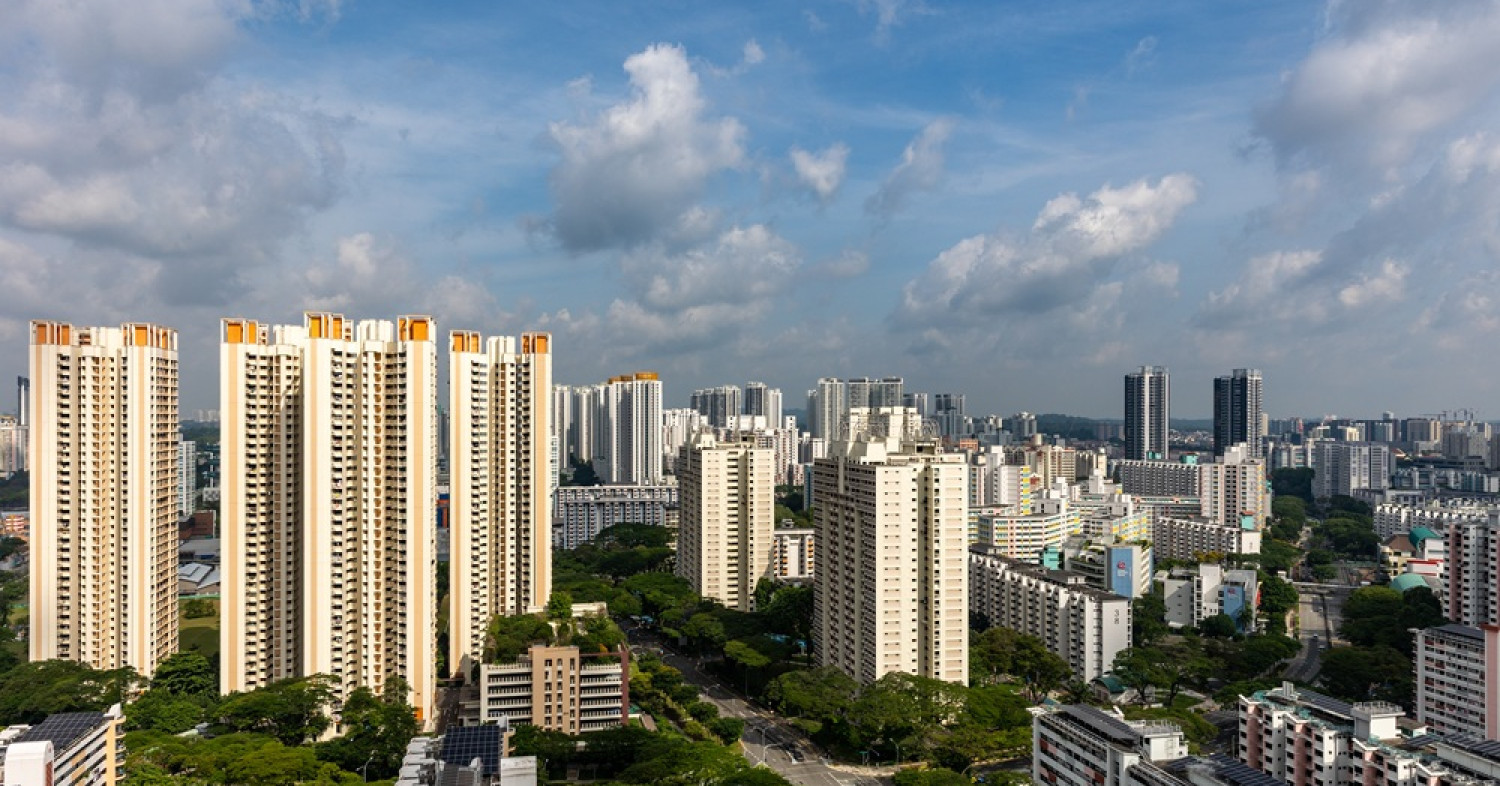
Despite broader weakening sentiment, the domestic housing market remains stable according to NUS’ Resi findings. (Photo: Samuel Isaac Chua/EdgeProp Singapore)
Global political headwinds are casting a shadow over Singapore’s real estate market, according to the latest Real Estate Sentiment Index (Resi) published by the National University of Singapore (NUS). The Composite Sentiment Index dipped to 4.9 in 1Q2026, from 5.8 in the last quarter.
Produced by NUS’ Department of Real Estate and Institute of Real Estate and Urban Studies (Ireus), the Resi tracks perceptions and expectations of the real estate market through quarterly surveys of senior executives in Singapore real estate firms.
It comprises a Current Sentiment Index and a Future Sentiment Index, which track changes over the past six months and the next six months, respectively. Scores from both indices are aggregated to derive a Composite Index, which indicates overall market sentiment.
Advertisement
Advertisement
Both the current and future sentiment indices fell in 1Q2026. The former contracted to 4.9 from the previous quarter’s 6.1. The latter slipped to 5.0 from 5.5 in the preceding quarter.
Professor Qian Wenlan, director of the NUS Ireus, attributes the pessimistic turn in the market to macroeconomic headwinds stemming from the conflict happening in the Middle East. “The ongoing crisis in the Middle East — with its cascading effects on surging energy costs, persistent inflation, and elevated interest rates — has dampened property sentiment here in Singapore,” she explains.
Still, the domestic housing market remains stable, with respondents reflecting measured confidence in the suburban residential market. Across all real estate segments, suburban residential topped the list with a positive current net balance and future net balance of +15% each.
Survey results indicated 50% of developers expect higher prices for new residential launches for the next six months, while 60% predict launch volumes to hold firm, supported by resilient buyer demand.
However, sentiment in the prime residential market has softened. While the segment held a positive current net balance of 5% in 1Q2026, the figure is a marked decline from the 41% logged in the previous quarter. “The prime residential sector is inherently more sensitive to shifts in global capital and international buyer sentiment,” notes Qian.
Across commercial and industrial segments, sentiments broadly declined. The business park and hi-tech space market led this downturn, posting a current net balance of -25% and a future net balance of -20%.
Advertisement
Advertisement
Sentiment also fell in the retail and hospitality property markets. The prime retail and suburban retail segments logged current net balances of -20% and -15% for 1Q2026, while the hotel and serviced apartment segment had a current net balance of -15%.
Offices fared relatively better. While the sector’s current net balance slipped to 0% from the 12% in 4Q2025, low Grade A vacancy and a limited upcoming supply pipeline are expected to bolster this segment, reflected in a positive future outlook of +15%.
“With the Composite Index slipping below the neutral threshold, it is clear that the industry is shifting from an expansionary mindset to one of defensive consolidation as businesses shift into a ‘risk-off’ stance,” says Qian.
Follow Us
Property updates, 24/7.
Subscribe to Newsletter
Market insights, delivered weekly.