
Tackling waste in retail
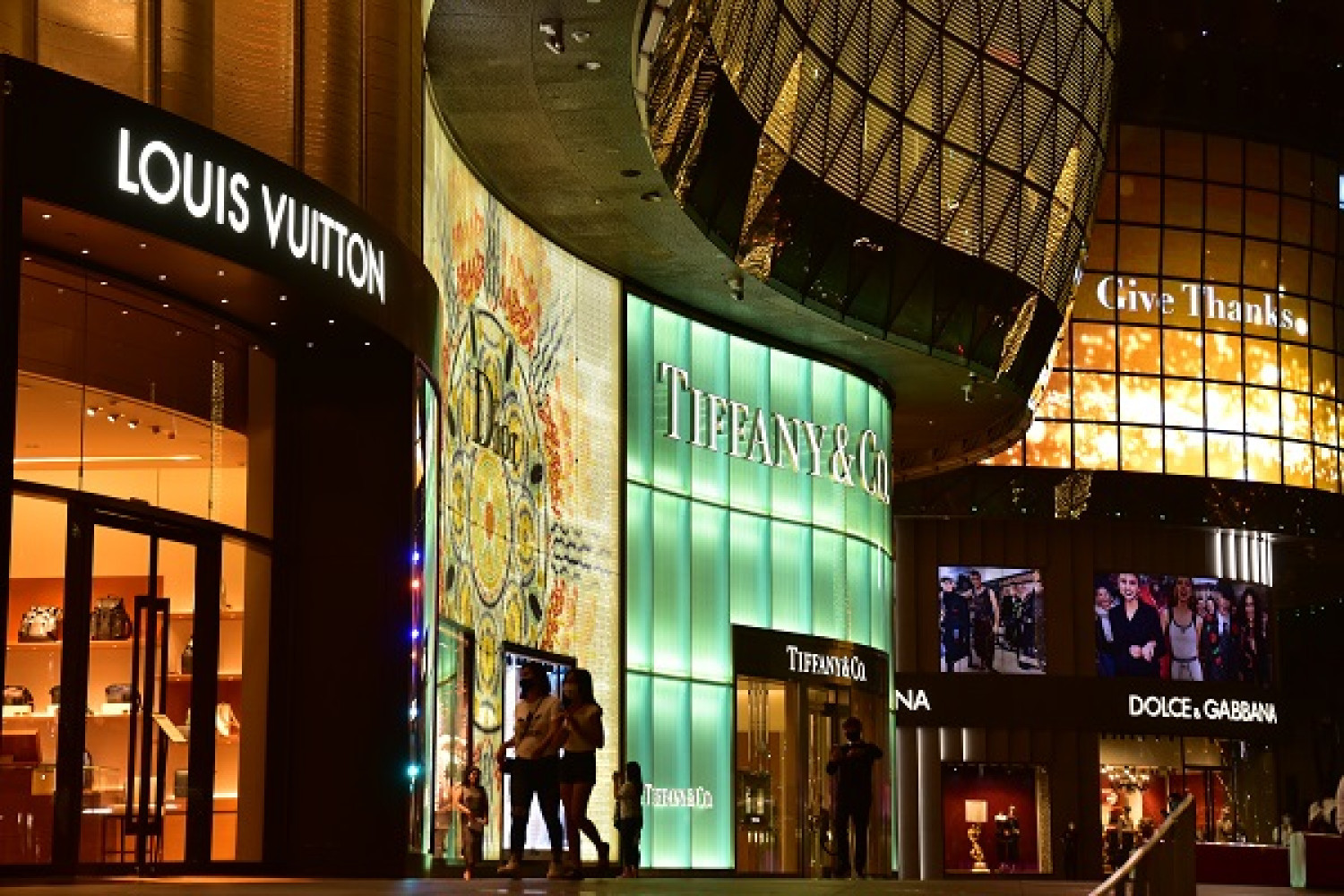
To address the high waste levels from the retail sector, the Singapore government mandated in 2014 that shopping malls with over 4,600 sq m (49,514 sq ft) of net lettable area would have to submit their waste data and a waste reduction plan to the National Environment Agency (NEA) (Credit: Albert Chua/ The Edge Singapore)
SINGAPORE (EDGEPROP) - A consequence of a rise in consumerism has been the increase in waste amounts generated. In 2018, large shopping malls in Singapore contributed 7% of the city-state’s total waste disposed of. (See also: 70% of firms in APAC willing to pay rental premium for green buildings)
To address the high waste levels from the retail sector, the Singapore government mandated in 2014 that shopping malls with over 4,600 sq m (49,514 sq ft) of net lettable area would have to submit their waste data and a waste reduction plan to the National Environment Agency (NEA). This yielded results, as between 2014 and 2019, the average waste generated by the retail sector fell from 52 kg per sq m to 45 kg per sq m, while the recycling rate rose from 6.7% to 11.4%.
If the disposal rates in 2019 are maintained, Singapore projected that by 2035, the Semakau Landfill will run out of space, and that future demand would require that a new incineration plant be built every seven to 10 years. Opened in 1999, the Semakau Landfill is an offshore landfill created entirely from sea space. It houses the city-state’s waste, which is cleared by incineration.
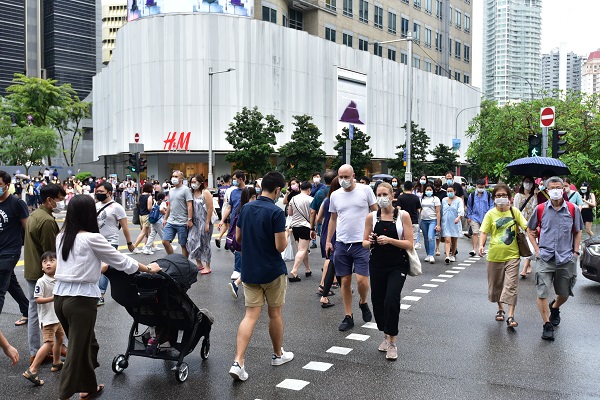
In 2018, large shopping malls in Singapore contributed to 7% of the city-state’s total waste disposed (Credit: Albert Chua/ The Edge Singapore)
Singapore’s latest Green Plan 2030 unveiled this year aims to quadruple solar energy deployment by 2025, cut waste sent to the landfill by 30% and plant one million more trees by 2030. This also includes schemes to add over 130ha of new parks, and enhance around 170ha of existing parks with more lush vegetation and natural landscapes by end-2026.
“What does it take for Singapore to become a zero-waste nation? We need to move from a linear option of ‘use and throw’, to a circular economy, one of reusing and recycling resources for as long as possible,” says Amy Khor, Senior Minister of State for Ministry of Sustainability and the Environment, at the launch of a joint study conducted by WWF Singapore and Lendlease on tackling waste in the retail sector.
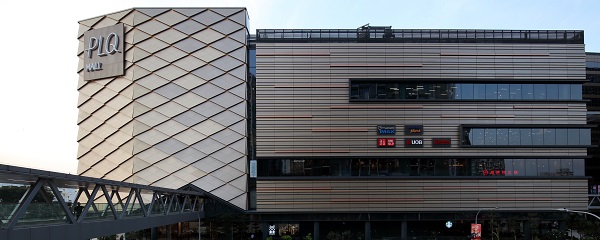
In PLQ Mall, Lendlease introduced a QR code system for waste tracking, where each retail tenant is assigned a unique QR code for waste disposal (Credit: Samuel Isaac Chua/ The Edge Singapore)
Retail tenant behaviours
In four of Lendlease’s retail malls in Singapore — 313@Somerset, Jem, Parkway Parade and PLQ Mall — the study reveals that tenants from different sectors have varying recycling behaviours. Fashion tenants have one of the lowest recycling rates, while supermarkets have a high volume of waste, but higher recycling rates. Fashion tenants, despite segregating cardboard boxes well, discard plastic packaging with general waste.
Supermarkets, meanwhile, have a designated space at the back-of-house for individual recycling bins and a clear protocol on how to segregate food waste, paper and plastic recyclables, which contributes to its higher recycling rate.
On the other hand, F&B tenants have low recycling rates, “which could be improved by segregating other recyclables besides food waste, like metals, as this would significantly improve the mall’s recycling rate and reduce the amount of waste sent to incineration”, highlights the report.

The observation tower at Chestnut Nature Park. Singapore’s latest Green Plan 2030 unveiled this year aims to quadruple solar energy deployment by 2025, cut waste sent to the landfill by 30% and plant one million more trees by 2030 (Credit: Samuel Isaac Chua/ The Edge Singapore)
Role of mall operators
More can be done by mall operators to improve recycling and waste management. This could come in the form of behavioural nudges, such as providing clearer instructional infographics on bins and supplementary training to tenants and cleaners in food court areas on appropriate segregation and cleaning requirements, it adds.
Recycling bins at common areas and bin centres should also be labelled according to the packaging type, rather than material, as this often results in contaminated items being collected, the study says. When a certain percentage of a batch of recycled materials is contaminated, the whole batch is considered unusable and has to be discarded.
Retail malls can also monitor waste data, digitising such practices. The report suggests further categorising tenants according to their retail category, as this would allow them to compare themselves with their peers.
In PLQ Mall, for instance, Lendlease introduced a QR code system for waste tracking, where each retail tenant is assigned a unique QR code for waste disposal. When tenants deposit general waste or recyclables at the bin centre, they have to scan the QR code, weigh and record the type of waste in the system, reducing errors from manual recording and saving time.
With such a system in place, waste data could then be linked to specific tenants. Lendlease found that F&B tenants with dining-in operations were “generally high-waste generators”, and “only a handful of them segregated their food waste, and even then, they were not consistent in this action”.
Across all four of Lendlease’s malls, food waste is the largest waste stream compared to other types of waste. Since 2013, the mall operator has been installing food waste digesters at its malls, with a dedicated personnel present to guide people to the accurate food waste bins at the bin centre. Due to this effort, two of its malls managed to divert about 1,040 tonnes of food waste from incineration, contributing to a 13% and 19% respective reduction in total general waste in the malls.
Currently, Lendlease has a recycling programme in place that is voluntary for its tenants. WWF suggests that to boost waste management, regulatory authorities could also play a part. Initiatives could include developing a regulatory framework for mall operators to include a waste management clause in their lease agreements, standardising the penalty imposed for non-compliance, and incentivising good waste reduction and recycling behaviour using grants and tax rebates.
Follow Us
Property updates, 24/7.


Subscribe to Newsletter
Market insights, delivered weekly.
Top Articles
Search