
What it will take to unlock investment in housing, infrastructure, urban resilience: World Cities Summit 2026

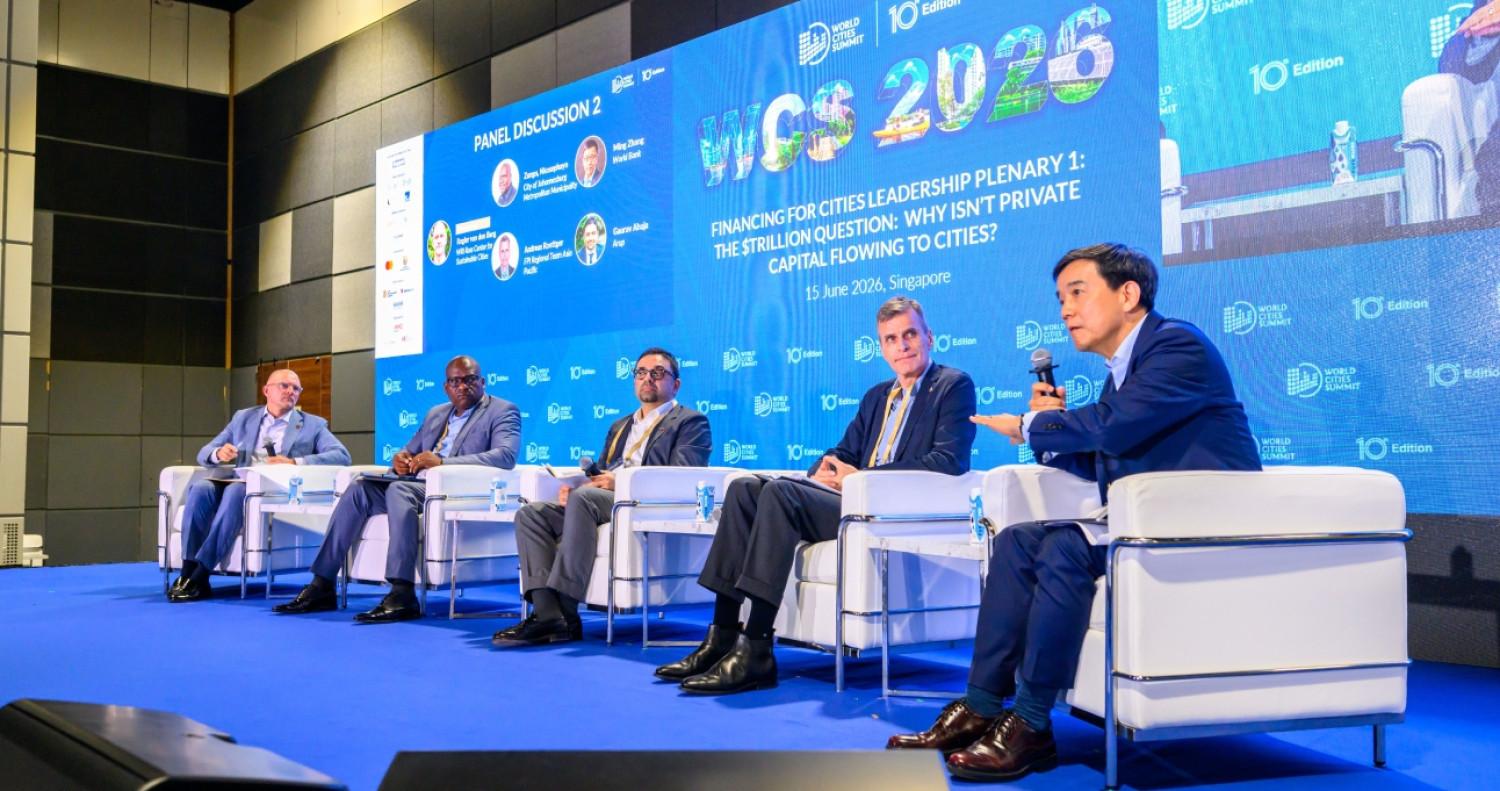
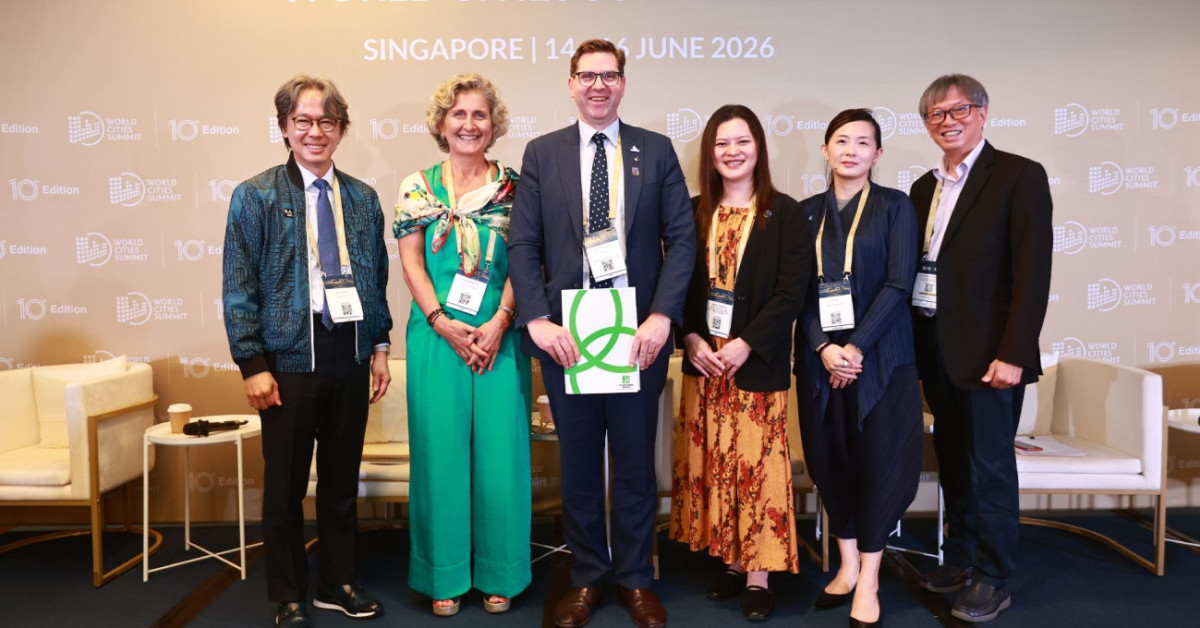
From left: Rogier Van Den Berg, WRI Ross Center for Sustainable Cities; Sithembiso Zungu, Johannesburg; Gaurav Ahuja, Arup; Andreas Roettger, EU; Ming Zhang, World Bank. (Photo: World Cities Summit 2026)
Global markets are awash with capital, yet cities around the world continue to struggle to fund affordable housing, infrastructure and urban resilience projects.
At a recent plenary on financing for cities, speakers examined why private capital is not flowing to projects that cities need most despite investor interest in long-term stable assets.
The problem is not a lack of money, but a lack of investible opportunities, clear risk allocation, policy certainty, and credible pipelines that can attract institutional capital at scale.
To unlock more private capital, cities need to combine smaller projects, improve transparency, and create financing structures that can offer the certainty and predictability investors seek.
Co-curated with Arup, a global built environment consultancy, the session was part of the World Cities Summit 2026 held in Singapore on June 14–16.
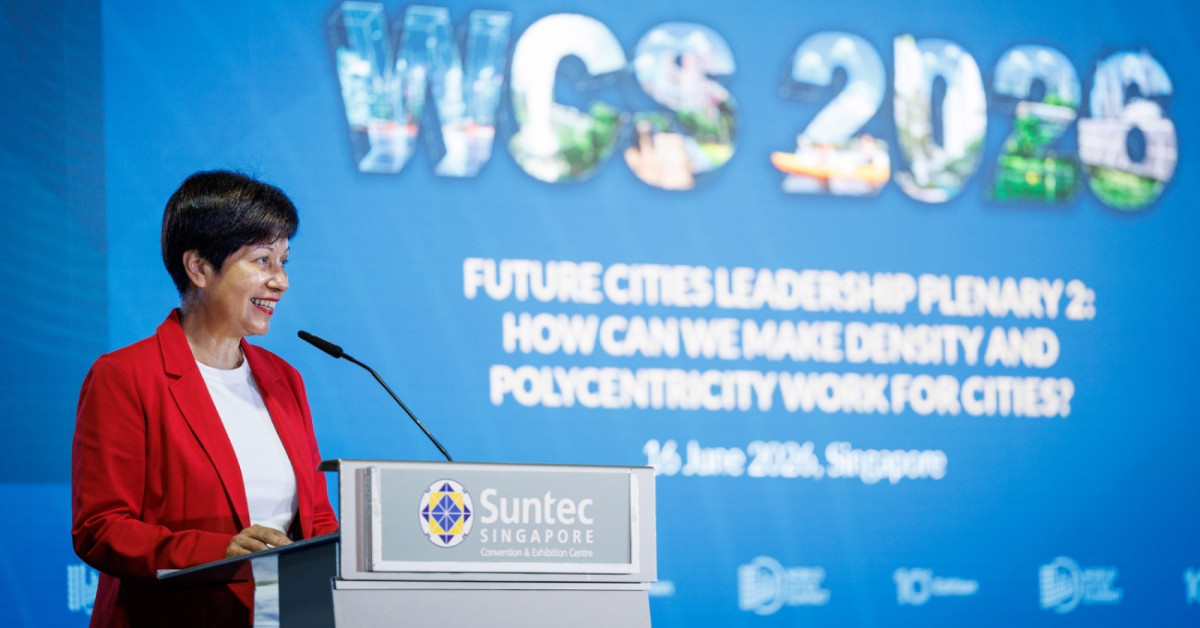
The leadership plenary featured a keynote address by Sanjeev Sanyal, member of the economic advisory council to the Prime Minister of India.
This was followed by two panel discussions with speakers from Arup, C40 Cities, BlackRock, the European Union delegation to Thailand, Johannesburg, Singapore Green Finance Centre, Temasek Trust, World Bank, and WRI Ross Center for Sustainable Cities.
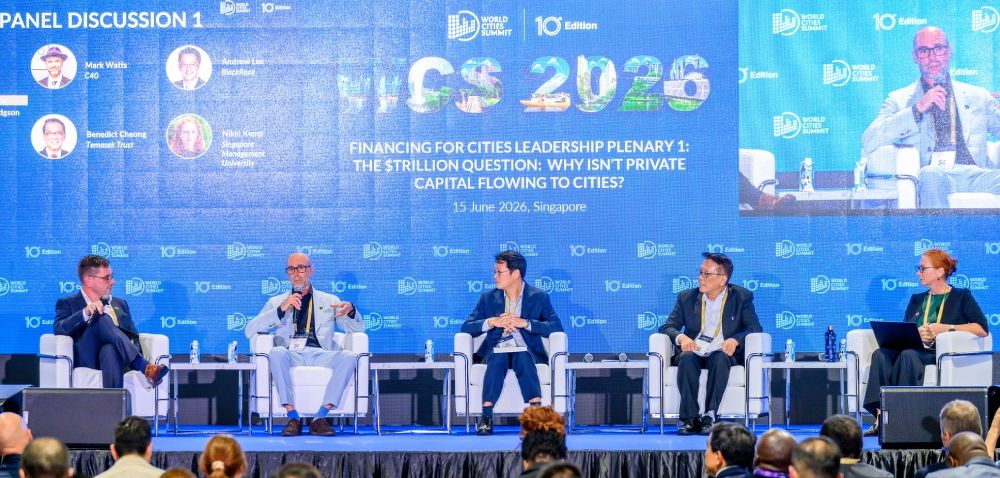
From left: Andy Hodgson, Arup; Mark Watts, C40 Cities; Andrew Lee, BlackRock Private Markets; Benedict Cheong, Temasek Trust; Nikki Kemp, Singapore Green Finance Centre. (Photo: World Cities Summit 2026)
Turning public goods into investible assets
Private capital can play a role in urban development, but only where cities are able to create investible opportunities with clear revenue streams and identifiable returns, India’s Sanyal said in his keynote address.
Many urban challenges do not naturally lend themselves to private financing. While investors are often willing to fund commercially viable projects, it is tricky to generate direct financial returns from infrastructure and services that generate broad public benefits.
“Private capital understands private assets,” he added. “It boils down to a few solutions. First, how do you convert a public good into something where you can raise money in some fashion to create private assets?”
That means governments need to think carefully about how urban projects are structured, and whether public assets, land or services can be organised in ways that create sustainable sources of revenue.
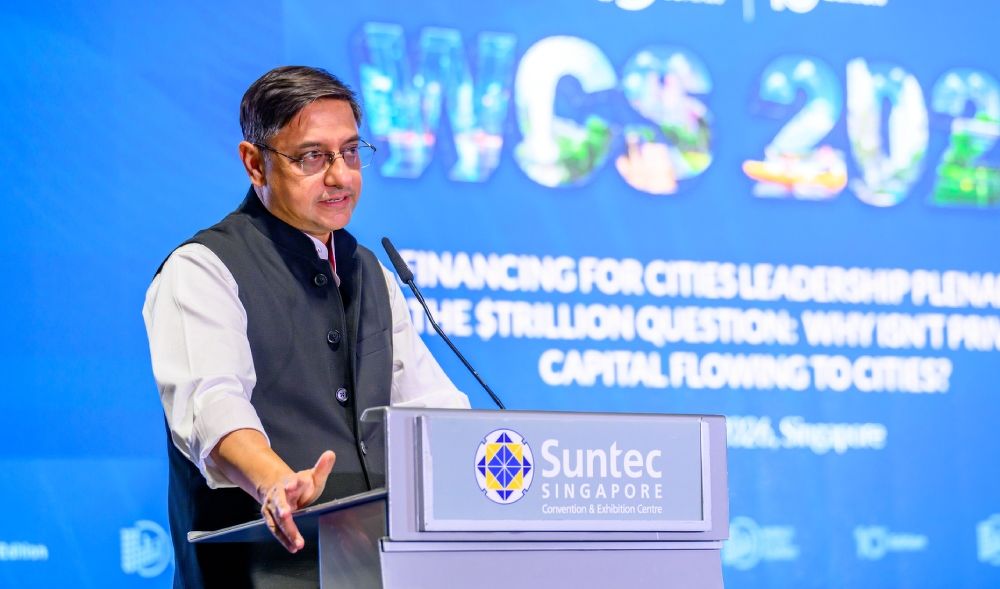
Sanjeev Sanyal, member of the economic advisory council to the Prime Minister of India. (Photo: World Cities Summit 2026)
Slum redevelopment efforts are an example of how cities can monetise land while delivering public benefits.
By redeveloping sites occupied by informal settlements, governments can provide the residents with improved, modern housing and services while unlocking value from the surrounding land.
Sanyal also stressed that cities should not shy away from creating “gated” or “enclosable” spaces that can generate rent and revenue while remaining accessible to the public.
“We should stop being squeamish about this. In the end, you do want to create spaces,” he said. “And if we cannot create private returns, then we should not expect private capital.”
Airports, for instance, are enclosable spaces that have been attracting private investment. In turn, that also helps fund major upgrades to the airports that would have been difficult to achieve through public spending alone.
Not every project can or should be financed this way, however.
"If we cannot convert something into a private good, then it must be delivered the old way, through public infrastructure spending," Sanyal added.
Why scale and certainty matter
Panellists throughout the discussions highlighted that there is no shortage of capital, but cities could do more to provide investors with certainty, transparency and scale.
These qualities are critical to turning city projects into investible and bankable opportunities for institutional capital.
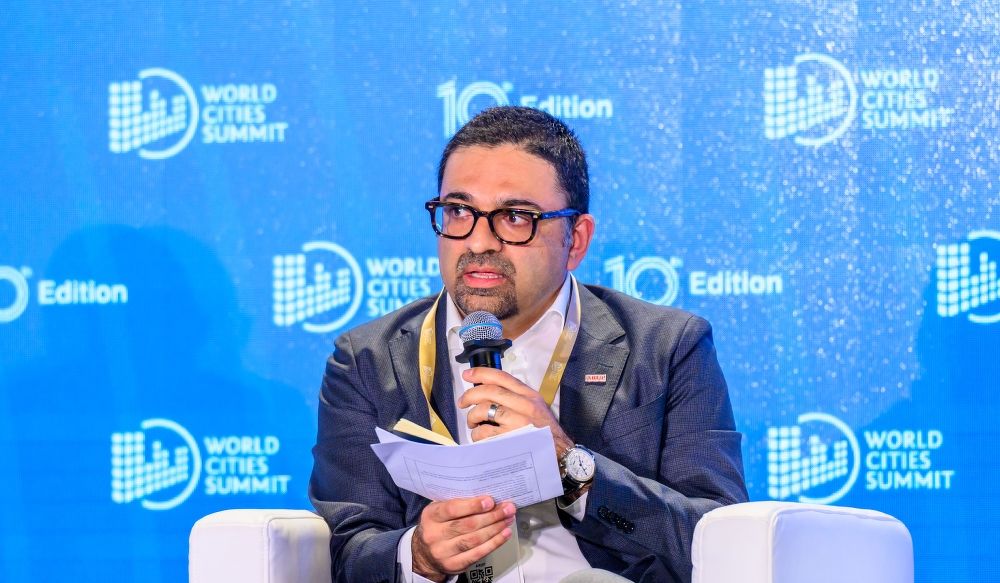
Arup’s Gaurav Ahuja. (Photo: World Cities Summit 2026)
“What we see is plenty of institutional capital looking for a home, particularly where there’s inflation-linked income,” said Gaurav Ahuja, principal, investor advisory at Arup.
He described it as a product problem. For example, most housing projects are structured as individual assets, not necessarily as investible products in which large pools of capital can participate.
Ahuja reckoned that the three common barriers to investment are: fragmented pipelines with small and inconsistent projects; poor risk allocation; and policy misalignment.
Likewise, Nikki Kemp, executive director of the Singapore Green Finance Centre, said: “If it is [structured] asset by asset, it will kill any deal. You’ll see the banks and traditional investors running a mile, because it’s typically small.”
Instead, she suggested cities aggregate assets by pooling many small projects together into bigger portfolios, which could help cities achieve scale and investment-grade characteristics.
“There will then be a really interesting opportunity for institutional investors to get excited about, because it’s a whole new asset class to invest in,” Kemp added.
Panellists also pointed out that investors are generally prepared to accept moderate returns, but are less tolerant of uncertainty.
Contrary to popular belief, real estate investors are actually quite conservative, said Andrew Lee, director, BlackRock Private Markets.
“In terms of returns, we’re not looking to knock it out of the park or achieve a 20% IRR (internal rate of return), but rather we’re very much focused on downside risk,” Lee shared. “What’s the volatility? What’s the planning risk? What’s the execution risk?”
Institutional capital is therefore typically attracted to markets and cities where there are healthy supply and demand dynamics.
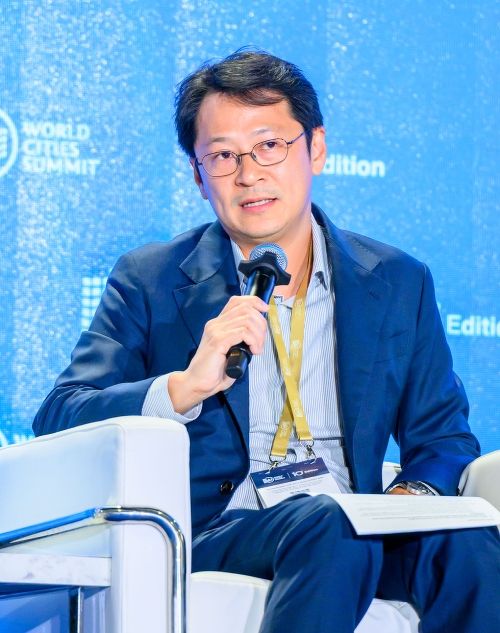
Andrew Lee, BlackRock Private Markets. (Photo: World Cities Summit 2026)
Trust, partnerships and patient capital
Clear governance and accountability are also important prerequisites for attracting capital, be it from investors or philanthropists.
Cities need to strengthen their institutions, relationships and transparency mechanisms — or the so-called “trust infrastructure” — according to Benedict Cheong, chief systems integration officer at Temasek Trust.
Investors and donors alike need confidence that resources will be directed to “the right places for the right results”, supported by clear rules, responsibilities, rights, and accountability frameworks, Cheong added.
At the same time, speakers stressed that affordable housing is a complex urban challenge that cannot be addressed through public funding alone. It requires collaboration across the public, private and philanthropic sectors.
They noted that housing cannot be viewed in isolation from the infrastructure and public services that support it. Providing affordable housing at scale requires coordination with transport, utilities and other essential infrastructure.
“Affordable housing is an issue all governments face, whether it’s a developing country or an advanced economy,” said Ming Zhang, the World Bank Group’s global director for urban, subnational finance, tourism and disaster management.
Relying on just government financing will not solve the problem, as the scale of the issue is simply too enormous.
“You really need to work with the market to make housing affordable and the investments work,” Zhang continued.
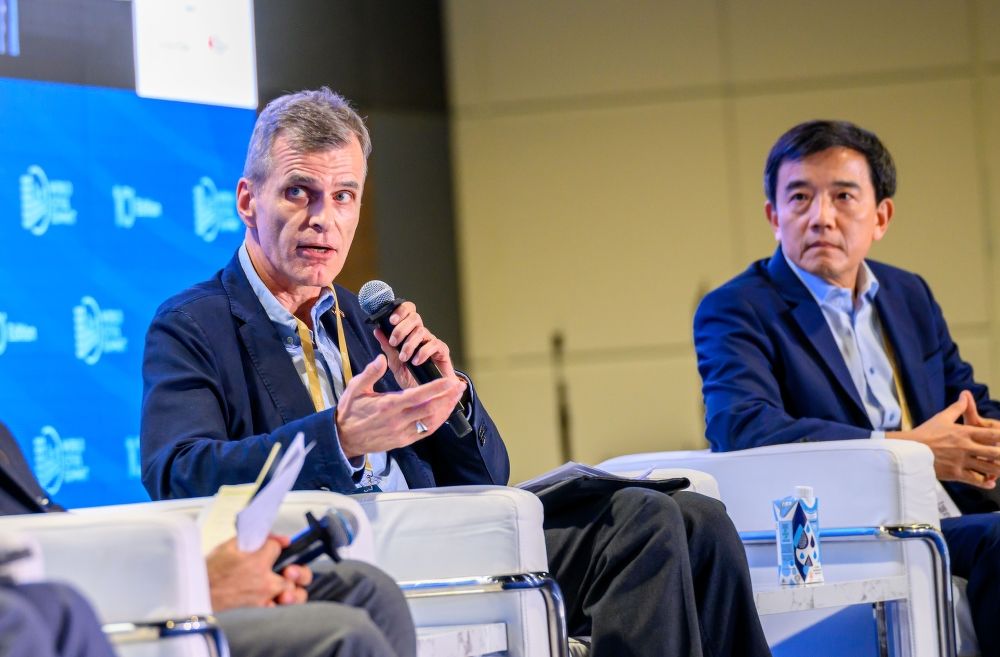
Andreas Roettger (left), Delegation of the European Union to Thailand; and Ming Zhang, World Bank. (Photo: World Cities Summit 2026)
The scale and complexity of such challenges mean cities will need to draw on a broader mix of capital and expertise.
In particular, philanthropy can play a role in helping projects reach a stage where private investors are prepared to participate, said Cheong from Temasek Trust.
Beyond providing funding, the philanthropic sector can also support capacity building and innovation, strengthen systems, convene stakeholders, as well as absorb early risks that investors may be unwilling to take on initially.
“Philanthropy has a big role to play, and many cities are starting to realise this,” Cheong shared.
“We can provide first-loss funding to de-risk and unlock capital. If [a project] doesn’t fail, the private sector and the government can take it forward… There’s a lot we can do together.”
He also encouraged more philanthropists to participate in urban resilience and city development, to build systemic solutions, innovations and assets “with and for cities”.
For more news and analysis, read our weekly e-paper. Prefer a print copy? Get it delivered to your home every Monday.
Follow Us
Property updates, 24/7.


Subscribe to Newsletter
Market insights, delivered weekly.
Top Articles
Search