
Today’s competitive retail scene calls for a ‘department mall’ model
Michael Leong and Tan Boon Tuck
/ EdgeProp Singapore
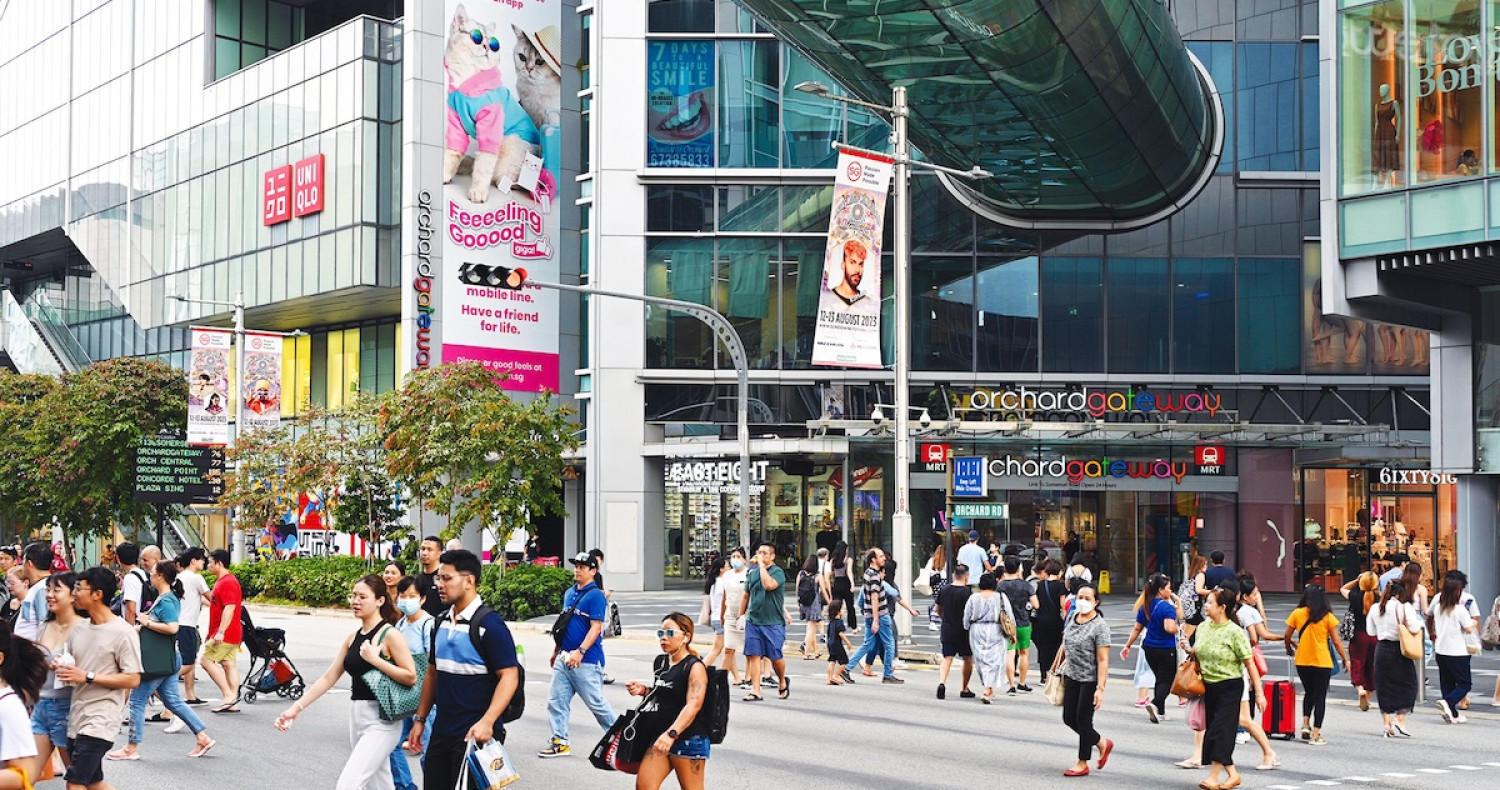
Integrating smaller retail clusters within larger open-concept spaces, with the presence of major brands, creates a richer retail narrative, encouraging foot traffic (Photo: Albert Chua/The Edge Singapore)
Malls and department stores each possess distinct strengths. Malls benefit from scale, capital strength and physical presence while department stores excel in merchandising, retail management and sales execution. Notably, each party’s strength is also the other’s weakness.
Since both malls and retailers ultimately draw revenue from the same shoppers, it follows that malls should work far more closely with retailers to improve sales outcomes.
True collaboration, rather than a purely landlord-tenant relationship, is the most effective way to deliver what shoppers want, and grow turnover. Yet, many mall management teams lack the retail management expertise needed to collaborate meaningfully with retailers.
Advertisement
Advertisement
In today’s competitive environment, proactive sales management is essential. This is where the “department mall” model — one that incorporates department store practices into mall management — becomes increasingly relevant.
Let a hundred flowers bloom
Large brands anchor a mall’s themes while small retailers are the flowers — as it were — that bring colour, texture and discovery through unique offerings. These smaller players cannot afford large spaces or high rents, yet they are essential to creating a vibrant shopping experience.
One way to achieve this is by integrating smaller retail clusters within larger open-concept spaces, surrounded by the presence of major brands. This creates a richer retail narrative and encourages foot traffic.
Beyond tenant mix, ambience matters. Floor configuration, themed common areas, thoughtful shop layouts and creative merchandising displays all encourage shoppers to meander — moving from store to open space and back again, and discovering products as they browse.
One team, one direction, one goal
Maintaining a consistent service standard across a mall is difficult unless management oversees service delivery more directly. Many older Singaporeans will remember the sales staff at former department stores such as Robinsons and John Little — seasoned professionals who worked as a cohesive team and set the tone for service excellence.
A unified team requires a shared direction and a common goal. That goal — driving sales and profitability — must be embraced by everyone. Common values, pride and enthusiasm can only be cultivated through shared training, mentoring and guidance. Only then can a mall deliver consistently high service standards.
Advertisement
Advertisement
Professional service and sales training can be conducted in-house while product-specific training remains the responsibility of retailers. Big brands may wish to adhere to their established service standards, which can be accommodated through additional brand-led training.
With a central workforce of service and backroom staff, supervisory roles can be optimised and shift planning streamlined. Economies of scale also allow better use of foreign worker quotas, as backroom and management staff are included in overall headcount. This can help ease manpower constraints across the retail sector.
Providing shared sales staff offers another advantage: real-time insight into product popularity and sales performance. With agreed targets, malls and retailers can jointly apply the science of retailing to improve outcomes.
Advance with technology, not avoid it
Today, many malls rely mainly on loyalty systems, sometimes supplemented by basic financial modules for lease and rental tracking. Department stores, by contrast, often deploy sophisticated enterprise resource planning or ERP systems that integrate finance, point-of-sale data, inventory management, customer transactions and operational workflows.
When these systems feed into a central data repository, analytics can be performed across the entire business. This is where AI — in analysing historical data, identifying patterns and generating predictive insights — becomes invaluable.
However, data is the foundation. Without sales and product data, AI has little value. Malls typically lack this information as they rely largely on customer data from loyalty programmes. Department stores, by contrast, house comprehensive datasets under one roof.
Advertisement
Advertisement
AI will play a growing role in productivity and decision support but final decisions must remain the preserve of people. Retail is, at its core, a people business. Shoppers respond to warmth, empathy and personal interaction — qualities no algorithm can replicate.
Therefore, collaboration with retailers should include shared application of retail science. Since small retailers cannot afford expensive technology, department malls can leverage scale to support them — analysing data, generating insights and jointly agreeing on strategies to improve sales. This value-add is substantial.
Central control with scale equals cost savings
Faced with high operating costs, retailers stand to benefit from shared services. Under a department-mall model, scale and central control can revive cost-saving initiatives that previously failed due to fragmentation.
Examples include centralised dishwashing facilities and in-mall distribution logistics services. Managed centrally, these services can be offered at a fraction of the cost that retailers would otherwise incur if they managed them independently. Service providers, in turn, must adapt their operating models to meet the needs of these centrally managed malls.
New value-adds, new income streams, equitable partnerships
Moving beyond the traditional mall business model allows for new value-adds — and with that, new revenue streams. Shared sales staff, renovation advisory services, sales activation programmes and cost-optimisation schemes can all be monetised.
Charges may be structured as fixed fees or as a share of incremental sales. With a reimagined rent roll, malls can diversify income beyond base rent. However, fairness and transparency are essential. Trust must underpin all charging mechanisms if long-term partnerships are to succeed.
When malls and retailers move from transactional relationships to true collaboration, one plus one can indeed equal more.
For more on the evolving retail landscape:
https://www.edgeprop.sg/property-news/today%E2%80%99s-competitive-retail-scene-calls-%E2%80%98department-mall%E2%80%99-model
Follow Us
Property updates, 24/7.


Subscribe to Newsletter
Market insights, delivered weekly.

Advertisement
Advertisement
Advertisement
Top Articles
Search